
5 Important Crypto News: XRP Adoption, Bitcoin Milestones, U.S. Policy Shifts & Ripple-SEC Deal – BotSlash Daily Crypto News Analysis
Today’s developments mark a decisive shift in how crypto assets are being regulated, integrated into traditional systems, and leveraged for global financial innovation. From Coinbase’s push to transform online payments, to the OCC empowering banks to handle customer crypto directly, and Robinhood eyeing blockchain-based equity access in Europe, the stage is set for deeper global crypto adoption. Meanwhile, the Federal Reserve’s signals on inflation and interest rates offer vital macroeconomic insight impacting risk assets, including crypto. 🟢 Florida Pharma Firm Will Use XRP for Real-Time Payments in $50M Financing Deal Wellgistics Health, a publicly traded pharmaceutical distribution company, has announced a $50 million Equity Line of Credit (ELOC) to support the integration of XRP into its payment infrastructure. This initiative aims to utilize XRP for real-time settlements between pharmacies, suppliers, and manufacturers, significantly reducing transaction times and costs compared to traditional banking methods. The move positions Wellgistics as a pioneer in adopting blockchain technology within the healthcare sector. By leveraging XRP’s capabilities, Wellgistics intends to enhance liquidity for independent pharmacies through XRP-backed credit lines and facilitate global vendor payouts with minimal fees. The transparency of the XRP Ledger will also aid in compliance and auditability, ensuring real-time tracking of transactions. This strategic adoption reflects a growing trend of blockchain integration in traditional industries seeking efficiency and cost reduction. The successful implementation of XRP in Wellgistics’ operations could set a precedent for other healthcare companies to explore blockchain solutions. As the healthcare industry grapples with complex supply chains and payment systems, blockchain technology offers a promising avenue for streamlining processes and enhancing transparency. 🟢 Missouri Takes the Lead: Upcoming Tax Incentives for Cryptocurrency Transactions The Missouri House of Representatives has passed a groundbreaking bill to exempt capital gains taxes on cryptocurrencies, stocks, and real estate. This legislative move positions Missouri as the first U.S. state to offer such comprehensive tax incentives, aiming to attract investors and stimulate economic growth within the state. By eliminating capital gains taxes on these assets, Missouri seeks to become a hub for digital asset trading and long-term investment. The policy is expected to encourage more residents and businesses to engage in cryptocurrency transactions, potentially boosting the state’s economy. However, critics express concerns about potential revenue shortfalls and the equitable distribution of tax benefits. If successful, Missouri’s approach could inspire other states to consider similar tax incentives, potentially leading to a more favorable regulatory environment for cryptocurrencies across the United States. This development underscores the growing recognition of digital assets in mainstream financial systems and the importance of supportive legislation in fostering innovation. 🟢 Bitcoin’s Realized Market Capitalization Reaches New All-Time High; Persistent Inflows Indicate Positive Market Trends Bitcoin’s realized market capitalization has reached a new all-time high of $890.7 billion, signaling sustained investor confidence and robust capital inflows into the cryptocurrency. This metric, which accounts for the aggregate value of all coins based on their last moved price, provides a more accurate representation of the network’s economic weight compared to traditional market capitalization. The continuous rise in realized cap suggests that investors are accumulating Bitcoin at higher prices, reflecting a bullish sentiment and anticipation of future price increases. Analysts interpret this trend as a foundational step toward a potential new bull cycle, with Bitcoin’s price approaching the significant $100,000 milestone. This development highlights the growing maturity of the Bitcoin market, with increased participation from institutional investors and a broader acceptance of the cryptocurrency as a store of value. The positive momentum in realized capitalization may further attract new investors, reinforcing the upward trajectory of Bitcoin’s market performance. 🟢 A Trump Advisor Has Stated That Bitcoin Is Likely to Become a Global Reserve Currency Sooner Than Many People Anticipate A senior advisor to former President Donald Trump has suggested that Bitcoin could attain the status of a global reserve currency sooner than expected. This statement aligns with Trump’s recent executive order establishing a Strategic Bitcoin Reserve and a U.S. Digital Asset Stockpile, signaling a significant shift in the government’s approach to digital assets. The advisor emphasized Bitcoin’s potential to enhance financial stability and its role as a hedge against inflation. By integrating Bitcoin into national reserves, the U.S. aims to position itself at the forefront of the evolving global financial landscape. This move reflects a growing acknowledgment of cryptocurrencies’ strategic importance in economic policy. The endorsement of Bitcoin by high-level government officials may accelerate its adoption and integration into traditional financial systems. As more countries explore the inclusion of digital assets in their reserves, Bitcoin’s role as a global financial instrument is likely to expand, influencing international monetary dynamics. 🟢 Ripple and the SEC Have Finalized a Significant Agreement Involving the Return of a Remaining $75 Million Penalty and the Lifting of the Injunction Ripple Labs has reached a settlement with the U.S. Securities and Exchange Commission (SEC), concluding a prolonged legal dispute over the classification of its XRP token. Under the agreement, Ripple will pay a $50 million penalty, and the SEC will return the remaining $75 million held in escrow. Additionally, the court-imposed injunction against Ripple has been lifted, allowing the company to resume its operations without legal constraints. This resolution marks a significant victory for Ripple, providing regulatory clarity and enabling the company to expand its services without the overhang of legal uncertainty. The settlement may also set a precedent for how digital assets are regulated in the United States, potentially influencing future enforcement actions and legislative developments. The conclusion of this case is expected to have a positive impact on XRP’s market performance and could encourage other blockchain companies to seek regulatory compliance proactively. It underscores the importance of clear regulatory frameworks in fostering innovation and growth within the cryptocurrency industry. Key Takeaways XRP Integration in Pharma: A $50M financing deal will enable Wellgistics Health to deploy XRP for real-time payments, marking a breakthrough in blockchain adoption in healthcare. Missouri’s Crypto Tax Reform: The state is pushing to exempt capital gains on crypto, aiming to become a crypto-friendly hub and encourage long-term
4 Important Crypto News: Ripple’s $1.25B Move, Bitcoin’s Slide, BlackRock’s EU ETF, and Hive’s Paraguay Expansion — BotSlash Daily Crypto News Analysis
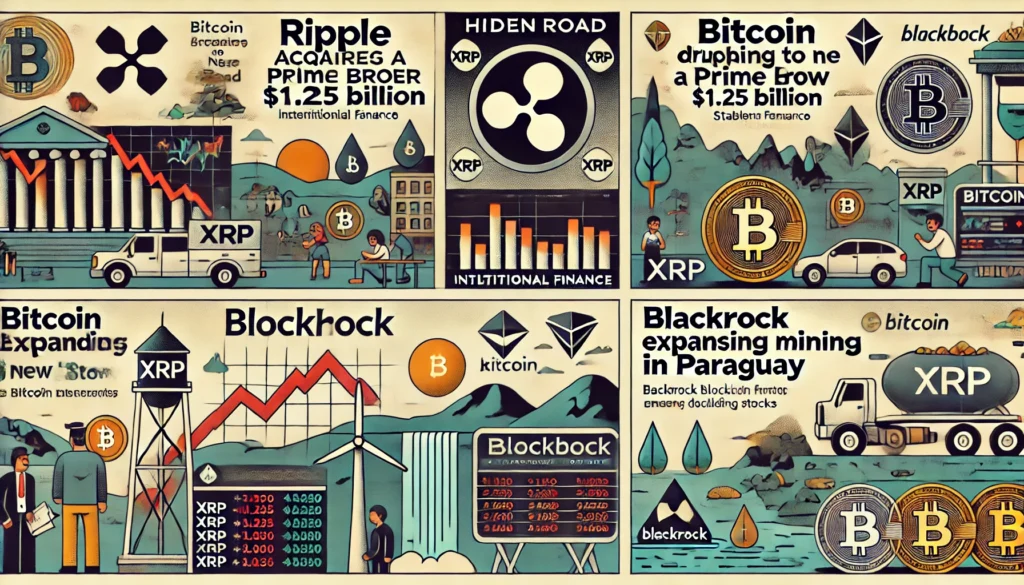
The past 24 hours brought impactful developments across key sectors of the crypto world, signaling a deepening institutional presence and reactive market shifts. Ripple is making a power move with a $1.25 billion acquisition aimed at expanding its DeFi influence. Meanwhile, the broader crypto market reacted negatively to macroeconomic fears, pulling Bitcoin to new lows and dragging crypto stocks down. In contrast, BlackRock is charging ahead, debuting its first Bitcoin product in Europe — a milestone for the region’s digital asset exposure. And Hive Blockchain is going green, announcing new mining operations in Paraguay, tapping into sustainable energy. Ripple’s $1.25 Billion Acquisition of Prime Broker Hidden Road Ripple Labs, the company behind the cryptocurrency XRP, has announced plans to acquire multi-asset prime brokerage firm Hidden Road for $1.25 billion. This strategic move aims to bolster Ripple’s position in institutional decentralized finance (DeFi) by integrating Hidden Road’s extensive client base and clearing capabilities. Hidden Road processes approximately $3 trillion annually across various financial markets and serves over 300 institutional clients. The acquisition is expected to enhance the utility of Ripple’s U.S. dollar-pegged stablecoin, RLUSD, which Hidden Road utilizes as collateral in its brokerage products. This positions Ripple to compete more effectively with established stablecoin providers like Tether and USD Coin. The deal is anticipated to close in the coming months, pending regulatory approvals. Market Impact: This acquisition signifies a substantial expansion of Ripple’s institutional services, potentially increasing XRP’s adoption among institutional investors. The move may also influence the competitive landscape of stablecoins, challenging existing market leaders. U.S. Crypto Stocks Decline as Bitcoin Hits New 2025 Low On April 7, 2025, U.S.-listed crypto company stocks experienced significant declines, mirroring a sharp drop in bitcoin prices. Bitcoin fell by as much as 5.5%, reaching its lowest point in 2025. Shares of major crypto-related firms also suffered, with MicroStrategy falling over 7%, Coinbase dropping 6%, and Robinhood sliding 4%. The downturn is attributed to escalating global trade tensions following new tariffs announced by President Donald Trump, which have dampened investor confidence and risk appetite. Additionally, billionaire investor Bill Ackman warned of a potential “economic nuclear winter,” further fueling market concerns. Market Impact: The recent market volatility underscores the sensitivity of crypto assets to broader economic and geopolitical developments. Investors may need to reassess the role of cryptocurrencies as safe-haven assets during times of economic instability. BlackRock Launches First Bitcoin Product in Europe BlackRock, the world’s largest asset manager, has introduced its first bitcoin exchange-traded product (ETP) in Europe, named the ‘iShares Bitcoin ETP.’ Domiciled in Switzerland, the product is listed in Paris, Amsterdam, and Frankfurt. This launch follows BlackRock’s success in the United States, where it attracted over $50 billion into similar cryptocurrency products after the Securities and Exchange Commission approved such offerings in January 2024. BlackRock has partnered with Coinbase as the custodian and Bank of New York Mellon as the administrator for this new product. Reuters Market Impact: BlackRock’s expansion into the European crypto market reflects growing institutional interest and could pave the way for increased adoption of bitcoin ETPs across the continent. Hive’s Expansion of Bitcoin Mining Operations in Paraguay Hive Blockchain Technologies, under the leadership of Executive Chairman Frank Holmes, is expanding its bitcoin mining operations into Paraguay. The move aims to leverage Paraguay’s abundant hydroelectric power to support sustainable and cost-effective mining activities. This expansion aligns with Hive’s strategy to diversify its operations geographically and enhance its mining capacity while adhering to environmentally friendly practices. Market Impact: Hive’s expansion into Paraguay could set a precedent for other mining companies seeking sustainable energy sources, potentially influencing global mining operations’ geographical distribution and environmental strategies. Key Takeaways: Ripple’s acquisition of Hidden Road for $1.25 billion aims to enhance its institutional DeFi services and stablecoin utility. U.S. crypto stocks have declined amid bitcoin’s drop to a new 2025 low, influenced by escalating trade tensions and economic concerns. BlackRock has launched its first bitcoin ETP in Europe, reflecting growing institutional interest in cryptocurrency products. Hive Blockchain is expanding its bitcoin mining operations into Paraguay, leveraging sustainable hydroelectric power.
Crypto Daily News Analysis: Bitcoin Nears $100K, XRP Surges, Binance & Coinbase Expand, and Hong Kong Strengthens Oversight

Bitcoin has surged past $99K, bringing fresh optimism to the market, while XRP rallied 40%, signaling renewed interest in altcoins. Regulatory advancements are reshaping the industry, with Coinbase securing a UK VASP license and Kraken expanding into Europe’s derivatives market. Meanwhile, Binance is pushing forward with crypto adoption, forming key partnerships and maintaining confidence despite recent market turbulence. On the innovation front, TON has launched a $100 million fund to accelerate blockchain development. At the same time, Hong Kong is reinforcing its regulatory framework, even as it faces financial challenges. With shifting global trade policies and new regulatory approvals, the market is experiencing a mix of bullish momentum and cautious optimism. Institutional players are gaining clearer pathways to enter the space, and payment adoption is expanding across Europe. These developments set the stage for greater mainstream adoption, increased market liquidity, and potential price volatility as investors react to changing economic conditions. 1. Bitcoin Surges Above $99K and XRP Rallies 40% as Trade War Tensions Ease Bitcoin crossed the $99,000 mark after easing trade war tensions between major economies, signaling renewed investor confidence. Alongside Bitcoin, XRP recorded an impressive 40% surge, leading a broader altcoin rally. This price jump comes as global economic uncertainty diminishes, allowing risk assets to thrive. The trade war between the U.S. and China had previously created market volatility, with Bitcoin acting as a safe-haven asset. However, the recent de-escalation encouraged more investments into traditional and digital assets alike. XRP’s sharp rise suggests that investor interest is shifting back toward altcoins, possibly due to improving sentiment in the crypto market. If Bitcoin manages to maintain its position above $99K, analysts suggest it could soon reach six figures. However, caution remains as external macroeconomic events still influence price movements. A stable global economy tends to reduce Bitcoin’s appeal as a hedge, but if new tensions arise, crypto could once again see volatility. XRP’s rally is promising, but its history of sharp price swings suggests a high-risk, high-reward scenario for investors. Market Impact: Bullish sentiment for Bitcoin – breaking $99K could push it past the $100K milestone. Altcoin market revival – XRP’s rally might inspire renewed interest in alternative cryptocurrencies. Global trade stability favors traditional investments, but crypto remains attractive as a long-term store of value. 2. Kraken Expands into Europe with Regulated Crypto Derivatives Kraken has announced its expansion into Europe with regulated crypto derivatives, positioning itself as a leading exchange in the region. This move is significant as it aligns with increasing demand for compliant trading products, particularly among institutional investors. Crypto derivatives—such as futures and options—allow traders to hedge risk, speculate on price movements, and increase market liquidity. However, they have been under heavy regulatory scrutiny due to concerns over market manipulation. Kraken securing regulatory approval gives it an advantage over competitors that face restrictions in certain regions. This move also highlights Europe’s growing role as a crypto-friendly regulatory environment, especially as the U.S. imposes stricter crypto rules. With more U.S. exchanges struggling with compliance, companies like Kraken are looking abroad for growth. If Kraken’s European derivatives market succeeds, it could set a precedent for other exchanges to expand under similar regulatory frameworks. Market Impact: Institutional adoption grows as Kraken brings compliance-focused products. Europe solidifies its role as a key crypto hub, attracting more exchanges and investors. Derivatives trading expands liquidity, potentially reducing market volatility. 3. US and Mexico Delay Trump Tariffs, Crypto Market Reacts Positively The U.S. and Mexico agreed to delay tariffs proposed by Donald Trump, bringing relief to both traditional and crypto markets. This news helped Bitcoin and altcoins recover, as economic stability reduces the immediate need for hedging against fiat risks. Previously, tariff uncertainties led investors to seek safe-haven assets like Bitcoin. With the delay, risk assets—including stocks and cryptocurrencies—saw renewed investor confidence. However, this does not eliminate the possibility of future trade tensions, meaning crypto could remain a key hedge. If long-term resolutions emerge, crypto might experience lower volatility as economic stability increases. However, if trade disputes resurface, Bitcoin could regain its hedge appeal. For now, the market is responding positively, but traders should watch for further geopolitical developments. Market Impact: Short-term bullish sentiment for Bitcoin and altcoins. Decreased hedge demand if economic stability continues. Future tariffs could reintroduce volatility, making crypto attractive again as a hedge. 4. Binance CEO Remains Optimistic Despite Market Crash Binance CEO Changpeng Zhao (CZ) has reassured investors that market downturns are a normal part of crypto’s evolution. He emphasized that historical patterns show recovery after major corrections and urged patience among traders. CZ’s confidence is backed by ongoing developments within Binance, including regulatory compliance and new product launches. This message appears to have calmed investor fears, especially as Binance continues to expand globally. While optimism from an industry leader like CZ helps maintain market morale, external factors like regulatory crackdowns and macroeconomic conditions still impact crypto’s long-term stability. If Binance continues innovating and securing regulatory approvals, it could mitigate some of the market’s volatility. Market Impact: Positive sentiment boost for Binance users and the broader market. Reinforces long-term investment mindset, despite short-term downturns. Regulatory actions remain a key factor in Binance’s future. 5. TON Launches $100M Fund to Boost Blockchain Development The Open Network (TON) has launched a $100 million fund to support projects built on its blockchain. This move aims to attract developers and enhance adoption within the TON ecosystem, which has been growing due to Telegram integration. The fund will likely support DeFi projects, dApps, and blockchain infrastructure, making TON a more competitive alternative to platforms like Ethereum and Solana. If executed well, this could position TON as a major player in Web3 development. However, the success of this initiative depends on developer interest and real-world adoption. If funded projects gain traction, TON’s value and network usage could increase significantly. Market Impact: TON ecosystem expansion through new projects and funding. Increased developer activity, making the blockchain more competitive. Long-term value potential depends on adoption success. 6. Coinbase Secures UK VASP License for
7 Seven latest News : Litecoin ETFs, Bitcoin Reserves, Gen Z Crypto Retirement, and Malaysia’s Blockchain Revolution: A New Era for Digital Assets

The cryptocurrency world continues to witness transformative developments, from groundbreaking moves toward Litecoin’s ETF approval to Malaysia’s forward-thinking blockchain regulations. With key players like Senator Cynthia Lummis and former President Trump pushing for strategic reserves, institutional and governmental interest is reshaping the future of digital assets. Additionally, the younger generations are embracing crypto for retirement, further signaling the industry’s mainstream adoption. These diverse yet interconnected stories highlight the growing integration of cryptocurrency into financial markets, policymaking, and personal finance. 1. Litecoin May Soon Get Its Own ETF Litecoin is emerging as a contender for the next cryptocurrency exchange-traded fund (ETF) in the United States. Canary Capital has submitted a filing to the U.S. Securities and Exchange Commission (SEC) for a spot Litecoin ETF, a move that could mark a significant milestone for the cryptocurrency. This development aligns Litecoin with Bitcoin and Ethereum, which have already gained ETF approvals. Analysts highlight that Litecoin’s proof-of-work consensus and its classification as a commodity make it a promising candidate. Additionally, its decentralized origin, free from pre-mining controversies, simplifies regulatory review. The announcement has generated widespread optimism, driving Litecoin’s market value upward. Investors and traders view this as a sign of growing institutional interest in Litecoin, which has long been considered Bitcoin’s “silver.” If approved, the ETF could potentially provide greater accessibility to Litecoin for retail and institutional investors alike, adding to its credibility and market demand. Market Impact: If a Litecoin ETF is approved, it would likely attract significant investment, elevating its market cap and liquidity. Such a move could boost broader market adoption of crypto ETFs, setting the stage for other altcoins to follow. On the flip side, failure to secure SEC approval might dampen market sentiment, although the attention Litecoin is receiving has already sparked short-term bullishness. 2. Senator Lummis Investigates Bitcoin Sales by U.S. Marshals Senator Cynthia Lummis is probing the U.S. Marshals Service over its handling of Bitcoin sales, questioning the agency’s transparency and efficiency. The inquiry stems from the agency’s sale of seized Bitcoin, which critics argue has often been conducted under opaque circumstances, potentially undervaluing the assets. Lummis, known for her pro-Bitcoin stance, is pushing for reforms that would optimize the use of these funds and ensure proper financial accountability. This investigation highlights the growing importance of cryptocurrencies within government operations. By scrutinizing Bitcoin auctions, the senator aims to align the process with broader financial policies advocating for transparency and fiscal responsibility. It may also prompt legislative changes to improve how digital assets are managed in federal agencies, reflecting Bitcoin’s rising significance in economic strategies. Market Impact: This development underscores the need for efficient Bitcoin handling within federal frameworks, boosting investor confidence in Bitcoin’s legitimacy. It could pave the way for more government-backed use cases, positively influencing Bitcoin’s long-term valuation. However, it also raises questions about the role of crypto in public funds, sparking debates that could influence regulatory decisions. 3. Bank of Japan’s Rate Hike Rattles Crypto Markets The Bank of Japan (BoJ) recently raised interest rates for the first time in nearly two decades, shaking global financial markets, including cryptocurrencies. This policy shift strengthened the yen, prompting a sell-off in Japanese equities and triggering volatility across international markets. The move caused significant liquidations in the cryptocurrency space, as investors unwound leveraged positions tied to the yen. Bitcoin and Ethereum bore the brunt of the sell-off, with Bitcoin dropping to levels unseen in months. Analysts attribute this to the unwinding of the yen carry trade, where investors borrowed yen to fund crypto investments. The rate hike disrupted this strategy, leading to a cascade of asset sales and raising concerns about further instability in crypto markets. Market Impact: The BoJ’s decision highlights how macroeconomic policies can ripple through crypto markets. The increased correlation between traditional and digital assets suggests that cryptocurrencies are no longer isolated havens. Such volatility may deter short-term investors but reinforces the need for diversification and hedging strategies in crypto portfolios. 4. Bitcoin Hodlers Drive Apparent Demand Recent data suggests that Bitcoin’s “apparent demand” is rising as long-term holders reduce their supply faster than new coins are being mined. This metric, which assesses Bitcoin’s active circulation, has turned positive, indicating heightened market activity and a potential for upward price movements. Analysts believe this trend reflects renewed investor confidence in Bitcoin as a store of value. Despite the optimistic outlook, the market remains volatile, with external factors like regulatory changes and macroeconomic trends influencing Bitcoin’s trajectory. The reduced circulating supply, while bullish in the short term, may also signal increased market speculation, leading to potential corrections in the future. Market Impact: The increasing demand for Bitcoin highlights its continued relevance as a long-term investment, potentially driving its value higher. However, this trend also brings heightened market sensitivity to external shocks, urging investors to remain vigilant. 5. Trump Considers Strategic Crypto Reserve Former President Donald Trump is reportedly open to the idea of a U.S. strategic reserve that includes cryptocurrencies such as Bitcoin, XRP, and Solana. This proposal builds on earlier discussions about creating a national Bitcoin reserve, aiming to leverage digital assets for economic stability. While supporters see this as a progressive step, critics argue that prioritizing altcoins could introduce volatility into the reserve’s holdings. This development aligns with increasing governmental interest in blockchain technology and its potential role in national financial strategies. Incorporating a diverse range of digital assets could position the U.S. as a leader in financial innovation, though it also raises questions about the stability and security of altcoins in such a reserve. Market Impact: The inclusion of cryptocurrencies in a national reserve could boost institutional confidence, driving long-term adoption and investment. However, the focus on altcoins might spark debates about the prioritization of Bitcoin as a reserve asset, potentially creating market volatility. 6. Gen Z and Alpha Favor Crypto Retirement Options A study by Bitget Research reveals that 20% of Gen Z and Gen Alpha are open to receiving pensions in cryptocurrency. This reflects a generational shift toward decentralized finance, with
AI Tokens, Groundbreaking Trends in Regulations, , and Bitcoin Milestones : Revolutionizing the Crypto Market in 2025

From Senator Tim Scott’s regulatory focus to Thailand’s exploration of Bitcoin ETFs, and from meteoric rise of AI tokens to the Ripple’s ongoing legal battle with the SEC , the industry is abuzz with activity. Simultaneously, Bitcoin’s rally past $99,000 amidst inflation concerns underscores its role as a hedge against economic instability. Together, these stories highlight the rapid evolution and increasing adoption of digital assets across the globe. 1. Senator Tim Scott Prioritizes Crypto Regulation as Banking Committee Chair The new chair of the U.S. Senate Banking Committee, Senator Tim Scott, has placed crypto regulation at the forefront of his legislative agenda. With financial inclusion and innovation as core goals, Scott aims to craft a clear regulatory framework for digital assets. Criticizing past leadership under SEC Chair Gary Gensler, he highlighted the lack of clarity in crypto policies, which has driven innovation abroad. The senator emphasized the importance of tailored solutions for stablecoins, trading platforms, and custody mechanisms to foster a balanced approach to innovation and consumer protection. Scott’s leadership comes at a time of significant political shifts in the U.S., with crypto-friendly lawmakers gaining influence. These developments reflect the growing recognition of cryptocurrencies in mainstream finance. However, balancing regulation with innovation remains a challenge. The committee’s focus on establishing a structured pathway for digital assets could pave the way for more widespread adoption while addressing long-standing regulatory ambiguities. The potential impact on the crypto market is profound. Clear regulatory guidelines could boost investor confidence and attract institutional capital, stabilizing and expanding the market. However, excessive regulation risks stifling innovation. By creating a framework that encourages responsible growth, the U.S. could position itself as a leader in the global digital asset space. 2. AI Token Market Could Reach $60 Billion by 2025, Predicts Bitget CEO Gracy Chen, CEO of Bitget, forecasts that the AI Tokens market could soar to $60 billion by 2025, quadrupling its current market value of $15 billion. She cites the growing use of AI agents in trading, wallet management, and crypto operations as key drivers. Despite rapid growth, she advises investors to remain cautious, stressing the need for human oversight given the nascent state of AI technologies. Practical applications, such as automation and programming, are areas to prioritize. This prediction aligns with recent trends in the AI Tokens market, which grew 222% in Q4 2024 alone. The rise of AI Tokens projects like Solana-backed Goatseus Maximus has fueled this momentum, making Solana a dominant platform in this niche. While AI tokens are gaining traction, their long-term success will depend on real-world utility and scalability. The burgeoning AI Tokens market reflects the potential for AI and blockchain convergence. Successful applications could redefine efficiency in various sectors, attracting investors and developers. However, the AI Tokens market’s speculative nature may also lead to volatility, necessitating careful investment strategies. 3. SEC Appeals Ripple Case Ruling Amid Gensler’s Departure The SEC’s decision to appeal Judge Analisa Torres’ ruling in the Ripple case marks a pivotal moment for cryptocurrency regulation. While the court previously deemed XRP not a security in retail transactions, institutional sales were ruled in violation of securities laws. The appeal comes as SEC Chair Gary Gensler prepares to step down, signaling potential shifts in the regulatory approach under new leadership. Ripple has reiterated that the decision on XRP’s retail classification remains law, solidifying its position as a non-security in such transactions. However, the SEC’s appeal raises questions about broader implications for crypto classification and market dynamics. The case outcome will influence how digital assets are treated under U.S. law, potentially affecting the market’s future trajectory. The appeal highlights the regulatory uncertainty facing the crypto industry. A favorable resolution for Ripple could set a precedent, encouraging innovation and market participation. Conversely, a stricter ruling could dampen investor confidence and stifle growth. Gensler’s exit adds further complexity, leaving the crypto community optimistic about a more favorable regulatory environment. 4. Thailand to Allow Bitcoin Spot ETF Listings for Local Exchanges Thailand’s SEC is considering permitting Bitcoin spot ETFs on local exchanges, reflecting its ambition to become a digital asset hub. This move follows the success of the ONE Bitcoin ETF Fund, launched in 2024, targeting wealthy and institutional investors. By enabling direct exposure to Bitcoin, Thailand aims to cater to the growing interest in cryptocurrencies while ensuring robust investor protections. With active crypto accounts more than doubling to 270,000, the Thai market is primed for innovation. The SEC’s broader agenda includes allowing bond-backed stablecoins and piloting Bitcoin payments in tourist regions. These initiatives indicate Thailand’s proactive approach to digital assets, balancing adoption with regulatory safeguards. A Bitcoin ETF listing would position Thailand as a leader in regulated crypto investment opportunities. It could attract foreign investors, boost market liquidity, and inspire similar initiatives in other jurisdictions. However, global market volatility and local investor education remain key challenges. 5. Core CPI Decline Sparks Bitcoin Rally The unexpected drop in core inflation, despite a 2.9% rise in the broader CPI, has ignited optimism in financial markets, particularly in cryptocurrencies. The prospect of Federal Reserve rate cuts has spurred Bitcoin’s price to surge by 2.9%, crossing the $99,000 threshold. Investors see digital assets as a hedge against traditional market uncertainties, aligning with broader adoption trends. This price surge is part of Bitcoin’s ongoing bull run, with the cryptocurrency appreciating over 40% since November. Other digital assets, including Ethereum and Solana, have also rallied, reflecting renewed investor confidence. Market dynamics suggest a correlation between inflation trends and crypto performance, as monetary easing boosts risk-on sentiment. The rally reinforces Bitcoin’s position as a store of value and an alternative asset class. A sustained price increase could attract more institutional interest, further solidifying its mainstream acceptance. However, the speculative nature of crypto requires vigilance amid macroeconomic shifts. 6. Bitcoin Smashes $99,000 Amid Inflationary Concerns Bitcoin’s ascent to an all-time high of $99,000 highlights its growing role as a hedge against inflation and economic uncertainty. This surge coincides with a 2.9% increase in annual CPI and declining core inflation,
Ripple Lawsuit Breakthrough, FTX’s $16B Repayments, South Korea’s ETF Revolution, and Solana’s Quantum Leap

Ripple ongoing legal battle with the SEC is nearing a pivotal moment, FTX has begun repaying $16 billion to creditors, South Korea is rethinking its stance on crypto ETFs, and Solana has introduced groundbreaking quantum-resistant security. These developments underscore the sector’s resilience, innovation, and regulatory evolution as it continues to shape the future of finance. 1. Ripple-SEC Lawsuit Nearing Conclusion The long-running XRP-SEC lawsuit is approaching a critical deadline. In July 2023, Judge Analisa Torres ruled that XRP, Ripple’s cryptocurrency, was not a security when sold to retail investors, though it was deemed a security in institutional sales. The SEC must decide by January 15, 2025, whether to appeal this decision or request an extension. Meanwhile, SEC Chair Gary Gensler’s anticipated departure adds uncertainty to the agency’s direction. Pro-XRP attorney Jeremy Hogan predicts a resolution as early as spring or summer 2025, with significant implications for the crypto industry. This lawsuit has become a landmark case for cryptocurrency regulation. The dual ruling on XRP—security in institutional sales but not retail sales—provides clarity while raising questions about broader enforcement policies. Ripple’s partial victory has been celebrated by the crypto community as a step towards fairer regulatory standards. However, the SEC’s potential appeal could prolong uncertainty for XRP holders and the market. Gensler’s likely departure may signal a shift in the SEC’s crypto stance. New leadership might adopt a more collaborative approach, emphasizing clarity over litigation. The lawsuit’s outcome will be pivotal in shaping U.S. crypto regulations and influencing how other nations approach blockchain technology. Impact A final resolution could lead to increased adoption of XRP and bolster investor confidence. Conversely, prolonged litigation may deter institutional investments. The outcome may also prompt Congress to prioritize comprehensive crypto legislation, addressing inconsistencies highlighted by this case. 2. FTX Initiates $16 Billion Repayment FTX, the infamous cryptocurrency exchange, has commenced its $16 billion repayment process. Approved in October 2024, this plan aims to return 98% of customer losses, with smaller claims prioritized initially. The company, under CEO John J. Ray III, has recovered approximately $14.7-$16.5 billion to fund the repayments. This milestone is expected to restore trust in the crypto ecosystem after the significant damage caused by FTX’s collapse in 2022. The repayment process marks a turning point for FTX and the broader crypto sector. The company’s ability to recover significant funds and prioritize smaller creditors demonstrates progress in addressing the fallout from one of the industry’s largest scandals. By returning funds to users, FTX is setting a precedent for accountability, which could improve trust in crypto exchanges. This development may also signal a shift in regulatory attitudes. Authorities may intensify scrutiny of exchanges to prevent similar collapses. Investors, too, are likely to demand greater transparency and custodial safeguards. However, questions remain about how recovered funds will impact market dynamics if reinvested. Impact The potential reinvestment of recovered funds into major cryptocurrencies could lead to increased demand, potentially boosting prices of assets like Bitcoin and Ethereum. Additionally, FTX’s actions may encourage other troubled platforms to expedite customer repayments, promoting a culture of restitution and accountability. 3. South Korea to Reevaluate Crypto ETFs South Korea’s Financial Services Commission (FSC) has announced plans to reevaluate its ban on spot cryptocurrency exchange-traded funds (ETFs) in response to global trends. Following the U.S. approval of spot Bitcoin ETFs, South Korea is exploring ways to permit institutional access to crypto markets. The FSC is also investigating market dominance by local exchange Upbit, as part of efforts to ensure fair competition. The FSC’s decision to reconsider spot crypto ETFs reflects a significant policy shift. Historically cautious, South Korea has been slow to embrace crypto innovations due to concerns about market volatility. The move suggests a growing recognition of the sector’s legitimacy, driven by international developments like the U.S.’s acceptance of spot Bitcoin ETFs. Allowing ETFs could increase accessibility for retail and institutional investors, fostering growth in South Korea’s crypto market. At the same time, FSC’s investigation into Upbit’s dominance underscores the regulator’s commitment to market fairness. Ensuring competitive conditions is essential as the market matures and attracts more participants. Impact Approval of crypto ETFs could lead to a surge in investment, as ETFs are often seen as safer, regulated entry points. Additionally, this may prompt neighboring nations to reconsider their crypto policies, accelerating global adoption. If the FSC permits institutional trading, it could significantly expand South Korea’s market liquidity. 4. Solana Introduces Quantum-Resistant Security Solana developers have unveiled the “Solana Winternitz Vault,” a quantum-resistant security feature. The system uses hash-based cryptographic signatures, generating new keys for every transaction to protect user funds from potential quantum computer attacks. However, this feature is optional, requiring users to store their assets in specialized vaults to benefit from enhanced security. The introduction of the Winternitz Vault underscores Solana’s forward-looking approach to emerging threats. Quantum computing, while not an immediate danger, poses a long-term challenge to blockchain security. By preemptively addressing this issue, Solana positions itself as a leader in blockchain resilience. The optional nature of this feature, however, raises concerns about user adoption. Many users may overlook or misunderstand the importance of quantum resistance, limiting the feature’s impact. Educational efforts will be crucial in encouraging users to transition to these vaults. Solana’s innovation also sets a benchmark for other blockchains to explore quantum-resistant solutions, potentially sparking a wave of similar advancements. Impact The vault’s adoption could bolster Solana’s reputation as a secure and innovative platform, attracting developers and investors. Long-term, the move could drive industry-wide upgrades, ensuring that blockchain technology remains robust against evolving computational threats. Key Takeaways Ripple-SEC Lawsuit The Ripple lawsuit, a significant legal battle, has the potential to conclude by mid-2025. The resolution of this case could set a major precedent for how cryptocurrencies are regulated in the United States. With the SEC’s deadline looming and the possible departure of SEC Chair Gary Gensler, the case is a turning point in clarifying the distinction between securities and cryptocurrencies. If Ripple secures a favorable outcome, it could lead to a surge
7 Key Crypto Updates: Marathon’s $618M Bitcoin Buy, MicroStrategy’s BTC Push, Ethereum’s Price Surge & More!
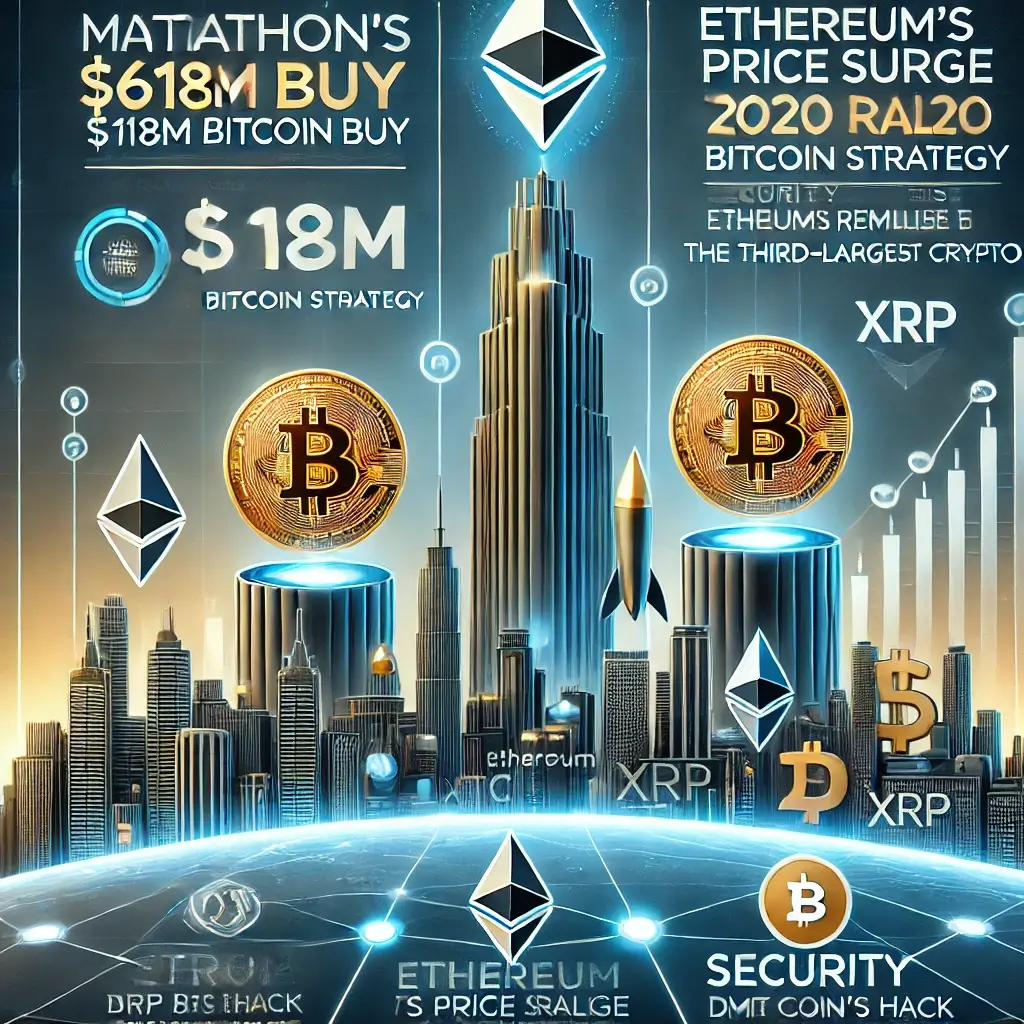
The crypto market sees Marathon’s $618M BTC buy, MicroStrategy’s push, Ethereum’s bullish trend, XRP’s rise, and a $305M exchange hack in Japan. 1. Marathon Buys $618M Bitcoin: Strategic Expansion Amid Volatility Marathon Digital Holdings, one of the leading Bitcoin mining firms, recently acquired $618 million worth of Bitcoin, bringing its total holdings to over 270,000 BTC. This purchase, part of Marathon’s ongoing strategy to build Bitcoin reserves, showcases the company’s long-term belief in Bitcoin’s potential, even amidst market volatility. Marathon’s actions highlight the growing trend of institutional adoption and large-scale Bitcoin accumulation among mining firms. The move could be seen as a signal to the broader market that Bitcoin is seen as a reliable store of value. As more institutional investors like Marathon absorb Bitcoin, it further limits supply on exchanges, which could potentially contribute to price increases if demand continues to rise. Impact: Marathon’s Bitcoin buy will likely spark similar moves from other institutions, which may lead to tighter market liquidity. This shift could result in upward pressure on Bitcoin’s price as institutional demand grows, signaling a more bullish outlook for the cryptocurrency market. 2. MicroStrategy’s Ongoing Bitcoin Strategy: $1.5B in New Acquisitions MicroStrategy continues to accumulate Bitcoin, purchasing an additional 15,400 BTC for $1.5 billion. This increases the company’s total Bitcoin holdings to nearly 160,000 BTC. CEO Michael Saylor remains steadfast in his belief that Bitcoin is a superior asset for corporate treasuries, positioning MicroStrategy as one of the largest Bitcoin holders globally. Despite market volatility, Saylor views Bitcoin as a hedge against inflation and a long-term store of value. Saylor’s actions and advocacy have put pressure on other corporations to consider Bitcoin in their financial strategies. By continually adding to its Bitcoin reserves, MicroStrategy demonstrates a commitment to Bitcoin’s future value. The company’s strategy could prompt other businesses to rethink traditional cash reserves and explore Bitcoin as an alternative, potentially leading to greater corporate adoption. Impact: MicroStrategy’s consistent Bitcoin accumulation sets a precedent for other corporations, influencing more institutional players to follow suit. This could result in broader corporate adoption of Bitcoin, helping to establish it as a mainstream financial asset. 3. Japanese Crypto Exchange DMM Bitcoin to Shut Down After $305M Hack DMM Bitcoin, a leading Japanese cryptocurrency exchange, announced it would shut down after suffering a massive hack resulting in the theft of $305 million worth of digital assets. The breach, one of the largest in recent times, raises serious concerns about the security of crypto exchanges, especially in regions like Japan, where crypto regulations are stringent. Despite the hack, DMM Bitcoin confirmed that users would be fully compensated for their losses. This hack underscores the ongoing security risks in the cryptocurrency space, especially for centralized exchanges. It also brings attention to the need for improved security measures and stronger regulations to protect users and their assets. The hack could erode trust in some exchanges, but it could also drive improvements in security practices across the industry. Impact: The DMM Bitcoin hack highlights the vulnerabilities of centralized exchanges and could push users toward decentralized alternatives or more secure platforms. It could also lead to stronger regulatory scrutiny of exchanges, potentially resulting in enhanced security standards across the industry. 4. Ethereum’s Price Action Mirrors Bitcoin’s Record-Breaking Rally Ethereum’s price action recently began to mirror the pattern that foretold Bitcoin’s record rally in 2020, sparking speculation that ETH might be poised for a significant upward move. The price of Ethereum has shown a strong upward trajectory, backed by increased network activity, especially in DeFi and NFT markets. If Ethereum continues to follow this pattern, it could signal another massive bull run similar to Bitcoin’s past rallies. Ethereum’s strong performance is also supported by its ongoing shift to Ethereum 2.0, which aims to improve scalability, security, and energy efficiency. These developments could increase investor confidence, potentially driving up the price. As Ethereum continues to position itself as the backbone of decentralized finance (DeFi), its long-term growth prospects remain highly bullish. Impact: If Ethereum’s price continues to follow the pattern observed in Bitcoin’s 2020 rally, it could experience a substantial price surge. Investors are closely monitoring ETH’s price action, and its success could also contribute to broader optimism in the altcoin market. 5. XRP Surpasses Tether as 3rd Largest Crypto Amid Market Shifts XRP recently surpassed Tether (USDT) as the third-largest cryptocurrency by market cap, following the ongoing legal developments in its case with the SEC. This surge in XRP’s market value is partly driven by the growing optimism surrounding its legal battle and renewed investor confidence in the project. XRP has been increasingly seen as a viable alternative to traditional financial systems, especially for cross-border payments. This shift in market rankings reflects the growing interest in XRP as a financial asset, not just a utility token. XRP’s legal victories and the increased adoption of its technology in financial sectors could further elevate its market position. Its ability to compete with stablecoins like Tether signals that investors are starting to view XRP as a stable store of value. Impact: XRP’s rise in market rank suggests that it is gaining traction as a financial tool in addition to being a cryptocurrency. The legal developments and adoption could drive more institutional interest and lead to further growth in XRP’s market capitalization. 6. Bitcoin’s Exchange Balances Drop, Indicating Bullish Sentiment Bitcoin exchange balances have decreased significantly, now sitting at a six-year low. This drop is indicative of a broader trend where investors are moving their Bitcoin into cold storage rather than leaving it on exchanges. This behavior is generally seen as a bullish signal, suggesting that investors are holding their assets long-term, anticipating price increases. The reduction in Bitcoin’s supply on exchanges also indicates tightening liquidity, which could amplify any future demand spikes. The ongoing trend of reduced exchange balances is often associated with rising prices, as the available supply decreases while demand continues to grow. Impact: With fewer Bitcoin available for trading, any increase in demand could push the price
5 Key Crypto Developments: Regulation, Stability, Security, and Market Momentum

The cryptocurrency landscape is abuzz with activity, as significant developments shape the market’s trajectory. From regulatory advances in Taiwan to a renewed surge in Bitcoin’s price, each event underscores the sector’s dynamism and its growing global relevance. Bitcoin whales are signaling confidence in long-term stability, while Ripple eyes the launch of a regulated stablecoin to strengthen its foothold in digital payments. Meanwhile, cybersecurity challenges loom large with Web3’s expansion, highlighting the need for robust solutions. Together, these trends reflect a maturing industry navigating innovation, regulation, and market momentum. 1. Taiwan’s AML Regulations and Their Implications Taiwan’s decision to accelerate AML regulations reflects a proactive approach to curbing illicit activities in the cryptocurrency sector. By enforcing compliance through stringent registration and monitoring, the Financial Supervisory Commission (FSC) aims to create a more transparent and secure ecosystem. However, this rapid implementation could create transitional challenges for smaller VASPs, which may lack the resources to meet the updated compliance standards swiftly. This could result in market consolidation, favoring larger, more established firms while potentially sidelining innovative startups. Impact: The new AML rules are likely to attract institutional investors by ensuring a secure and regulated environment, but they may stifle smaller firms due to increased operational burdens. In the long term, these measures could strengthen Taiwan’s position as a global crypto hub. 2. Bitcoin Whales Show Long-Term Confidence The data showing that Bitcoin whales are holding their assets suggests a stabilizing effect on the cryptocurrency’s market. Whales retaining their positions reduces selling pressure, creating a more predictable price environment and setting the stage for a potential rally. Metrics such as the low exchange whale ratio and minimal Coin Days Destroyed further validate this trend, demonstrating long-term confidence among major holders. Their actions influence the market sentiment, potentially encouraging smaller investors to adopt a similar approach. Impact: This behavior from whales is a bullish signal for the market. It reflects a strong belief in Bitcoin’s future, stabilizes supply, and attracts new participants, potentially laying the groundwork for further price increases. 3. Security Risks in Web3 Expansion As Web3 adoption accelerates, the security risks highlighted by Forta founder Andy Beal become more apparent. The transition from Web2 introduces unique vulnerabilities, particularly for inexperienced retail investors who may fall victim to sophisticated scams. Beal’s call for integrating traditional cybersecurity measures into Web3 frameworks highlights a need for comprehensive solutions, leveraging decades of proven security practices to address modern challenges. The overlap of Web2 and Web3 systems suggests that adaptation, rather than reinvention, could be the key to robust security. Impact: If Web3 security issues remain unresolved, it could deter retail and institutional adoption, slowing the sector’s growth. Conversely, proactive measures to enhance security could build trust, enabling broader acceptance and driving market expansion. 4. Ripple’s RLUSD Launch and Regulatory Strategy Ripple’s plan to launch RLUSD marks a strategic pivot toward regulatory compliance, addressing the volatility and legal challenges associated with XRP. By pegging RLUSD to the U.S. dollar and seeking NYDFS approval, Ripple aims to offer users a stable and secure digital asset for payments and remittances. Partnering with major payment providers ensures a broad rollout, potentially positioning RLUSD as a strong competitor in the stablecoin market. Impact: If approved, RLUSD could set a benchmark for regulated stablecoins, providing a template for other projects. This could boost Ripple’s reputation and influence in the digital payments ecosystem, reinforcing the role of stablecoins in the broader crypto landscape. 5. Bitcoin’s $100K Rally and Market Dynamics Bitcoin’s near approach to the $100,000 milestone underscores strong market momentum, with U.S. traders driving significant activity post-Thanksgiving. Institutional trading via CME futures and gains in crypto-related stocks highlight increased confidence in the asset. The return of Coinbase’s price premium over Binance further emphasizes the dominance of U.S. market sentiment, reinforcing Bitcoin’s role as the flagship cryptocurrency. Impact: A successful breach of $100,000 would likely attract significant media attention, sparking FOMO (fear of missing out) among retail investors and accelerating market participation. It could also signal a broader bullish trend, lifting other cryptocurrencies along with Bitcoin. Key Takeaways: Regulatory Advances: Taiwan’s AML measures showcase a global trend of stricter oversight, benefiting institutional trust but potentially challenging smaller crypto businesses. Market Stability: Bitcoin whales’ confidence signals long-term bullish sentiment, providing stability in an often-volatile market. Cybersecurity Priorities: Web3’s growth necessitates robust security integration to prevent losses and build trust among users. Stablecoin Innovation: Ripple’s RLUSD, if approved, could reshape perceptions of stablecoins, emphasizing regulatory compliance and broad usability. Bullish Momentum: Bitcoin’s near-$100K rally highlights the influence of U.S. market activity and institutional interest, potentially setting the stage for broader market growth.
9 Major Crypto Updates Shaping XRP, Bitcoin, Stablecoins, Altcoins, and Regulation
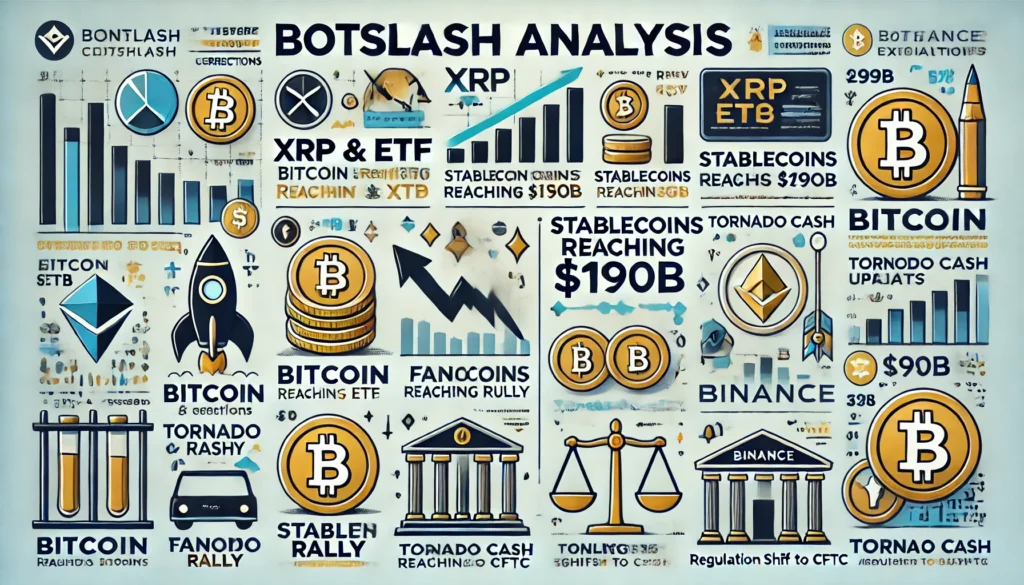
The cryptocurrency market has been buzzing with significant developments. Here’s a detailed analysis of each news event, its implications, and actionable takeaways for investors and enthusiasts. 1. XRP Rally Sees Record Profit-Taking as Ripple Invests in Bitwise XRP ETF Ripple Labs’ decision to invest in Bitwise’s rebranded Physical XRP Exchange-Traded Product (ETP) marks a significant move towards integrating XRP with institutional markets. Bitwise has rebranded the product under the ticker GXRP and is regulated by German financial authorities. This step aligns with Ripple’s broader strategy to push XRP adoption in regulated financial ecosystems. Despite this positive development, the rally in XRP prices has led to record levels of profit-taking among traders. This profit realization suggests that while investor sentiment around XRP remains optimistic, there is still caution about sustaining higher price levels in the short term. Overall, the investment by Ripple signals long-term confidence in XRP’s utility across cross-border payments, DeFi, and tokenization. The profit-taking, however, reflects the balance of optimism and caution typical of volatile crypto markets. Market Impact: Institutional support strengthens XRP’s legitimacy and adoption. Profit-taking may slow the rally temporarily but highlights healthy market activity. 2. Short-Term Bitcoin Holders Move $8B to Exchanges Glassnode’s data indicates that short-term Bitcoin holders recently moved nearly $8 billion worth of BTC to exchanges, with the majority of these trades occurring at a loss. Historically, such capitulation events often signal a local price bottom, as weaker hands exit the market while long-term holders accumulate. This movement follows Bitcoin’s recent price volatility, which saw it decline from $100,000 to around $90,000. Short-term traders were quick to liquidate as the market dipped, while long-term investors held firm, reflecting contrasting sentiments between these groups. Such patterns, which are not uncommon in Bitcoin’s history, usually set the stage for price stabilization and potential rebounds. Investors should interpret these signals as indicative of a market recalibration rather than a full-blown downturn. Market Impact: Short-term volatility heightened by panic selling. Long-term holders maintain confidence, which stabilizes market sentiment. 3. Stablecoin Market Hits Record $190B Market Cap The total market capitalization of stablecoins has surpassed $190 billion, recovering to levels last seen before the TerraUSD collapse. Tether (USDT) leads the pack with a dominant $132 billion share, followed by USD Coin (USDC) and Dai (DAI). This resurgence underscores the critical role stablecoins play in providing liquidity, stability, and utility within the broader cryptocurrency ecosystem. The rise reflects increased adoption of stablecoins for decentralized finance (DeFi) and cross-border payments, demonstrating their importance as hedging tools against market volatility. The recovery highlights growing confidence in stablecoins, even as the crypto industry grapples with challenges. As stablecoins continue to bridge traditional and digital finance, their role in fostering wider adoption of cryptocurrencies becomes even more pronounced. Market Impact: Stablecoins bolster liquidity in DeFi and remittance use cases. Renewed trust in stablecoin resilience post-Terra crash enhances ecosystem stability. 4. Fantom Price Rallies 63% Amid Sonic Upgrade Hype Fantom’s price surge of 63% in just one week reflects growing excitement around the platform’s upcoming “Sonic” upgrade. The upgrade aims to enhance Fantom’s performance in the DeFi space, which peaked with $15 billion in TVL during 2021 but has since dropped significantly. The Sonic upgrade promises to improve scalability and usability, attracting new projects and users to the ecosystem. Analysts have set ambitious price targets, with long-term projections suggesting a potential rally to $15, provided the upgrade delivers on its promises and market sentiment remains favorable. This resurgence marks Fantom’s determination to reclaim its position as a leading DeFi platform. Investors should monitor the platform’s progress as the upgrade rolls out, as its success could drive sustained growth in FTM’s valuation. Market Impact: Anticipation of upgrades boosts short-term investor confidence. Long-term growth contingent on successful implementation of Sonic. 5. Bitcoin Price Drops 8% After Nearing $100K Bitcoin recently experienced an 8% pullback after reaching a high of $99,800, primarily due to profit-taking by long-term holders. Approximately $60 billion worth of Bitcoin has been distributed by these investors over the past month, marking the heaviest profit-taking of the cycle. Despite the decline, options market data suggests balanced sentiment, with probabilities favoring both upward and downward movements in the near term. Analysts point out that such corrections are not unusual, especially during high-volatility bull markets. This correction could pave the way for a healthier rally, as the market digests recent gains and builds momentum for another push toward $100,000. Long-term investors remain optimistic, viewing these dips as opportunities to accumulate. Market Impact: Temporary dip fueled by heavy profit-taking. Options market signals cautious optimism for eventual recovery. 6. Binance Expands Support for SHIB, HBAR, and APE Binance’s decision to add new trading pairs and enable trading bot services for Shiba Inu, Hedera, and ApeCoin has sparked price rallies for these tokens. By offering increased liquidity and automated trading tools, Binance is positioning itself as a leader in supporting altcoin markets. Following the announcement, SHIB, HBAR, and APE saw gains of 4%, 8%, and 3%, respectively. These price movements indicate strong investor interest and the potential for sustained momentum as Binance continues to expand its offerings. The exchange’s initiatives highlight the growing appeal of altcoins and their role in diversifying crypto portfolios. Enhanced accessibility to these tokens further fuels their adoption. Market Impact: Increased trading volumes drive short-term price gains. Binance’s support strengthens altcoin credibility and liquidity. 7. Bitcoin Can Experience 30% Declines During Bull Markets Analysts emphasize that sharp corrections, even up to 30%, are common in Bitcoin’s price history, even during bull runs. These dips serve as necessary consolidation phases that shake out weaker hands and prepare the market for sustained growth. Such patterns have been observed during previous cycles, including Bitcoin’s surge from $17,000 to $64,000 in 2021. The latest 8% decline aligns with this trend, reminding investors to focus on long-term trajectories rather than short-term volatility. This insight highlights the importance of managing risk and avoiding panic-selling during market downturns, as corrections often present valuable entry points for strategic investors. Market Impact: Reinforces