
Stablecoins: Algorithmic vs Fiat-backed — 3 Key Differences

Have you heard of stablecoins? In the crypto world, price volatility has always been one of the biggest challenges.If you’ve ever invested in Bitcoin or Ethereum, you’ve surely experienced moments when prices jumped or fell by 10–20% within a day, or even a few hours.This volatility can be a major shock for new investors and can put experienced ones under constant pressure. That’s why, when Decentralized Finance (DeFi) emerged as a complete alternative financial system, the market realized that it didn’t just need opportunities — it also needed stability.This is where stablecoins came onto the scene, creating a whole new revolution.Stablecoins are digital currency units designed with specific mechanisms to maintain price stability, no matter what’s happening in the broader market. Why Stablecoins Matter Imagine you’re running a business in the digital world, making online purchases, or trading on a crypto platform. You need a currency that serves as a stable unit of account — just like the US dollar or euro does in the real world. In the crypto space, stablecoins fulfill this role. Today, nearly every major DeFi platform, trading exchange, and crypto wallet uses stablecoins.Without them, decentralized finance wouldn’t progress, nor would crypto adoption on a global scale become feasible. But here’s the interesting part:Not all stablecoins are the same.They operate on different mechanisms, models, and principles — and understanding their differences is crucial because that determines which model can stay strong… and which can collapse. In this article, we’ll break down two major types:✅ Fiat-backed stablecoins — coins backed by real-world currencies or assets✅ Algorithmic stablecoins — coins that maintain their value purely through code and algorithmic mechanisms We’ll explore how they work, their advantages and disadvantages, how trust is built (or lost), and what role they play in the global financial landscape. Let’s dive in and understand where stablecoins came from, how they function, and how they’re transforming our digital world. 💵 What Are Fiat-backed Stablecoins? Fiat-backed stablecoins are digital currency units backed by real-world currencies (like US dollars or euros) or valuable assets (like gold or silver).This means that if you hold 1 USDT (Tether) or 1 USDC (USD Coin) in your wallet, somewhere behind the scenes, there’s one US dollar sitting in a bank account or financial reserve supporting the value of your coin. The primary purpose of stablecoins is to provide price stability to holders — meaning you don’t have to worry about the price suddenly fluctuating, as often happens with Bitcoin or Ethereum. 🔹 How Do They Work? Here’s how:When you buy a new fiat-backed stablecoin, the issuing company (like Tether or Circle) holds one dollar or an equivalent asset in its reserves for every unit issued. For example: You pay $100 on an exchange to get 100 USDT. The Tether company deposits $100 into its bank account to back those coins, ensuring that when you redeem them, you can get real dollars back. These companies typically maintain reserves in: ✅ Cash in bank accounts✅ US treasuries✅ Short-term loans✅ Other secure financial assets 🔍 Transparency and Trust Because this model is centralized — meaning a single company or institution controls it — transparency becomes a key issue. Companies like Tether release periodic audit reports to prove they have enough reserves to back their issued coins. However, historically, projects like Tether have faced accusations that their reserves were incomplete or unclear, damaging their credibility. By contrast, coins like USDC and BUSD have gained stronger trust by operating under stricter regulatory environments. 🌟 The Importance of Fiat-backed Stablecoins Fiat-backed stablecoins are now the backbone of the crypto market. Why?✅ They serve as the base currency for most trading pairs, like BTC/USDT or ETH/USDC.✅ They function as “digital dollars,” transferable globally — fast, cheap, and without needing bank approval.✅ They play a fundamental role in DeFi protocols, crypto lending, and smart contracts, where stable value is essential. ⚙️ What Are Algorithmic Stablecoins? Algorithmic stablecoins are digital currencies that are not backed directly by real-world currencies or reserves.Instead, they maintain price stability using smart contracts and complex algorithms that automatically adjust supply and demand. The core idea is:If you can flexibly increase or decrease the number of units in circulation, you can maintain price stability — no matter how volatile the market. 🔹 How Do They Work? Algorithmic stablecoins operate on two main mechanisms: 1️⃣ Expansion (Increasing Supply):When the market price rises above $1, the system mints (creates) new coins, increasing supply to bring the price down. 2️⃣ Contraction (Reducing Supply):When the price drops below $1, the system buys back or burns (destroys) coins, reducing supply to push the price back up. This system is similar to how a central bank manages its currency’s value — but here, it’s fully decentralized, automated, and governed by algorithms, not human decisions. 🌍 Example: Terra’s UST Terra’s UST was one of the most famous algorithmic stablecoins, working in conjunction with the LUNA token.When UST’s price rose above $1, the system minted more UST and burned LUNA to stabilize the price.When UST’s price fell below $1, the system burned UST and minted more LUNA to lift it back up. Unfortunately, in May 2022, the market lost confidence in UST, causing the algorithm to fail — and UST’s price collapsed to near zero. This became one of the most infamous stablecoin crashes in crypto history. 🔑 The Allure of Algorithmic Stablecoins ✅ Their biggest promise is decentralization — no company or central authority controls them.✅ They are programmable, meaning new algorithms and models can be tested for innovative financial systems. But: ❌ These models are highly sensitive — if market confidence disappears, the supply-demand balance can break down quickly, leading to collapse.❌ For new users, they can be very complex, making them prone to misunderstanding and misuse. 🏛️ Popular Examples Globally, we have several famous stablecoins. Among fiat-backed ones: USDT (Tether) USDC (USD Coin) BUSD (Binance USD) Among algorithmic ones: Frax TerraUSD (UST) — now defunct Empty Set Dollar (ESD) 💡 A Simple Analogy Imagine you’re at a restaurant
4 Important Crypto News: Gold-Backed Stablecoin, Dubai’s $8.8B Blockchain Bet, Vitalik’s 100x Ethereum Plan, Bitcoin Stays Strong at $95K+: BotSlash Daily Crypto News Analysis

From Central Asia’s digital finance innovation to Dubai’s massive blockchain ambitions, and from Ethereum’s proposed transformation to Bitcoin’s resilience above $95K — today’s roundup covers four critical developments shaping the crypto world. Each story reflects a broader trend: asset-backed stability, geopolitical blockchain expansion, next-gen blockchain efficiency, and market decoupling from on-chain data. Kyrgyzstan’s Gold-Backed Dollar-Pegged Stablecoin USDKG to Debut in Q3 Kyrgyzstan is set to launch a gold-backed stablecoin, USDKG, in Q3 2025. Backed by $500 million in gold reserves, with plans to expand to $2 billion, USDKG aims to offer a stable digital currency alternative, enhancing financial inclusion and reducing reliance on fiat currencies. This move positions Kyrgyzstan as a pioneer in asset-backed digital currencies, potentially attracting foreign investment and boosting economic stability. Market Impact: The introduction of USDKG could inspire other nations to explore asset-backed digital currencies, potentially increasing demand for gold and influencing global stablecoin markets. Dubai Family Office to Invest $8.8B to Turn the Maldives into a Blockchain Hub MBS Global Investments, a Dubai-based family office, plans to invest $8.8 billion to develop the Maldives International Financial Centre, focusing on blockchain and digital assets. This investment exceeds the Maldives’ annual GDP and aims to diversify the economy beyond tourism. The project includes creating a financial free zone in Malé, expected to generate significant employment and revenue. Market Impact: This substantial investment could position the Maldives as a significant player in the blockchain industry, potentially attracting global tech companies and investors, and influencing regional economic dynamics. Vitalik Wants to Speed Up Ethereum by 100x, Make It as Simple as Bitcoin Ethereum co-founder Vitalik Buterin proposes a four-phase plan to simplify Ethereum’s architecture, aiming for a 100x performance boost. The plan includes replacing the Ethereum Virtual Machine (EVM) with a more efficient system and reducing consensus-critical code, making Ethereum more accessible and maintainable. Market Impact: If successful, these changes could enhance Ethereum’s scalability and usability, potentially increasing adoption and solidifying its position in the blockchain ecosystem. Bitcoin Remains Above $95,000 Even with a Decline in Blockchain Activity Despite a decline in on-chain activity, including lower transaction volumes and active addresses, Bitcoin’s price remains above $95,000. Analytics firm Alphractal suggests that the price stability is due to factors like institutional investments and market sentiment, indicating a decoupling of price from traditional activity metrics. Market Impact: This trend may signal a maturation of the Bitcoin market, where price movements are increasingly influenced by macroeconomic factors and institutional participation rather than solely on-chain activity. Michael Saylor Posts Bitcoin Tracker, Hints at Potential BTC Purchase Michael Saylor, Executive Chairman of Strategy (formerly MicroStrategy), posted a Bitcoin tracker, historically preceding significant BTC purchases. The company has been aggressively acquiring Bitcoin, holding over 553,000 BTC. This strategy reflects a strong belief in Bitcoin’s long-term value and serves as a signal to the market about institutional confidence in the cryptocurrency. Market Impact: Such announcements often lead to increased market activity and can influence Bitcoin’s price, highlighting the impact of institutional players on the cryptocurrency market. Key Takeaways 📉 Kyrgyzstan’s Gold-Backed Dollar-Pegged Stablecoin USDKG to Debut in Q3➤ While innovative, it reflects global skepticism toward fiat-backed stablecoins and may signal distrust in current financial systems — cautious sentiment. 📉 Dubai Family Office to Invest $8.8B to Turn the Maldives into a Blockchain Hub➤ Ambitious but speculative; no concrete implementation yet. Projects of this scale often face delays or regulatory setbacks — bearish due to uncertainty. 📉 Vitalik Wants to Speed Up Ethereum by 100x, Make It as Simple as Bitcoin➤ The need for a drastic overhaul implies current inefficiencies and developer concerns about Ethereum’s complexity — a short-term bearish view. 📉 Bitcoin Remains Above $95,000 Even with a Decline in Blockchain Activity➤ Price stability despite weak fundamentals like declining activity is a red flag for sustainability — bearish divergence. 📉 Michael Saylor Posts Bitcoin Tracker, Hints at Potential BTC Purchase➤ Frequent purchases despite already large holdings may indicate a need to support price artificially or compensate for weak demand — potentially bearish.
4 Important Crypto News: Ripple’s $1.25B Move, Bitcoin’s Slide, BlackRock’s EU ETF, and Hive’s Paraguay Expansion — BotSlash Daily Crypto News Analysis
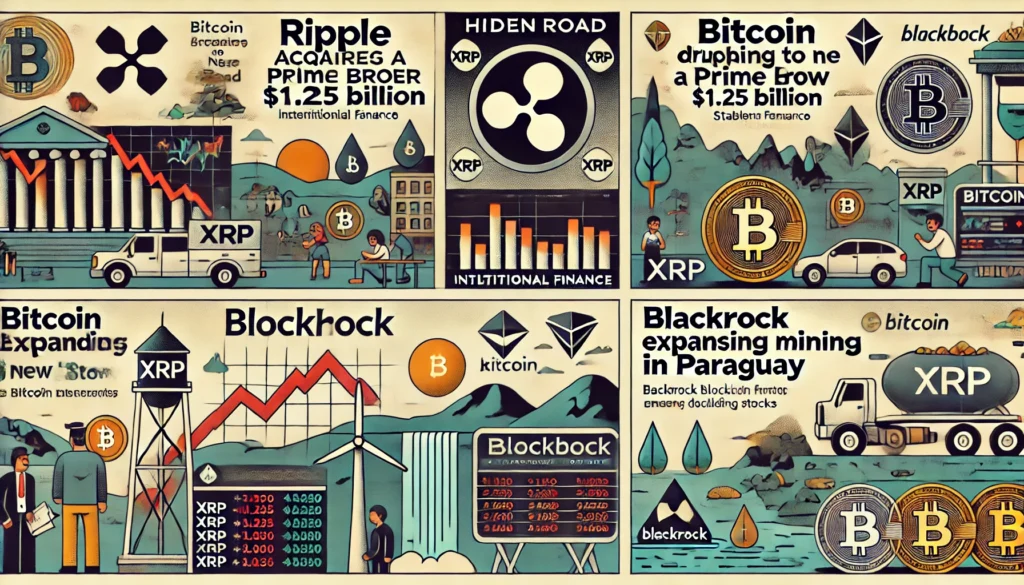
The past 24 hours brought impactful developments across key sectors of the crypto world, signaling a deepening institutional presence and reactive market shifts. Ripple is making a power move with a $1.25 billion acquisition aimed at expanding its DeFi influence. Meanwhile, the broader crypto market reacted negatively to macroeconomic fears, pulling Bitcoin to new lows and dragging crypto stocks down. In contrast, BlackRock is charging ahead, debuting its first Bitcoin product in Europe — a milestone for the region’s digital asset exposure. And Hive Blockchain is going green, announcing new mining operations in Paraguay, tapping into sustainable energy. Ripple’s $1.25 Billion Acquisition of Prime Broker Hidden Road Ripple Labs, the company behind the cryptocurrency XRP, has announced plans to acquire multi-asset prime brokerage firm Hidden Road for $1.25 billion. This strategic move aims to bolster Ripple’s position in institutional decentralized finance (DeFi) by integrating Hidden Road’s extensive client base and clearing capabilities. Hidden Road processes approximately $3 trillion annually across various financial markets and serves over 300 institutional clients. The acquisition is expected to enhance the utility of Ripple’s U.S. dollar-pegged stablecoin, RLUSD, which Hidden Road utilizes as collateral in its brokerage products. This positions Ripple to compete more effectively with established stablecoin providers like Tether and USD Coin. The deal is anticipated to close in the coming months, pending regulatory approvals. Market Impact: This acquisition signifies a substantial expansion of Ripple’s institutional services, potentially increasing XRP’s adoption among institutional investors. The move may also influence the competitive landscape of stablecoins, challenging existing market leaders. U.S. Crypto Stocks Decline as Bitcoin Hits New 2025 Low On April 7, 2025, U.S.-listed crypto company stocks experienced significant declines, mirroring a sharp drop in bitcoin prices. Bitcoin fell by as much as 5.5%, reaching its lowest point in 2025. Shares of major crypto-related firms also suffered, with MicroStrategy falling over 7%, Coinbase dropping 6%, and Robinhood sliding 4%. The downturn is attributed to escalating global trade tensions following new tariffs announced by President Donald Trump, which have dampened investor confidence and risk appetite. Additionally, billionaire investor Bill Ackman warned of a potential “economic nuclear winter,” further fueling market concerns. Market Impact: The recent market volatility underscores the sensitivity of crypto assets to broader economic and geopolitical developments. Investors may need to reassess the role of cryptocurrencies as safe-haven assets during times of economic instability. BlackRock Launches First Bitcoin Product in Europe BlackRock, the world’s largest asset manager, has introduced its first bitcoin exchange-traded product (ETP) in Europe, named the ‘iShares Bitcoin ETP.’ Domiciled in Switzerland, the product is listed in Paris, Amsterdam, and Frankfurt. This launch follows BlackRock’s success in the United States, where it attracted over $50 billion into similar cryptocurrency products after the Securities and Exchange Commission approved such offerings in January 2024. BlackRock has partnered with Coinbase as the custodian and Bank of New York Mellon as the administrator for this new product. Reuters Market Impact: BlackRock’s expansion into the European crypto market reflects growing institutional interest and could pave the way for increased adoption of bitcoin ETPs across the continent. Hive’s Expansion of Bitcoin Mining Operations in Paraguay Hive Blockchain Technologies, under the leadership of Executive Chairman Frank Holmes, is expanding its bitcoin mining operations into Paraguay. The move aims to leverage Paraguay’s abundant hydroelectric power to support sustainable and cost-effective mining activities. This expansion aligns with Hive’s strategy to diversify its operations geographically and enhance its mining capacity while adhering to environmentally friendly practices. Market Impact: Hive’s expansion into Paraguay could set a precedent for other mining companies seeking sustainable energy sources, potentially influencing global mining operations’ geographical distribution and environmental strategies. Key Takeaways: Ripple’s acquisition of Hidden Road for $1.25 billion aims to enhance its institutional DeFi services and stablecoin utility. U.S. crypto stocks have declined amid bitcoin’s drop to a new 2025 low, influenced by escalating trade tensions and economic concerns. BlackRock has launched its first bitcoin ETP in Europe, reflecting growing institutional interest in cryptocurrency products. Hive Blockchain is expanding its bitcoin mining operations into Paraguay, leveraging sustainable hydroelectric power.
4 Important Crypto News: ICE–Circle Tokenization, Bitcoin Whale Moves, BTC–Altcoin Decoupling & Russian Crypto Reserve Warning – BotSlash Daily Crypto News Analysis

The cryptocurrency market is undergoing pivotal changes across multiple fronts — from deepening institutional integration to macroeconomic policy concerns. The Intercontinental Exchange (ICE) is moving into tokenized assets with Circle, Russian economists are warning against adopting national crypto reserves imported from external sources, Bitcoin is breaking its historic correlation with altcoins, and whales are making billion-dollar moves that reflect growing confidence. These developments together indicate a maturing market with renewed focus on compliance, innovation, and strategic investment. 1. NYSE Parent ICE to Explore New Products with Circle’s Stablecoin & Tokenized Fund The partnership between Intercontinental Exchange (ICE), parent company of the New York Stock Exchange, and Circle, the issuer of USDC, signals a critical step forward for institutional adoption of blockchain-based financial products. By collaborating on tokenized funds and exploring new use cases for USDC, ICE is aligning traditional finance with emerging decentralized systems in a controlled and compliant manner. Tokenized assets offer benefits such as real-time settlement, reduced counterparty risk, and greater transparency. Through this partnership, ICE can leverage Circle’s infrastructure to potentially offer products like tokenized ETFs or funds that appeal to both retail and institutional investors. The choice of USDC is notable—it’s one of the most compliant and regulated stablecoins, meaning any new financial products based on it are likely to align with U.S. regulatory standards. This move also positions ICE competitively within the growing field of tokenized finance, a space already being explored by giants like BlackRock and JPMorgan. For Circle, this partnership enhances credibility and further embeds USDC within the global financial ecosystem. Market Impact:While the announcement didn’t spark major short-term price action, it strengthens USDC’s long-term position and sets the stage for future institutional adoption. Expect increased interest in tokenized assets and more regulated stablecoin use cases as traditional players enter the space. 2. Russian Economist Warns Against Establishing National Crypto Reserve Imported from Binance A prominent Russian economist has warned against the establishment of a national crypto reserve using digital assets imported from Binance. The caution reflects deep concerns over sovereignty, transparency, and long-term control in adopting externally managed cryptocurrencies or tokens. The proposed idea of using imported crypto as a reserve asset raises fears about dependence on foreign-controlled infrastructure and protocols. In a geopolitical context where Russia is increasingly seeking economic autonomy due to sanctions and strained relations with the West, creating a reserve based on a platform like Binance may undermine that very goal. Critics argue that imported reserves could be subject to external manipulation, surveillance, or even geopolitical pressure. Furthermore, the decentralized nature of cryptocurrencies clashes with state-controlled economic frameworks, making integration difficult without compromising either side. This skepticism also illustrates a broader global dilemma—nations exploring digital currencies must balance innovation with control. While China has embraced a state-run digital yuan, Russia remains cautious, torn between exploring blockchain-based finance and avoiding external dependencies. The warning may signal a growing shift toward developing in-house solutions, such as central bank digital currencies (CBDCs), rather than relying on imported or third-party tokens. It emphasizes that strategic digital asset policies are not just economic decisions, but matters of national security. Market Impact:This stance may influence other countries considering similar strategies. It reflects growing distrust in centralized crypto platforms like Binance and may drive momentum toward sovereign digital assets and localized blockchain infrastructure, particularly in sanctioned or isolationist economies. 3. Bitcoin’s Correlation with Altcoins Declines, Attracting More Investment A recent analysis shows that Bitcoin’s correlation with altcoins is weakening, signaling a shift in how investors perceive and allocate capital within the crypto space. Traditionally, Bitcoin and altcoins moved in sync, rising and falling together. However, current data suggests a decoupling trend, with Bitcoin moving more independently as investors begin to treat it as a distinct asset class. This divergence has a few key implications. First, it reflects Bitcoin’s growing appeal as a macro asset—akin to digital gold—rather than just another crypto. As institutional interest increases, Bitcoin is often the primary (or only) asset chosen due to its liquidity, regulatory clarity, and relative stability compared to smaller tokens. This has led to Bitcoin being seen more as a hedge than a speculative bet. Second, it points to an evolving investor mindset. Diversified portfolios may now include Bitcoin not as a lead indicator of altcoin trends, but as a separate entity deserving individual analysis. This has also allowed altcoins to develop their own narratives—whether based on DeFi, NFTs, or utility tokens—without being entirely tethered to Bitcoin’s price movements. Finally, the decoupling increases opportunities for selective investment and risk management. Traders and institutions can isolate BTC performance or altcoin-specific themes, rather than treating the market as a monolith. Market Impact:This trend can attract new capital into Bitcoin from investors seeking lower volatility exposure. At the same time, it allows altcoins to shine individually, promoting innovation and differentiated growth. The decoupling could result in more stable inflows into Bitcoin during uncertain times and increased altcoin activity during bullish cycles. 4. Bitcoin Whales Bought $1.1B of BTC in Two Weeks as Confidence Grew, Glassnode Says According to Glassnode data, Bitcoin whales have purchased over $1.1 billion worth of BTC within just two weeks, suggesting a strong return of confidence among large-scale investors. This level of accumulation typically precedes significant market movements and often indicates the belief that prices will rise or that Bitcoin is entering a more stable, bullish phase. Whales—wallets holding large amounts of BTC—are often considered smart money, and their behavior is closely watched by analysts. When such entities accumulate instead of distributing or selling, it often reflects internal metrics or long-term conviction that may not yet be visible in the broader market. Their recent purchases come amid improved market sentiment, stronger macroeconomic indicators, and the expectation of institutional adoption through ETFs and other financial products. This accumulation also aligns with a period of reduced exchange outflows, suggesting that whales are not preparing to sell but are instead securing assets for long-term storage. Additionally, recent regulatory clarity in the U.S. and ongoing developments in Bitcoin ETF approvals
8 Important Crypto News: Tether Expands Beyond Stablecoins, Grayscale’s Solana Fund, and Nigerian Crypto Taxes : BotSlash Daily Crypto News Analysis

In today’s analysis, we cover a range of significant developments across the crypto space, from Tether’s expansion into traditional industries like energy, to Grayscale’s move to democratize access to Solana’s ecosystem. Alongside these, the news of Nigeria’s new tax plans for cryptocurrency transactions, Robinhood’s expansion into Singapore’s crypto market, and increasing U.S. miner dominance of global Bitcoin hashrate have all shaped the latest market developments. Additionally, meme coins are seeing a resurgence, despite a prolonged slump in Bitcoin prices. These trends reflect both the challenges and opportunities present in today’s evolving crypto landscape. 1. Tether to Acquire Stake in South African Energy Company After Juventus Deal Tether, the issuer of the largest stablecoin USDT, has announced its acquisition of a stake in a South African energy company. This move marks a significant step in Tether’s diversification strategy as it aims to move beyond the crypto space and into traditional industries. The acquisition follows Tether’s recent partnership with the Italian football club Juventus, where the stablecoin firm launched a branded fan token. This acquisition reflects a broader effort to integrate stablecoins into real-world assets and industries. By expanding into energy, Tether aims to leverage its blockchain-backed value to secure assets in a sector known for its long-term profitability. Tether’s move into the energy sector could be viewed as part of a broader trend where stablecoin issuers are exploring opportunities beyond their core digital asset offerings. Energy is a high-demand sector, and such strategic investments could provide Tether with a more diversified portfolio, offering the potential for stable returns. Additionally, energy-related investments could bolster Tether’s standing within traditional financial markets, presenting opportunities for greater institutional adoption of stablecoins. While some might see this move as risky given the complexities of energy markets, Tether is betting on the long-term stability of this sector to balance out the volatility typically associated with cryptocurrencies. From a market impact perspective, this acquisition signals Tether’s growing ambition to diversify its business model, potentially lowering its reliance on crypto market fluctuations. Moreover, this move may have ripple effects in the stablecoin market, where other major players may begin exploring similar expansions into real-world assets, thus increasing institutional confidence in the broader cryptocurrency ecosystem. Tether’s entry into the energy market might also catalyze more partnerships between blockchain projects and traditional industries, further solidifying the case for crypto’s mainstream adoption. Market Impact:Tether’s diversification could reduce the volatility associated with its core product, USDT, by anchoring it to real-world, less volatile sectors like energy. If successful, this could stabilize Tether’s value, increase investor confidence, and enhance its reputation among traditional investors, possibly influencing other stablecoin providers to follow suit. 2. Grayscale Launches Crypto Fund for Pyth, Expanding Investor Access to Solana Ecosystem Grayscale, one of the leading institutional asset managers in the cryptocurrency space, has announced the launch of a new crypto fund dedicated to Pyth Network, expanding investor access to the Solana ecosystem. Pyth Network, a decentralized financial data provider, plays a key role in providing high-quality, real-time data for decentralized finance (DeFi) and blockchain-based applications. By offering a fund that focuses on Pyth, Grayscale is effectively facilitating institutional exposure to the growing Solana ecosystem, which has shown promise due to its scalability and lower transaction costs compared to Ethereum. The launch of this fund represents an important step toward the mainstream adoption of blockchain technology, especially as institutional players show increasing interest in the decentralized finance space. Grayscale’s move is especially strategic as it capitalizes on Solana’s growing presence in the DeFi sector and its expanding network of developers and projects. For investors, this fund provides an easier and more secure way to gain exposure to Solana’s ecosystem, without directly purchasing the tokens or setting up complex infrastructure. It’s a sign that the institutional investment model for crypto is maturing, with products designed to cater to a more sophisticated, risk-averse audience. This fund launch not only benefits Pyth and Solana but also underscores the growing importance of decentralized finance infrastructure in the broader crypto market. As more institutions and retail investors seek exposure to blockchain technologies, projects like Pyth—integrated with Solana—are becoming critical pillars of the decentralized financial landscape. The fund also highlights the continued growth of Grayscale as a leading investment vehicle in crypto, following the success of its Bitcoin and Ethereum funds. Over time, the accessibility of such products will likely drive even more institutional capital into the blockchain and DeFi spaces. Market Impact:This fund could signal the beginning of broader institutional participation in the Solana ecosystem and decentralized financial infrastructure. As more institutions gain exposure to assets like Pyth through regulated vehicles, Solana’s legitimacy and visibility in the mainstream financial sector could increase, potentially driving up demand for both the SOL token and associated DeFi projects on the network. 3. Nigeria Plans to Tax Cryptocurrency Transactions to Boost Revenue Nigeria is taking significant steps toward taxing cryptocurrency transactions as part of its broader efforts to stabilize its economy and increase public revenue. The government aims to capitalize on the growing popularity of cryptocurrencies in the country, where digital assets are used widely for remittances and trading, especially given the Nigerian Naira’s volatility. By taxing crypto transactions, Nigeria hopes to capture a new source of revenue and formalize the cryptocurrency market, bringing it under greater regulatory scrutiny. This move also highlights Nigeria’s acknowledgment of the central role that digital assets are playing in the modern economy. The decision to introduce taxes on cryptocurrency transactions comes at a time when the Nigerian government is seeking to address its fiscal challenges. Although there are concerns about stifling innovation in the crypto space, the government believes that the imposition of a tax could lead to greater economic stability by improving the formalization of the sector. However, critics argue that it could also drive the country’s crypto activities further underground, as traders might look for less regulated environments. Despite these concerns, the government has highlighted that the tax policy will create a framework for a more transparent market, potentially attracting
Rising Liquidity, Bitcoin Resilience, Cardano’s Governance Shift, Ripple’s Stablecoin Growth ,Hong Kong’s SFC revoked crypto licenses & Czech Republic’s Bold BTC Move : 6 Crypto Market Surge

. The rising M2 money supply signals potential asset inflation, which could fuel Bitcoin’s price growth. Meanwhile, Bitcoin remains stable despite concerns around DeepSeek, showcasing the market’s increasing maturity. In the blockchain ecosystem, Cardano is making a bold move towards full decentralized governance, while Ripple’s RLUSD stablecoin secures new listings with a transparent reserves report. On a geopolitical level, the Czech central bank is exploring Bitcoin as a reserve asset, a move that could influence global financial strategies. Additionally, whale accumulation continues, indicating bullish sentiment as exchange supplies shrink. These developments collectively highlight a period of growth, adaptation, and mainstream acceptance for crypto assets. 1. M2 Money Supply Approaches All-Time High – A Bullish Signal for Crypto? The global M2 money supply is nearing an all-time high, signaling increased liquidity in financial markets. According to the report, a rising M2 supply often leads to asset inflation, meaning that investors may look for stores of value such as Bitcoin and other cryptocurrencies. Historically, when central banks expand the money supply, assets like Bitcoin tend to benefit as they are seen as hedges against inflation. Analysts believe that this development could be particularly bullish for crypto, as more liquidity in the economy means more potential capital inflow into risk-on assets. Additionally, the Federal Reserve’s monetary policies are being closely watched, as any dovish signals could further drive capital into Bitcoin. In past cycles, Bitcoin has reacted positively to expansionary monetary policies, as investors seek alternative assets to hedge against currency debasement. If the M2 supply continues to grow, crypto markets could experience renewed bullish momentum, particularly if interest rates are cut or remain steady. Market Impact: A rising M2 money supply typically supports asset prices, and Bitcoin’s reputation as “digital gold” may attract more capital inflows. This could be a long-term bullish signal, especially if institutional investors allocate more funds to Bitcoin in response to liquidity expansion. 2. Concerns Surrounding DeepSeek Increase, But Bitcoin Remains Resilient DeepSeek, an AI-driven trading firm, is facing growing concerns over its financial stability and market influence. Reports suggest that the firm has been under scrutiny for its trading practices, which some analysts fear could disrupt market stability if issues arise. Despite this uncertainty, Bitcoin has shown resilience, maintaining its price levels and even experiencing minor gains. This stability suggests that Bitcoin is increasingly maturing as an asset, decoupling from individual market events that might have previously caused high volatility. Nigel Green, CEO of deVere Group, highlighted Bitcoin’s ability to remain stable despite these concerns. He pointed out that the digital asset’s fundamentals remain strong, and its long-term growth trajectory is largely unaffected by the troubles of any single firm. Market participants seem more focused on macroeconomic trends, regulatory developments, and institutional adoption rather than individual firms’ activities. Market Impact: While concerns about DeepSeek could create short-term uncertainty, Bitcoin’s resilience suggests growing investor confidence. If Bitcoin continues to hold steady in the face of negative news, it strengthens the case for it being a more stable asset class over time. 3. Cardano to Transition to Full Decentralized Governance After Hard Fork The Cardano Foundation has confirmed that the blockchain will transition to a fully decentralized governance model following its upcoming hard fork. This shift is a major milestone for Cardano, as it means that decision-making processes will no longer be centralized among developers or a core team. Instead, governance will be managed by the community, giving ADA holders direct influence over the network’s future. The hard fork is part of Cardano’s broader plan to evolve into a self-sustaining blockchain ecosystem. By allowing stakeholders to propose and vote on protocol changes, Cardano is aligning itself with the ideals of decentralized finance (DeFi). Some analysts believe this could boost investor confidence and attract more developers to the platform, as decentralized governance is often seen as a positive step for long-term blockchain sustainability. Market Impact: If successful, this transition could strengthen Cardano’s appeal among investors who favor decentralized networks. ADA could see increased demand if governance improvements lead to enhanced ecosystem development and greater adoption. 4. Ripple’s RLUSD Stablecoin Gains New Listings and Releases Reserves Report Ripple’s RLUSD stablecoin has secured another exchange listing, marking a step forward in its adoption. The stablecoin aims to provide an alternative to existing options like USDT and USDC while being backed by a transparent reserve structure. Ripple also released a reserves report confirming that RLUSD is fully backed, which is crucial for maintaining investor trust, especially in a market where stablecoin credibility has been a recurring issue. With regulatory scrutiny surrounding stablecoins, transparency in reserves is a key factor in adoption. Ripple’s approach aligns with the growing demand for audited and verifiable backing of stable assets. The new listings will also increase RLUSD’s liquidity, making it easier for users to access and trade the stablecoin across various platforms. Market Impact: If RLUSD gains traction, it could add competition to the stablecoin market, potentially impacting dominant players like USDT and USDC. A strong reserve structure may also help Ripple position itself as a trusted issuer of digital assets. 5. Czech Central Bank Governor Proposes Adding Bitcoin to Reserves The governor of the Czech National Bank is reportedly considering adding Bitcoin to the country’s reserves. This would be a major shift in traditional central banking strategies, as most central banks still rely on gold and fiat reserves. If approved, this move could set a precedent for other countries, particularly those looking to diversify their reserves amidst economic uncertainty. Central banks have traditionally been skeptical of Bitcoin, but rising inflation and concerns over fiat stability have led some to reconsider. A country adding Bitcoin to its reserves would be a significant step toward mainstream adoption and could drive institutional investors to view BTC as a legitimate store of value. While this proposal is still in the early stages, its approval could mark a historic moment for Bitcoin. Market Impact: If the Czech Republic follows through, it could inspire other nations to consider Bitcoin as a
Bitcoin Whales, Digital Euro, and Market Volatility 7 Game-Changing Crypto Developments

Bitcoin continues to dominate global financial discussions as billion-dollar options are set to expire, whales ramp up accumulation, and analysts point to low sell-side risk as a precursor to major price movements. Alongside these developments, the European Central Bank is accelerating its push for a digital euro to compete with Bitcoin and politically-backed stablecoins, while Donald Trump’s opposition to CBDCs shakes up the global debate. Meanwhile, Elon Musk’s X faces legal challenges, spotlighting the intersection of social media, crypto, and regulation, as Coinbase’s CEO reignites the Bitcoin vs. gold debate. This article breaks down each story, analyzes its market impact, and ties it all together to provide you with actionable insights into how these developments might shape the crypto landscape. Whether you’re a long-term investor or a trader looking to make sense of the news, here’s everything you need to know. 1. Elon Musk’s X May Face Multi-Million Euro Fine in EU Probe The European Union is investigating Elon Musk’s platform X (formerly Twitter) for allegedly failing to comply with the EU’s Digital Services Act (DSA). The DSA mandates social media platforms to curb disinformation, particularly regarding conflicts like the Israel-Palestine war. If proven non-compliant, X could face a fine of up to 6% of its global revenue, which could amount to hundreds of millions of euros. The probe highlights recent concerns over the spread of unregulated content and the legal consequences of social platforms being held accountable. Analysis and Market Impact: For crypto markets, this has indirect implications. X is a popular hub for crypto-related conversations, trading communities, and influencer-driven market movements. Any potential regulatory hurdles or penalties for the platform could decrease trust in it as a tool for crypto discourse. Additionally, Musk’s unpredictable involvement in crypto (e.g., his effect on Dogecoin prices) often attracts market volatility. A significant legal blow to X could reduce its utility for crypto enthusiasts, leading communities to shift elsewhere. Moreover, the EU’s strict regulatory stance could spill over into crypto companies operating within its jurisdiction, as it signals a growing intolerance for non-compliance. This news serves as a reminder that both social media platforms and crypto ecosystems are under increasing regulatory scrutiny, which may weigh on short-term market sentiment. 2. ECB Proposes Digital Euro to Counter Trump’s Stablecoin Advances The European Central Bank (ECB) is accelerating its plans for a digital euro in response to increasing competition from private stablecoins, particularly those tied to political figures like Donald Trump. According to reports, the ECB is concerned about the influence of politically-backed stablecoins on the euro’s dominance. The digital euro project aims to modernize the EU’s monetary system, providing a secure and regulated alternative to privately-issued stablecoins. Analysis and Market Impact: The ECB’s move highlights a growing trend among central banks: countering the rise of stablecoins with their own Central Bank Digital Currencies (CBDCs). If implemented, the digital euro could provide a more regulated and stable option for digital transactions, potentially attracting users away from decentralized cryptocurrencies and private stablecoins. However, its centralized nature might also deter crypto purists who value anonymity and decentralization. The global competition between CBDCs and stablecoins introduces uncertainty into the crypto space. Stablecoins like USDT and USDC could face increased regulatory and competitive pressure, possibly leading to market volatility. Additionally, if Trump’s stablecoin gains traction, it could attract a politically-driven user base, creating a new layer of competition for established cryptos. This news reflects a growing trend of governments entering the digital currency arena, which could reshape the global financial landscape. 3. $7.8 Billion in Bitcoin Options Set to Expire on Deribit Bitcoin options worth $7.8 billion are set to expire at the end of the month on the Deribit exchange. These contracts are significant because their expiration often creates volatility in Bitcoin’s price. As traders rush to close or roll over positions, the market could see sudden price movements, depending on whether options are exercised in the money or expire worthless. Deribit remains the largest crypto options market, with Bitcoin options accounting for the majority of activity. Analysis and Market Impact: This massive expiration event has the potential to disrupt Bitcoin’s current price stability. Large-scale expirations often create a tug-of-war between bulls and bears, resulting in heightened volatility. If a significant portion of the options expire in the money, it could lead to a wave of buy or sell orders, depending on the strike prices and market sentiment. Traders should watch key price levels closely. For instance, if Bitcoin trades above key strike prices near expiration, it could trigger bullish momentum. Conversely, falling below significant levels may result in sell-offs. This news also highlights the growing influence of derivatives in the crypto market, as institutions and retail investors use options to hedge or speculate. Short-term traders could benefit from volatility, but long-term holders should brace for price swings. 4. Bitcoin Whales in Accumulation Phase After Trump Inauguration According to CryptoQuant, Bitcoin whales have entered a new accumulation phase following Donald Trump’s inauguration announcement. Whales, who hold massive BTC amounts, often signal potential market trends. The report suggests that whale activity is increasing on exchanges, which could indicate preparations for a price rally or hedge against market uncertainties tied to political developments. Analysis and Market Impact: The accumulation by Bitcoin whales is a bullish signal, as their activity often precedes significant price moves. Whales’ confidence in BTC may stem from increasing uncertainty in traditional markets, such as fears of inflation or geopolitical tensions. Trump’s inauguration announcement could also be reigniting interest in crypto as a hedge against political and economic uncertainty. For the broader market, this trend suggests that large investors are doubling down on Bitcoin’s long-term potential, which could encourage retail traders to follow suit. However, whale activity can also lead to heightened price manipulation risks, as large holders have the ability to influence short-term trends. If this accumulation continues, Bitcoin could gain upward momentum, especially if supported by positive macroeconomic news. 5. Bitcoin vs. Gold: Coinbase CEO Says BTC is Better Coinbase CEO Brian
5 Groundbreaking Crypto Trends: Stablecoins, ETFs, Regulation Wins, and Market Signals You Can’t Ignore
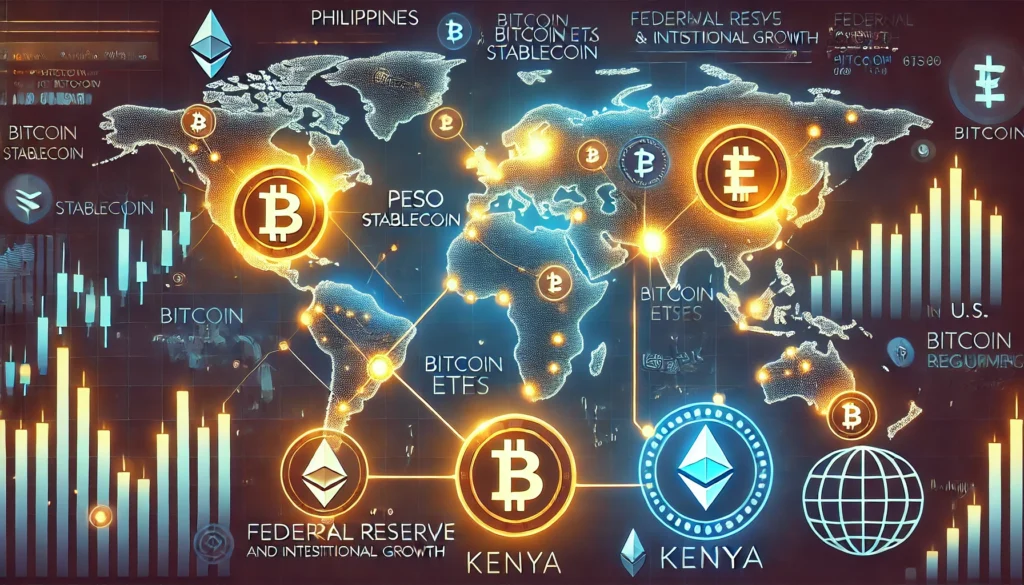
From the Philippines launching its first peso-backed stablecoin to the record-breaking success of U.S. spot Bitcoin ETFs, the industry is brimming with innovation and growth. Meanwhile, Kenya takes a bold step towards legalizing cryptocurrencies, setting the stage for broader African adoption. Amid these advancements, the U.S. job market report highlights Bitcoin’s sensitivity to macroeconomic factors. Let’s delve into the key developments shaping the crypto world today. 1. Filipino Banks Launch PHPX Stablecoin on Hedera Network Filipino banks, in collaboration with Singapore-based Just Finance, are introducing PHPX, a stablecoin pegged to the Philippine peso and powered by Hedera’s decentralized ledger technology (DLT). The initiative, slated for launch between May and July, involves prominent banks like UnionBank, RCBC, and Cantilan Bank. PHPX aims to provide a secure and efficient payment solution, leveraging blockchain’s capabilities to enhance cross-border payments and financial inclusion. The project also plans to establish a multicurrency stablecoin exchange for seamless transactions, bridging PHPX with other stablecoins like USDC and EURC. This move reflects the Philippines’ commitment to embracing blockchain technology as a tool for economic development. By integrating regulated institutions, the PHPX initiative stands out for its secure, transparent, and inclusive approach. The collaboration among local banks highlights the growing interest in digital finance in emerging markets, underscoring the demand for blockchain solutions to address inefficiencies in traditional systems. If executed successfully, this could serve as a template for other nations aiming to modernize their financial systems. The launch of PHPX could reshape remittance markets, vital to the Philippine economy, which saw over $40 billion in remittances in 2024. By reducing transaction costs and processing times, PHPX may encourage wider crypto adoption while fostering innovation in the country’s financial sector. As stablecoins gain traction globally, PHPX’s success could position the Philippines as a leader in blockchain integration in Southeast Asia. 2. First U.S. Spot Bitcoin ETF Marks a Year of Record Growth The first U.S. spot Bitcoin ETFs, launched on January 11, 2024, have celebrated a remarkable debut year, surpassing $61 billion in assets under management (AUM). BlackRock’s iShares Bitcoin Trust led the charge, becoming the most successful ETF launch in history. Institutional investors, drawn by the simplified exposure to Bitcoin, fueled unprecedented inflows, exceeding initial projections of $14 billion. The ETFs thrived against a backdrop of supportive regulations, heightened institutional demand, and Bitcoin’s stellar price performance, doubling to over $100,000 in 2024. The introduction of spot Bitcoin ETFs marked a pivotal shift in the crypto market, bridging the gap between traditional finance and digital assets. By offering a regulated avenue for Bitcoin exposure, the ETFs addressed lingering concerns over security and custody. The regulatory approval also signaled growing institutional trust in crypto assets, potentially setting the stage for broader adoption of blockchain-based financial instruments. The SEC’s landmark decision provided clarity, invigorating market sentiment and reinforcing Bitcoin’s role as a legitimate investment vehicle. This milestone for Bitcoin ETFs has likely set a precedent for future financial innovation, enabling investors to participate in the crypto market without direct ownership complexities. As institutional interest grows, Bitcoin ETFs could attract more capital, increasing liquidity and reducing volatility in the crypto market. The sustained success of these ETFs solidifies Bitcoin’s mainstream acceptance, reinforcing its position as “digital gold.” 3. U.S. Nonfarm Payrolls Surge to 256,000: Implications for Bitcoin The U.S. added 256,000 jobs in December 2024, outpacing the forecasted 160,000 and driving the unemployment rate down to 4.1%. This robust labor market performance has tempered expectations of Federal Reserve rate cuts, which were initially anticipated for early 2025. Strong employment data suggests the economy remains resilient, even as higher interest rates weigh on borrowing and spending. This development has prompted investors to revise their outlook for monetary policy, with rate cuts now delayed to late 2025. The surge in payrolls has created ripples across financial markets, including the crypto sector. Bitcoin, often perceived as a hedge against loose monetary policy, faced downward pressure following the labor report. Prices fell by 1.3% over 24 hours, reflecting concerns over tighter financial conditions. The Fed’s reluctance to cut rates implies higher yields for traditional assets, potentially diverting investment away from riskier options like Bitcoin. Traders are now weighing macroeconomic stability against crypto’s role in diversifying portfolios. This news underscores the ongoing tension between macroeconomic factors and crypto market performance. Bitcoin’s sensitivity to interest rates highlights its maturing relationship with traditional finance, where economic indicators increasingly influence its price movements. As the Federal Reserve navigates monetary policy, Bitcoin’s trajectory may hinge on how investors balance their risk appetite in a high-interest-rate environment. 4. Kenya’s Shift Toward Crypto Regulation Kenya is preparing to legalize cryptocurrency through a comprehensive regulatory framework addressing issues like money laundering and taxation. The government has tasked the Blockchain Association of Kenya (BAK) with drafting a Virtual Asset Service Providers (VASP) bill. This legislation will outline licensing requirements, consumer protections, and tax regulations. Meanwhile, the Kenya Revenue Authority (KRA) has proposed a real-time tax system to track crypto transactions, aiming to integrate taxation into crypto trading platforms seamlessly. This marks a groundbreaking shift in Kenya’s approach to digital finance. The move to regulate cryptocurrencies reflects a desire to embrace innovation while ensuring compliance with international financial standards, such as FATF anti-money laundering guidelines. By involving stakeholders like BAK, the Kenyan government demonstrates its commitment to creating an inclusive and balanced regulatory ecosystem. This could position Kenya as a leader in crypto adoption across Africa, leveraging blockchain to address financial inclusion challenges. The initiative’s success could pave the way for more African nations to adopt similar measures, fostering a more robust crypto ecosystem across the continent. For Kenya, legalizing crypto could boost investment, innovation, and financial inclusion while setting an example for emerging markets globally. By combining regulation with technological advancement, Kenya may become a hub for crypto innovation in Africa. 5. Bitcoin Funding Rates Turn Negative: A Potential Bottom Signal? Bitcoin’s funding rates briefly turned negative, a situation where traders holding short positions (betting on Bitcoin’s price decline) pay funding fees to
Crypto Revolution 2024: Stablecoins, Bitcoin Integration, DeFi Interoperability, AI Synergy, and Market Sentiment Trends
From the rapid growth of stablecoins surpassing $200 billion to Vancouver’s bold Bitcoin adoption initiative, the narrative reflects a dynamic shift in digital finance. Key highlights include the evolving role of AI in blockchain, advances in DeFi interoperability, Bitcoin’s record-breaking rally, and changing market sentiments. With major players like Standard Chartered and Frax Finance leading innovations, the crypto ecosystem continues to redefine global finance, bridging the gap between traditional systems and decentralized technologies. Discover how these pivotal stories are driving the next chapter in the crypto revolution. 1. Opening Doors for Banks Under a Trump Administration The re-election of Donald Trump and his administration’s potential for easing banking regulations has drawn both excitement and skepticism. Proponents argue that deregulation can lead to a surge in banking sector mergers and acquisitions, enhancing competitiveness and growth opportunities. Critics, however, warn of the potential systemic risks, as loosening oversight has historically led to economic instability, notably during the 2008 financial crisis. This anticipated deregulatory shift also raises questions about the U.S.’s global economic positioning. While the removal of certain restrictions may empower domestic financial institutions, it could also erode trust in the financial system’s resilience, especially in times of economic stress. Balancing growth with stability will be a key challenge in this scenario. Impact on Crypto: A more deregulated banking environment could indirectly benefit cryptocurrencies by fostering innovation in financial technologies. As traditional banks seek to remain competitive, partnerships with blockchain and crypto firms could increase, bridging the gap between decentralized and traditional finance. 2. Stablecoin Market Cap Hits $200B Milestone, Could Double in 2025 as Adoption Accelerates The stablecoin market reaching $200 billion highlights its integral role in crypto ecosystems and beyond. Tether (USDT) and Circle’s USDC lead the pack, with the market expected to grow to $400 billion by 2025. Drivers include clearer regulations, adoption by fintech firms, and the introduction of stablecoin projects like PayPal’s PYUSD. Stablecoins are increasingly used for remittances, payments, and liquidity management. This growth underscores their potential to serve as a bridge between fiat and digital economies. However, concerns about over-centralization and the concentration of dominance by a few issuers remain critical. These issues need to be addressed to ensure the sustainable expansion of the stablecoin ecosystem. Impact on Crypto: The stablecoin boom boosts liquidity in the cryptocurrency market, allowing for smoother transactions and greater participation. As stablecoins grow, they provide the foundation for broader adoption of crypto assets, increasing the ecosystem’s stability and attractiveness to institutional investors. 3. Vancouver City Council Passes Pro-Bitcoin Motion Citing Fiat Challenges Vancouver’s initiative to explore Bitcoin integration represents a significant leap in municipal adoption of cryptocurrencies. The motion includes accepting taxes and fees in Bitcoin and exploring reserves held in BTC. This aligns the city with progressive approaches to hedging against inflation and fiat volatility. While the motion is ambitious, it also faces challenges. Bitcoin’s environmental footprint and price volatility could impede implementation. However, successful execution could set a precedent for other cities globally, signaling a broader acceptance of cryptocurrencies as part of public financial management. Impact on Crypto: If successful, Vancouver’s move could ignite a trend of Bitcoin adoption among other cities and institutions, enhancing Bitcoin’s legitimacy as a reserve and payment asset. It also strengthens the narrative of crypto as a hedge against inflation and fiat instability. 4. Will Bitcoin Price Hit New All-Time High Heading into FOMC? Bitcoin’s recent rally to $103,900 comes amid optimism over potential interest rate cuts and favorable inflation data. Historically, Bitcoin prices surge following FOMC meetings, with investors anticipating easier monetary policies as a boon for risk assets like cryptocurrencies. However, Bitcoin’s notorious volatility remains a concern. After its peak, prices corrected to $94,100, resulting in liquidations exceeding $1.7 billion. This underscores the fragility of the market despite bullish trends. Impact on Crypto: A dovish FOMC could pave the way for more capital inflows into cryptocurrencies, further driving Bitcoin and altcoin prices upward. Yet, volatility remains a significant hurdle for wider adoption and stability in the market. 5. Blockchain’s Interoperability Revolution: The Role of Orchestration in Enhancing DeFi Platforms Cross-chain orchestration is transforming decentralized finance (DeFi) by connecting isolated blockchain networks. Solutions like Agoric’s Orchestration API enable seamless interactions across chains, solving liquidity fragmentation issues and simplifying user experiences. These tools are pivotal for a unified DeFi ecosystem. By promoting more efficient liquidity management, cross-chain orchestration can also drive innovation. Developers and users alike benefit from an interconnected financial landscape, fostering the growth of multi-chain decentralized applications (dApps). Impact on Crypto: As interoperability becomes a reality, it increases the usability and attractiveness of DeFi platforms, drawing more participants into the crypto market. It positions DeFi as a competitive alternative to traditional financial systems, enhancing the sector’s long-term viability. 6. Frax Finance Working on Tech to Integrate AI and Blockchain Frax Finance’s initiatives to merge AI with blockchain aim to redefine DeFi innovation. Collaborations like its NEAR Protocol partnership highlight the potential of leveraging AI for scalability and efficiency. Products like frxNEAR represent new use cases for blockchain technology, pushing boundaries in DeFi. Additionally, Frax’s ongoing expansion into multi-chain ecosystems demonstrates its commitment to interoperability. By integrating AI into its blockchain infrastructure, Frax Finance is poised to create intelligent, adaptive financial systems tailored to user needs. Impact on Crypto: AI integration could usher in a new era for cryptocurrencies by enhancing efficiency and user experience in DeFi. Such developments may also attract tech-savvy investors, broadening the crypto market’s appeal. 7. Market Sentiment Shifts to Extreme Greed The Crypto Fear and Greed Index hitting “Extreme Greed” signals high investor confidence, driven by Bitcoin’s rally to $103,900. However, such exuberance often precedes heightened volatility, as evidenced by recent liquidations totaling $1.71 billion after Bitcoin corrected to $94,100. This sentiment-driven market dynamic emphasizes the cyclical nature of crypto investing, where extreme optimism can quickly turn into caution or panic. It underscores the importance of balanced trading strategies. Impact on Crypto: Extreme greed fuels short-term price surges but increases the likelihood of sharp corrections. While
9 Major Crypto Updates Shaping XRP, Bitcoin, Stablecoins, Altcoins, and Regulation
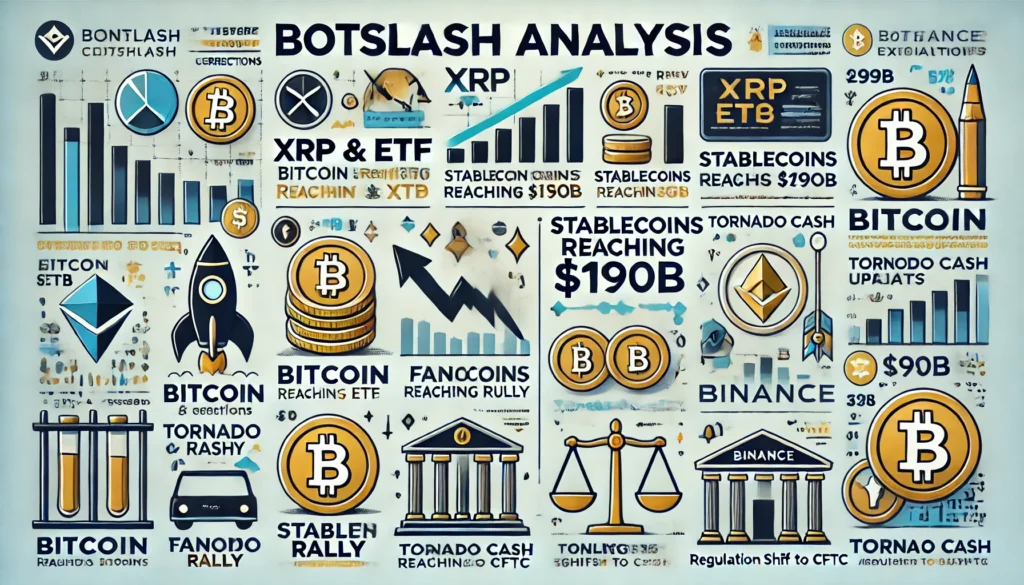
The cryptocurrency market has been buzzing with significant developments. Here’s a detailed analysis of each news event, its implications, and actionable takeaways for investors and enthusiasts. 1. XRP Rally Sees Record Profit-Taking as Ripple Invests in Bitwise XRP ETF Ripple Labs’ decision to invest in Bitwise’s rebranded Physical XRP Exchange-Traded Product (ETP) marks a significant move towards integrating XRP with institutional markets. Bitwise has rebranded the product under the ticker GXRP and is regulated by German financial authorities. This step aligns with Ripple’s broader strategy to push XRP adoption in regulated financial ecosystems. Despite this positive development, the rally in XRP prices has led to record levels of profit-taking among traders. This profit realization suggests that while investor sentiment around XRP remains optimistic, there is still caution about sustaining higher price levels in the short term. Overall, the investment by Ripple signals long-term confidence in XRP’s utility across cross-border payments, DeFi, and tokenization. The profit-taking, however, reflects the balance of optimism and caution typical of volatile crypto markets. Market Impact: Institutional support strengthens XRP’s legitimacy and adoption. Profit-taking may slow the rally temporarily but highlights healthy market activity. 2. Short-Term Bitcoin Holders Move $8B to Exchanges Glassnode’s data indicates that short-term Bitcoin holders recently moved nearly $8 billion worth of BTC to exchanges, with the majority of these trades occurring at a loss. Historically, such capitulation events often signal a local price bottom, as weaker hands exit the market while long-term holders accumulate. This movement follows Bitcoin’s recent price volatility, which saw it decline from $100,000 to around $90,000. Short-term traders were quick to liquidate as the market dipped, while long-term investors held firm, reflecting contrasting sentiments between these groups. Such patterns, which are not uncommon in Bitcoin’s history, usually set the stage for price stabilization and potential rebounds. Investors should interpret these signals as indicative of a market recalibration rather than a full-blown downturn. Market Impact: Short-term volatility heightened by panic selling. Long-term holders maintain confidence, which stabilizes market sentiment. 3. Stablecoin Market Hits Record $190B Market Cap The total market capitalization of stablecoins has surpassed $190 billion, recovering to levels last seen before the TerraUSD collapse. Tether (USDT) leads the pack with a dominant $132 billion share, followed by USD Coin (USDC) and Dai (DAI). This resurgence underscores the critical role stablecoins play in providing liquidity, stability, and utility within the broader cryptocurrency ecosystem. The rise reflects increased adoption of stablecoins for decentralized finance (DeFi) and cross-border payments, demonstrating their importance as hedging tools against market volatility. The recovery highlights growing confidence in stablecoins, even as the crypto industry grapples with challenges. As stablecoins continue to bridge traditional and digital finance, their role in fostering wider adoption of cryptocurrencies becomes even more pronounced. Market Impact: Stablecoins bolster liquidity in DeFi and remittance use cases. Renewed trust in stablecoin resilience post-Terra crash enhances ecosystem stability. 4. Fantom Price Rallies 63% Amid Sonic Upgrade Hype Fantom’s price surge of 63% in just one week reflects growing excitement around the platform’s upcoming “Sonic” upgrade. The upgrade aims to enhance Fantom’s performance in the DeFi space, which peaked with $15 billion in TVL during 2021 but has since dropped significantly. The Sonic upgrade promises to improve scalability and usability, attracting new projects and users to the ecosystem. Analysts have set ambitious price targets, with long-term projections suggesting a potential rally to $15, provided the upgrade delivers on its promises and market sentiment remains favorable. This resurgence marks Fantom’s determination to reclaim its position as a leading DeFi platform. Investors should monitor the platform’s progress as the upgrade rolls out, as its success could drive sustained growth in FTM’s valuation. Market Impact: Anticipation of upgrades boosts short-term investor confidence. Long-term growth contingent on successful implementation of Sonic. 5. Bitcoin Price Drops 8% After Nearing $100K Bitcoin recently experienced an 8% pullback after reaching a high of $99,800, primarily due to profit-taking by long-term holders. Approximately $60 billion worth of Bitcoin has been distributed by these investors over the past month, marking the heaviest profit-taking of the cycle. Despite the decline, options market data suggests balanced sentiment, with probabilities favoring both upward and downward movements in the near term. Analysts point out that such corrections are not unusual, especially during high-volatility bull markets. This correction could pave the way for a healthier rally, as the market digests recent gains and builds momentum for another push toward $100,000. Long-term investors remain optimistic, viewing these dips as opportunities to accumulate. Market Impact: Temporary dip fueled by heavy profit-taking. Options market signals cautious optimism for eventual recovery. 6. Binance Expands Support for SHIB, HBAR, and APE Binance’s decision to add new trading pairs and enable trading bot services for Shiba Inu, Hedera, and ApeCoin has sparked price rallies for these tokens. By offering increased liquidity and automated trading tools, Binance is positioning itself as a leader in supporting altcoin markets. Following the announcement, SHIB, HBAR, and APE saw gains of 4%, 8%, and 3%, respectively. These price movements indicate strong investor interest and the potential for sustained momentum as Binance continues to expand its offerings. The exchange’s initiatives highlight the growing appeal of altcoins and their role in diversifying crypto portfolios. Enhanced accessibility to these tokens further fuels their adoption. Market Impact: Increased trading volumes drive short-term price gains. Binance’s support strengthens altcoin credibility and liquidity. 7. Bitcoin Can Experience 30% Declines During Bull Markets Analysts emphasize that sharp corrections, even up to 30%, are common in Bitcoin’s price history, even during bull runs. These dips serve as necessary consolidation phases that shake out weaker hands and prepare the market for sustained growth. Such patterns have been observed during previous cycles, including Bitcoin’s surge from $17,000 to $64,000 in 2021. The latest 8% decline aligns with this trend, reminding investors to focus on long-term trajectories rather than short-term volatility. This insight highlights the importance of managing risk and avoiding panic-selling during market downturns, as corrections often present valuable entry points for strategic investors. Market Impact: Reinforces