4 Important Crypto News: Ripple’s $1.25B Move, Bitcoin’s Slide, BlackRock’s EU ETF, and Hive’s Paraguay Expansion — BotSlash Daily Crypto News Analysis
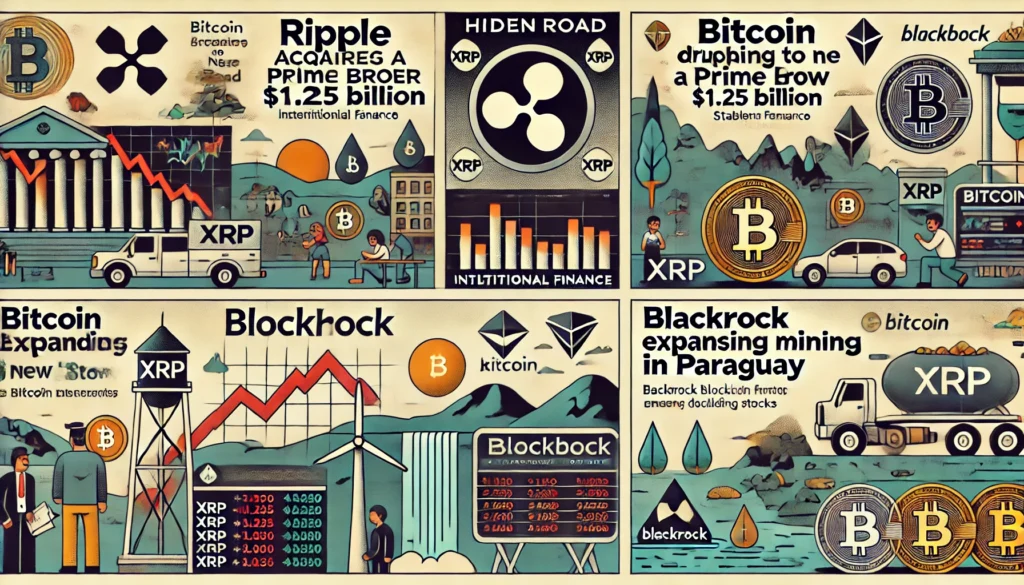
The past 24 hours brought impactful developments across key sectors of the crypto world, signaling a deepening institutional presence and reactive market shifts. Ripple is making a power move with a $1.25 billion acquisition aimed at expanding its DeFi influence. Meanwhile, the broader crypto market reacted negatively to macroeconomic fears, pulling Bitcoin to new lows and dragging crypto stocks down. In contrast, BlackRock is charging ahead, debuting its first Bitcoin product in Europe — a milestone for the region’s digital asset exposure. And Hive Blockchain is going green, announcing new mining operations in Paraguay, tapping into sustainable energy. Ripple’s $1.25 Billion Acquisition of Prime Broker Hidden Road Ripple Labs, the company behind the cryptocurrency XRP, has announced plans to acquire multi-asset prime brokerage firm Hidden Road for $1.25 billion. This strategic move aims to bolster Ripple’s position in institutional decentralized finance (DeFi) by integrating Hidden Road’s extensive client base and clearing capabilities. Hidden Road processes approximately $3 trillion annually across various financial markets and serves over 300 institutional clients. The acquisition is expected to enhance the utility of Ripple’s U.S. dollar-pegged stablecoin, RLUSD, which Hidden Road utilizes as collateral in its brokerage products. This positions Ripple to compete more effectively with established stablecoin providers like Tether and USD Coin. The deal is anticipated to close in the coming months, pending regulatory approvals. Market Impact: This acquisition signifies a substantial expansion of Ripple’s institutional services, potentially increasing XRP’s adoption among institutional investors. The move may also influence the competitive landscape of stablecoins, challenging existing market leaders. U.S. Crypto Stocks Decline as Bitcoin Hits New 2025 Low On April 7, 2025, U.S.-listed crypto company stocks experienced significant declines, mirroring a sharp drop in bitcoin prices. Bitcoin fell by as much as 5.5%, reaching its lowest point in 2025. Shares of major crypto-related firms also suffered, with MicroStrategy falling over 7%, Coinbase dropping 6%, and Robinhood sliding 4%. The downturn is attributed to escalating global trade tensions following new tariffs announced by President Donald Trump, which have dampened investor confidence and risk appetite. Additionally, billionaire investor Bill Ackman warned of a potential “economic nuclear winter,” further fueling market concerns. Market Impact: The recent market volatility underscores the sensitivity of crypto assets to broader economic and geopolitical developments. Investors may need to reassess the role of cryptocurrencies as safe-haven assets during times of economic instability. BlackRock Launches First Bitcoin Product in Europe BlackRock, the world’s largest asset manager, has introduced its first bitcoin exchange-traded product (ETP) in Europe, named the ‘iShares Bitcoin ETP.’ Domiciled in Switzerland, the product is listed in Paris, Amsterdam, and Frankfurt. This launch follows BlackRock’s success in the United States, where it attracted over $50 billion into similar cryptocurrency products after the Securities and Exchange Commission approved such offerings in January 2024. BlackRock has partnered with Coinbase as the custodian and Bank of New York Mellon as the administrator for this new product. Reuters Market Impact: BlackRock’s expansion into the European crypto market reflects growing institutional interest and could pave the way for increased adoption of bitcoin ETPs across the continent. Hive’s Expansion of Bitcoin Mining Operations in Paraguay Hive Blockchain Technologies, under the leadership of Executive Chairman Frank Holmes, is expanding its bitcoin mining operations into Paraguay. The move aims to leverage Paraguay’s abundant hydroelectric power to support sustainable and cost-effective mining activities. This expansion aligns with Hive’s strategy to diversify its operations geographically and enhance its mining capacity while adhering to environmentally friendly practices. Market Impact: Hive’s expansion into Paraguay could set a precedent for other mining companies seeking sustainable energy sources, potentially influencing global mining operations’ geographical distribution and environmental strategies. Key Takeaways: Ripple’s acquisition of Hidden Road for $1.25 billion aims to enhance its institutional DeFi services and stablecoin utility. U.S. crypto stocks have declined amid bitcoin’s drop to a new 2025 low, influenced by escalating trade tensions and economic concerns. BlackRock has launched its first bitcoin ETP in Europe, reflecting growing institutional interest in cryptocurrency products. Hive Blockchain is expanding its bitcoin mining operations into Paraguay, leveraging sustainable hydroelectric power.
4 Important Crypto News: Bitcoin Whales Rise, South Korea Eyes Blockchain, Hong Kong Embraces Staking, and Global Tariffs Shake Markets – BotSlash Daily Crypto News Analysis
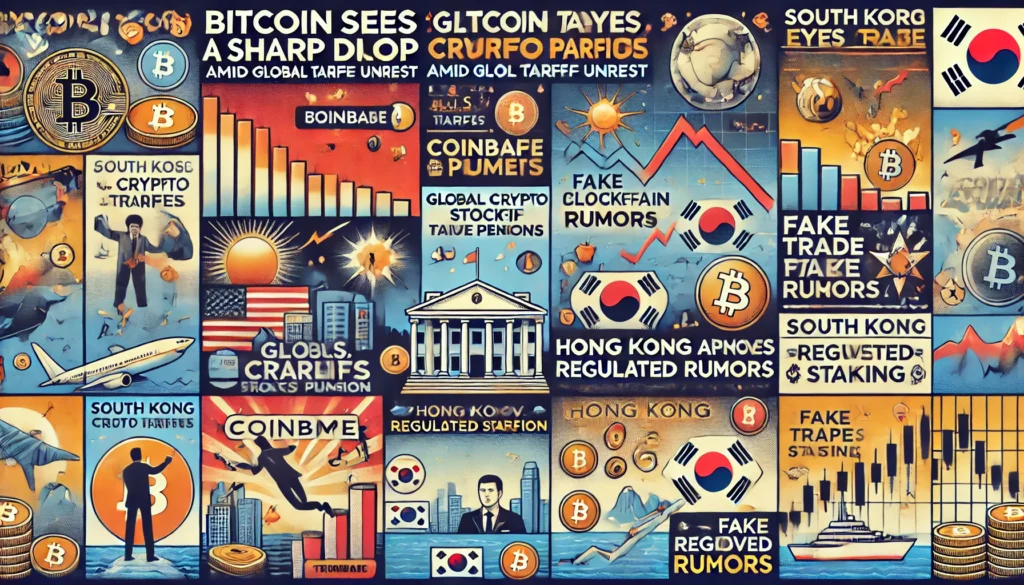
April 7 brought a whirlwind of developments in the crypto space, with global economic policies shaking Bitcoin’s price, while institutional momentum continues to push the blockchain industry forward. From major pension funds eyeing blockchain to new staking permissions from regulators and growing whale activity in Bitcoin, the market finds itself at the crossroads of volatility and innovation. Let’s dive into the key takeaways and understand the bigger picture. Bitcoin’s Volatility Amid Tariff-Induced Market Turbulence The recent imposition of sweeping tariffs by President Donald Trump has led to significant volatility across global financial markets, with Bitcoin experiencing notable price fluctuations. On April 7, 2025, Bitcoin’s price fell below the $80,000 mark, reaching approximately $79,000, a 5% decline. This downturn aligns with investor concerns over escalating trade tensions and the potential for a global recession. Additionally, the cryptocurrency market faced $250 million in long liquidations over a 24-hour period, indicating forced exits from bullish positions amid declining prices. Technical analysis reveals bearish momentum, highlighted by the formation of a “death cross,” where the 50-day moving average crosses below the 200-day moving average. This pattern suggests the possibility of further declines. Key support levels to monitor include $74,000, $65,000, and $57,000, each corresponding to previous performance benchmarks. Conversely, resistance is anticipated around $87,000, where significant moving averages converge. Investors are advised to closely observe these technical levels amid ongoing market instability linked to macroeconomic tensions. Market Impact: The tariff-induced market volatility has not only affected traditional financial markets but also significantly impacted the cryptocurrency sector. The decline in Bitcoin’s price and the broader crypto market underscores the interconnectedness of global economic policies and digital asset valuations. Investors should remain vigilant, as continued trade tensions may lead to further market fluctuations and influence investment strategies in both traditional and digital asset markets. South Korea’s National Pension Service Explores Blockchain for $890 Billion Fund Transactions South Korea’s National Pension Service (NPS), managing assets worth approximately $890 billion, is evaluating the integration of blockchain technology into its fund transaction processes. The primary objective is to leverage blockchain’s shared ledger capabilities to prevent tampering of fund records, thereby enhancing the security and transparency of its accounting systems. This initiative underscores NPS’s commitment to adopting innovative technologies to safeguard the retirement funds of millions. To assess the feasibility of this integration, NPS has initiated a pre-standardization process, seeking feedback from industry experts, including those in the blockchain sector. This collaborative approach aims to gather diverse insights to inform a comprehensive research study on the potential implementation of blockchain within NPS’s operations. Notably, NPS has prior experience with blockchain, having utilized it to track overseas pension recipients, indicating a foundational understanding of the technology’s applications. While NPS is not currently considering direct investments in cryptocurrencies like Bitcoin, it holds indirect exposure through investments in companies such as Coinbase. This strategic move aligns with broader trends in South Korea, where entities like 7-Eleven have begun accepting the Bank of Korea’s central bank digital currency as part of significant trials, reflecting the nation’s progressive stance on digital financial innovations. NPS’s exploration of blockchain technology signifies a substantial endorsement of blockchain’s potential in institutional finance. Such initiatives by major pension funds can catalyze broader adoption of blockchain solutions across the financial sector, potentially leading to increased investments in blockchain infrastructure and related technologies. This development may also influence regulatory perspectives and encourage other institutional investors to consider blockchain’s benefits, thereby impacting the broader financial ecosystem. Hong Kong Regulator Permits Licensed Firms to Offer Crypto Staking Services Hong Kong’s Securities and Futures Commission (SFC) has issued new guidance allowing licensed virtual asset trading platforms (VATPs) and authorized virtual asset funds to offer staking services. Staking involves investors locking their virtual assets to support blockchain networks and, in return, earning rewards. This move is part of Hong Kong’s broader strategy to position itself as a leading hub for Web3 and digital asset innovations. Under the new framework, licensed platforms must obtain SFC approval before offering staking services and are required to maintain full control over client assets, explicitly prohibiting the outsourcing of staking to third parties. Additionally, platforms must transparently disclose all associated risks, including potential vulnerabilities like blockchain errors, hacking, or validator inactivity. These stringent measures aim to enhance investor protection and ensure the integrity of staking operations within the regulated environment. This regulatory development contrasts with approaches in other jurisdictions; for instance, Singapore has banned retail staking, and the U.S. Securities and Exchange Commission has taken a restrictive stance. Hong Kong’s decision reflects its commitment to fostering a progressive yet secure environment for digital asset services, potentially attracting more crypto-related businesses to its market. Market Impact: The SFC’s approval for licensed firms to offer staking services is likely to bolster investor confidence and attract more participants to Hong Kong’s crypto market. By providing a clear regulatory framework, Hong Kong positions itself as a favorable destination for crypto enterprises seeking a supportive yet regulated environment. This move may also influence regional regulatory approaches, potentially setting a precedent for other jurisdictions considering the integration of staking services within their financial ecosystems. Institutional Demand for Bitcoin Rises with Increase in Large Holders Recent data indicates a significant uptick in institutional interest in Bitcoin, evidenced by the addition of 76 new entities holding over 1,000 BTC each in the past two months—a 4.6% increase. This trend suggests that institutional investors are increasingly viewing Bitcoin as a viable asset class, even amid recent market volatility. The growing institutional appetite is further highlighted by similar trends in other cryptocurrencies. For instance, XRP has experienced heightened demand, leading to optimistic price projections. This pattern of accumulation by large holders, often referred to as “whales,” typically signals bullish sentiment and can contribute to upward price momentum. Despite recent price corrections in the crypto market, the sustained interest from institutional investors underscores a broader acceptance and integration of digital assets into traditional financial portfolios. This development reflects a maturation of the cryptocurrency market,