
5 Important Crypto News : GameStop’s Bitcoin Bet, Polkadot ETF, U.S. Economic Uncertainty & Dubai’s Stablecoin Approval – BotSlash Daily Crypto News Analysis

The financial world is witnessing a dynamic shift as major corporations and governments take decisive steps regarding crypto assets. From GameStop’s potential Bitcoin treasury strategy to Nasdaq’s move toward a Polkadot ETF, institutional interest in crypto continues to grow. Meanwhile, macroeconomic concerns in the U.S. are affecting consumer confidence and stock markets, influencing investment behaviors. On the regulatory front, Dubai has approved Circle’s stablecoins, reinforcing its vision of becoming a leading digital asset hub. These developments highlight the interplay between crypto adoption, economic trends, and regulatory advancements, shaping the future of the digital economy. GameStop Urged to Convert Cash Reserves into Bitcoin GameStop, a well-known video game retailer, is being urged by Strive’s CEO, Matt Cole, to convert its $5 billion cash reserves into Bitcoin. Cole believes that adopting Bitcoin as a treasury asset could enhance GameStop’s long-term financial stability and create substantial value for shareholders. This recommendation comes amid an ongoing trend where companies, including MicroStrategy and Tesla, have incorporated Bitcoin into their balance sheets. The move would align GameStop with the growing digital asset economy and potentially position it as an innovative leader in corporate crypto adoption. Despite the potential benefits, analysts caution against such a bold move. Bitcoin’s volatility presents a significant financial risk, and GameStop’s core business model does not directly align with cryptocurrency investments. Wedbush Securities analyst Michael Pachter pointed out that GameStop already trades at a premium relative to its net asset value, much like MicroStrategy, which has a strong Bitcoin correlation. If GameStop were to follow the same strategy, its stock price could become highly correlated with Bitcoin, making it susceptible to the unpredictable nature of the crypto market. Investors might see this as a speculative move rather than a strategic business decision. GameStop’s interest in cryptocurrency is not new. The company has previously explored blockchain and NFT-related initiatives, signaling its openness to digital asset integration. However, a full-scale transition of cash reserves into Bitcoin could attract regulatory scrutiny and investor skepticism. If GameStop follows through with this idea, it may influence other companies to consider similar strategies, especially in sectors looking to hedge against inflation. For now, the market remains divided on whether such a move would be a game-changer or a financial misstep. Market Impact: If GameStop announces a Bitcoin investment, its stock price could experience short-term volatility. Bitcoin’s price may also react positively to the news, as corporate adoption signals growing institutional interest. However, regulatory concerns and investor sentiment will play a crucial role in determining the long-term effects. Nasdaq Submits Filing to List Grayscale’s Polkadot ETF Nasdaq has officially submitted a Form 19b-4 to the U.S. Securities and Exchange Commission (SEC) to list and trade shares of Grayscale’s Polkadot Trust (DOT) as an exchange-traded fund (ETF). If approved, this would mark one of the first ETFs to provide direct exposure to Polkadot, a blockchain network focused on interoperability and scalability. This filing is part of Grayscale’s broader strategy to expand crypto investment products, following its success with Bitcoin and Ethereum ETFs. The potential listing of a Polkadot ETF signals growing institutional interest in blockchain ecosystems beyond Bitcoin and Ethereum. Polkadot, with its parachain technology, aims to improve blockchain interoperability, allowing different networks to communicate and share data efficiently. An ETF offering direct exposure to DOT would allow traditional investors to gain regulated access to the asset without dealing with cryptocurrency exchanges or private wallets. This development could lead to increased liquidity and broader adoption of Polkadot in mainstream financial markets. Despite the optimism, regulatory approval remains a key hurdle. The SEC has historically been cautious with crypto ETFs, especially those tied to altcoins. The decision will depend on market transparency, security, and whether the Polkadot ecosystem meets compliance standards. If approved, this ETF could boost Polkadot’s adoption and price, similar to the impact seen with Bitcoin ETFs. On the other hand, a rejection might delay institutional participation in Polkadot’s ecosystem. Market Impact: If the ETF gets approved, DOT’s price could surge due to increased investor interest. The overall crypto market may benefit from greater institutional inflows. However, a rejection could dampen market sentiment, leading to a short-term price dip for Polkadot. U.S. Consumer Confidence Declines Sharply in February The U.S. consumer confidence index fell significantly in February 2025, dropping from 105.3 in January to 98.3. This marks the steepest monthly decline in over four years. The drop is attributed to persistent inflation concerns, rising interest rates, and economic uncertainty tied to trade policies under President Trump’s administration. Consumer sentiment is a crucial indicator of economic health, as it directly influences spending behavior. With consumer confidence declining, there are fears that reduced spending could slow economic growth. A separate survey from the University of Michigan further reinforced these concerns, showing that consumer sentiment fell from 71.7 to 64.7 in the same period. The survey highlights that more than half of respondents expect unemployment to rise, while 40% report that inflation is negatively impacting their standard of living. These findings indicate that households are becoming more cautious, potentially cutting back on non-essential purchases, which could hurt retail, automotive, and housing sectors. The decline in consumer confidence has already impacted financial markets. The S&P 500 and Nasdaq fell in response to the report, reflecting concerns over a possible economic slowdown. The Federal Reserve may need to reassess its monetary policy approach, balancing inflation control with economic growth. If consumer sentiment continues to weaken, policymakers might be pressured to adjust interest rates or introduce stimulus measures to prevent a prolonged downturn. Market Impact: A sustained drop in consumer confidence could lead to weaker corporate earnings, stock market corrections, and increased economic uncertainty. The crypto market may also experience volatility as investors seek safe-haven assets like Bitcoin during economic downturns. Major U.S. Stock Indexes Experience Decline The U.S. stock market has faced significant declines recently, with major indices posting losses amid economic uncertainty. The S&P 500 fell 1.7%, marking its worst trading day in two months. The Dow Jones Industrial Average dropped 748.63
AI Tokens, Groundbreaking Trends in Regulations, , and Bitcoin Milestones : Revolutionizing the Crypto Market in 2025
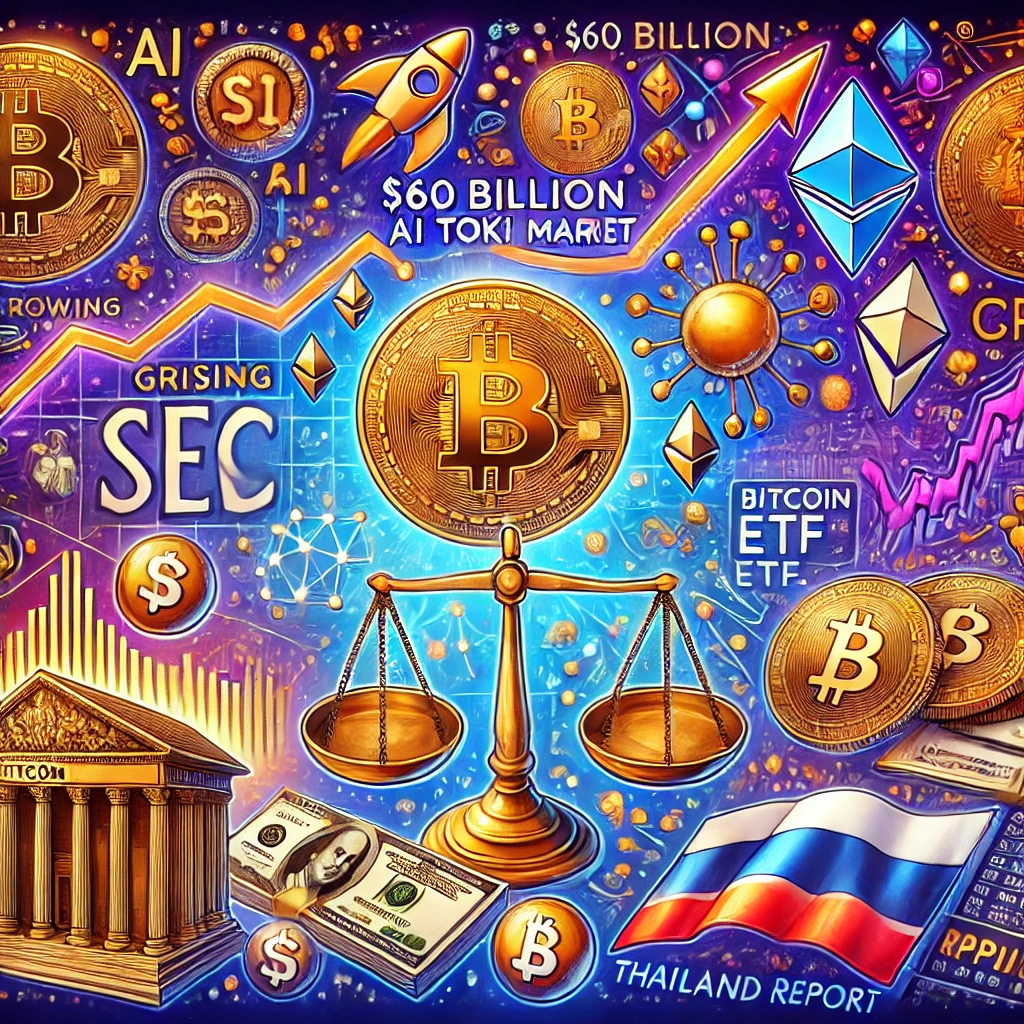
From Senator Tim Scott’s regulatory focus to Thailand’s exploration of Bitcoin ETFs, and from meteoric rise of AI tokens to the Ripple’s ongoing legal battle with the SEC , the industry is abuzz with activity. Simultaneously, Bitcoin’s rally past $99,000 amidst inflation concerns underscores its role as a hedge against economic instability. Together, these stories highlight the rapid evolution and increasing adoption of digital assets across the globe. 1. Senator Tim Scott Prioritizes Crypto Regulation as Banking Committee Chair The new chair of the U.S. Senate Banking Committee, Senator Tim Scott, has placed crypto regulation at the forefront of his legislative agenda. With financial inclusion and innovation as core goals, Scott aims to craft a clear regulatory framework for digital assets. Criticizing past leadership under SEC Chair Gary Gensler, he highlighted the lack of clarity in crypto policies, which has driven innovation abroad. The senator emphasized the importance of tailored solutions for stablecoins, trading platforms, and custody mechanisms to foster a balanced approach to innovation and consumer protection. Scott’s leadership comes at a time of significant political shifts in the U.S., with crypto-friendly lawmakers gaining influence. These developments reflect the growing recognition of cryptocurrencies in mainstream finance. However, balancing regulation with innovation remains a challenge. The committee’s focus on establishing a structured pathway for digital assets could pave the way for more widespread adoption while addressing long-standing regulatory ambiguities. The potential impact on the crypto market is profound. Clear regulatory guidelines could boost investor confidence and attract institutional capital, stabilizing and expanding the market. However, excessive regulation risks stifling innovation. By creating a framework that encourages responsible growth, the U.S. could position itself as a leader in the global digital asset space. 2. AI Token Market Could Reach $60 Billion by 2025, Predicts Bitget CEO Gracy Chen, CEO of Bitget, forecasts that the AI Tokens market could soar to $60 billion by 2025, quadrupling its current market value of $15 billion. She cites the growing use of AI agents in trading, wallet management, and crypto operations as key drivers. Despite rapid growth, she advises investors to remain cautious, stressing the need for human oversight given the nascent state of AI technologies. Practical applications, such as automation and programming, are areas to prioritize. This prediction aligns with recent trends in the AI Tokens market, which grew 222% in Q4 2024 alone. The rise of AI Tokens projects like Solana-backed Goatseus Maximus has fueled this momentum, making Solana a dominant platform in this niche. While AI tokens are gaining traction, their long-term success will depend on real-world utility and scalability. The burgeoning AI Tokens market reflects the potential for AI and blockchain convergence. Successful applications could redefine efficiency in various sectors, attracting investors and developers. However, the AI Tokens market’s speculative nature may also lead to volatility, necessitating careful investment strategies. 3. SEC Appeals Ripple Case Ruling Amid Gensler’s Departure The SEC’s decision to appeal Judge Analisa Torres’ ruling in the Ripple case marks a pivotal moment for cryptocurrency regulation. While the court previously deemed XRP not a security in retail transactions, institutional sales were ruled in violation of securities laws. The appeal comes as SEC Chair Gary Gensler prepares to step down, signaling potential shifts in the regulatory approach under new leadership. Ripple has reiterated that the decision on XRP’s retail classification remains law, solidifying its position as a non-security in such transactions. However, the SEC’s appeal raises questions about broader implications for crypto classification and market dynamics. The case outcome will influence how digital assets are treated under U.S. law, potentially affecting the market’s future trajectory. The appeal highlights the regulatory uncertainty facing the crypto industry. A favorable resolution for Ripple could set a precedent, encouraging innovation and market participation. Conversely, a stricter ruling could dampen investor confidence and stifle growth. Gensler’s exit adds further complexity, leaving the crypto community optimistic about a more favorable regulatory environment. 4. Thailand to Allow Bitcoin Spot ETF Listings for Local Exchanges Thailand’s SEC is considering permitting Bitcoin spot ETFs on local exchanges, reflecting its ambition to become a digital asset hub. This move follows the success of the ONE Bitcoin ETF Fund, launched in 2024, targeting wealthy and institutional investors. By enabling direct exposure to Bitcoin, Thailand aims to cater to the growing interest in cryptocurrencies while ensuring robust investor protections. With active crypto accounts more than doubling to 270,000, the Thai market is primed for innovation. The SEC’s broader agenda includes allowing bond-backed stablecoins and piloting Bitcoin payments in tourist regions. These initiatives indicate Thailand’s proactive approach to digital assets, balancing adoption with regulatory safeguards. A Bitcoin ETF listing would position Thailand as a leader in regulated crypto investment opportunities. It could attract foreign investors, boost market liquidity, and inspire similar initiatives in other jurisdictions. However, global market volatility and local investor education remain key challenges. 5. Core CPI Decline Sparks Bitcoin Rally The unexpected drop in core inflation, despite a 2.9% rise in the broader CPI, has ignited optimism in financial markets, particularly in cryptocurrencies. The prospect of Federal Reserve rate cuts has spurred Bitcoin’s price to surge by 2.9%, crossing the $99,000 threshold. Investors see digital assets as a hedge against traditional market uncertainties, aligning with broader adoption trends. This price surge is part of Bitcoin’s ongoing bull run, with the cryptocurrency appreciating over 40% since November. Other digital assets, including Ethereum and Solana, have also rallied, reflecting renewed investor confidence. Market dynamics suggest a correlation between inflation trends and crypto performance, as monetary easing boosts risk-on sentiment. The rally reinforces Bitcoin’s position as a store of value and an alternative asset class. A sustained price increase could attract more institutional interest, further solidifying its mainstream acceptance. However, the speculative nature of crypto requires vigilance amid macroeconomic shifts. 6. Bitcoin Smashes $99,000 Amid Inflationary Concerns Bitcoin’s ascent to an all-time high of $99,000 highlights its growing role as a hedge against inflation and economic uncertainty. This surge coincides with a 2.9% increase in annual CPI and declining core inflation,