
8 Important Crypto Market News : Bitcoin, Solana, Coinbase, Federal Reserve, CPI, crypto market, exchange withdrawals, institutional adoption, blockchain research, quantum computing, CBDC ban, financial regulation : Botslash Daily Crypto News Analysis

The cryptocurrency market is witnessing major developments across various fronts, from institutional adoption and blockchain expansion to regulatory shifts and future technological threats. Bitcoin’s withdrawal rate from exchanges is at an all-time high, signaling strong long-term investor confidence. Meanwhile, market participants eagerly await U.S. inflation data, which could influence Federal Reserve interest rate decisions and impact crypto volatility. Solana continues to experience exponential growth, adding millions of new addresses daily, while Coinbase strengthens its institutional foothold with $137 billion in assets under custody. Additionally, legislative efforts to ban a U.S. central bank digital currency (CBDC) are reigniting debates on financial privacy and monetary control. Quantum computing is also emerging as a potential long-term risk for lost Bitcoin wallets. These factors highlight the evolving landscape of digital assets and the need for investors to stay informed in an increasingly complex market. 1. Bitcoin Withdrawals from Exchanges Reach Unprecedented Levels Bitcoin is being withdrawn from cryptocurrency exchanges at an unprecedented rate, signaling increased investor confidence in its long-term value. On-chain data indicates that Bitcoin holders are transferring their assets to private wallets, reducing the supply available on trading platforms. This trend reflects a shift in investor behavior, emphasizing self-custody over short-term trading. The decline in exchange balances historically correlates with bullish market sentiment, as it suggests that investors expect Bitcoin’s price to rise and prefer to hold their assets securely. The primary driver of this movement appears to be a combination of institutional adoption, regulatory concerns, and a heightened focus on self-custody following past exchange failures. With increasing distrust in centralized platforms, particularly after events like FTX’s collapse, more investors are choosing to store their Bitcoin in hardware or software wallets. Additionally, Bitcoin ETFs and other institutional investment vehicles are contributing to the outflows, as large entities move their holdings into custodial solutions that don’t rely on traditional exchanges. Market Impact Bitcoin’s declining exchange balances typically lead to a supply squeeze, which can drive prices higher. If this trend continues, the available Bitcoin for trading could shrink further, potentially leading to increased volatility. However, while long-term holders reinforce price stability, a liquidity crunch could create sharp price fluctuations in both directions. 2. Crypto Market Awaits US CPI Figures as Job Data Fuels Fed Rate Cut Hope The cryptocurrency market is closely monitoring upcoming U.S. Consumer Price Index (CPI) data, as inflation trends could heavily influence Federal Reserve policy. Recent job data has fueled speculation that the Fed might pivot toward rate cuts, which would generally be bullish for risk assets like Bitcoin and Ethereum. Lower interest rates typically drive capital inflows into speculative markets, as investors seek higher returns than those offered by traditional fixed-income instruments. If the CPI report indicates that inflation is cooling, the Federal Reserve may have greater flexibility to ease monetary policy. This would likely boost investor sentiment in the crypto sector, as lower borrowing costs and increased liquidity could drive greater participation. Conversely, if inflation remains stubbornly high, the Fed might delay rate cuts, which could dampen enthusiasm in the digital asset space. Market Impact The crypto market is highly sensitive to macroeconomic factors, especially interest rate decisions. A dovish stance from the Fed could push Bitcoin and altcoins higher, while a hawkish stance may lead to short-term price corrections. Traders are bracing for increased volatility around the CPI announcement, which could set the tone for market movements in the coming weeks. 3. Solana Network Sees Rapid Growth with Over 5 Million New Addresses Daily Solana is witnessing an explosive increase in network activity, with over 5 million new wallet addresses being created daily. This surge highlights growing user adoption and suggests that developers and projects are actively engaging with the blockchain. Solana has positioned itself as one of the fastest and most scalable blockchain networks, making it a preferred choice for decentralized applications (dApps) and NFT projects. Despite this growth, Solana’s price action has been mixed. While network expansion often correlates with bullish sentiment, short-term price movements remain influenced by broader market conditions. Increased adoption could strengthen Solana’s long-term fundamentals, especially as more developers build within its ecosystem. However, the sustainability of this rapid address creation remains uncertain, and some analysts question whether these numbers are inflated by automated activity rather than genuine user interest. Market Impact A rapidly expanding network is a positive indicator for Solana, but price action depends on real-world utility and sustained transaction activity. If the surge in new addresses translates into higher dApp usage and transaction volume, Solana could see long-term price appreciation. However, if much of the activity is inorganic, price gains may remain limited. 4.Coinbase has reached $420 billion in assets under management Coinbase, the largest publicly traded crypto exchange in the U.S., reported holding $137 billion in assets under custody at the end of the third quarter. This figure reflects the trust placed in Coinbase as a reliable custodian for retail and institutional investors. The exchange’s growing asset base highlights its resilience despite recent market challenges and regulatory scrutiny. Coinbase’s earnings report showed a 143% increase in trading volume, with institutional activity accounting for most of the surge. However, the platform missed analyst expectations, reporting earnings of $0.28 per share on revenue of $1.21 billion—below estimates. This underscores the challenge Coinbase faces in balancing user growth with profitability, especially amid fluctuating crypto prices. Market Impact Coinbase’s growing assets under custody reaffirm its dominance in the industry, which could attract further institutional investment. However, its financial performance will be closely monitored, as missed revenue expectations could weigh on its stock price. A strong crypto bull run could benefit Coinbase significantly, but regulatory hurdles remain a key risk factor. 5. University of Waterloo Receives $1 Million for AI and Blockchain Research The University of Waterloo has secured a $1 million grant from Interop Labs to establish the GENESIS Lab, a dedicated research center focused on artificial intelligence (AI) and blockchain technology. This initiative aims to drive innovation in decentralized systems, smart contracts, and AI integration within blockchain networks. By
5 Groundbreaking Crypto Trends: Stablecoins, ETFs, Regulation Wins, and Market Signals You Can’t Ignore
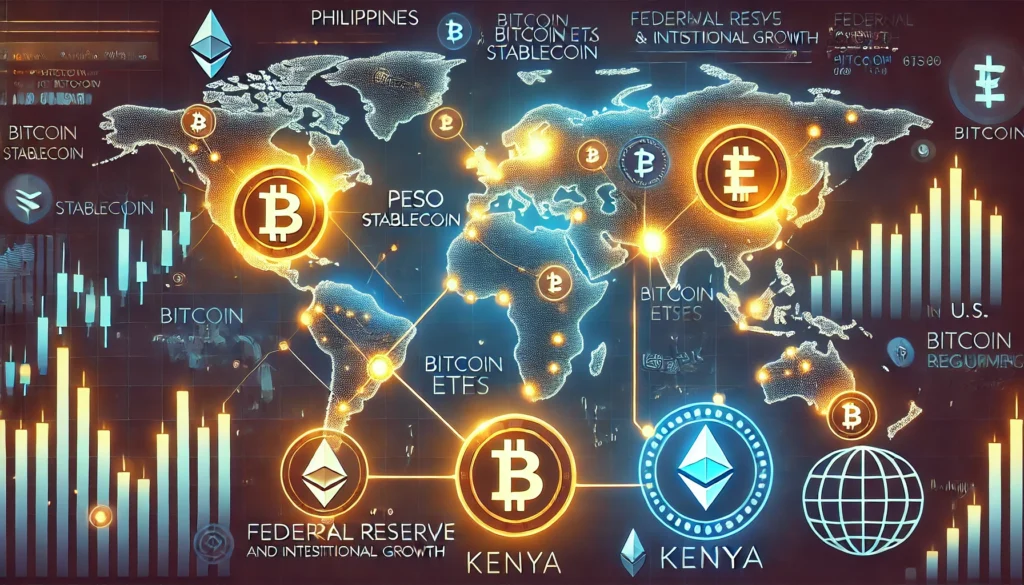
From the Philippines launching its first peso-backed stablecoin to the record-breaking success of U.S. spot Bitcoin ETFs, the industry is brimming with innovation and growth. Meanwhile, Kenya takes a bold step towards legalizing cryptocurrencies, setting the stage for broader African adoption. Amid these advancements, the U.S. job market report highlights Bitcoin’s sensitivity to macroeconomic factors. Let’s delve into the key developments shaping the crypto world today. 1. Filipino Banks Launch PHPX Stablecoin on Hedera Network Filipino banks, in collaboration with Singapore-based Just Finance, are introducing PHPX, a stablecoin pegged to the Philippine peso and powered by Hedera’s decentralized ledger technology (DLT). The initiative, slated for launch between May and July, involves prominent banks like UnionBank, RCBC, and Cantilan Bank. PHPX aims to provide a secure and efficient payment solution, leveraging blockchain’s capabilities to enhance cross-border payments and financial inclusion. The project also plans to establish a multicurrency stablecoin exchange for seamless transactions, bridging PHPX with other stablecoins like USDC and EURC. This move reflects the Philippines’ commitment to embracing blockchain technology as a tool for economic development. By integrating regulated institutions, the PHPX initiative stands out for its secure, transparent, and inclusive approach. The collaboration among local banks highlights the growing interest in digital finance in emerging markets, underscoring the demand for blockchain solutions to address inefficiencies in traditional systems. If executed successfully, this could serve as a template for other nations aiming to modernize their financial systems. The launch of PHPX could reshape remittance markets, vital to the Philippine economy, which saw over $40 billion in remittances in 2024. By reducing transaction costs and processing times, PHPX may encourage wider crypto adoption while fostering innovation in the country’s financial sector. As stablecoins gain traction globally, PHPX’s success could position the Philippines as a leader in blockchain integration in Southeast Asia. 2. First U.S. Spot Bitcoin ETF Marks a Year of Record Growth The first U.S. spot Bitcoin ETFs, launched on January 11, 2024, have celebrated a remarkable debut year, surpassing $61 billion in assets under management (AUM). BlackRock’s iShares Bitcoin Trust led the charge, becoming the most successful ETF launch in history. Institutional investors, drawn by the simplified exposure to Bitcoin, fueled unprecedented inflows, exceeding initial projections of $14 billion. The ETFs thrived against a backdrop of supportive regulations, heightened institutional demand, and Bitcoin’s stellar price performance, doubling to over $100,000 in 2024. The introduction of spot Bitcoin ETFs marked a pivotal shift in the crypto market, bridging the gap between traditional finance and digital assets. By offering a regulated avenue for Bitcoin exposure, the ETFs addressed lingering concerns over security and custody. The regulatory approval also signaled growing institutional trust in crypto assets, potentially setting the stage for broader adoption of blockchain-based financial instruments. The SEC’s landmark decision provided clarity, invigorating market sentiment and reinforcing Bitcoin’s role as a legitimate investment vehicle. This milestone for Bitcoin ETFs has likely set a precedent for future financial innovation, enabling investors to participate in the crypto market without direct ownership complexities. As institutional interest grows, Bitcoin ETFs could attract more capital, increasing liquidity and reducing volatility in the crypto market. The sustained success of these ETFs solidifies Bitcoin’s mainstream acceptance, reinforcing its position as “digital gold.” 3. U.S. Nonfarm Payrolls Surge to 256,000: Implications for Bitcoin The U.S. added 256,000 jobs in December 2024, outpacing the forecasted 160,000 and driving the unemployment rate down to 4.1%. This robust labor market performance has tempered expectations of Federal Reserve rate cuts, which were initially anticipated for early 2025. Strong employment data suggests the economy remains resilient, even as higher interest rates weigh on borrowing and spending. This development has prompted investors to revise their outlook for monetary policy, with rate cuts now delayed to late 2025. The surge in payrolls has created ripples across financial markets, including the crypto sector. Bitcoin, often perceived as a hedge against loose monetary policy, faced downward pressure following the labor report. Prices fell by 1.3% over 24 hours, reflecting concerns over tighter financial conditions. The Fed’s reluctance to cut rates implies higher yields for traditional assets, potentially diverting investment away from riskier options like Bitcoin. Traders are now weighing macroeconomic stability against crypto’s role in diversifying portfolios. This news underscores the ongoing tension between macroeconomic factors and crypto market performance. Bitcoin’s sensitivity to interest rates highlights its maturing relationship with traditional finance, where economic indicators increasingly influence its price movements. As the Federal Reserve navigates monetary policy, Bitcoin’s trajectory may hinge on how investors balance their risk appetite in a high-interest-rate environment. 4. Kenya’s Shift Toward Crypto Regulation Kenya is preparing to legalize cryptocurrency through a comprehensive regulatory framework addressing issues like money laundering and taxation. The government has tasked the Blockchain Association of Kenya (BAK) with drafting a Virtual Asset Service Providers (VASP) bill. This legislation will outline licensing requirements, consumer protections, and tax regulations. Meanwhile, the Kenya Revenue Authority (KRA) has proposed a real-time tax system to track crypto transactions, aiming to integrate taxation into crypto trading platforms seamlessly. This marks a groundbreaking shift in Kenya’s approach to digital finance. The move to regulate cryptocurrencies reflects a desire to embrace innovation while ensuring compliance with international financial standards, such as FATF anti-money laundering guidelines. By involving stakeholders like BAK, the Kenyan government demonstrates its commitment to creating an inclusive and balanced regulatory ecosystem. This could position Kenya as a leader in crypto adoption across Africa, leveraging blockchain to address financial inclusion challenges. The initiative’s success could pave the way for more African nations to adopt similar measures, fostering a more robust crypto ecosystem across the continent. For Kenya, legalizing crypto could boost investment, innovation, and financial inclusion while setting an example for emerging markets globally. By combining regulation with technological advancement, Kenya may become a hub for crypto innovation in Africa. 5. Bitcoin Funding Rates Turn Negative: A Potential Bottom Signal? Bitcoin’s funding rates briefly turned negative, a situation where traders holding short positions (betting on Bitcoin’s price decline) pay funding fees to