
4 Important Crypto News: Ethereum ETF Surge, Stablecoin Bill Momentum, Market-Making Scandals & Abu Dhabi’s Bitcoin Bet – Botslash Daily Crypto News Analysis
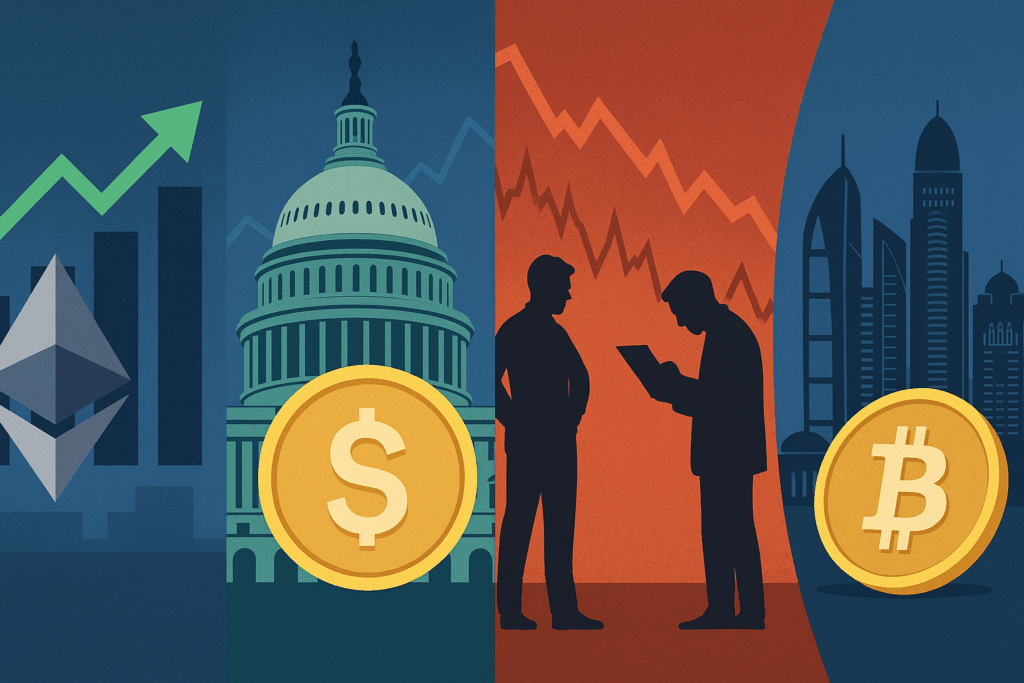
Investor sentiment in crypto is seeing strong momentum across multiple fronts, from Ethereum’s underappreciated value now attracting ETF interest, to a critical U.S. stablecoin regulation bill nearing Senate approval. At the same time, a scandal involving Movement Labs and Mantra is raising concerns about integrity in crypto market-making. In a major institutional move, Abu Dhabi has strengthened its stake in Bitcoin via a $408 million investment in BlackRock’s ETF. These developments underline a shifting landscape driven by both optimism and scrutiny. 🟢 Undervalued Ether Catching Eye of ETF Buyers as Rally Inbound Ethereum (ETH) is experiencing a notable resurgence, drawing increased attention from ETF investors. According to a CryptoQuant report, the ETH/BTC Market Value to Realized Value (MVRV) ratio indicates that ETH is significantly undervalued compared to Bitcoin—a condition not observed since 2019. This undervaluation, coupled with a 38% surge in the ETH/BTC price ratio from a five-year low, suggests a potential bullish trend for ETH. Institutional interest is also on the rise, with ETF holdings of ETH increasing relative to BTC since late April. Additionally, the ETH-to-BTC spot trading volume ratio has reached 0.89, the highest since August 2024, indicating a shift in investor preference towards ETH. These metrics, combined with reduced selling pressure on ETH, point towards a favorable market sentiment. The convergence of these factors suggests that Ethereum may be poised to lead a new ‘Alt season,’ potentially outperforming Bitcoin and driving a broader altcoin rally. 🟢 U.S. Stablecoin Bill Could Clear Senate Next Week, Proponents Say The U.S. Senate is on the verge of passing the Guiding and Establishing National Innovation in U.S. Stablecoins (GENIUS) Act, which aims to establish a regulatory framework for stablecoins. The bill mandates that stablecoins be backed by safe, liquid assets and comply with anti-money laundering and terrorism financing regulations. It also provides bankruptcy protections for holders. Despite facing opposition over provisions that could allow non-financial tech companies to issue stablecoins, the bill has garnered bipartisan support. Proponents argue that regulating stablecoins will reinforce the U.S. dollar’s global standing, as over 99% of stablecoins are pegged to the USD. By providing a clear regulatory framework, the bill could enhance the dollar’s appeal as a ‘safe haven’ asset. The passage of the GENIUS Act could be a significant step towards integrating stablecoins into the mainstream financial system, potentially boosting institutional confidence and accelerating crypto adoption. 🔻 Movement Labs and Mantra Scandal Are Shaking up Crypto Market-Making Recent scandals involving Movement Labs and Mantra have disrupted the crypto market-making landscape. Leaked documents reveal that Movement Labs, a Trump-backed startup, secretly promised up to 10% of its MOVE token supply to shadow advisers through undisclosed agreements. These arrangements were not disclosed to investors, raising concerns about transparency and governance. Additionally, Movement Labs’ co-founder Rushi Manche was fired following a controversial market-making deal involving the sale of 66 million MOVE tokens. This incident, along with similar issues at Mantra, has prompted a reevaluation of liquidity structures and trust in the crypto market-making sector. These events highlight the need for greater transparency and stricter verification processes within the crypto industry to maintain investor confidence and market integrity. 🟢 Abu Dhabi’s Sovereign Wealth Fund Reveals $408 Million Investment In BlackRock’s Bitcoin ETF Abu Dhabi’s sovereign wealth fund, Mubadala, has disclosed a $408.5 million investment in BlackRock’s iShares Bitcoin Trust (IBIT), according to a recent SEC filing. Mubadala’s strategic move into Bitcoin ETFs reflects a growing institutional appetite for crypto assets. By opting for ETF exposure rather than direct Bitcoin purchases, the fund simplifies custody and compliance processes, making it a more manageable investment. This investment also underscores the increasing acceptance of digital assets among sovereign wealth funds. As institutional interest in Bitcoin continues to rise, such significant investments could further legitimize and stabilize the crypto market, potentially attracting more traditional investors. Key Takeaways: Ethereum ETF buying surges as metrics reveal ETH is undervalued compared to BTC; bullish signs point to an incoming altcoin season. U.S. stablecoin legislation (GENIUS Act) is expected to reach the Senate floor next week; this could define global standards and boost dollar dominance. Movement Labs and Mantra scandal shakes investor trust, revealing backroom token deals and poor market-making transparency. Abu Dhabi invests $408M in Bitcoin ETF, signaling sustained institutional confidence and expanding sovereign crypto exposure.
Crypto Daily News Analysis: Bitcoin Reserves, ETFs, AI Trading, and Institutional Adoption : 10 latest news analysis

As Bitcoin adoption accelerates, governments and financial institutions are making bold moves in the crypto space. U.S. states like Kentucky and Maryland are proposing Bitcoin reserves to diversify assets, while major banks, including PNC, are revealing significant Bitcoin ETF investments. Meanwhile, the SEC remains cautious, delaying its decision on BlackRock’s Ethereum ETF options. In a groundbreaking development, AI agents are now autonomously trading intellectual property rights and earning cryptocurrency, reshaping digital ownership. Despite Bitcoin’s continued volatility, retail investor confidence is rising, signaling bullish sentiment. El Salvador remains committed to Bitcoin despite IMF-driven policy adjustments, further reinforcing the global shift toward digital assets. These developments paint a picture of an evolving financial landscape where crypto is becoming an integral part of national and institutional strategies. 1. VanEck CEO Advocates for U.S. Bitcoin Reserve VanEck CEO Jan van Eck has proposed that the United States establish a Bitcoin reserve as a means to maintain economic supremacy. According to him, Bitcoin, similar to gold, can act as a hedge against inflation and currency devaluation, providing financial security in uncertain economic times. This perspective aligns with growing institutional and governmental interest in digital assets, as countries explore ways to incorporate blockchain technology and decentralized assets into their economic policies. The concept of a national Bitcoin reserve is gaining traction, especially with the Trump administration signaling openness to crypto-friendly regulations. If the U.S. were to adopt Bitcoin as part of its reserves, it could create a ripple effect, prompting other nations to follow suit. This could significantly boost Bitcoin’s global adoption and legitimacy as a reserve asset. However, critics argue that Bitcoin’s volatility could pose risks to national financial stability. Unlike gold, Bitcoin’s price is highly unpredictable, and integrating it into a country’s reserve system may introduce unnecessary risks. Nonetheless, if successfully implemented, this initiative could strengthen the U.S.’s leadership in financial innovation while reinforcing Bitcoin’s position as “digital gold.” Impact on Market: If the U.S. seriously considers a Bitcoin reserve, it could trigger a bullish trend, with institutional investors following suit. This would likely increase demand, drive up prices, and further cement Bitcoin’s role in the financial ecosystem. 2. Long-Term Bitcoin Holders Increase Accumulation, Signaling Potential Rally Analysis: Data suggests that Bitcoin holders, particularly those who keep their assets for extended periods (six months or more), have been significantly increasing their accumulation. With approximately 75% of Bitcoin’s supply now held in dormant wallets, analysts believe this signals a potential rally. Historically, when long-term holders accumulate, it reduces available supply, leading to upward price pressure when demand rises. This trend is further supported by macroeconomic factors, including institutional adoption, favorable regulations, and the increasing view of Bitcoin as a hedge against inflation. With financial uncertainty looming due to global economic conditions, investors are turning to decentralized assets. Additionally, the Trump administration’s pro-Bitcoin stance has increased confidence in Bitcoin’s long-term potential. However, while long-term accumulation is a bullish signal, the market still faces risks. External factors such as regulatory crackdowns, macroeconomic downturns, or unforeseen events could lead to sudden price corrections. Investors should be cautious and consider potential volatility despite the positive sentiment. Impact on Market: A continued accumulation trend could drive a supply shock, causing Bitcoin’s price to rise sharply. If demand surges alongside this trend, Bitcoin could experience a major rally, making 2024-2025 a crucial period for long-term investors. 3. AI Agents Now Trading IP Rights and Earning Crypto for Owners A new trend is emerging where AI agents are autonomously trading intellectual property (IP) rights and generating cryptocurrency revenue for their owners. These AI systems use blockchain-based smart contracts to facilitate transactions, ensuring security, transparency, and automation. This development represents a fusion of AI and decentralized finance (DeFi), creating new opportunities for digital ownership and asset monetization. One notable example is Truth Terminal, an AI that successfully gathered a substantial crypto fortune through social media interactions and community-driven support. This demonstrates how AI-driven economic activity is becoming more prevalent, with implications for digital property rights, automated financial transactions, and even potential regulatory challenges. While this innovation presents numerous opportunities, it also raises ethical and legal questions. How will regulatory authorities address AI-driven transactions? What happens when AI agents make financial decisions that impact human users? Governments and regulatory bodies will need to catch up quickly to establish legal frameworks that ensure fair and responsible AI-driven financial activity. Impact on Market: The integration of AI in blockchain and DeFi could drive demand for cryptocurrencies supporting smart contracts, such as Ethereum and Solana. However, regulatory uncertainty could lead to temporary volatility as policymakers navigate this new technological landscape. 4. Bitcoin Address Activity Drops as Holding Strategy Dominates Data indicates that Bitcoin’s address activity has shifted into a downward trend, as more investors are choosing to hold onto their assets rather than trade. This pattern has persisted for nearly two years, suggesting a strong belief in Bitcoin’s future price appreciation. Historically, when large portions of Bitcoin remain inactive, it creates supply constraints that could lead to higher prices in the long term. This shift also correlates with Bitcoin’s broader adoption as a store of value, much like gold. Long-term holding strategies have been amplified by institutional players, high-net-worth individuals, and even some governmental entities considering Bitcoin reserves. As a result, Bitcoin is increasingly viewed as a hedge against inflation and fiat currency devaluation. However, reduced address activity could also indicate lower overall liquidity in the market. While this may support price increases, it can also contribute to higher volatility when large trades occur. Investors must be prepared for potential market swings if sudden shifts in sentiment lead to sell-offs or increased accumulation. Impact on Market: If the holding trend continues, Bitcoin could experience a supply shock, leading to higher prices. However, if selling pressure emerges, low liquidity could exacerbate price volatility, causing sharp market fluctuations. 5. Kentucky Proposes Bitcoin Reserve Bill Following National Trend Kentucky has joined the growing list of U.S. states considering Bitcoin reserves, introducing a bill aimed at incorporating Bitcoin into state