
CBDCs vs Stablecoins: Government Control vs Public Freedom 5 Important things to know

🏦 CBDCs: Government-Backed Digital Mint Central Bank Digital Currencies (CBDCs) are digital forms of national currencies, issued and regulated directly by a country’s central bank. These digital assets are not cryptocurrencies in the traditional sense; rather, they are sovereign currencies with legal tender status, backed by the full faith and credit of the issuing nation. Examples include China’s digital yuan (e-CNY), the European Union’s digital euro, and the UK’s upcoming digital pound. CBDCs represent a fundamental shift in monetary systems. Unlike decentralized cryptocurrencies, which are built to operate without a central authority, CBDCs are designed for centralized control. Governments and central banks can issue, monitor, and regulate every unit of currency in real-time, allowing them to enforce monetary policies with surgical precision. One of the key benefits of CBDCs is security and regulatory oversight. Since they are built on permissioned blockchain or secure databases, CBDCs allow for high levels of control, traceability, and protection against fraud. This level of security makes them attractive for high-volume financial systems, especially in national and cross-border settlements. Another powerful feature is programmability. CBDCs can be designed to support smart payment logic—such as conditional disbursements, expiry dates on stimulus packages, or automatic tax collection. This could enable real-time implementation of fiscal policies, targeted subsidies, and instant social welfare disbursements. CBDCs also promise greater financial inclusion and cost efficiency. For underserved populations lacking access to traditional banks, CBDCs could offer mobile-based access to digital money. Cross-border remittances, typically slow and expensive, could become faster and cheaper through CBDC-powered international corridors. However, the downsides are significant. The introduction of CBDCs raises concerns over privacy and surveillance, as governments could technically track every transaction. There are fears that authoritarian regimes may misuse this capability to restrict dissent or control behavior. Additionally, the potential for bank disintermediation is real—if individuals can hold money directly with central banks, commercial banks may lose deposits, weakening their role in credit creation. Critics also warn about the politicization of financial systems, where governments might freeze or redirect funds based on political agendas. For example, programmable money could be restricted to certain uses or areas, curbing financial freedom. Despite these concerns, many countries are rapidly advancing their CBDC experiments. Nations like China, the UAE, Sweden, and the UK are conducting active pilot programs. While full-scale national rollouts may still take a few more years, industry experts expect many CBDCs to enter public circulation by the mid-to-late 2020s. CBDCs are not merely a digital extension of fiat—they signal a reshaping of how money itself is understood, issued, and controlled. Whether they become tools of empowerment or instruments of control will depend on how they are implemented, regulated, and balanced with civil liberties. 🪙 Stablecoins: Private Innovation & Decentralized Utility 💵 Stablecoins: Privately-Issued Digital Alternatives Stablecoins are digital tokens typically issued by private companies or decentralized protocols, designed to maintain a stable value by being pegged to another asset—most commonly fiat currencies like the US dollar, but also sometimes commodities or even algorithmic models. Some of the most well-known examples include Tether (USDT), USD Coin (USDC), and DAI. What sets stablecoins apart is their value stabilization mechanisms. Fiat-backed stablecoins rely on cash or asset reserves held in banks or custodians to ensure each token is redeemable for one unit of the underlying currency. In contrast, algorithmic stablecoins maintain parity through supply-adjusting code that automatically burns or mints tokens based on demand. This programmability allows for on-chain value management without a central authority—although it comes with its own set of risks. A significant advantage of stablecoins is their interoperability with decentralized finance (DeFi). They serve as the foundational layer for numerous DeFi applications, enabling users to trade, lend, borrow, and earn yields across various decentralized platforms. Their ability to function seamlessly across different blockchain networks has made them the preferred medium for on-chain financial transactions and cross-border remittances. The adoption of stablecoins is accelerating worldwide, particularly in regions facing currency instability or banking access issues. For individuals in countries with high inflation or limited financial infrastructure, stablecoins offer a means to preserve value and participate in global commerce using just a mobile phone and internet connection. Industry forecasts suggest that stablecoin usage could surpass $2 trillion annually by 2028, underlining their transformative potential in the digital economy. However, stablecoins are not without challenges. Concerns often arise around the transparency and safety of their reserves, especially in cases where issuers do not undergo frequent or independent audits. There are also cybersecurity risks, as stablecoin platforms can be targeted by sophisticated attacks that compromise funds. Additionally, regulatory ambiguity poses a major hurdle, with governments unsure how to classify, supervise, or integrate stablecoins within existing legal frameworks. In response to these concerns, legislative efforts are underway in jurisdictions like the United States. Proposals such as the STABLE Act and the GENIUS Act aim to introduce legal clarity by mandating regular audits, enforcing capital reserve requirements, and creating standards for operational transparency. These regulatory moves indicate that while stablecoins are decentralized in use, they are increasingly subject to centralized scrutiny. 🔍 Side-by-Side Comparison Issuer CBDC: Central bank (e.g., digital euro, digital pound) Stablecoins: Private companies or algorithmic protocols Trust Anchor CBDC: Backed by sovereign government guarantee Stablecoins: Backed by audited reserves or algorithmic codes Regulation CBDC: Fully regulated by state authorities Stablecoins: Partially regulated; evolving legal frameworks Decentralization CBDC: Fully centralized control Stablecoins: Hybrid — decentralized in DeFi, centralized in fiat-backed models Innovation Speed CBDC: Slow, due to government-led development and policy constraints Stablecoins: Rapid innovation driven by private sector competition Privacy CBDC: Low — prone to potential surveillance and transaction tracking Stablecoins: Generally higher, depending on design and issuer policy DeFi & Programmability CBDC: Programmable only if configured by central authorities Stablecoins: Native compatibility with dApps and smart contracts Financial Inclusion CBDC: Broad national access, but digital literacy gaps remain Stablecoins: Global access for anyone with a smartphone and internet 🤝 CBDC and Stablecoin Coexistence Researchers envision a hybrid ecosystem, where CBDCs provide foundational stability and transparency, while stablecoins
5 Important Crypto News: Stablecoin Bill Stalls, Bullish Bitcoin Indicator, $13.3B Binance Case, & EU Capital Controls: BotSlash Daily Crypto News Analysis
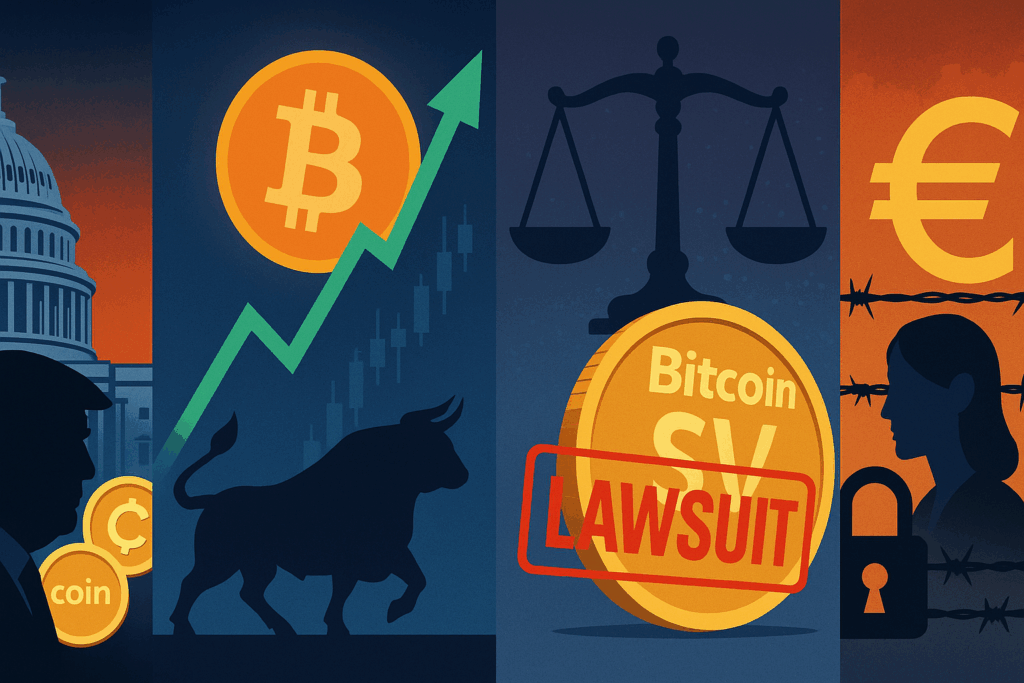
Political scrutiny, legal disputes, and macroeconomic policy shifts are converging with Crypto momentum and institutional behavior to shape the current crypto narrative. While the U.S. Senate battles controversy over the stablecoin framework, Europe tightens monetary policy in the shadow of its digital euro ambitions. Meanwhile, bullish market indicators and whale activity are hinting at renewed optimism in Bitcoin’s trajectory, all while Binance faces a resurrected multibillion-dollar lawsuit from discontented Bitcoin SV investors. 1. Senate Stablecoin Bill Stalls Amid Political Controversy The U.S. Senate’s attempt to pass the GENIUS Act, aimed at establishing a federal regulatory framework for stablecoins, has hit a roadblock. Despite earlier bipartisan support, the bill failed a procedural vote, largely due to concerns over former President Donald Trump’s involvement in cryptocurrency ventures. Democrats expressed apprehension about potential conflicts of interest, citing Trump’s launch of a meme coin and connections to a stablecoin project receiving significant foreign investment. The legislation’s future remains uncertain, with ongoing negotiations attempting to address issues related to money laundering, foreign issuers, and accountability. Senator Mark Warner has indicated a commitment to refining the bill to garner broader support. The crypto industry, which has invested heavily in lobbying for regulatory clarity, views the bill’s failure as a significant setback. The situation underscores the complexities of crafting legislation in a rapidly evolving financial landscape, especially when political interests intersect with regulatory efforts. 2. Bitcoin Bull-Bear Cycle Indicator Signals Potential Uptrend CryptoQuant’s Bull-Bear Market Cycle Indicator has flashed its first bullish signal since February, suggesting a possible shift in Bitcoin’s market dynamics. The indicator, which had consistently signaled bearish conditions, now points to a trend reversal as Bitcoin consolidates around the $103,000 mark. Analysts interpret this development as a sign of renewed investor confidence, with the potential for Bitcoin to challenge its all-time high of $109,000. The current market behavior indicates accumulation, often a precursor to significant price movements. While the bullish signal is promising, market participants remain cautious, acknowledging the need for sustained momentum and external factors that could influence the trajectory. 3. Bitcoin SV Investors Revive $13.3 Billion Claim Against Binance Investors in Bitcoin SV (BSV) are seeking to reinstate a “loss of chance” claim in a UK lawsuit against Binance, alleging that the exchange’s delisting of BSV led to significant financial losses. The claim, valued at approximately $13.3 billion, centers on the argument that Binance’s actions deprived investors of potential gains. A judge previously highlighted a discrepancy in the claimed damages, noting a substantial overstatement. Despite this, the investors are pushing to have their case reconsidered, emphasizing the impact of Binance’s decision on their investment opportunities. The outcome of this legal battle could set a precedent for how exchanges handle token listings and the responsibilities they bear toward investors. 4. Europe Faces Capital Controls Amid Digital Euro Concerns European nations are implementing capital controls in response to growing apprehensions about the digital euro initiative. Critics argue that the central bank digital currency could lead to increased surveillance and reduced financial privacy. Concerns include the potential for the digital euro to limit cash availability and grant authorities greater control over individual spending habits. The European Central Bank maintains that the digital euro aims to modernize the financial system, but public skepticism persists. The debate highlights the challenges central banks face in balancing innovation with privacy and autonomy in the digital age. 5. Institutional Bitcoin Holdings Surge by 41,300 BTC Institutional investors have significantly increased their Bitcoin holdings, with a reported addition of 41,300 BTC. This surge reflects a growing institutional interest in Bitcoin as a hedge against economic uncertainty and a store of value. Analysts attribute this trend to factors such as global economic instability and the search for alternative assets. The accumulation by large-scale investors suggests confidence in Bitcoin’s long-term prospects. This development could influence market dynamics, potentially leading to increased price stability and further adoption of Bitcoin in institutional portfolios. Key Takeaways 1. Senate Stablecoin Bill Stalls Amid Political Controversy The GENIUS Act failed to pass due to political disputes tied to Trump’s crypto involvement. Key issues include foreign issuer oversight, anti-money laundering, and governance structures. A major regulatory setback for stablecoin clarity and institutional crypto expansion in the U.S. 2. Bitcoin Bull-Bear Cycle Indicator Signals Potential Uptrend CryptoQuant’s indicator flipped bullish for the first time since February. Bitcoin hovers around $103K with renewed institutional and retail accumulation signals. A potential trend shift could lead BTC toward retesting its all-time high of $109K. 3. Bitcoin SV Investors Revive $13.3 Billion Claim Against Binance Investors allege Binance’s delisting of BSV caused lost opportunities. The case highlights exchange accountability and risks tied to token removals. A judicial precedent could emerge affecting future token listing decisions globally. 4. Europe Faces Capital Controls Amid Digital Euro Concerns EU capital restrictions raise alarms over surveillance and cash access. Public distrust grows around CBDCs despite ECB’s assurances. The development adds friction to the broader push toward digital financial systems. 5. Institutional Bitcoin Holdings Surge by 41,300 BTC Bitcoin whale wallets saw a sharp spike in holdings, signaling institutional confidence. Motivated by macroeconomic concerns and long-term value positioning. May fuel price stability and boost institutional adoption.
4 Important Crypto News: Regulatory Pressure, CBDC Progress, Blockchain Legal Barriers & Tether Compliance – BotSlash Daily Crypto News Analysis

From regulatory scrutiny tightening its grip, to Europe’s strides toward a digital euro, the crypto landscape is experiencing pivotal shifts. Blockchain’s legal hurdles are becoming clearer even as its technical potential remains strong, while Tether’s new compliance moves reflect a larger trend toward regulatory alignment. These developments show the fast-evolving nature of crypto infrastructure and policy across different global fronts. 1. Will Crypto Values Survive the Regulatory Wave? The cryptocurrency market is currently navigating a complex regulatory landscape, with global authorities intensifying their focus on digital assets. This scrutiny stems from concerns over financial stability, consumer protection, and the prevention of illicit activities. As a result, the industry faces a pivotal moment where regulatory clarity could either bolster confidence or stifle innovation. In the United States, agencies like the Securities and Exchange Commission (SEC) and the Commodity Futures Trading Commission (CFTC) are actively working to define the legal status of various digital assets. Meanwhile, the European Union is advancing its Markets in Crypto-Assets (MiCA) regulation, aiming to establish a comprehensive framework for crypto operations. These developments indicate a global trend towards formalizing the crypto sector within existing financial systems. For investors and market participants, this evolving regulatory environment presents both challenges and opportunities. On one hand, increased oversight could lead to greater market stability and attract institutional investment. On the other, stringent regulations might limit the decentralized nature of cryptocurrencies, potentially impacting their core value proposition. Navigating this regulatory wave will require adaptability and proactive engagement from all stakeholders. Market Impact: The heightened regulatory focus is likely to result in increased compliance costs for crypto businesses, potentially leading to market consolidation. However, clear regulations could also pave the way for broader adoption and integration of digital assets into mainstream finance. 2. ECB Establishes Innovation Hub to Test Digital Euro as Preparation Phase Nears End The European Central Bank (ECB) has launched an innovation platform to collaborate with approximately 70 market participants in testing the functionalities of a potential digital euro. This initiative marks a significant step in the ECB’s exploration of a central bank digital currency (CBDC), aiming to enhance the efficiency and inclusivity of the European payment system. Participants in the innovation hub are divided into two groups: “pioneers” focusing on technical aspects such as conditional payments, and “visionaries” exploring broader use cases like financial inclusion. The ECB provides technical support and infrastructure, enabling these stakeholders to simulate and assess various scenarios involving the digital euro. Insights gathered from this collaboration will inform the ECB’s decision-making process regarding the potential issuance of a digital euro. This proactive engagement with industry players underscores the ECB’s commitment to ensuring that any future digital currency meets the needs of both the economy and society. By fostering innovation and gathering diverse perspectives, the ECB aims to design a digital euro that complements existing payment methods while addressing emerging challenges in the digital era. Market Impact: The development of a digital euro could significantly influence the European financial landscape, potentially reducing reliance on private payment providers and enhancing the resilience of the payment system. For businesses and consumers, it may offer a secure and efficient alternative for digital transactions. 3. Blockchain Integration Faces Legal Hurdles Despite Technical Readiness While blockchain technology has matured technically, its widespread adoption faces significant legal and regulatory challenges. Issues such as data privacy, jurisdictional uncertainties, and the lack of standardized legal frameworks hinder the seamless integration of blockchain solutions across industries. For instance, the immutable nature of blockchain records raises concerns under data protection laws like the General Data Protection Regulation (GDPR), which grants individuals the right to have their personal data erased. Additionally, the cross-border nature of blockchain transactions complicates the determination of applicable laws and regulatory oversight. These complexities create a cautious environment for businesses considering blockchain adoption. To overcome these hurdles, stakeholders must engage in collaborative efforts to develop clear legal guidelines and standards that accommodate the unique characteristics of blockchain technology. This includes dialogue between technologists, legal experts, and policymakers to ensure that regulations foster innovation while protecting public interests. Market Impact: Legal uncertainties may slow down the deployment of blockchain solutions, particularly in regulated sectors like finance and healthcare. However, resolving these issues could unlock significant efficiencies and trust in various applications, from supply chain management to digital identity verification. 4. Tether Enhances Compliance with Chainalysis Integration Tether, the issuer of the USDT stablecoin, has partnered with blockchain analytics firm Chainalysis to bolster its compliance measures. This collaboration enables Tether to implement advanced monitoring tools, enhancing its ability to detect and prevent illicit activities within its ecosystem. The integration includes real-time transaction monitoring and Know Your Transaction (KYT) protocols, aligning Tether’s operations with global anti-money laundering (AML) standards. By proactively addressing regulatory concerns, Tether aims to reinforce trust among users and regulators, ensuring the stability and legitimacy of its stablecoin. This move reflects a broader trend in the cryptocurrency industry, where compliance and transparency are becoming critical for the sustained growth and acceptance of digital assets. As regulators worldwide tighten scrutiny, such initiatives are essential for crypto firms to demonstrate their commitment to lawful and ethical practices. Market Impact: Strengthened compliance measures may enhance investor confidence in Tether, potentially increasing its adoption in various financial applications. Moreover, it sets a precedent for other stablecoin issuers to prioritize regulatory alignment, contributing to the overall maturation of the crypto market. Key Takeaways Regulatory Pressure on Crypto Values Heightened global regulations are redefining how crypto projects operate and raise funds. Regulatory clarity could stabilize markets but may also limit decentralization. Institutional participation is contingent on clear and enforceable guidelines. ECB Accelerates Digital Euro Testing ECB collaborates with 70 partners to test use cases for the digital euro. Innovation hub will shape the final structure of Europe’s CBDC initiative. Could reduce dependence on private payment platforms and boost resilience. Blockchain’s Legal and Jurisdictional Barriers Data privacy laws and lack of international legal consistency are key obstacles. Regulatory uncertainty discourages corporate blockchain adoption. Unified legal frameworks are urgently
Bitcoin Whales, Digital Euro, and Market Volatility 7 Game-Changing Crypto Developments

Bitcoin continues to dominate global financial discussions as billion-dollar options are set to expire, whales ramp up accumulation, and analysts point to low sell-side risk as a precursor to major price movements. Alongside these developments, the European Central Bank is accelerating its push for a digital euro to compete with Bitcoin and politically-backed stablecoins, while Donald Trump’s opposition to CBDCs shakes up the global debate. Meanwhile, Elon Musk’s X faces legal challenges, spotlighting the intersection of social media, crypto, and regulation, as Coinbase’s CEO reignites the Bitcoin vs. gold debate. This article breaks down each story, analyzes its market impact, and ties it all together to provide you with actionable insights into how these developments might shape the crypto landscape. Whether you’re a long-term investor or a trader looking to make sense of the news, here’s everything you need to know. 1. Elon Musk’s X May Face Multi-Million Euro Fine in EU Probe The European Union is investigating Elon Musk’s platform X (formerly Twitter) for allegedly failing to comply with the EU’s Digital Services Act (DSA). The DSA mandates social media platforms to curb disinformation, particularly regarding conflicts like the Israel-Palestine war. If proven non-compliant, X could face a fine of up to 6% of its global revenue, which could amount to hundreds of millions of euros. The probe highlights recent concerns over the spread of unregulated content and the legal consequences of social platforms being held accountable. Analysis and Market Impact: For crypto markets, this has indirect implications. X is a popular hub for crypto-related conversations, trading communities, and influencer-driven market movements. Any potential regulatory hurdles or penalties for the platform could decrease trust in it as a tool for crypto discourse. Additionally, Musk’s unpredictable involvement in crypto (e.g., his effect on Dogecoin prices) often attracts market volatility. A significant legal blow to X could reduce its utility for crypto enthusiasts, leading communities to shift elsewhere. Moreover, the EU’s strict regulatory stance could spill over into crypto companies operating within its jurisdiction, as it signals a growing intolerance for non-compliance. This news serves as a reminder that both social media platforms and crypto ecosystems are under increasing regulatory scrutiny, which may weigh on short-term market sentiment. 2. ECB Proposes Digital Euro to Counter Trump’s Stablecoin Advances The European Central Bank (ECB) is accelerating its plans for a digital euro in response to increasing competition from private stablecoins, particularly those tied to political figures like Donald Trump. According to reports, the ECB is concerned about the influence of politically-backed stablecoins on the euro’s dominance. The digital euro project aims to modernize the EU’s monetary system, providing a secure and regulated alternative to privately-issued stablecoins. Analysis and Market Impact: The ECB’s move highlights a growing trend among central banks: countering the rise of stablecoins with their own Central Bank Digital Currencies (CBDCs). If implemented, the digital euro could provide a more regulated and stable option for digital transactions, potentially attracting users away from decentralized cryptocurrencies and private stablecoins. However, its centralized nature might also deter crypto purists who value anonymity and decentralization. The global competition between CBDCs and stablecoins introduces uncertainty into the crypto space. Stablecoins like USDT and USDC could face increased regulatory and competitive pressure, possibly leading to market volatility. Additionally, if Trump’s stablecoin gains traction, it could attract a politically-driven user base, creating a new layer of competition for established cryptos. This news reflects a growing trend of governments entering the digital currency arena, which could reshape the global financial landscape. 3. $7.8 Billion in Bitcoin Options Set to Expire on Deribit Bitcoin options worth $7.8 billion are set to expire at the end of the month on the Deribit exchange. These contracts are significant because their expiration often creates volatility in Bitcoin’s price. As traders rush to close or roll over positions, the market could see sudden price movements, depending on whether options are exercised in the money or expire worthless. Deribit remains the largest crypto options market, with Bitcoin options accounting for the majority of activity. Analysis and Market Impact: This massive expiration event has the potential to disrupt Bitcoin’s current price stability. Large-scale expirations often create a tug-of-war between bulls and bears, resulting in heightened volatility. If a significant portion of the options expire in the money, it could lead to a wave of buy or sell orders, depending on the strike prices and market sentiment. Traders should watch key price levels closely. For instance, if Bitcoin trades above key strike prices near expiration, it could trigger bullish momentum. Conversely, falling below significant levels may result in sell-offs. This news also highlights the growing influence of derivatives in the crypto market, as institutions and retail investors use options to hedge or speculate. Short-term traders could benefit from volatility, but long-term holders should brace for price swings. 4. Bitcoin Whales in Accumulation Phase After Trump Inauguration According to CryptoQuant, Bitcoin whales have entered a new accumulation phase following Donald Trump’s inauguration announcement. Whales, who hold massive BTC amounts, often signal potential market trends. The report suggests that whale activity is increasing on exchanges, which could indicate preparations for a price rally or hedge against market uncertainties tied to political developments. Analysis and Market Impact: The accumulation by Bitcoin whales is a bullish signal, as their activity often precedes significant price moves. Whales’ confidence in BTC may stem from increasing uncertainty in traditional markets, such as fears of inflation or geopolitical tensions. Trump’s inauguration announcement could also be reigniting interest in crypto as a hedge against political and economic uncertainty. For the broader market, this trend suggests that large investors are doubling down on Bitcoin’s long-term potential, which could encourage retail traders to follow suit. However, whale activity can also lead to heightened price manipulation risks, as large holders have the ability to influence short-term trends. If this accumulation continues, Bitcoin could gain upward momentum, especially if supported by positive macroeconomic news. 5. Bitcoin vs. Gold: Coinbase CEO Says BTC is Better Coinbase CEO Brian