
5 Important Crypto News: XRP Adoption, Bitcoin Milestones, U.S. Policy Shifts & Ripple-SEC Deal – BotSlash Daily Crypto News Analysis

Today’s developments mark a decisive shift in how crypto assets are being regulated, integrated into traditional systems, and leveraged for global financial innovation. From Coinbase’s push to transform online payments, to the OCC empowering banks to handle customer crypto directly, and Robinhood eyeing blockchain-based equity access in Europe, the stage is set for deeper global crypto adoption. Meanwhile, the Federal Reserve’s signals on inflation and interest rates offer vital macroeconomic insight impacting risk assets, including crypto. 🟢 Florida Pharma Firm Will Use XRP for Real-Time Payments in $50M Financing Deal Wellgistics Health, a publicly traded pharmaceutical distribution company, has announced a $50 million Equity Line of Credit (ELOC) to support the integration of XRP into its payment infrastructure. This initiative aims to utilize XRP for real-time settlements between pharmacies, suppliers, and manufacturers, significantly reducing transaction times and costs compared to traditional banking methods. The move positions Wellgistics as a pioneer in adopting blockchain technology within the healthcare sector. By leveraging XRP’s capabilities, Wellgistics intends to enhance liquidity for independent pharmacies through XRP-backed credit lines and facilitate global vendor payouts with minimal fees. The transparency of the XRP Ledger will also aid in compliance and auditability, ensuring real-time tracking of transactions. This strategic adoption reflects a growing trend of blockchain integration in traditional industries seeking efficiency and cost reduction. The successful implementation of XRP in Wellgistics’ operations could set a precedent for other healthcare companies to explore blockchain solutions. As the healthcare industry grapples with complex supply chains and payment systems, blockchain technology offers a promising avenue for streamlining processes and enhancing transparency. 🟢 Missouri Takes the Lead: Upcoming Tax Incentives for Cryptocurrency Transactions The Missouri House of Representatives has passed a groundbreaking bill to exempt capital gains taxes on cryptocurrencies, stocks, and real estate. This legislative move positions Missouri as the first U.S. state to offer such comprehensive tax incentives, aiming to attract investors and stimulate economic growth within the state. By eliminating capital gains taxes on these assets, Missouri seeks to become a hub for digital asset trading and long-term investment. The policy is expected to encourage more residents and businesses to engage in cryptocurrency transactions, potentially boosting the state’s economy. However, critics express concerns about potential revenue shortfalls and the equitable distribution of tax benefits. If successful, Missouri’s approach could inspire other states to consider similar tax incentives, potentially leading to a more favorable regulatory environment for cryptocurrencies across the United States. This development underscores the growing recognition of digital assets in mainstream financial systems and the importance of supportive legislation in fostering innovation. 🟢 Bitcoin’s Realized Market Capitalization Reaches New All-Time High; Persistent Inflows Indicate Positive Market Trends Bitcoin’s realized market capitalization has reached a new all-time high of $890.7 billion, signaling sustained investor confidence and robust capital inflows into the cryptocurrency. This metric, which accounts for the aggregate value of all coins based on their last moved price, provides a more accurate representation of the network’s economic weight compared to traditional market capitalization. The continuous rise in realized cap suggests that investors are accumulating Bitcoin at higher prices, reflecting a bullish sentiment and anticipation of future price increases. Analysts interpret this trend as a foundational step toward a potential new bull cycle, with Bitcoin’s price approaching the significant $100,000 milestone. This development highlights the growing maturity of the Bitcoin market, with increased participation from institutional investors and a broader acceptance of the cryptocurrency as a store of value. The positive momentum in realized capitalization may further attract new investors, reinforcing the upward trajectory of Bitcoin’s market performance. 🟢 A Trump Advisor Has Stated That Bitcoin Is Likely to Become a Global Reserve Currency Sooner Than Many People Anticipate A senior advisor to former President Donald Trump has suggested that Bitcoin could attain the status of a global reserve currency sooner than expected. This statement aligns with Trump’s recent executive order establishing a Strategic Bitcoin Reserve and a U.S. Digital Asset Stockpile, signaling a significant shift in the government’s approach to digital assets. The advisor emphasized Bitcoin’s potential to enhance financial stability and its role as a hedge against inflation. By integrating Bitcoin into national reserves, the U.S. aims to position itself at the forefront of the evolving global financial landscape. This move reflects a growing acknowledgment of cryptocurrencies’ strategic importance in economic policy. The endorsement of Bitcoin by high-level government officials may accelerate its adoption and integration into traditional financial systems. As more countries explore the inclusion of digital assets in their reserves, Bitcoin’s role as a global financial instrument is likely to expand, influencing international monetary dynamics. 🟢 Ripple and the SEC Have Finalized a Significant Agreement Involving the Return of a Remaining $75 Million Penalty and the Lifting of the Injunction Ripple Labs has reached a settlement with the U.S. Securities and Exchange Commission (SEC), concluding a prolonged legal dispute over the classification of its XRP token. Under the agreement, Ripple will pay a $50 million penalty, and the SEC will return the remaining $75 million held in escrow. Additionally, the court-imposed injunction against Ripple has been lifted, allowing the company to resume its operations without legal constraints. This resolution marks a significant victory for Ripple, providing regulatory clarity and enabling the company to expand its services without the overhang of legal uncertainty. The settlement may also set a precedent for how digital assets are regulated in the United States, potentially influencing future enforcement actions and legislative developments. The conclusion of this case is expected to have a positive impact on XRP’s market performance and could encourage other blockchain companies to seek regulatory compliance proactively. It underscores the importance of clear regulatory frameworks in fostering innovation and growth within the cryptocurrency industry. Key Takeaways XRP Integration in Pharma: A $50M financing deal will enable Wellgistics Health to deploy XRP for real-time payments, marking a breakthrough in blockchain adoption in healthcare. Missouri’s Crypto Tax Reform: The state is pushing to exempt capital gains on crypto, aiming to become a crypto-friendly hub and encourage long-term
4 Important Crypto News: Regulatory Pressure, CBDC Progress, Blockchain Legal Barriers & Tether Compliance – BotSlash Daily Crypto News Analysis

From regulatory scrutiny tightening its grip, to Europe’s strides toward a digital euro, the crypto landscape is experiencing pivotal shifts. Blockchain’s legal hurdles are becoming clearer even as its technical potential remains strong, while Tether’s new compliance moves reflect a larger trend toward regulatory alignment. These developments show the fast-evolving nature of crypto infrastructure and policy across different global fronts. 1. Will Crypto Values Survive the Regulatory Wave? The cryptocurrency market is currently navigating a complex regulatory landscape, with global authorities intensifying their focus on digital assets. This scrutiny stems from concerns over financial stability, consumer protection, and the prevention of illicit activities. As a result, the industry faces a pivotal moment where regulatory clarity could either bolster confidence or stifle innovation. In the United States, agencies like the Securities and Exchange Commission (SEC) and the Commodity Futures Trading Commission (CFTC) are actively working to define the legal status of various digital assets. Meanwhile, the European Union is advancing its Markets in Crypto-Assets (MiCA) regulation, aiming to establish a comprehensive framework for crypto operations. These developments indicate a global trend towards formalizing the crypto sector within existing financial systems. For investors and market participants, this evolving regulatory environment presents both challenges and opportunities. On one hand, increased oversight could lead to greater market stability and attract institutional investment. On the other, stringent regulations might limit the decentralized nature of cryptocurrencies, potentially impacting their core value proposition. Navigating this regulatory wave will require adaptability and proactive engagement from all stakeholders. Market Impact: The heightened regulatory focus is likely to result in increased compliance costs for crypto businesses, potentially leading to market consolidation. However, clear regulations could also pave the way for broader adoption and integration of digital assets into mainstream finance. 2. ECB Establishes Innovation Hub to Test Digital Euro as Preparation Phase Nears End The European Central Bank (ECB) has launched an innovation platform to collaborate with approximately 70 market participants in testing the functionalities of a potential digital euro. This initiative marks a significant step in the ECB’s exploration of a central bank digital currency (CBDC), aiming to enhance the efficiency and inclusivity of the European payment system. Participants in the innovation hub are divided into two groups: “pioneers” focusing on technical aspects such as conditional payments, and “visionaries” exploring broader use cases like financial inclusion. The ECB provides technical support and infrastructure, enabling these stakeholders to simulate and assess various scenarios involving the digital euro. Insights gathered from this collaboration will inform the ECB’s decision-making process regarding the potential issuance of a digital euro. This proactive engagement with industry players underscores the ECB’s commitment to ensuring that any future digital currency meets the needs of both the economy and society. By fostering innovation and gathering diverse perspectives, the ECB aims to design a digital euro that complements existing payment methods while addressing emerging challenges in the digital era. Market Impact: The development of a digital euro could significantly influence the European financial landscape, potentially reducing reliance on private payment providers and enhancing the resilience of the payment system. For businesses and consumers, it may offer a secure and efficient alternative for digital transactions. 3. Blockchain Integration Faces Legal Hurdles Despite Technical Readiness While blockchain technology has matured technically, its widespread adoption faces significant legal and regulatory challenges. Issues such as data privacy, jurisdictional uncertainties, and the lack of standardized legal frameworks hinder the seamless integration of blockchain solutions across industries. For instance, the immutable nature of blockchain records raises concerns under data protection laws like the General Data Protection Regulation (GDPR), which grants individuals the right to have their personal data erased. Additionally, the cross-border nature of blockchain transactions complicates the determination of applicable laws and regulatory oversight. These complexities create a cautious environment for businesses considering blockchain adoption. To overcome these hurdles, stakeholders must engage in collaborative efforts to develop clear legal guidelines and standards that accommodate the unique characteristics of blockchain technology. This includes dialogue between technologists, legal experts, and policymakers to ensure that regulations foster innovation while protecting public interests. Market Impact: Legal uncertainties may slow down the deployment of blockchain solutions, particularly in regulated sectors like finance and healthcare. However, resolving these issues could unlock significant efficiencies and trust in various applications, from supply chain management to digital identity verification. 4. Tether Enhances Compliance with Chainalysis Integration Tether, the issuer of the USDT stablecoin, has partnered with blockchain analytics firm Chainalysis to bolster its compliance measures. This collaboration enables Tether to implement advanced monitoring tools, enhancing its ability to detect and prevent illicit activities within its ecosystem. The integration includes real-time transaction monitoring and Know Your Transaction (KYT) protocols, aligning Tether’s operations with global anti-money laundering (AML) standards. By proactively addressing regulatory concerns, Tether aims to reinforce trust among users and regulators, ensuring the stability and legitimacy of its stablecoin. This move reflects a broader trend in the cryptocurrency industry, where compliance and transparency are becoming critical for the sustained growth and acceptance of digital assets. As regulators worldwide tighten scrutiny, such initiatives are essential for crypto firms to demonstrate their commitment to lawful and ethical practices. Market Impact: Strengthened compliance measures may enhance investor confidence in Tether, potentially increasing its adoption in various financial applications. Moreover, it sets a precedent for other stablecoin issuers to prioritize regulatory alignment, contributing to the overall maturation of the crypto market. Key Takeaways Regulatory Pressure on Crypto Values Heightened global regulations are redefining how crypto projects operate and raise funds. Regulatory clarity could stabilize markets but may also limit decentralization. Institutional participation is contingent on clear and enforceable guidelines. ECB Accelerates Digital Euro Testing ECB collaborates with 70 partners to test use cases for the digital euro. Innovation hub will shape the final structure of Europe’s CBDC initiative. Could reduce dependence on private payment platforms and boost resilience. Blockchain’s Legal and Jurisdictional Barriers Data privacy laws and lack of international legal consistency are key obstacles. Regulatory uncertainty discourages corporate blockchain adoption. Unified legal frameworks are urgently
5 Important Crypto News: Miners Underperform, UK’s Regulatory Stumble, Bitcoin’s Bullish Signals, and Stablecoin Innovations : Botslash Daily Crypto News Analysis
The world of digital finance is undergoing major transformations, driven by institutions doubling down on Bitcoin, evolving regulatory landscapes, and innovative product launches. Major players like Franklin Templeton and Morgan Stanley are actively deepening their crypto involvement, while Tether sharpens its focus on the U.S. market with a new stablecoin. Meanwhile, market dominance dynamics shift with Bitcoin’s rising share and bold moves by figures like Michael Saylor. These headlines signal accelerating momentum across decentralized finance, traditional investment platforms, and policy developments. Franklin Templeton Embraces Bitcoin DeFi, Citing ‘New Utility’ for Investors Franklin Templeton, a prominent asset management firm, has announced its support for Bitcoin-based decentralized finance (DeFi) initiatives, highlighting the new utility these offer to investors. The firm believes that integrating Bitcoin into DeFi platforms can enhance the asset’s functionality without compromising its core value proposition as a store of value. This move signifies a growing institutional interest in expanding the use cases of established cryptocurrencies beyond traditional investment vehicles. By backing Bitcoin DeFi, Franklin Templeton aims to provide investors with more diverse and innovative financial products. The firm’s endorsement could pave the way for increased adoption of DeFi solutions that leverage Bitcoin’s security and liquidity. This development also reflects a broader trend of traditional financial institutions exploring blockchain technologies to offer more efficient and transparent services. The firm’s initiative is part of a larger strategy to integrate digital assets into mainstream finance. Franklin Templeton’s support for Bitcoin DeFi could encourage other institutional players to explore similar avenues, potentially leading to a more robust and diversified DeFi ecosystem. As regulatory frameworks evolve, such institutional involvement may also contribute to greater legitimacy and stability within the cryptocurrency market. Market Impact: Franklin Templeton’s endorsement of Bitcoin DeFi is likely to bolster investor confidence in the integration of traditional finance with decentralized platforms. This could lead to increased capital inflows into DeFi projects and further validation of Bitcoin’s evolving role in the financial ecosystem. BTC Dominance Rises; Saylor Eyes $82B BTC Acquisition; BOOP Launches Bitcoin’s dominance in the cryptocurrency market has reached a four-year high, indicating a shift in investor preference towards the leading digital asset. This resurgence is attributed to growing institutional interest and macroeconomic factors favoring Bitcoin over alternative cryptocurrencies. The increased dominance suggests a consolidation phase where investors seek stability amidst market volatility. In a bold move, Michael Saylor, a prominent Bitcoin advocate, has expressed intentions to acquire an additional $82 billion worth of Bitcoin. Such a significant investment underscores the confidence some institutional players have in Bitcoin’s long-term value proposition. Saylor’s strategy may influence other large-scale investors to consider substantial allocations to Bitcoin, further reinforcing its market position. Meanwhile, the launch of BOOP, a new cryptocurrency project, has garnered attention. While details remain limited, BOOP’s introduction during a period of increasing Bitcoin dominance suggests a competitive environment where new entrants must offer unique value propositions to capture market share. The success of such projects will depend on their ability to differentiate themselves and meet evolving investor demands. Market Impact: The rise in Bitcoin dominance and significant investment plans by institutional figures like Michael Saylor are likely to attract more investors to Bitcoin, potentially leading to price appreciation. However, new projects like BOOP must navigate a challenging landscape dominated by established cryptocurrencies. Morgan Stanley Introduces Crypto Trading on E*Trade Amid Deregulation Morgan Stanley has announced plans to introduce cryptocurrency trading on its E*Trade platform, marking a significant step in mainstream financial institutions embracing digital assets. This initiative is facilitated by recent deregulation efforts under the Trump administration, which have created a more favorable environment for banks to engage in crypto-related activities. The move aims to meet growing client demand for diversified investment options, including cryptocurrencies. By integrating crypto trading into E*Trade, Morgan Stanley positions itself to compete with established crypto exchanges and attract a broader client base interested in digital assets. The firm’s entry into the crypto market reflects a broader trend of traditional financial institutions recognizing the importance of offering comprehensive investment services that include emerging asset classes. This development also signals increased confidence in the stability and legitimacy of cryptocurrencies as investment vehicles. As more banks and financial platforms offer crypto trading, the barrier to entry for retail investors decreases, potentially leading to higher market participation and liquidity. However, it also underscores the need for robust regulatory frameworks to ensure investor protection and market integrity. Market Impact: Morgan Stanley’s foray into crypto trading via E*Trade is poised to enhance the accessibility and acceptance of digital assets among mainstream investors. This could lead to increased trading volumes and further integration of cryptocurrencies into traditional financial systems. Trump’s Economic Advisor Anticipates Imminent Tariff Changes The Trump administration’s economic advisor has indicated that changes to current tariff policies may be forthcoming. This anticipation arises amidst ongoing trade negotiations and economic considerations, suggesting a potential shift in the administration’s approach to international trade. Adjustments to tariffs could have significant implications for global markets and trade relations. The possibility of tariff modifications reflects the dynamic nature of trade policies and their responsiveness to economic indicators and diplomatic engagements. Such changes could aim to balance domestic economic interests with international trade obligations, potentially easing tensions with key trading partners. However, the specifics of any policy adjustments remain to be seen and will depend on the outcomes of ongoing discussions. Market participants are closely monitoring these developments, as alterations in tariff structures can influence supply chains, pricing, and investment decisions across various sectors. A move towards more favorable trade terms could bolster investor confidence and stimulate economic activity, while increased protectionism might lead to market volatility and strained international relations. Market Impact: Anticipated changes in tariff policies could lead to shifts in market dynamics, affecting sectors reliant on international trade. Investors should remain vigilant to policy announcements, as these could impact asset valuations and economic forecasts. Tether Plans U.S.-Focused Stablecoin Launch Later This Year Tether, the issuer of the widely used USDT stablecoin, has announced plans to launch a U.S.-focused stablecoin by the end
4 Important Crypto News: Bitcoin Whales Rise, South Korea Eyes Blockchain, Hong Kong Embraces Staking, and Global Tariffs Shake Markets – BotSlash Daily Crypto News Analysis
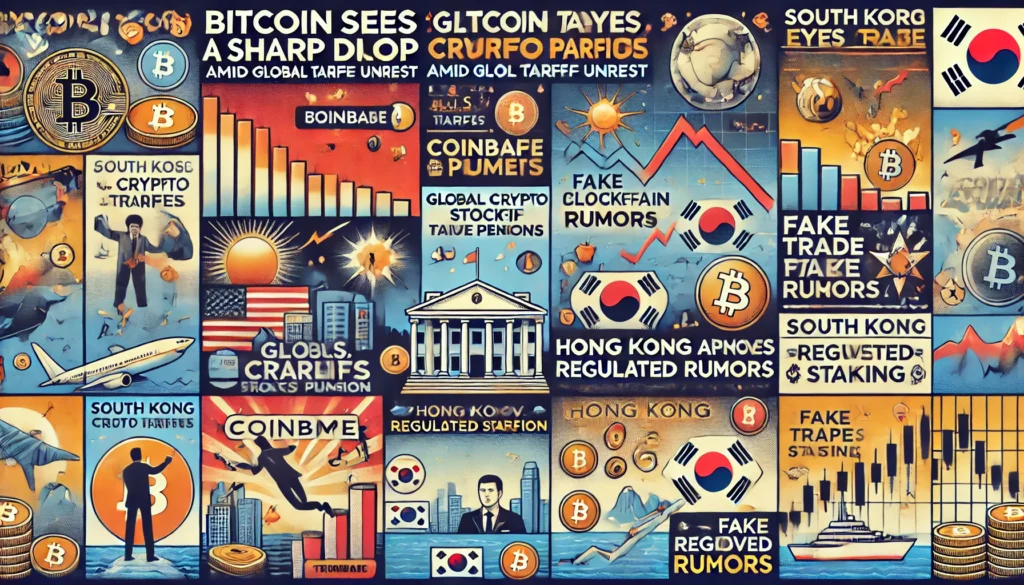
April 7 brought a whirlwind of developments in the crypto space, with global economic policies shaking Bitcoin’s price, while institutional momentum continues to push the blockchain industry forward. From major pension funds eyeing blockchain to new staking permissions from regulators and growing whale activity in Bitcoin, the market finds itself at the crossroads of volatility and innovation. Let’s dive into the key takeaways and understand the bigger picture. Bitcoin’s Volatility Amid Tariff-Induced Market Turbulence The recent imposition of sweeping tariffs by President Donald Trump has led to significant volatility across global financial markets, with Bitcoin experiencing notable price fluctuations. On April 7, 2025, Bitcoin’s price fell below the $80,000 mark, reaching approximately $79,000, a 5% decline. This downturn aligns with investor concerns over escalating trade tensions and the potential for a global recession. Additionally, the cryptocurrency market faced $250 million in long liquidations over a 24-hour period, indicating forced exits from bullish positions amid declining prices. Technical analysis reveals bearish momentum, highlighted by the formation of a “death cross,” where the 50-day moving average crosses below the 200-day moving average. This pattern suggests the possibility of further declines. Key support levels to monitor include $74,000, $65,000, and $57,000, each corresponding to previous performance benchmarks. Conversely, resistance is anticipated around $87,000, where significant moving averages converge. Investors are advised to closely observe these technical levels amid ongoing market instability linked to macroeconomic tensions. Market Impact: The tariff-induced market volatility has not only affected traditional financial markets but also significantly impacted the cryptocurrency sector. The decline in Bitcoin’s price and the broader crypto market underscores the interconnectedness of global economic policies and digital asset valuations. Investors should remain vigilant, as continued trade tensions may lead to further market fluctuations and influence investment strategies in both traditional and digital asset markets. South Korea’s National Pension Service Explores Blockchain for $890 Billion Fund Transactions South Korea’s National Pension Service (NPS), managing assets worth approximately $890 billion, is evaluating the integration of blockchain technology into its fund transaction processes. The primary objective is to leverage blockchain’s shared ledger capabilities to prevent tampering of fund records, thereby enhancing the security and transparency of its accounting systems. This initiative underscores NPS’s commitment to adopting innovative technologies to safeguard the retirement funds of millions. To assess the feasibility of this integration, NPS has initiated a pre-standardization process, seeking feedback from industry experts, including those in the blockchain sector. This collaborative approach aims to gather diverse insights to inform a comprehensive research study on the potential implementation of blockchain within NPS’s operations. Notably, NPS has prior experience with blockchain, having utilized it to track overseas pension recipients, indicating a foundational understanding of the technology’s applications. While NPS is not currently considering direct investments in cryptocurrencies like Bitcoin, it holds indirect exposure through investments in companies such as Coinbase. This strategic move aligns with broader trends in South Korea, where entities like 7-Eleven have begun accepting the Bank of Korea’s central bank digital currency as part of significant trials, reflecting the nation’s progressive stance on digital financial innovations. NPS’s exploration of blockchain technology signifies a substantial endorsement of blockchain’s potential in institutional finance. Such initiatives by major pension funds can catalyze broader adoption of blockchain solutions across the financial sector, potentially leading to increased investments in blockchain infrastructure and related technologies. This development may also influence regulatory perspectives and encourage other institutional investors to consider blockchain’s benefits, thereby impacting the broader financial ecosystem. Hong Kong Regulator Permits Licensed Firms to Offer Crypto Staking Services Hong Kong’s Securities and Futures Commission (SFC) has issued new guidance allowing licensed virtual asset trading platforms (VATPs) and authorized virtual asset funds to offer staking services. Staking involves investors locking their virtual assets to support blockchain networks and, in return, earning rewards. This move is part of Hong Kong’s broader strategy to position itself as a leading hub for Web3 and digital asset innovations. Under the new framework, licensed platforms must obtain SFC approval before offering staking services and are required to maintain full control over client assets, explicitly prohibiting the outsourcing of staking to third parties. Additionally, platforms must transparently disclose all associated risks, including potential vulnerabilities like blockchain errors, hacking, or validator inactivity. These stringent measures aim to enhance investor protection and ensure the integrity of staking operations within the regulated environment. This regulatory development contrasts with approaches in other jurisdictions; for instance, Singapore has banned retail staking, and the U.S. Securities and Exchange Commission has taken a restrictive stance. Hong Kong’s decision reflects its commitment to fostering a progressive yet secure environment for digital asset services, potentially attracting more crypto-related businesses to its market. Market Impact: The SFC’s approval for licensed firms to offer staking services is likely to bolster investor confidence and attract more participants to Hong Kong’s crypto market. By providing a clear regulatory framework, Hong Kong positions itself as a favorable destination for crypto enterprises seeking a supportive yet regulated environment. This move may also influence regional regulatory approaches, potentially setting a precedent for other jurisdictions considering the integration of staking services within their financial ecosystems. Institutional Demand for Bitcoin Rises with Increase in Large Holders Recent data indicates a significant uptick in institutional interest in Bitcoin, evidenced by the addition of 76 new entities holding over 1,000 BTC each in the past two months—a 4.6% increase. This trend suggests that institutional investors are increasingly viewing Bitcoin as a viable asset class, even amid recent market volatility. The growing institutional appetite is further highlighted by similar trends in other cryptocurrencies. For instance, XRP has experienced heightened demand, leading to optimistic price projections. This pattern of accumulation by large holders, often referred to as “whales,” typically signals bullish sentiment and can contribute to upward price momentum. Despite recent price corrections in the crypto market, the sustained interest from institutional investors underscores a broader acceptance and integration of digital assets into traditional financial portfolios. This development reflects a maturation of the cryptocurrency market,
4 Important Crypto News: ICE–Circle Tokenization, Bitcoin Whale Moves, BTC–Altcoin Decoupling & Russian Crypto Reserve Warning – BotSlash Daily Crypto News Analysis

The cryptocurrency market is undergoing pivotal changes across multiple fronts — from deepening institutional integration to macroeconomic policy concerns. The Intercontinental Exchange (ICE) is moving into tokenized assets with Circle, Russian economists are warning against adopting national crypto reserves imported from external sources, Bitcoin is breaking its historic correlation with altcoins, and whales are making billion-dollar moves that reflect growing confidence. These developments together indicate a maturing market with renewed focus on compliance, innovation, and strategic investment. 1. NYSE Parent ICE to Explore New Products with Circle’s Stablecoin & Tokenized Fund The partnership between Intercontinental Exchange (ICE), parent company of the New York Stock Exchange, and Circle, the issuer of USDC, signals a critical step forward for institutional adoption of blockchain-based financial products. By collaborating on tokenized funds and exploring new use cases for USDC, ICE is aligning traditional finance with emerging decentralized systems in a controlled and compliant manner. Tokenized assets offer benefits such as real-time settlement, reduced counterparty risk, and greater transparency. Through this partnership, ICE can leverage Circle’s infrastructure to potentially offer products like tokenized ETFs or funds that appeal to both retail and institutional investors. The choice of USDC is notable—it’s one of the most compliant and regulated stablecoins, meaning any new financial products based on it are likely to align with U.S. regulatory standards. This move also positions ICE competitively within the growing field of tokenized finance, a space already being explored by giants like BlackRock and JPMorgan. For Circle, this partnership enhances credibility and further embeds USDC within the global financial ecosystem. Market Impact:While the announcement didn’t spark major short-term price action, it strengthens USDC’s long-term position and sets the stage for future institutional adoption. Expect increased interest in tokenized assets and more regulated stablecoin use cases as traditional players enter the space. 2. Russian Economist Warns Against Establishing National Crypto Reserve Imported from Binance A prominent Russian economist has warned against the establishment of a national crypto reserve using digital assets imported from Binance. The caution reflects deep concerns over sovereignty, transparency, and long-term control in adopting externally managed cryptocurrencies or tokens. The proposed idea of using imported crypto as a reserve asset raises fears about dependence on foreign-controlled infrastructure and protocols. In a geopolitical context where Russia is increasingly seeking economic autonomy due to sanctions and strained relations with the West, creating a reserve based on a platform like Binance may undermine that very goal. Critics argue that imported reserves could be subject to external manipulation, surveillance, or even geopolitical pressure. Furthermore, the decentralized nature of cryptocurrencies clashes with state-controlled economic frameworks, making integration difficult without compromising either side. This skepticism also illustrates a broader global dilemma—nations exploring digital currencies must balance innovation with control. While China has embraced a state-run digital yuan, Russia remains cautious, torn between exploring blockchain-based finance and avoiding external dependencies. The warning may signal a growing shift toward developing in-house solutions, such as central bank digital currencies (CBDCs), rather than relying on imported or third-party tokens. It emphasizes that strategic digital asset policies are not just economic decisions, but matters of national security. Market Impact:This stance may influence other countries considering similar strategies. It reflects growing distrust in centralized crypto platforms like Binance and may drive momentum toward sovereign digital assets and localized blockchain infrastructure, particularly in sanctioned or isolationist economies. 3. Bitcoin’s Correlation with Altcoins Declines, Attracting More Investment A recent analysis shows that Bitcoin’s correlation with altcoins is weakening, signaling a shift in how investors perceive and allocate capital within the crypto space. Traditionally, Bitcoin and altcoins moved in sync, rising and falling together. However, current data suggests a decoupling trend, with Bitcoin moving more independently as investors begin to treat it as a distinct asset class. This divergence has a few key implications. First, it reflects Bitcoin’s growing appeal as a macro asset—akin to digital gold—rather than just another crypto. As institutional interest increases, Bitcoin is often the primary (or only) asset chosen due to its liquidity, regulatory clarity, and relative stability compared to smaller tokens. This has led to Bitcoin being seen more as a hedge than a speculative bet. Second, it points to an evolving investor mindset. Diversified portfolios may now include Bitcoin not as a lead indicator of altcoin trends, but as a separate entity deserving individual analysis. This has also allowed altcoins to develop their own narratives—whether based on DeFi, NFTs, or utility tokens—without being entirely tethered to Bitcoin’s price movements. Finally, the decoupling increases opportunities for selective investment and risk management. Traders and institutions can isolate BTC performance or altcoin-specific themes, rather than treating the market as a monolith. Market Impact:This trend can attract new capital into Bitcoin from investors seeking lower volatility exposure. At the same time, it allows altcoins to shine individually, promoting innovation and differentiated growth. The decoupling could result in more stable inflows into Bitcoin during uncertain times and increased altcoin activity during bullish cycles. 4. Bitcoin Whales Bought $1.1B of BTC in Two Weeks as Confidence Grew, Glassnode Says According to Glassnode data, Bitcoin whales have purchased over $1.1 billion worth of BTC within just two weeks, suggesting a strong return of confidence among large-scale investors. This level of accumulation typically precedes significant market movements and often indicates the belief that prices will rise or that Bitcoin is entering a more stable, bullish phase. Whales—wallets holding large amounts of BTC—are often considered smart money, and their behavior is closely watched by analysts. When such entities accumulate instead of distributing or selling, it often reflects internal metrics or long-term conviction that may not yet be visible in the broader market. Their recent purchases come amid improved market sentiment, stronger macroeconomic indicators, and the expectation of institutional adoption through ETFs and other financial products. This accumulation also aligns with a period of reduced exchange outflows, suggesting that whales are not preparing to sell but are instead securing assets for long-term storage. Additionally, recent regulatory clarity in the U.S. and ongoing developments in Bitcoin ETF approvals
5 Important Crypto News: Tokenization, Bitcoin ETPs, USDC in Japan, and Regulatory Wins – BotSlash Daily Crypto News Analysis

As major financial giants dive deeper into blockchain technology, today’s headlines reflect a clear acceleration toward crypto adoption across traditional markets and global regions. From BlackRock’s twin moves in Europe and Solana to Circle’s stablecoin debut in Japan, institutional momentum is reshaping the financial landscape. Meanwhile, legal victories in the U.S. and new blockchain infrastructure projects point to a future where tokenized assets and self-custody rights are central to the digital economy. CME Group Teams Up with Google Cloud to Explore Asset Tokenization CME Group, a powerhouse in the derivatives market, has announced a strategic collaboration with Google Cloud to experiment with asset tokenization. The project will leverage Google Cloud’s new Universal Ledger infrastructure, a purpose-built distributed ledger designed to accommodate both digital and traditional financial assets. This is not merely a tech experiment—CME’s involvement signals serious intent to move toward real-world applications of blockchain technology in financial markets. The tokenization initiative aims to improve efficiency in areas like clearing and settlement by using programmable digital representations of assets. Tokenization could help shorten transaction times, reduce operational risks, and lower costs. It also opens the door for fractional ownership and global, round-the-clock trading. Google Cloud’s infrastructure is tailored to meet strict regulatory and performance standards, which will be essential for onboarding institutional clients. The pilot testing phase will begin later this year, involving select market participants. If successful, services built on this tokenization platform are expected to launch in 2026. This could place CME and Google Cloud ahead in the race to build institutional-grade blockchain infrastructure. While the news doesn’t mention specific assets yet, it’s likely that the initial use cases will focus on tokenized versions of bonds or commodities—areas where CME already holds strong market presence. Market Impact: This move by CME adds credibility to the broader tokenization narrative. With trillions of dollars worth of assets potentially moving onto blockchain platforms, this announcement may influence other traditional financial institutions to explore similar ventures. It also fuels bullish sentiment for blockchain infrastructure projects and enterprise-focused tokens. BlackRock and Securitize Expand Tokenized Money Market Fund to Solana BlackRock and Securitize are scaling up their tokenized money market fund—known as BUIDL—by expanding to the Solana blockchain. Originally launched on Ethereum in collaboration with Securitize, the $1.7 billion BUIDL fund will now also operate on Solana, tapping into the network’s low fees and fast transaction capabilities. This move reinforces Solana’s growing reputation as a serious player in institutional finance. Tokenizing a money market fund offers numerous advantages: faster settlement, increased transparency, and easier fractional ownership. The expansion to Solana is particularly strategic because the network boasts high-speed performance and low costs—traits ideal for trading tokenized financial instruments. With BUIDL offering daily redemptions and a stable yield, it presents an attractive option for institutional and retail investors seeking exposure to dollar-backed assets. Securitize will handle the technical and compliance aspects of token issuance and management, allowing users to access tokenized fund shares directly via supported platforms. This move also reflects a broader industry trend where traditional financial products are being rebuilt for blockchain-based ecosystems. It’s part of a larger narrative of convergence between TradFi and DeFi, bringing mainstream capital closer to decentralized protocols. Market Impact: This is bullish for Solana, as it validates the chain’s ability to support serious financial instruments. Expect increased institutional interest in SOL, along with heightened developer activity. It could also put pressure on Ethereum to address its scalability issues faster to retain dominance in tokenized finance. BlackRock Launches Bitcoin ETP in Europe, Expands Global Crypto Reach BlackRock has officially launched its first Bitcoin exchange-traded product (ETP) in Europe, marking a significant step in the asset manager’s international crypto expansion. The ETP is now trading on Germany’s Xetra and Euronext exchanges in Paris and Amsterdam under the tickers IB1T and BTCN, respectively. This offering allows European investors to gain exposure to Bitcoin without having to hold the asset directly, streamlining access through traditional brokerage platforms. The ETP is physically backed by Bitcoin, with Coinbase acting as the custodian. BlackRock has temporarily reduced the fee to just 0.15% until the end of 2025, likely to attract initial flows and compete with existing ETPs in the region. This launch complements the iShares Bitcoin Trust ETF, which has already gained traction in the U.S. market with over $50 billion in assets under management. The move also indicates BlackRock’s long-term commitment to crypto as an asset class. This ETP provides a bridge between institutional capital and the crypto world, helping reduce barriers to entry for traditional investors. Its regulatory compliance and reputable backing are expected to instill confidence in hesitant European investors. BlackRock’s credibility and global presence might also catalyze more crypto product approvals in Europe, potentially sparking a new wave of digital asset innovation across the continent. Market Impact: Positive for Bitcoin’s global adoption and institutional legitimacy. European investors now have a regulated, secure avenue to invest, which may drive inflows into BTC and increase demand. It could also put competitive pressure on other asset managers in Europe to launch similar products. Kentucky Passes Law Supporting Bitcoin and Ethereum Self-Custody Rights Kentucky has officially passed a law safeguarding the right of individuals to self-custody Bitcoin and Ethereum. The bill also ensures businesses and miners can operate without undue regulatory interference. This legislative move sets a powerful precedent in crypto-friendly regulation, particularly at a time when federal-level clarity is still lacking in the U.S. The new law legally enshrines the right for residents to hold their own digital assets without relying on third-party custodians. It also protects individuals and businesses from being penalized or discriminated against based on their use of blockchain technology. Furthermore, the bill provides regulatory relief to miners, ensuring they can operate as long as they comply with standard environmental and zoning laws. Kentucky has been a surprising but increasingly influential state in the crypto space. With low energy costs and a growing interest in Bitcoin mining, this legislation could attract more blockchain-related businesses. This trend mirrors moves in other
7 Important Daily Crypto News: Market Resilience, Bitcoin’s Bull Run, Crypto-to-Debit Services, Memecoin Legislation, Futures Correction Risks, Bitcoin Reserve Plans, and Pakistan’s Regulatory Council… Botslash Daily Crypto News Analysis
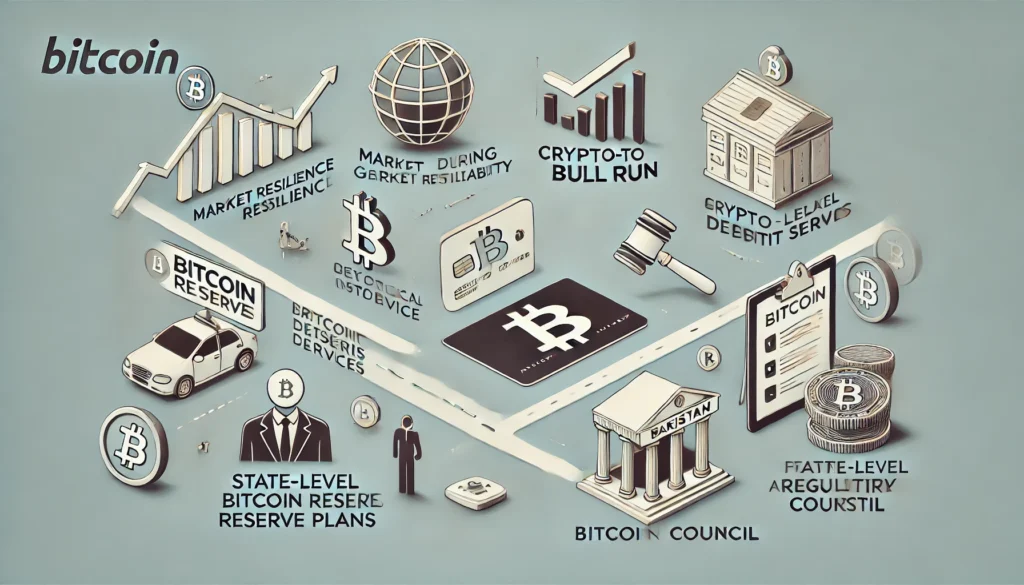
The latest developments in the crypto world underscore the sector’s resilience amid global financial uncertainties. From regulatory actions to new market features, the crypto ecosystem continues to evolve rapidly. Institutional demand for Bitcoin remains strong, even as governments propose new legislation targeting memecoins and the integration of Bitcoin into state reserves faces hurdles. Meanwhile, innovation in crypto payments and partnerships, such as the collaboration between Cronos and Crypto.com, highlights the growing use case for digital currencies in everyday transactions. Let’s dive into these key updates: Crypto Holds Firm as Traditional Markets Struggle with Trump’s Tariff Threat The cryptocurrency market has shown resilience amid a downturn in traditional finance triggered by Donald Trump’s latest tariff threats. Major stock indices, including the S&P 500 and Dow Jones, suffered losses as investors grew wary of potential economic repercussions. However, Bitcoin and other leading cryptocurrencies remained stable, demonstrating their role as alternative assets during economic uncertainty. This divergence between TradFi and crypto highlights the growing perception of digital assets as a hedge against geopolitical risks and macroeconomic instability. A key factor behind crypto’s stability is institutional demand, with many investors turning to Bitcoin as a digital store of value. Historically, Bitcoin has performed well in times of financial distress, and its decentralized nature shields it from direct government policies like tariffs. Furthermore, growing adoption in emerging markets and increasing utility in payment systems continue to strengthen crypto’s long-term outlook. Despite concerns over regulatory challenges, the sustained demand for digital assets suggests they are becoming more integrated into the global financial ecosystem. While Bitcoin’s price action remains relatively steady, altcoins like Ethereum and Solana are also seeing interest from investors seeking diversification. If economic uncertainty persists, crypto markets may continue to decouple from traditional assets, further reinforcing their role as an independent financial system. However, regulatory scrutiny and potential policy shifts remain risks that could impact market sentiment. Market Impact: The market impact of this development suggests that digital assets, particularly Bitcoin, are increasingly seen as a safe-haven investment during times of geopolitical and financial uncertainty. As traditional markets react negatively to Trump’s tariff threats, cryptocurrencies are holding steady, potentially attracting institutional investors who seek protection from external macroeconomic pressures. This trend could further solidify Bitcoin’s role as a store of value, separate from traditional assets, especially if geopolitical tensions continue to rise. CryptoQuant CEO: Bitcoin’s Bull Run Still Has Momentum CryptoQuant CEO Ki Young Ju remains confident that Bitcoin’s bull market is far from over, citing strong on-chain data as evidence. He highlights that long-term holders continue to accumulate Bitcoin while exchange reserves remain low, indicating that investors are not eager to sell. Historically, bull markets end when a “blow-off top” occurs, marked by excessive retail euphoria and large-scale profit-taking—something Ju believes has not yet happened. One key metric supporting his argument is Bitcoin’s realized cap, which is approaching all-time highs. This suggests that new capital is entering the market rather than old money exiting. Additionally, institutional adoption continues to grow, with major financial firms integrating Bitcoin into their offerings, further solidifying its position as a legitimate asset class. The approval of spot Bitcoin ETFs has introduced a new wave of demand, which could sustain the bull cycle for longer than previous market cycles. Despite short-term corrections, Ju sees Bitcoin’s fundamentals as strong, with supply-side dynamics favoring further price appreciation. The reduced availability of BTC on exchanges, coupled with strong holding patterns, indicates that any dips could be buying opportunities rather than signs of a market top. However, investors should remain cautious of external macroeconomic factors that could trigger temporary downturns. Market Impact: The market impact of this news suggests that Bitcoin’s bullish trend is likely to persist in the medium to long term. Strong on-chain metrics and low exchange reserves point to continued accumulation, especially by long-term holders and institutional investors. As Bitcoin’s realized cap approaches all-time highs, there may be more upward pressure on its price, which could lead to more institutional interest and stronger demand, even in the face of short-term volatility or corrections. Cronos Enables Crypto-to-Debit Card Transfers in Partnership with Crypto.com Cronos has introduced a seamless crypto-to-debit card transfer service in partnership with Crypto.com, allowing users to spend digital assets directly. This initiative simplifies the crypto payment process by eliminating the need for complex conversions. Users can now load their debit cards with cryptocurrencies and use them for everyday purchases, marking a step toward mainstream adoption. The partnership between Cronos and Crypto.com aims to bridge the gap between digital assets and traditional finance. One of the biggest barriers to crypto adoption is the difficulty of using it in real-world transactions. By offering a direct conversion service, Cronos enhances the usability of its ecosystem, positioning itself as a key player in crypto payments. Additionally, this service may encourage greater adoption of stablecoins and other digital currencies as everyday payment methods. As crypto regulation continues to evolve, services like these could influence how authorities perceive and regulate digital payments. The ability to seamlessly use crypto for daily spending may accelerate regulatory discussions, potentially leading to clearer policies. If successful, this initiative could set a precedent for other crypto platforms to follow, pushing digital assets closer to mass adoption. Market Impact: This development is expected to drive further adoption of cryptocurrency for everyday transactions. The ability to load debit cards directly with crypto makes it more practical for users to use digital assets for purchases, thereby increasing their utility in real-world applications. This could lead to increased demand for Cronos’ platform and Crypto.com services, while also creating a more mainstream pathway for crypto integration in traditional financial systems. Over time, this could reduce barriers to entry for those unfamiliar with crypto exchanges or wallets, promoting further mass adoption. U.S. House Democrats Propose Law to Ban Presidential-Themed Memecoins A group of U.S. House Democrats has introduced a bill seeking to ban presidential-themed memecoins, citing concerns over financial scams and misinformation. The rise of politically charged tokens, including those based on Donald Trump
5 Important Crypto News : GameStop’s Bitcoin Bet, Polkadot ETF, U.S. Economic Uncertainty & Dubai’s Stablecoin Approval – BotSlash Daily Crypto News Analysis

The financial world is witnessing a dynamic shift as major corporations and governments take decisive steps regarding crypto assets. From GameStop’s potential Bitcoin treasury strategy to Nasdaq’s move toward a Polkadot ETF, institutional interest in crypto continues to grow. Meanwhile, macroeconomic concerns in the U.S. are affecting consumer confidence and stock markets, influencing investment behaviors. On the regulatory front, Dubai has approved Circle’s stablecoins, reinforcing its vision of becoming a leading digital asset hub. These developments highlight the interplay between crypto adoption, economic trends, and regulatory advancements, shaping the future of the digital economy. GameStop Urged to Convert Cash Reserves into Bitcoin GameStop, a well-known video game retailer, is being urged by Strive’s CEO, Matt Cole, to convert its $5 billion cash reserves into Bitcoin. Cole believes that adopting Bitcoin as a treasury asset could enhance GameStop’s long-term financial stability and create substantial value for shareholders. This recommendation comes amid an ongoing trend where companies, including MicroStrategy and Tesla, have incorporated Bitcoin into their balance sheets. The move would align GameStop with the growing digital asset economy and potentially position it as an innovative leader in corporate crypto adoption. Despite the potential benefits, analysts caution against such a bold move. Bitcoin’s volatility presents a significant financial risk, and GameStop’s core business model does not directly align with cryptocurrency investments. Wedbush Securities analyst Michael Pachter pointed out that GameStop already trades at a premium relative to its net asset value, much like MicroStrategy, which has a strong Bitcoin correlation. If GameStop were to follow the same strategy, its stock price could become highly correlated with Bitcoin, making it susceptible to the unpredictable nature of the crypto market. Investors might see this as a speculative move rather than a strategic business decision. GameStop’s interest in cryptocurrency is not new. The company has previously explored blockchain and NFT-related initiatives, signaling its openness to digital asset integration. However, a full-scale transition of cash reserves into Bitcoin could attract regulatory scrutiny and investor skepticism. If GameStop follows through with this idea, it may influence other companies to consider similar strategies, especially in sectors looking to hedge against inflation. For now, the market remains divided on whether such a move would be a game-changer or a financial misstep. Market Impact: If GameStop announces a Bitcoin investment, its stock price could experience short-term volatility. Bitcoin’s price may also react positively to the news, as corporate adoption signals growing institutional interest. However, regulatory concerns and investor sentiment will play a crucial role in determining the long-term effects. Nasdaq Submits Filing to List Grayscale’s Polkadot ETF Nasdaq has officially submitted a Form 19b-4 to the U.S. Securities and Exchange Commission (SEC) to list and trade shares of Grayscale’s Polkadot Trust (DOT) as an exchange-traded fund (ETF). If approved, this would mark one of the first ETFs to provide direct exposure to Polkadot, a blockchain network focused on interoperability and scalability. This filing is part of Grayscale’s broader strategy to expand crypto investment products, following its success with Bitcoin and Ethereum ETFs. The potential listing of a Polkadot ETF signals growing institutional interest in blockchain ecosystems beyond Bitcoin and Ethereum. Polkadot, with its parachain technology, aims to improve blockchain interoperability, allowing different networks to communicate and share data efficiently. An ETF offering direct exposure to DOT would allow traditional investors to gain regulated access to the asset without dealing with cryptocurrency exchanges or private wallets. This development could lead to increased liquidity and broader adoption of Polkadot in mainstream financial markets. Despite the optimism, regulatory approval remains a key hurdle. The SEC has historically been cautious with crypto ETFs, especially those tied to altcoins. The decision will depend on market transparency, security, and whether the Polkadot ecosystem meets compliance standards. If approved, this ETF could boost Polkadot’s adoption and price, similar to the impact seen with Bitcoin ETFs. On the other hand, a rejection might delay institutional participation in Polkadot’s ecosystem. Market Impact: If the ETF gets approved, DOT’s price could surge due to increased investor interest. The overall crypto market may benefit from greater institutional inflows. However, a rejection could dampen market sentiment, leading to a short-term price dip for Polkadot. U.S. Consumer Confidence Declines Sharply in February The U.S. consumer confidence index fell significantly in February 2025, dropping from 105.3 in January to 98.3. This marks the steepest monthly decline in over four years. The drop is attributed to persistent inflation concerns, rising interest rates, and economic uncertainty tied to trade policies under President Trump’s administration. Consumer sentiment is a crucial indicator of economic health, as it directly influences spending behavior. With consumer confidence declining, there are fears that reduced spending could slow economic growth. A separate survey from the University of Michigan further reinforced these concerns, showing that consumer sentiment fell from 71.7 to 64.7 in the same period. The survey highlights that more than half of respondents expect unemployment to rise, while 40% report that inflation is negatively impacting their standard of living. These findings indicate that households are becoming more cautious, potentially cutting back on non-essential purchases, which could hurt retail, automotive, and housing sectors. The decline in consumer confidence has already impacted financial markets. The S&P 500 and Nasdaq fell in response to the report, reflecting concerns over a possible economic slowdown. The Federal Reserve may need to reassess its monetary policy approach, balancing inflation control with economic growth. If consumer sentiment continues to weaken, policymakers might be pressured to adjust interest rates or introduce stimulus measures to prevent a prolonged downturn. Market Impact: A sustained drop in consumer confidence could lead to weaker corporate earnings, stock market corrections, and increased economic uncertainty. The crypto market may also experience volatility as investors seek safe-haven assets like Bitcoin during economic downturns. Major U.S. Stock Indexes Experience Decline The U.S. stock market has faced significant declines recently, with major indices posting losses amid economic uncertainty. The S&P 500 fell 1.7%, marking its worst trading day in two months. The Dow Jones Industrial Average dropped 748.63
6 Improtant latest Crypto News : SEC Drops Coinbase Lawsuit, BNB Chain’s Smart Contract Wallets, Bybit Hack Fallout, Altvest’s Bitcoin Adoption, ECB’s Wholesale CBDC Push : Botslash Daily Crypto News Analysis

The cryptocurrency market is seeing dynamic shifts across multiple fronts, with key regulatory actions and technological advancements shaping its future. From the U.S. SEC’s reversal on a major lawsuit against Coinbase, to BNB Chain’s upcoming hard fork aimed at enhancing smart contract capabilities, the industry is in a state of flux. Additionally, the aftermath of the Bybit hack has raised concerns around centralized exchange security, while institutional adoption continues to grow with firms like Altvest embracing Bitcoin. Meanwhile, central banks are making strides toward their own digital currencies, with the European Central Bank advancing its wholesale CBDC plans. Together, these developments illustrate the evolving nature of crypto markets and regulatory landscapes. 1. U.S. Senators Push for SEC to Rethink Crypto Staking in Exchange Funds U.S. senators are urging the Securities and Exchange Commission (SEC) to reconsider its stance on staking within exchange-traded funds (ETFs). Specifically, lawmakers have expressed concern over the exclusion of staking activities in crypto ETFs, pointing out that it harms innovation in the cryptocurrency market. Staking, particularly within Ethereum and other PoS (Proof of Stake) protocols, plays a crucial role in securing blockchain networks while offering additional rewards to token holders. The senators are arguing that staking in ETFs should be allowed, particularly since it aligns with decentralized principles and contributes to the broader cryptocurrency ecosystem. While the SEC has historically resisted including staking in ETFs due to concerns about unregistered securities offerings, the lawmakers point out that staking protocols such as Ethereum’s are well-regulated and provide a legitimate way for investors to earn rewards. The letter penned by the senators reflects growing bipartisan support for embracing crypto activities that could potentially enhance blockchain security and reward holders, thereby adding value to these networks. This type of regulatory shift could be a significant step toward legitimizing crypto ETFs and fostering broader institutional adoption of digital assets. Despite the SEC’s reservations, including staking within ETFs could potentially boost investor confidence by offering more transparent and regulated avenues for exposure to cryptocurrency assets. This change could open the door for institutional investors to more easily interact with crypto markets and further integrate digital assets into traditional financial systems. However, it remains to be seen how the SEC will respond to the growing call for a more inclusive regulatory environment for staking, and whether this move will trigger broader policy shifts in the U.S. toward cryptocurrency adoption. Market Impact: If this proposal gains traction, it could significantly impact the crypto market by accelerating institutional involvement in staking, potentially increasing liquidity and market stability. Staking integration within ETFs may also open new investment avenues, especially for risk-averse institutional investors. 2. Bybit Hack Update: Reasons Behind the Breach and How It Affects the Crypto Market The Bybit exchange, a major player in the cryptocurrency sector, was recently targeted by hackers in a sophisticated security breach that compromised user funds. This breach exposes ongoing vulnerabilities in centralized crypto exchanges, which are more susceptible to attacks compared to decentralized platforms. The incident highlights the need for stronger security protocols to protect user assets, especially in light of growing institutional interest in cryptocurrencies. Bybit’s quick response, including freezing compromised accounts and launching investigations with cybersecurity experts, shows its commitment to safeguarding user funds, though the hack raises broader concerns about the security of centralized exchanges. Centralized exchanges, which are tasked with handling user funds and transactions, have often been the target of hackers due to their large liquidity pools and single points of control. This breach serves as a reminder to both traders and institutions that they must carefully consider security when selecting platforms to interact with digital assets. The hack also adds to the ongoing discussion about the risks associated with using centralized platforms versus decentralized alternatives, which rely on smart contracts and distributed ledgers to enhance security. The hack’s impact on the market sentiment has been noticeable. Following the breach, many traders are reassessing the risks of trading on centralized exchanges, which could lead to a temporary decrease in trading volumes on Bybit and similar platforms. This heightened risk awareness might shift investor preferences toward decentralized exchanges (DEXs), which do not hold user funds and are less vulnerable to hacking. If the breach continues to affect Bybit’s reputation, the broader crypto market might see an increase in regulatory scrutiny of exchange security practices. Market Impact: This hack could trigger a wave of caution among crypto traders and investors, leading to decreased trust in centralized exchanges. Consequently, we may see increased adoption of decentralized finance (DeFi) solutions and platforms that prioritize user control and security over centralized models. 3. BNB Chain Sets Mid-March Pascal Hard Fork Date to Bring Native Smart Contract Wallets BNB Chain has announced the date for its upcoming Pascal hard fork in mid-March 2025, which will introduce native smart contract wallets on the network. This upgrade is designed to improve the functionality and flexibility of BNB Chain, bringing it closer to Ethereum’s ecosystem in terms of transaction capabilities and wallet integrations. The Pascal hard fork will introduce new features such as spending limits, batch transactions, and multisignature support, which could improve the overall user experience and enhance the network’s scalability. Additionally, it aligns BNB Chain with Ethereum’s Pectra upgrade, which is aimed at improving transaction efficiency and data handling across blockchain networks. The decision to implement native smart contract wallets is seen as a key step in BNB Chain’s ongoing efforts to attract more developers and decentralized applications (dApps) to the platform. The introduction of these advanced wallet features will likely attract both retail and institutional investors, further legitimizing BNB Chain as a serious player in the blockchain space. With its rapidly growing ecosystem and significant adoption by meme coins and DeFi projects, the BNB Chain is positioning itself as an alternative to Ethereum, and this update may bolster its competitive edge. By introducing this new functionality, BNB Chain is not only enhancing its usability but also improving its security model. Smart contract wallets offer greater control over digital
8 Latest Crypto Analysis : Bitcoin ETFs, Binance Rumors, Institutional Growth & Regulatory Challenges Shape Market Sentiment : News Daily Crypto News Analysis

The cryptocurrency landscape is undergoing significant changes, driven by both market dynamics and regulatory shifts. Key developments include the rise of Bitcoin exchange-traded funds (ETFs), which could bring institutional investors into the market, as well as rumors surrounding Binance’s potential sale, with CEO Changpeng Zhao firmly denying these claims. Meanwhile, global regulations are tightening, with Australia leading the charge in cracking down on crypto exchanges, while Hong Kong sees increased institutional investment in Bitcoin. Reports also suggest Bitcoin could play a key role in the market’s growth in 2025, contingent on holding support levels. These stories reflect a market in transition, with both growth potential and regulatory uncertainty on the horizon. 1. FTX Payouts, Trump & Musk, FOMC Minutes May Roil Crypto Markets This Week Analysis:The crypto market faces potential turbulence this week, driven by a combination of significant events. First, the payout of FTX creditors is expected to have ripple effects. As the bankrupt exchange distributes assets, many creditors, particularly institutional players, may liquidate their holdings, causing price fluctuations in the market. The timing of these asset sales, compounded by the current market conditions, could amplify volatility. The liquidation of assets by large creditors could flood the market with Bitcoin and other cryptocurrencies, creating downward pressure on prices. The second potential catalyst for market volatility is the high-profile Trump and Musk interview, which could trigger unpredictable movements in market sentiment. Both figures are influential in shaping public opinion on crypto, and their views on the industry often send signals that can sway investor behavior. As we’ve seen in the past, Musk’s remarks on cryptocurrencies, especially regarding Bitcoin and Dogecoin, have caused sharp price fluctuations. With Trump’s political influence and Musk’s power as a tech mogul, any new developments from their interaction could have substantial implications for market confidence. Lastly, the release of the Federal Open Market Committee (FOMC) minutes is expected to further stir market sentiment. The FOMC minutes provide insight into the Federal Reserve’s future plans on interest rates and monetary policies, which directly affect risk assets, including cryptocurrencies. Investors in the crypto space are highly sensitive to any signals of tightening monetary policy, as it could lead to higher borrowing costs and reduced liquidity in the market. The release of the minutes is likely to fuel uncertainty, adding more volatility to an already fragile market. Market Impact:The combined effect of these events could result in short-term market volatility, especially if the FTX payouts lead to large sell-offs. Market participants will also be keeping a close eye on the political and macroeconomic developments tied to Trump, Musk, and the FOMC. It’s possible that investors might choose to sit on the sidelines, awaiting clearer guidance from these events. However, the outcome could vary depending on how quickly the market absorbs the potential shocks. 2. U.S. Listed Bitcoin Miners Growing Their Share of the Network Hashrate: Bernstein Analysis:U.S.-listed Bitcoin miners are gaining a significant share of the network’s hashrate, as detailed in a recent Bernstein report. Bitcoin mining, known for its high capital requirements and energy demands, has seen a shift toward U.S.-based mining operations, thanks in large part to access to the U.S. capital markets. Publicly traded companies like Marathon Digital and Riot Platforms have successfully raised capital to expand their mining capacity, investing heavily in more efficient mining hardware. This surge in hashrate has not only strengthened the position of U.S. miners but also provided them with greater influence over the Bitcoin network itself, potentially affecting network security and block production. The expansion of U.S.-listed miners could be seen as a response to global mining pressures, particularly from China, which was once the dominant force in Bitcoin mining. As the Chinese government imposed a ban on Bitcoin mining in 2021, many miners relocated to jurisdictions with more favorable regulations, including the U.S. The increased share of U.S. miners in the Bitcoin network demonstrates the global shift in the mining landscape, showcasing the power of the U.S. to harness resources and technology for Bitcoin mining. The shift also marks a growing trend toward centralization of mining power in the U.S., which could influence the decentralization principles that Bitcoin was initially built upon. While the increase in mining capacity has advantages for U.S. miners, it also poses challenges. The industry faces growing scrutiny over the environmental impact of energy-intensive mining operations. There are calls for the adoption of cleaner energy sources to mitigate the carbon footprint associated with mining. Additionally, the increased dominance of U.S.-listed miners could create potential risks of network centralization, which might be counterproductive to the decentralization ethos of the Bitcoin network. Nonetheless, this trend is a clear indicator that the U.S. is becoming a major player in the future of Bitcoin mining. Market Impact:The increase in U.S. miners’ hashrate share can influence the price of Bitcoin and market sentiment, particularly in terms of perceived network security and centralization risks. Miners with greater control over the network may benefit from enhanced profitability, but as the sector becomes more competitive, smaller miners may face challenges in staying afloat. Investors in mining companies might see opportunities in this trend, but the environmental and centralization concerns could introduce long-term market risks, especially in terms of regulation and public perception. 3. Institutional Adoption of Bitcoin ETF Increases Under Trump Administration Analysis:The increasing institutional adoption of Bitcoin ETFs has gained traction, and the potential return of a pro-crypto stance under a Trump administration could significantly accelerate this trend. Institutional investors have shown increasing interest in Bitcoin, primarily driven by Bitcoin’s potential to serve as a hedge against inflation and the digital asset’s growing acceptance as an asset class. Bitcoin ETFs, in particular, offer a more accessible method of exposure to Bitcoin for traditional investors who are reluctant to handle the complexities of holding Bitcoin directly. The launch of Bitcoin ETFs, such as the recent attempts by various financial institutions to introduce Bitcoin-linked ETFs, would allow larger investors, like pension funds and hedge funds, to gain exposure to Bitcoin through familiar financial