
4 Important Crypto News: Ripple’s $1.25B Move, Bitcoin’s Slide, BlackRock’s EU ETF, and Hive’s Paraguay Expansion — BotSlash Daily Crypto News Analysis
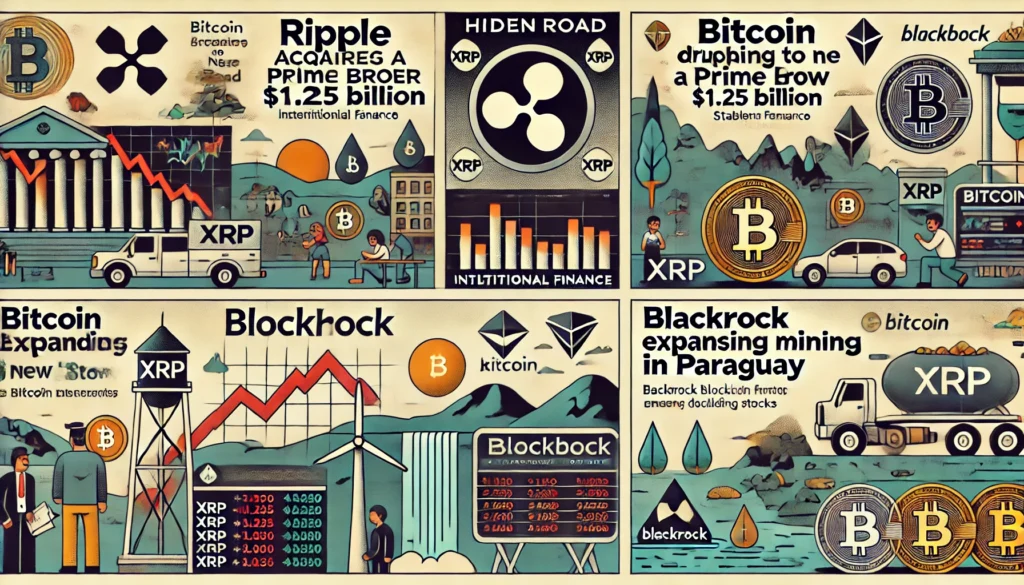
The past 24 hours brought impactful developments across key sectors of the crypto world, signaling a deepening institutional presence and reactive market shifts. Ripple is making a power move with a $1.25 billion acquisition aimed at expanding its DeFi influence. Meanwhile, the broader crypto market reacted negatively to macroeconomic fears, pulling Bitcoin to new lows and dragging crypto stocks down. In contrast, BlackRock is charging ahead, debuting its first Bitcoin product in Europe — a milestone for the region’s digital asset exposure. And Hive Blockchain is going green, announcing new mining operations in Paraguay, tapping into sustainable energy. Ripple’s $1.25 Billion Acquisition of Prime Broker Hidden Road Ripple Labs, the company behind the cryptocurrency XRP, has announced plans to acquire multi-asset prime brokerage firm Hidden Road for $1.25 billion. This strategic move aims to bolster Ripple’s position in institutional decentralized finance (DeFi) by integrating Hidden Road’s extensive client base and clearing capabilities. Hidden Road processes approximately $3 trillion annually across various financial markets and serves over 300 institutional clients. The acquisition is expected to enhance the utility of Ripple’s U.S. dollar-pegged stablecoin, RLUSD, which Hidden Road utilizes as collateral in its brokerage products. This positions Ripple to compete more effectively with established stablecoin providers like Tether and USD Coin. The deal is anticipated to close in the coming months, pending regulatory approvals. Market Impact: This acquisition signifies a substantial expansion of Ripple’s institutional services, potentially increasing XRP’s adoption among institutional investors. The move may also influence the competitive landscape of stablecoins, challenging existing market leaders. U.S. Crypto Stocks Decline as Bitcoin Hits New 2025 Low On April 7, 2025, U.S.-listed crypto company stocks experienced significant declines, mirroring a sharp drop in bitcoin prices. Bitcoin fell by as much as 5.5%, reaching its lowest point in 2025. Shares of major crypto-related firms also suffered, with MicroStrategy falling over 7%, Coinbase dropping 6%, and Robinhood sliding 4%. The downturn is attributed to escalating global trade tensions following new tariffs announced by President Donald Trump, which have dampened investor confidence and risk appetite. Additionally, billionaire investor Bill Ackman warned of a potential “economic nuclear winter,” further fueling market concerns. Market Impact: The recent market volatility underscores the sensitivity of crypto assets to broader economic and geopolitical developments. Investors may need to reassess the role of cryptocurrencies as safe-haven assets during times of economic instability. BlackRock Launches First Bitcoin Product in Europe BlackRock, the world’s largest asset manager, has introduced its first bitcoin exchange-traded product (ETP) in Europe, named the ‘iShares Bitcoin ETP.’ Domiciled in Switzerland, the product is listed in Paris, Amsterdam, and Frankfurt. This launch follows BlackRock’s success in the United States, where it attracted over $50 billion into similar cryptocurrency products after the Securities and Exchange Commission approved such offerings in January 2024. BlackRock has partnered with Coinbase as the custodian and Bank of New York Mellon as the administrator for this new product. Reuters Market Impact: BlackRock’s expansion into the European crypto market reflects growing institutional interest and could pave the way for increased adoption of bitcoin ETPs across the continent. Hive’s Expansion of Bitcoin Mining Operations in Paraguay Hive Blockchain Technologies, under the leadership of Executive Chairman Frank Holmes, is expanding its bitcoin mining operations into Paraguay. The move aims to leverage Paraguay’s abundant hydroelectric power to support sustainable and cost-effective mining activities. This expansion aligns with Hive’s strategy to diversify its operations geographically and enhance its mining capacity while adhering to environmentally friendly practices. Market Impact: Hive’s expansion into Paraguay could set a precedent for other mining companies seeking sustainable energy sources, potentially influencing global mining operations’ geographical distribution and environmental strategies. Key Takeaways: Ripple’s acquisition of Hidden Road for $1.25 billion aims to enhance its institutional DeFi services and stablecoin utility. U.S. crypto stocks have declined amid bitcoin’s drop to a new 2025 low, influenced by escalating trade tensions and economic concerns. BlackRock has launched its first bitcoin ETP in Europe, reflecting growing institutional interest in cryptocurrency products. Hive Blockchain is expanding its bitcoin mining operations into Paraguay, leveraging sustainable hydroelectric power.
7 Important Crypto News: U.S. Push for Bitcoin Reserve, Bearish Divergence, UK Regulations & Exchange Supply Trends – BotSlash Daily Crypto News Analysis
A pivotal day in the crypto space as U.S. lawmakers accelerate efforts around both combating illicit activity and exploring Bitcoin as a sovereign reserve asset. Technical signals warn of a possible downturn even as investor behavior turns bullish, pulling Bitcoin off exchanges in record volumes. Meanwhile, the UK makes long-term regulatory commitments, signaling growing international focus on crypto frameworks. Altogether, today’s developments highlight the battle between regulatory control, national strategy, investor sentiment, and market signals. U.S. Crypto Bill Targets Illicit Finance With Renewed Bipartisan Support The reintroduction of the Financial Technology Protection Act (FTPA) marks a pivotal move by U.S. lawmakers aiming to curb illicit financial activity facilitated by digital assets. Spearheaded by Representatives Zach Nunn and Jim Himes, the bill proposes the formation of an interagency working group combining government expertise from entities like the DOJ and FBI with insights from crypto industry professionals. The act is positioned as a forward-looking policy tool, emphasizing national security without stifling innovation. The core purpose of the FTPA is to improve oversight of suspicious blockchain activities while simultaneously enhancing the capacity of law enforcement and intelligence agencies to tackle crypto-related crime. The collaborative structure of the working group allows for a multifaceted approach, balancing enforcement with education and technological adaptation. Importantly, the bipartisan nature of this push underscores the increasing political will to provide a regulatory backbone to the fast-evolving digital asset space. While the act primarily focuses on deterring terrorism financing and criminal transactions, it may also open doors for more defined guidelines in the crypto industry. By involving crypto experts, the bill avoids the traditional heavy-handedness often seen in early-stage regulation and paves the way for practical, implementable rules. Overall, the FTPA may become a model framework for future global initiatives aimed at harmonizing security and innovation. Market Impact: This legislative move could create short-term uncertainty, particularly for privacy-focused coins, but it’s largely neutral to positive in the medium term. The inclusion of crypto experts and the collaborative nature of the bill suggest a balanced approach that could boost investor confidence in regulated markets. Bitcoin Exchange Supply Drops to 5-Year Low—A Bullish Sign? According to Santiment’s latest analytics, only 7.53% of Bitcoin’s total circulating supply remains on centralized exchanges—a level not seen since early 2018. This massive drop indicates a growing preference for self-custody, a move generally associated with accumulation rather than imminent selloffs. Investors seem to be withdrawing their holdings for long-term storage, signaling confidence in Bitcoin’s upward potential and long-term value. Historically, declining exchange reserves have preceded significant price rallies. When BTC is held in cold wallets rather than exchange hot wallets, it becomes less susceptible to panic selling, and supply-side liquidity tightens. This reduces immediate selling pressure and can create upward price movement if demand persists. While this isn’t a guaranteed signal, it aligns with previous bullish phases in the Bitcoin market. The data also highlights broader behavioral shifts among both retail and institutional investors. With improved wallet technology and increased awareness of self-custody risks, fewer participants are willing to trust centralized platforms with their crypto. This trend, amplified by the collapse of FTX and similar platforms, reinforces Bitcoin’s ethos of decentralization and may gradually lead to a restructured trading environment where on-chain activity takes precedence over exchange-based metrics. Market Impact: This trend is bullish for Bitcoin. The decreased exchange supply tightens available liquidity and reduces volatility from mass sell-offs. If demand sustains or increases, especially during positive macro developments, Bitcoin’s price could see notable upward momentum. Bitcoin Reserve Bill Aims for Strategic National Holdings by August Senator Bernie Moreno’s push for the Bitcoin Reserve Bill marks a significant evolution in U.S. policy thinking around cryptocurrency. The proposed legislation calls for the United States to acquire one million BTC over five years, creating a government-backed reserve of the world’s largest cryptocurrency. Framed as a strategic financial move, Moreno argues the reserve could bolster national security, monetary independence, and future-proof the dollar in a rapidly changing digital economy. This proposal represents an aggressive stance, signaling that parts of the U.S. government are seriously considering Bitcoin as a sovereign-grade asset. The idea mirrors the gold reserves of the past century but tailored to a decentralized, programmable financial world. Moreno’s alignment with Bitcoin also suggests rising political legitimacy for digital assets, particularly in light of global tensions and fears of inflation eroding fiat value. From a macroeconomic lens, if the U.S. begins accumulating Bitcoin, it could reshape market dynamics by significantly tightening supply. Bitcoin’s fixed 21 million supply cap makes such a move potentially disruptive. It would not only elevate BTC’s geopolitical relevance but also ignite a wave of institutional and retail interest globally, possibly triggering a supply shock. Market Impact: Extremely bullish if passed. Even without full execution, the public debate could fuel a narrative that encourages accumulation among retail and institutional players. Speculation around sovereign accumulation typically drives long-term upward pressure on BTC’s price. Bitcoin Bearish Divergence Sparks Market Caution Amid Price Highs Bitcoin may be approaching a market top, according to recent analysis from Capriole Investments’ Macro Index. The indicator has shown a clear bearish divergence—price action has reached new highs, while the index’s underlying metrics like volume, volatility, and activity have not confirmed the rally. Such divergence often signals an overextended market and precedes reversals, especially during high volatility phases. Capriole’s founder Charles Edwards emphasized that similar signals in previous bull markets resulted in multi-month corrections. The risk here isn’t limited to technicals—macroeconomic headwinds, including rate hikes or inflation data surprises, could exacerbate the downside. Moreover, on-chain activity has stagnated, suggesting the recent price moves may be driven more by speculative leverage than organic demand. However, it’s worth noting that bearish divergence does not guarantee a full-fledged bear market. It often serves as a cautionary signal, prompting savvy traders to reduce exposure or hedge positions. Given the complexity of current market factors—ranging from ETF speculation to geopolitical uncertainty—the divergence could either be a false alarm or the start of a needed correction to reset the
6 Improtant latest Crypto News : SEC Drops Coinbase Lawsuit, BNB Chain’s Smart Contract Wallets, Bybit Hack Fallout, Altvest’s Bitcoin Adoption, ECB’s Wholesale CBDC Push : Botslash Daily Crypto News Analysis

The cryptocurrency market is seeing dynamic shifts across multiple fronts, with key regulatory actions and technological advancements shaping its future. From the U.S. SEC’s reversal on a major lawsuit against Coinbase, to BNB Chain’s upcoming hard fork aimed at enhancing smart contract capabilities, the industry is in a state of flux. Additionally, the aftermath of the Bybit hack has raised concerns around centralized exchange security, while institutional adoption continues to grow with firms like Altvest embracing Bitcoin. Meanwhile, central banks are making strides toward their own digital currencies, with the European Central Bank advancing its wholesale CBDC plans. Together, these developments illustrate the evolving nature of crypto markets and regulatory landscapes. 1. U.S. Senators Push for SEC to Rethink Crypto Staking in Exchange Funds U.S. senators are urging the Securities and Exchange Commission (SEC) to reconsider its stance on staking within exchange-traded funds (ETFs). Specifically, lawmakers have expressed concern over the exclusion of staking activities in crypto ETFs, pointing out that it harms innovation in the cryptocurrency market. Staking, particularly within Ethereum and other PoS (Proof of Stake) protocols, plays a crucial role in securing blockchain networks while offering additional rewards to token holders. The senators are arguing that staking in ETFs should be allowed, particularly since it aligns with decentralized principles and contributes to the broader cryptocurrency ecosystem. While the SEC has historically resisted including staking in ETFs due to concerns about unregistered securities offerings, the lawmakers point out that staking protocols such as Ethereum’s are well-regulated and provide a legitimate way for investors to earn rewards. The letter penned by the senators reflects growing bipartisan support for embracing crypto activities that could potentially enhance blockchain security and reward holders, thereby adding value to these networks. This type of regulatory shift could be a significant step toward legitimizing crypto ETFs and fostering broader institutional adoption of digital assets. Despite the SEC’s reservations, including staking within ETFs could potentially boost investor confidence by offering more transparent and regulated avenues for exposure to cryptocurrency assets. This change could open the door for institutional investors to more easily interact with crypto markets and further integrate digital assets into traditional financial systems. However, it remains to be seen how the SEC will respond to the growing call for a more inclusive regulatory environment for staking, and whether this move will trigger broader policy shifts in the U.S. toward cryptocurrency adoption. Market Impact: If this proposal gains traction, it could significantly impact the crypto market by accelerating institutional involvement in staking, potentially increasing liquidity and market stability. Staking integration within ETFs may also open new investment avenues, especially for risk-averse institutional investors. 2. Bybit Hack Update: Reasons Behind the Breach and How It Affects the Crypto Market The Bybit exchange, a major player in the cryptocurrency sector, was recently targeted by hackers in a sophisticated security breach that compromised user funds. This breach exposes ongoing vulnerabilities in centralized crypto exchanges, which are more susceptible to attacks compared to decentralized platforms. The incident highlights the need for stronger security protocols to protect user assets, especially in light of growing institutional interest in cryptocurrencies. Bybit’s quick response, including freezing compromised accounts and launching investigations with cybersecurity experts, shows its commitment to safeguarding user funds, though the hack raises broader concerns about the security of centralized exchanges. Centralized exchanges, which are tasked with handling user funds and transactions, have often been the target of hackers due to their large liquidity pools and single points of control. This breach serves as a reminder to both traders and institutions that they must carefully consider security when selecting platforms to interact with digital assets. The hack also adds to the ongoing discussion about the risks associated with using centralized platforms versus decentralized alternatives, which rely on smart contracts and distributed ledgers to enhance security. The hack’s impact on the market sentiment has been noticeable. Following the breach, many traders are reassessing the risks of trading on centralized exchanges, which could lead to a temporary decrease in trading volumes on Bybit and similar platforms. This heightened risk awareness might shift investor preferences toward decentralized exchanges (DEXs), which do not hold user funds and are less vulnerable to hacking. If the breach continues to affect Bybit’s reputation, the broader crypto market might see an increase in regulatory scrutiny of exchange security practices. Market Impact: This hack could trigger a wave of caution among crypto traders and investors, leading to decreased trust in centralized exchanges. Consequently, we may see increased adoption of decentralized finance (DeFi) solutions and platforms that prioritize user control and security over centralized models. 3. BNB Chain Sets Mid-March Pascal Hard Fork Date to Bring Native Smart Contract Wallets BNB Chain has announced the date for its upcoming Pascal hard fork in mid-March 2025, which will introduce native smart contract wallets on the network. This upgrade is designed to improve the functionality and flexibility of BNB Chain, bringing it closer to Ethereum’s ecosystem in terms of transaction capabilities and wallet integrations. The Pascal hard fork will introduce new features such as spending limits, batch transactions, and multisignature support, which could improve the overall user experience and enhance the network’s scalability. Additionally, it aligns BNB Chain with Ethereum’s Pectra upgrade, which is aimed at improving transaction efficiency and data handling across blockchain networks. The decision to implement native smart contract wallets is seen as a key step in BNB Chain’s ongoing efforts to attract more developers and decentralized applications (dApps) to the platform. The introduction of these advanced wallet features will likely attract both retail and institutional investors, further legitimizing BNB Chain as a serious player in the blockchain space. With its rapidly growing ecosystem and significant adoption by meme coins and DeFi projects, the BNB Chain is positioning itself as an alternative to Ethereum, and this update may bolster its competitive edge. By introducing this new functionality, BNB Chain is not only enhancing its usability but also improving its security model. Smart contract wallets offer greater control over digital
8 Important Crypto Market News : Bitcoin, Solana, Coinbase, Federal Reserve, CPI, crypto market, exchange withdrawals, institutional adoption, blockchain research, quantum computing, CBDC ban, financial regulation : Botslash Daily Crypto News Analysis

The cryptocurrency market is witnessing major developments across various fronts, from institutional adoption and blockchain expansion to regulatory shifts and future technological threats. Bitcoin’s withdrawal rate from exchanges is at an all-time high, signaling strong long-term investor confidence. Meanwhile, market participants eagerly await U.S. inflation data, which could influence Federal Reserve interest rate decisions and impact crypto volatility. Solana continues to experience exponential growth, adding millions of new addresses daily, while Coinbase strengthens its institutional foothold with $137 billion in assets under custody. Additionally, legislative efforts to ban a U.S. central bank digital currency (CBDC) are reigniting debates on financial privacy and monetary control. Quantum computing is also emerging as a potential long-term risk for lost Bitcoin wallets. These factors highlight the evolving landscape of digital assets and the need for investors to stay informed in an increasingly complex market. 1. Bitcoin Withdrawals from Exchanges Reach Unprecedented Levels Bitcoin is being withdrawn from cryptocurrency exchanges at an unprecedented rate, signaling increased investor confidence in its long-term value. On-chain data indicates that Bitcoin holders are transferring their assets to private wallets, reducing the supply available on trading platforms. This trend reflects a shift in investor behavior, emphasizing self-custody over short-term trading. The decline in exchange balances historically correlates with bullish market sentiment, as it suggests that investors expect Bitcoin’s price to rise and prefer to hold their assets securely. The primary driver of this movement appears to be a combination of institutional adoption, regulatory concerns, and a heightened focus on self-custody following past exchange failures. With increasing distrust in centralized platforms, particularly after events like FTX’s collapse, more investors are choosing to store their Bitcoin in hardware or software wallets. Additionally, Bitcoin ETFs and other institutional investment vehicles are contributing to the outflows, as large entities move their holdings into custodial solutions that don’t rely on traditional exchanges. Market Impact Bitcoin’s declining exchange balances typically lead to a supply squeeze, which can drive prices higher. If this trend continues, the available Bitcoin for trading could shrink further, potentially leading to increased volatility. However, while long-term holders reinforce price stability, a liquidity crunch could create sharp price fluctuations in both directions. 2. Crypto Market Awaits US CPI Figures as Job Data Fuels Fed Rate Cut Hope The cryptocurrency market is closely monitoring upcoming U.S. Consumer Price Index (CPI) data, as inflation trends could heavily influence Federal Reserve policy. Recent job data has fueled speculation that the Fed might pivot toward rate cuts, which would generally be bullish for risk assets like Bitcoin and Ethereum. Lower interest rates typically drive capital inflows into speculative markets, as investors seek higher returns than those offered by traditional fixed-income instruments. If the CPI report indicates that inflation is cooling, the Federal Reserve may have greater flexibility to ease monetary policy. This would likely boost investor sentiment in the crypto sector, as lower borrowing costs and increased liquidity could drive greater participation. Conversely, if inflation remains stubbornly high, the Fed might delay rate cuts, which could dampen enthusiasm in the digital asset space. Market Impact The crypto market is highly sensitive to macroeconomic factors, especially interest rate decisions. A dovish stance from the Fed could push Bitcoin and altcoins higher, while a hawkish stance may lead to short-term price corrections. Traders are bracing for increased volatility around the CPI announcement, which could set the tone for market movements in the coming weeks. 3. Solana Network Sees Rapid Growth with Over 5 Million New Addresses Daily Solana is witnessing an explosive increase in network activity, with over 5 million new wallet addresses being created daily. This surge highlights growing user adoption and suggests that developers and projects are actively engaging with the blockchain. Solana has positioned itself as one of the fastest and most scalable blockchain networks, making it a preferred choice for decentralized applications (dApps) and NFT projects. Despite this growth, Solana’s price action has been mixed. While network expansion often correlates with bullish sentiment, short-term price movements remain influenced by broader market conditions. Increased adoption could strengthen Solana’s long-term fundamentals, especially as more developers build within its ecosystem. However, the sustainability of this rapid address creation remains uncertain, and some analysts question whether these numbers are inflated by automated activity rather than genuine user interest. Market Impact A rapidly expanding network is a positive indicator for Solana, but price action depends on real-world utility and sustained transaction activity. If the surge in new addresses translates into higher dApp usage and transaction volume, Solana could see long-term price appreciation. However, if much of the activity is inorganic, price gains may remain limited. 4.Coinbase has reached $420 billion in assets under management Coinbase, the largest publicly traded crypto exchange in the U.S., reported holding $137 billion in assets under custody at the end of the third quarter. This figure reflects the trust placed in Coinbase as a reliable custodian for retail and institutional investors. The exchange’s growing asset base highlights its resilience despite recent market challenges and regulatory scrutiny. Coinbase’s earnings report showed a 143% increase in trading volume, with institutional activity accounting for most of the surge. However, the platform missed analyst expectations, reporting earnings of $0.28 per share on revenue of $1.21 billion—below estimates. This underscores the challenge Coinbase faces in balancing user growth with profitability, especially amid fluctuating crypto prices. Market Impact Coinbase’s growing assets under custody reaffirm its dominance in the industry, which could attract further institutional investment. However, its financial performance will be closely monitored, as missed revenue expectations could weigh on its stock price. A strong crypto bull run could benefit Coinbase significantly, but regulatory hurdles remain a key risk factor. 5. University of Waterloo Receives $1 Million for AI and Blockchain Research The University of Waterloo has secured a $1 million grant from Interop Labs to establish the GENESIS Lab, a dedicated research center focused on artificial intelligence (AI) and blockchain technology. This initiative aims to drive innovation in decentralized systems, smart contracts, and AI integration within blockchain networks. By
Bitcoin Whales, Digital Euro, and Market Volatility 7 Game-Changing Crypto Developments

Bitcoin continues to dominate global financial discussions as billion-dollar options are set to expire, whales ramp up accumulation, and analysts point to low sell-side risk as a precursor to major price movements. Alongside these developments, the European Central Bank is accelerating its push for a digital euro to compete with Bitcoin and politically-backed stablecoins, while Donald Trump’s opposition to CBDCs shakes up the global debate. Meanwhile, Elon Musk’s X faces legal challenges, spotlighting the intersection of social media, crypto, and regulation, as Coinbase’s CEO reignites the Bitcoin vs. gold debate. This article breaks down each story, analyzes its market impact, and ties it all together to provide you with actionable insights into how these developments might shape the crypto landscape. Whether you’re a long-term investor or a trader looking to make sense of the news, here’s everything you need to know. 1. Elon Musk’s X May Face Multi-Million Euro Fine in EU Probe The European Union is investigating Elon Musk’s platform X (formerly Twitter) for allegedly failing to comply with the EU’s Digital Services Act (DSA). The DSA mandates social media platforms to curb disinformation, particularly regarding conflicts like the Israel-Palestine war. If proven non-compliant, X could face a fine of up to 6% of its global revenue, which could amount to hundreds of millions of euros. The probe highlights recent concerns over the spread of unregulated content and the legal consequences of social platforms being held accountable. Analysis and Market Impact: For crypto markets, this has indirect implications. X is a popular hub for crypto-related conversations, trading communities, and influencer-driven market movements. Any potential regulatory hurdles or penalties for the platform could decrease trust in it as a tool for crypto discourse. Additionally, Musk’s unpredictable involvement in crypto (e.g., his effect on Dogecoin prices) often attracts market volatility. A significant legal blow to X could reduce its utility for crypto enthusiasts, leading communities to shift elsewhere. Moreover, the EU’s strict regulatory stance could spill over into crypto companies operating within its jurisdiction, as it signals a growing intolerance for non-compliance. This news serves as a reminder that both social media platforms and crypto ecosystems are under increasing regulatory scrutiny, which may weigh on short-term market sentiment. 2. ECB Proposes Digital Euro to Counter Trump’s Stablecoin Advances The European Central Bank (ECB) is accelerating its plans for a digital euro in response to increasing competition from private stablecoins, particularly those tied to political figures like Donald Trump. According to reports, the ECB is concerned about the influence of politically-backed stablecoins on the euro’s dominance. The digital euro project aims to modernize the EU’s monetary system, providing a secure and regulated alternative to privately-issued stablecoins. Analysis and Market Impact: The ECB’s move highlights a growing trend among central banks: countering the rise of stablecoins with their own Central Bank Digital Currencies (CBDCs). If implemented, the digital euro could provide a more regulated and stable option for digital transactions, potentially attracting users away from decentralized cryptocurrencies and private stablecoins. However, its centralized nature might also deter crypto purists who value anonymity and decentralization. The global competition between CBDCs and stablecoins introduces uncertainty into the crypto space. Stablecoins like USDT and USDC could face increased regulatory and competitive pressure, possibly leading to market volatility. Additionally, if Trump’s stablecoin gains traction, it could attract a politically-driven user base, creating a new layer of competition for established cryptos. This news reflects a growing trend of governments entering the digital currency arena, which could reshape the global financial landscape. 3. $7.8 Billion in Bitcoin Options Set to Expire on Deribit Bitcoin options worth $7.8 billion are set to expire at the end of the month on the Deribit exchange. These contracts are significant because their expiration often creates volatility in Bitcoin’s price. As traders rush to close or roll over positions, the market could see sudden price movements, depending on whether options are exercised in the money or expire worthless. Deribit remains the largest crypto options market, with Bitcoin options accounting for the majority of activity. Analysis and Market Impact: This massive expiration event has the potential to disrupt Bitcoin’s current price stability. Large-scale expirations often create a tug-of-war between bulls and bears, resulting in heightened volatility. If a significant portion of the options expire in the money, it could lead to a wave of buy or sell orders, depending on the strike prices and market sentiment. Traders should watch key price levels closely. For instance, if Bitcoin trades above key strike prices near expiration, it could trigger bullish momentum. Conversely, falling below significant levels may result in sell-offs. This news also highlights the growing influence of derivatives in the crypto market, as institutions and retail investors use options to hedge or speculate. Short-term traders could benefit from volatility, but long-term holders should brace for price swings. 4. Bitcoin Whales in Accumulation Phase After Trump Inauguration According to CryptoQuant, Bitcoin whales have entered a new accumulation phase following Donald Trump’s inauguration announcement. Whales, who hold massive BTC amounts, often signal potential market trends. The report suggests that whale activity is increasing on exchanges, which could indicate preparations for a price rally or hedge against market uncertainties tied to political developments. Analysis and Market Impact: The accumulation by Bitcoin whales is a bullish signal, as their activity often precedes significant price moves. Whales’ confidence in BTC may stem from increasing uncertainty in traditional markets, such as fears of inflation or geopolitical tensions. Trump’s inauguration announcement could also be reigniting interest in crypto as a hedge against political and economic uncertainty. For the broader market, this trend suggests that large investors are doubling down on Bitcoin’s long-term potential, which could encourage retail traders to follow suit. However, whale activity can also lead to heightened price manipulation risks, as large holders have the ability to influence short-term trends. If this accumulation continues, Bitcoin could gain upward momentum, especially if supported by positive macroeconomic news. 5. Bitcoin vs. Gold: Coinbase CEO Says BTC is Better Coinbase CEO Brian
Trump Memecoins, Telegram’s Exciting Crypto Revolution, and Musk’s DOGE Controversy: Defining Moments Shaping the Crypto Market in 2025
The cryptocurrency market is buzzing with major developments that are shaping the industry’s future. From the SEC’s crackdown on Donald Trump-themed memecoins to the TON Foundation’s integration with Telegram, we’re witnessing innovation colliding with regulation. Meanwhile, Bank of America is optimistic about the U.S. banking industry adopting crypto payments, while Elon Musk’s Dogecoin-related lawsuit is sparking debates on celebrity influence in crypto markets. Adding to the complexity, global macroeconomic moves, like the Bank of Japan’s potential interest rate hike, and political shifts such as Trump’s proposed deregulation of AI, are sending ripples across the blockchain landscape. Each of these stories highlights the growing intersection between technology, politics, and finance, making 2025 a pivotal year for crypto investors and innovators alike. 1. Trump Memecoins Face SEC Regulatory Challenges The rise of Donald Trump-themed memecoins, such as $TRUMP, has caught the attention of the U.S. Securities and Exchange Commission (SEC). These tokens, which gained popularity by leveraging Trump’s public persona and political influence, are now under scrutiny for potentially operating as unregistered securities. The SEC has been intensifying its focus on memecoins and other speculative tokens, citing their lack of clear use cases and potential for harm to retail investors. From a market perspective, this development could set a precedent for how regulators handle personality-based or event-themed tokens. Many memecoins rely on hype cycles rather than utility, making them inherently volatile and risky investments. If the SEC takes strong action against $TRUMP, other tokens operating in this gray area may face similar challenges. This could lead to decreased investor interest in speculative assets, potentially shrinking the memecoin sector. For the broader crypto market, this highlights the importance of regulatory clarity. While some argue that memecoins are “just for fun,” their financial impact on retail investors can be significant. If regulatory crackdowns become the norm, investors may gravitate toward assets with clearer compliance and utility, such as DeFi protocols or blockchain infrastructure projects. However, memecoin enthusiasts might continue to flock to these tokens as a form of digital expression, keeping the sector alive despite regulatory hurdles. 2. TON Foundation Expands Network With Telegram Mini-Apps The Open Network (TON) Foundation has made a significant leap in its ecosystem expansion by introducing mini-apps within Telegram. These apps, built on the TON blockchain, enable users to engage in cryptocurrency-related activities such as wallet transfers and decentralized finance (DeFi) services directly within Telegram’s interface. By leveraging Telegram’s global user base, TON aims to bring crypto services to millions without the need for standalone wallets or external platforms. This integration is a game-changer for crypto adoption. By removing traditional barriers like complex wallet setups, the TON Foundation is making blockchain technology more accessible. For new users, the simplicity of using crypto within a familiar messaging app could significantly lower the learning curve. This strategy might set a new trend for integrating blockchain into communication apps, further blurring the lines between mainstream tech platforms and decentralized networks. From a market standpoint, this development could make TON one of the most user-friendly blockchain ecosystems. By offering seamless integration into daily communication, TON has a unique value proposition compared to other networks. However, it also faces competition from similar projects that might follow this model. If successful, TON’s move could encourage other messaging platforms to adopt similar strategies, potentially sparking a wave of new users into crypto ecosystems. 3. US Banking Industry May Embrace Crypto Payments, Says Bank of America Bank of America (BofA) recently expressed optimism about the U.S. banking sector integrating cryptocurrency payments into its services. According to analysts, crypto-based payment systems offer significant advantages, such as reduced costs, faster settlement times, and improved efficiency in cross-border transfers. While adoption might take years, the banking industry’s acknowledgment of crypto’s utility marks a significant step toward mainstream integration. The implications of this trend could be profound. If traditional banks adopt blockchain payment rails, it would lend immense credibility to the crypto industry. Institutional players often drive market confidence, and their involvement could encourage more retail investors to explore digital assets. Furthermore, this would create opportunities for blockchain projects that specialize in payment systems, potentially leading to a surge in demand for infrastructure tokens like XRP or Stellar (XLM). However, challenges remain. Banks must navigate regulatory hurdles and educate their customers on how these systems work. Furthermore, concerns about security and scalability need to be addressed for large-scale implementation. Still, Bank of America’s analysis suggests that the long-term trajectory for crypto adoption in finance is positive, signaling bullish sentiment for the industry’s future. 4. Trump Eliminates Biden’s AI Regulations, Potential Benefit for AI Coins Former President Donald Trump has promised to remove artificial intelligence (AI) regulations implemented during Joe Biden’s administration if he wins reelection. While the focus is on reducing barriers for innovation in AI, this policy shift could also benefit blockchain projects that integrate AI into their ecosystems. Tokens like “Mind of Pepe,” which emphasize AI-based capabilities, might gain traction in a deregulated environment. For blockchain developers working on AI integration, deregulation could mean easier access to funding, reduced compliance costs, and a more welcoming innovation landscape. Investors looking for the next big trend might flock to AI-integrated crypto projects, creating upward momentum for coins in this niche. However, this scenario also comes with risks. Critics argue that a lack of oversight could result in ethical concerns or even misuse of AI, potentially impacting public perception of such projects. On a broader scale, the intersection of blockchain and AI is a growing frontier, and political decisions like this could significantly influence its trajectory. Whether this policy materializes or not, the discussion alone brings attention to AI-crypto projects, positioning them as a potential area of growth in the blockchain space. 5. Trump Meme Coin Crash: Will Official $TRUMP Price Drop to $10? $TRUMP, a Donald Trump-themed memecoin, has seen its value plummet by over 70% from its all-time high. The coin, which initially rallied due to speculative hype and Trump’s political influence, is now facing dwindling investor interest.
XRP ETF Hopes, Bitcoin’s Quantum Threats, Market Reactions to Rate Hikes, and Altcoin Speculation: Navigating Crypto’s Evolving Landscape 4 Latest Crypto News

From Bitcoin’s looming quantum computing threats to Ripple’s aspirations for a spot XRP ETF, and from the Federal Reserve’s interest rate impact to the altcoin speculation following Bitcoin’s price drop, the crypto world is experiencing transformative developments. These stories showcase the delicate balance between opportunity and risk, painting a comprehensive picture of an ecosystem constantly evolving to meet challenges and embrace growth. 1. Bitcoin Faces Dual Quantum Risks: Mining Disruption and Private Key Exposure Quantum computing has emerged as a potential game-changer for various industries, including cryptocurrencies. Bitcoin, with its reliance on SHA-256 cryptography, faces two key risks: mining disruption and private key exposure. Mining, the backbone of Bitcoin’s proof-of-work mechanism, could be rendered inefficient with the advent of quantum computers capable of solving cryptographic puzzles exponentially faster than traditional hardware. Furthermore, private key security could be compromised by quantum algorithms like Shor’s, especially for “pay to public key” addresses, which directly expose public keys. While “pay to public key hash” addresses offer an additional layer of protection, reusing these addresses might still leave Bitcoin vulnerable in a quantum computing era. Despite these concerns, the quantum threat is not immediate. Experts like Adam Back argue that Bitcoin’s cryptographic safeguards remain robust until at least 2035. Moreover, the Bitcoin community is exploring quantum-resistant cryptographic techniques to mitigate long-term risks. This proactive stance ensures that Bitcoin continues to evolve in response to technological advancements, reinforcing its position as a leading digital asset. Impact: The potential quantum threat to Bitcoin, though distant, has already sparked conversations about its long-term resilience. If quantum computers gain practical utility sooner than expected, it could shake investor confidence and prompt a significant technological overhaul within the Bitcoin ecosystem. However, proactive research into quantum-resistant cryptography could turn this challenge into an opportunity, solidifying Bitcoin’s standing as an adaptive and secure financial asset. 2. Ripple’s President Hints at Spot XRP ETF Approval Potential Ripple’s President expressed optimism about the potential approval of a spot XRP ETF, building on momentum from Bitcoin and Ether ETFs. Cryptocurrency ETFs provide regulated investment vehicles, allowing mainstream investors to gain exposure without owning the assets directly. If approved, an XRP ETF would mark a significant milestone for Ripple, signaling broader market adoption and potentially driving institutional interest in XRP. Regulatory approval of an XRP ETF would depend on its alignment with investor protection laws and financial stability measures. While Ripple’s leadership projects confidence, the regulatory landscape remains complex, especially amid ongoing scrutiny of Ripple’s legal issues with the SEC. However, if Ripple successfully navigates these challenges, a spot XRP ETF could bolster its credibility and drive adoption. Impact: The anticipation of an XRP ETF has implications for market liquidity and adoption. Approval could enhance XRP’s status as a credible digital asset while providing a new avenue for institutional capital. However, failure to secure regulatory approval may dampen market sentiment, impacting Ripple’s growth trajectory and broader crypto ETF developments. 3. Bitcoin’s Price Drops Amid Federal Reserve Rate Hike Concerns Bitcoin’s price recently dipped influenced by Federal Reserve signals of potential interest rate hikes. Higher interest rates typically strengthen the U.S. dollar, making riskier assets like Bitcoin less appealing. This sentiment shift highlights Bitcoin’s vulnerability to macroeconomic trends, as investors weigh the impact of tighter monetary policies on asset prices. Analysts suggest that Bitcoin’s price movements are closely tied to global economic indicators, reflecting its increasing integration into mainstream financial systems. While some investors view Bitcoin as a hedge against inflation, others interpret it as a high-risk asset. These contrasting perceptions amplify its price volatility during periods of economic uncertainty. Impact: The Federal Reserve’s interest rate policies underscore Bitcoin’s sensitivity to traditional market forces. Prolonged dollar strength could suppress Bitcoin demand, influencing broader crypto market dynamics. Conversely, a dovish monetary stance may reinvigorate investor interest, underscoring Bitcoin’s dual role as a speculative asset and a store of value. 4. Bitcoin’s Price Dip Fuels Altcoin Market Speculation Bitcoin’s price decline has triggered increased speculation in the altcoin market, as investors seek opportunities beyond the leading cryptocurrency. This shift reflects diversification strategies and growing confidence in alternative digital assets to deliver substantial returns during Bitcoin’s periods of underperformance. The heightened interest in altcoins underscores a maturing market, where participants recognize the potential for innovation and value in lesser-known projects. However, it also introduces risks, as speculative behavior can exacerbate market volatility. Investors are urged to evaluate altcoins based on fundamentals rather than short-term price movements. Impact: The Bitcoin-induced altcoin rally highlights the broader market’s interconnectedness. While this trend promotes diversity in investment strategies, it also magnifies the overall market’s susceptibility to sudden shifts in sentiment. Sustained interest in altcoins could strengthen the crypto ecosystem, but excessive speculation risks destabilizing it during downturns. Key Takeaways: 1. Bitcoin Faces Dual Quantum Risks: Quantum computing could disrupt Bitcoin’s mining system and compromise private key security. Current cryptographic protections are projected to be secure until 2035, with ongoing research into quantum-resistant measures. The Bitcoin community is actively addressing these potential long-term threats to ensure resilience. 2. XRP ETF Approval Hopes: Ripple’s leadership expresses optimism about an XRP spot ETF following approvals for Bitcoin and Ether ETFs. Regulatory approval could mark a milestone for XRP, enhancing its credibility and institutional adoption. However, Ripple’s ongoing legal challenges and regulatory scrutiny remain obstacles to this development. 3. Federal Reserve Interest Rate Hikes Impact Bitcoin: Bitcoin’s price dropped to $25,900 amid concerns over potential interest rate hikes, affecting demand for cryptocurrencies. A strong U.S. dollar, driven by tighter monetary policies, reduces the appeal of riskier assets like Bitcoin. Bitcoin’s price remains tied to macroeconomic factors, emphasizing its dual nature as both a hedge and speculative asset. 4. Altcoin Speculation Amid Bitcoin Dip: Bitcoin’s decline has prompted increased interest in altcoins, reflecting diversification trends among investors. While this highlights confidence in alternative cryptocurrencies, speculative behavior could amplify market volatility. Evaluating altcoins based on strong fundamentals is crucial for sustainable growth in the broader crypto market.
6 latest cryptomarket Rollercoaster : Record DEX Volumes, Policy Shifts, and Bitcoin’s Sentiment Fluctuations

December 2024 latest marked a pivotal moment in the cryptomarket, showcasing dramatic shifts, record-breaking achievements, and forward-looking policy changes. Decentralized exchanges (DEXs) hit unprecedented heights with $462 billion in monthly volume, underscoring the growing dominance of DeFi platforms. Meanwhile, the U.S. and Hong Kong unveiled bold plans, with President-elect Trump promising a crypto-friendly administration and Hong Kong proposing Bitcoin as part of its national reserves. Amidst these highlights, market sentiment took a turn as Bitcoin’s price faced corrections, accompanied by a dip in the Fear & Greed Index. Ethereum stood out with a surge in long-term holders, reflecting growing confidence in its ecosystem, while Bitcoin investors opted for profit-taking, leading to contrasting trends for the two leading assets. This period encapsulated the dynamism of the crypto industry, setting the stage for an eventful 2025. 1. DEXs Hit Record $462 Billion Monthly Volume In December 2024, decentralized exchanges (DEXs) recorded their highest-ever monthly trading volume, reaching $462 billion. This milestone surpassed the previous high of $374 billion set in November, reflecting the growing popularity of decentralized finance (DeFi). Platforms like Uniswap, PancakeSwap, and Raydium led this surge, with $106 billion, $96 billion, and $58 billion in respective volumes. The rise in DEX activity underscores a shift toward decentralized platforms, offering transparency and user control over assets. Interestingly, while DEX volumes flourished, the memecoin market faced a sharp correction, with market capitalization dropping from $137 billion to $92 billion in December. This shift suggests traders are pivoting toward established protocols and away from speculative assets, further solidifying DeFi’s growth trajectory in the crypto ecosystem. 2. Donald Trump’s Pro-Crypto Stance Signals Market Transformation President-elect Donald Trump has vowed to make the U.S. the “crypto capital of the planet,” promising a favorable regulatory environment for cryptocurrencies. His administration plans to appoint crypto-friendly officials, including David Sacks as “AI & Crypto Czar,” aiming to attract institutional investment and foster innovation. Analysts predict this could drive Bitcoin prices near $200,000 and bolster the cryptocurrency market in 2025. However, concerns about increased market volatility remain. While Trump’s agenda may accelerate adoption, it could also intensify speculative activity. Still, his supportive stance is expected to pave the way for significant advancements in blockchain technologies and heightened investor confidence. 3. Hong Kong Proposes Bitcoin as a National Reserve Hong Kong legislator Wu Jiezhuang has proposed adding Bitcoin to the region’s national reserves to strengthen financial security and stability. Inspired by El Salvador and Bhutan, Wu believes such a move could attract global talent and investment while positioning Hong Kong as a digital asset leader. Wu advocates for an incremental approach, starting with Bitcoin ETFs before expanding holdings. This proposal aligns with Hong Kong’s broader strategy of creating a secure and innovative digital asset framework. As the region embraces Bitcoin’s potential as “digital gold,” it aims to enhance its status as a forward-thinking financial hub. 4. Bitcoin’s Fear & Greed Index Falls Amidst Year-End Decline In late December, Bitcoin’s price dropped by 13.7%, landing around $93,000. This correction coincided with a decline in the Crypto Fear & Greed Index to a two-month low of 65, marking a significant shift in market sentiment from extreme greed to caution. Despite short-term volatility, Bitcoin remains the best-performing asset of 2024, with a 129% return compared to traditional investments like gold. cryptomarket analysts are divided on what’s next. While some foresee increased volatility, others maintain a bullish outlook for Bitcoin, citing strong fundamentals and institutional support. As the market digests these fluctuations, the long-term trajectory of Bitcoin remains optimistic. 5. Ethereum Long-Term Holders Surge as Bitcoin Investors Take Profits Throughout 2024, Ethereum (ETH) witnessed a significant rise in long-term holders, climbing from 59% to 75%. This trend contrasts with Bitcoin, where long-term holders decreased from 70% to 62%, likely due to profit-taking during Bitcoin’s recent price rally. Ethereum’s increased adoption is further highlighted by doubling ETF inflows, which reached $2.1 billion in December. The data reflects growing confidence in Ethereum’s ecosystem, driven by advancements in DeFi, scalability, and institutional adoption. Meanwhile, Bitcoin’s correction suggests a natural market adjustment, as investors rebalance portfolios after substantial gains. 6. Bitcoin Dips Below $94,000, Bears Take Charge? Bitcoin’s price slipped below $94,000 on December 29, raising concerns about bearish market control. The Taker-Buy-Sell Ratio fell below 1, signaling heightened selling pressure. Additionally, the rising dominance of Tether (USDT) indicates a flight to stability among investors. Despite bearish signals, some traders remain optimistic, as Bitcoin’s funding rates for perpetual contracts stay positive, showing confidence in long positions. Moreover, Bitcoin continues to hold above its 200-day exponential moving average (EMA), hinting at underlying support. While the market braces for potential short-term volatility, Bitcoin’s long-term bullish case remains strong. Key Insights 1. DEXs Break Records While Memecoins Decline Decentralized exchanges achieved a record $462 billion in trading volume, led by platforms like Uniswap and PancakeSwap. This growth underscores the increasing shift toward decentralized platforms for transparency and control. Memecoins, however, saw a sharp decline, losing 20% of their market capitalization in December. Key Insight: The DeFi sector continues to gain momentum, while speculative assets face a reality check. 2. Trump’s Crypto Push Sets Bullish Expectations President-elect Trump’s pro-crypto stance aims to make the U.S. a global crypto leader. Policies include appointing crypto-friendly officials and fostering institutional investment. Analysts predict these moves could drive Bitcoin toward $200,000 in 2025 but warn of potential market bubbles. Key Insight: U.S. policy shifts could catalyze adoption but introduce volatility risks. 3. Hong Kong’s Bitcoin Reserve Proposal Highlights Regional Ambitions Hong Kong explores adding Bitcoin to national reserves, inspired by El Salvador’s example. Legislators propose starting with ETFs before direct integration into reserves. This move could solidify Hong Kong’s reputation as a forward-thinking financial hub. Key Insight: Regional players are increasingly leveraging Bitcoin as a strategic asset. 4. Bitcoin Sentiment Weakens as Fear & Greed Index Drops Bitcoin fell to $93,000 amid a market sentiment shift from extreme greed to caution. Despite short-term corrections, Bitcoin outperformed other assets in
7 Game-Changing Crypto Trends: Stablecoins, Bitcoin in Trade, BRICS’ Gold Plans, and More

The world of crypto continues to evolve rapidly, with stablecoins becoming pivotal in payments, alongside regulatory shifts and market dynamics.with their growing adoption in payments and integration into traditional finance, are becoming a cornerstone of this transformation. From emerging crypto hubs in Asia to groundbreaking initiatives by multinational alliances like BRICS, the impact of blockchain technology is felt worldwide. This report delves into seven recent crypto stories, examining their developments and potential repercussions on the market. 1. Singapore Surpasses Hong Kong in the Race for Asia’s Crypto Hub Singapore’s rise as Asia’s leading crypto hub is rooted in its strategic policies and strong financial infrastructure. While Hong Kong has implemented a robust licensing regime to attract digital asset firms, Singapore’s appeal lies in its political stability, global connectivity, and tax incentives. Major players such as Coinbase have established operations in Singapore, signaling a preference for its business environment despite Hong Kong’s regulatory advancements. The rivalry between these cities illustrates the dynamic nature of the crypto industry in Asia. Singapore’s ability to attract global firms reinforces its reputation as a blockchain and Web3 innovation center. Meanwhile, Hong Kong’s push for inclusivity in crypto regulations demonstrates its intent to maintain relevance in the digital economy. Impact: This competition benefits the broader Asian crypto market, encouraging innovation and setting high regulatory standards. However, businesses must navigate differences in policies and choose the hub that aligns with their long-term goals. 2. BRICS to Ditch US Dollar for Gold-Backed Cryptocurrency BRICS nations are exploring the launch of a gold-backed cryptocurrency to challenge the dominance of the US dollar. This move reflects their desire for financial sovereignty and a stable medium for international trade. The accumulation of significant gold reserves by member countries is a clear step toward realizing this vision. However, challenges abound. Economic disparities and political differences within BRICS could hinder the creation of a unified currency. Additionally, introducing such a cryptocurrency would require careful coordination with global stakeholders to ensure trust and functionality. Impact: If successful, a BRICS-backed currency could shift global trade dynamics and reduce reliance on the dollar. For crypto markets, it would signify a major endorsement of blockchain technology at the state level, potentially increasing investor confidence in the sector. 3. Russia Expands Bitcoin Usage for Foreign Trade Russia’s decision to integrate Bitcoin and other cryptocurrencies into foreign trade reflects its strategic response to Western sanctions. This policy leverages decentralized digital currencies to bypass traditional financial restrictions. With legal frameworks now in place, Russia has already begun using Bitcoin for international transactions, demonstrating its commitment to this path. Despite this progress, the Bank of Russia remains cautious about widespread domestic adoption of cryptocurrencies. By focusing on foreign trade, the nation avoids potential financial instability while benefiting from Bitcoin’s decentralized nature for cross-border transactions. Impact: Russia’s pivot to Bitcoin underscores the potential of cryptocurrencies in geopolitics. For the crypto market, this development may increase Bitcoin’s appeal as a tool for global trade, boosting its value and institutional adoption. 4. Ether ETFs Drive Optimism for 2025 Price Targets The approval of spot Ether ETFs in the US has injected fresh momentum into the Ethereum ecosystem. Institutional interest is evident, with over $2.5 billion in inflows to these ETFs. Analysts predict that if Ether can hold key resistance levels, prices may surpass $4,000 in early 2025. However, challenges remain. Ether’s recent price dip highlights market volatility, which could deter risk-averse investors. Long-term forecasts, such as VanEck’s $6,000 target, rely heavily on continued institutional participation and favorable macroeconomic conditions. Impact: Ether ETFs solidify Ethereum’s position as a leading blockchain asset. Their success may drive further adoption of decentralized applications (dApps) and smart contracts, enhancing the network’s utility and market influence. 5. Canadian Crypto Firm Matador Allocates Treasury to Bitcoin Matador Technologies’ decision to allocate $4.5 million of its corporate treasury to Bitcoin is part of a broader shift among companies looking to diversify their financial reserves. The move reflects confidence in Bitcoin as a store of value and a hedge against currency devaluation, particularly amidst concerns over Canada’s economic outlook. The integration of Bitcoin into Matador’s financial strategy also aligns with the company’s focus on blockchain innovation. Their upcoming digital gold platform further highlights how cryptocurrencies can complement traditional assets like gold, offering a bridge between tangible and digital investments. Impact: Matador’s investment underscores Bitcoin’s growing role as a corporate asset. Such moves bolster institutional confidence in Bitcoin, contributing to increased stability and long-term growth for the cryptocurrency market. 6. MicroStrategy’s Shareholder Meeting: Expanding Bitcoin Investments MicroStrategy continues to push the boundaries of corporate Bitcoin adoption with its proposal to expand equity issuance for more Bitcoin purchases. The ambitious “21/21 Plan” signals a long-term commitment to Bitcoin, with the company aiming to acquire an additional $42 billion worth of the digital asset by 2027. While shareholders benefit from the company’s booming stock price, concerns about over-leverage and market volatility persist. MicroStrategy’s reliance on Bitcoin as a primary asset makes it highly sensitive to crypto market fluctuations, highlighting both opportunities and risks for investors. Impact: MicroStrategy’s bold strategy reinforces Bitcoin’s legitimacy as a corporate reserve asset. The company’s continued accumulation could influence other firms to follow suit, potentially driving further institutional adoption of cryptocurrencies. 7. Stablecoin Predictions for 2025: Payments and Regulations The stablecoin market is set for significant growth in 2025, with projections of reaching a $300 billion market cap. Increasing adoption in payments, spurred by platforms like Visa and Ripple, reflects stablecoins’ utility in bridging the gap between traditional finance and blockchain. However, regulatory hurdles remain a key challenge. The lack of a global regulatory framework could stifle innovation and create compliance issues for issuers. Harmonized policies are essential for unlocking the full potential of stablecoins in financial ecosystems. Impact: Stablecoins play a critical role in mainstreaming cryptocurrency use cases. Regulatory clarity and adoption in payments could enhance their appeal, making them a cornerstone of blockchain-based financial systems. Key Takeaways Asia’s Crypto Hub Rivalry: Singapore’s business-friendly environment gives it an edge over
8 Key Cryptocurrency Trends Shaping the Market: From Legal Battles to Bullish Predictions
1. Celsius to Make Second Payout to Creditors Soon as Mashinsky Awaits Day in Court Celsius Network, the bankrupt cryptocurrency lender, is preparing to distribute a second payout of $127 million to its creditors. This represents about 60% of total creditor claims and follows an earlier distribution of $2 billion in crypto to over 171,000 creditors. The funds will be paid in either cash or crypto, with Bitcoin values fixed at the time of Celsius’ bankruptcy petition. While creditors wait for restitution, Alex Mashinsky, Celsius’ former CEO, faces legal charges, including fraud, for his role in the platform’s collapse. He has pleaded not guilty, and the court proceedings are ongoing. Impact: This payout provides some relief to creditors, but the broader fallout from Celsius’ collapse continues to cast a shadow over crypto lending. Mashinsky’s legal troubles highlight the need for stricter accountability in the crypto space. The case has amplified calls for better transparency and risk management in centralized lending platforms. 2. Crypto Exchange XT.com Halts Withdrawals Amid $1.7 Million Hack Allegations XT.com paused all withdrawals after a suspected $1.7 million hack targeted its hot wallet infrastructure. Blockchain security firm PeckShield detected unusual fund movements and traced the stolen assets, which were converted to 461.58 ETH, to a wallet. Although XT.com initially attributed the withdrawal halt to “wallet upgrades,” it later acknowledged the breach. The platform assured users of its financial stability, citing a 1.5x reserve to cover all user funds. Impact: This hack underscores the ongoing vulnerability of centralized exchanges to cyberattacks. XT.com’s transparency and reserve policy may provide some reassurance to users, but such incidents erode overall trust in exchanges. It may push investors toward decentralized platforms or exchanges with stronger security frameworks. 3. Bitcoin Miners Approach $40B Market Cap as Difficulty Set for Fifth Straight Increase Bitcoin mining companies are experiencing a surge in market capitalization, nearing $40 billion collectively. This coincides with the fifth consecutive increase in Bitcoin’s mining difficulty, a sign of heightened network security and increased competition among miners. While the growth reflects strong investor confidence, rising operational costs due to higher difficulty levels are squeezing profit margins, particularly for smaller miners. Impact: Increased mining difficulty enhances Bitcoin’s network security and decentralization but may drive consolidation within the industry. Larger, more efficient miners are better positioned to weather these challenges, potentially monopolizing mining activity and altering the competitive landscape. 4. MetaPlanet Stock Jumps 6.5% After Raising $62 Million for Bitcoin Acquisition MetaPlanet, a Japanese investment firm, raised $62 million through stock acquisition rights to expand its Bitcoin reserves. The move mirrors strategies by companies like MicroStrategy, with MetaPlanet citing Bitcoin as a hedge against inflation and a store of value. Following the announcement, the company’s stock surged by 6.5%, reflecting investor confidence in its crypto-focused approach. Impact: This highlights a growing trend of corporate adoption of Bitcoin as a strategic asset. MetaPlanet’s success may encourage other firms to integrate crypto into their financial strategies, boosting demand and driving Bitcoin’s price. The move also reinforces Bitcoin’s role as a reliable inflation hedge. 5. Tether to Shutter Euro Stablecoin as Key MiCA Deadline Looms Tether announced plans to discontinue its euro-pegged stablecoin, EURT, due to limited demand and regulatory hurdles imposed by the EU’s Markets in Crypto-Assets (MiCA) framework. With a market cap of $27 million, EURT struggled to compete with Circle’s EURC. Tether will shift its focus to new MiCA-compliant products like EURQ and USDQ, to be launched via its Hadron platform. Impact: This decision illustrates how evolving regulatory landscapes impact stablecoin issuers. Tether’s proactive approach to adapting its offerings ensures compliance while opening the door to innovative products. However, the closure of EURT may leave gaps in euro-denominated crypto transactions. 6. Bitcoin Bull Market Is Far From Over, Galaxy Research Says Galaxy Research’s report predicts that Bitcoin will surpass $100,000 soon, citing institutional adoption, upcoming Bitcoin ETF launches, and potential national reserves as key drivers. The report notes the resilience of Bitcoin despite regulatory pressures and macroeconomic challenges, suggesting that its bull market is far from over. It also highlights the role of ETFs in boosting liquidity and reducing market volatility. Impact: This bullish sentiment could bolster investor confidence and drive fresh capital into the market. The prediction reinforces Bitcoin’s position as a long-term investment, potentially attracting more institutional and retail buyers. 7. Bitwise Files to Turn $1.4 Billion Crypto Index Fund into an ETF Bitwise has submitted a filing with the SEC to convert its $1.4 billion crypto index fund into an ETF. The ETF aims to provide exposure to a diversified portfolio of cryptocurrencies, led by Bitcoin and Ethereum. If approved, this product would enable traditional investors to access crypto through conventional financial instruments, potentially paving the way for broader adoption. Impact: An ETF approval could transform the crypto investment landscape, attracting institutional investors and enhancing market liquidity. Bitwise’s approach highlights the growing intersection of traditional finance and the crypto ecosystem, signaling a new phase of mainstream integration. 9 Leading Companies Embracing Bitcoin Reserves Several major companies, spanning industries from healthcare to tech, are embracing Bitcoin as a strategic reserve asset. Firms like Rumble, Genius Group, and Cosmos are increasingly allocating corporate cash reserves into Bitcoin, seeing it as a hedge against inflation and a store of value. This marks a significant shift towards mainstream adoption of crypto assets, reflecting growing institutional confidence. The decision could prompt further corporate integration into the digital asset space, enhancing Bitcoin’s legitimacy and driving more companies to diversify their treasury holdings. Impact: The growing trend of companies embracing Bitcoin as a strategic reserve asset highlights its shift from a speculative investment to a legitimate store of value. This move reflects institutional confidence in Bitcoin’s long-term potential as a hedge against inflation and economic uncertainty. As more firms allocate part of their reserves into Bitcoin, it not only enhances its legitimacy but also signals broader acceptance in traditional finance. This shift could attract more institutional investors, increase demand for Bitcoin, and further stabilize its position