
4 Important Crypto News: Gold-Backed Stablecoin, Dubai’s $8.8B Blockchain Bet, Vitalik’s 100x Ethereum Plan, Bitcoin Stays Strong at $95K+: BotSlash Daily Crypto News Analysis

From Central Asia’s digital finance innovation to Dubai’s massive blockchain ambitions, and from Ethereum’s proposed transformation to Bitcoin’s resilience above $95K — today’s roundup covers four critical developments shaping the crypto world. Each story reflects a broader trend: asset-backed stability, geopolitical blockchain expansion, next-gen blockchain efficiency, and market decoupling from on-chain data. Kyrgyzstan’s Gold-Backed Dollar-Pegged Stablecoin USDKG to Debut in Q3 Kyrgyzstan is set to launch a gold-backed stablecoin, USDKG, in Q3 2025. Backed by $500 million in gold reserves, with plans to expand to $2 billion, USDKG aims to offer a stable digital currency alternative, enhancing financial inclusion and reducing reliance on fiat currencies. This move positions Kyrgyzstan as a pioneer in asset-backed digital currencies, potentially attracting foreign investment and boosting economic stability. Market Impact: The introduction of USDKG could inspire other nations to explore asset-backed digital currencies, potentially increasing demand for gold and influencing global stablecoin markets. Dubai Family Office to Invest $8.8B to Turn the Maldives into a Blockchain Hub MBS Global Investments, a Dubai-based family office, plans to invest $8.8 billion to develop the Maldives International Financial Centre, focusing on blockchain and digital assets. This investment exceeds the Maldives’ annual GDP and aims to diversify the economy beyond tourism. The project includes creating a financial free zone in Malé, expected to generate significant employment and revenue. Market Impact: This substantial investment could position the Maldives as a significant player in the blockchain industry, potentially attracting global tech companies and investors, and influencing regional economic dynamics. Vitalik Wants to Speed Up Ethereum by 100x, Make It as Simple as Bitcoin Ethereum co-founder Vitalik Buterin proposes a four-phase plan to simplify Ethereum’s architecture, aiming for a 100x performance boost. The plan includes replacing the Ethereum Virtual Machine (EVM) with a more efficient system and reducing consensus-critical code, making Ethereum more accessible and maintainable. Market Impact: If successful, these changes could enhance Ethereum’s scalability and usability, potentially increasing adoption and solidifying its position in the blockchain ecosystem. Bitcoin Remains Above $95,000 Even with a Decline in Blockchain Activity Despite a decline in on-chain activity, including lower transaction volumes and active addresses, Bitcoin’s price remains above $95,000. Analytics firm Alphractal suggests that the price stability is due to factors like institutional investments and market sentiment, indicating a decoupling of price from traditional activity metrics. Market Impact: This trend may signal a maturation of the Bitcoin market, where price movements are increasingly influenced by macroeconomic factors and institutional participation rather than solely on-chain activity. Michael Saylor Posts Bitcoin Tracker, Hints at Potential BTC Purchase Michael Saylor, Executive Chairman of Strategy (formerly MicroStrategy), posted a Bitcoin tracker, historically preceding significant BTC purchases. The company has been aggressively acquiring Bitcoin, holding over 553,000 BTC. This strategy reflects a strong belief in Bitcoin’s long-term value and serves as a signal to the market about institutional confidence in the cryptocurrency. Market Impact: Such announcements often lead to increased market activity and can influence Bitcoin’s price, highlighting the impact of institutional players on the cryptocurrency market. Key Takeaways 📉 Kyrgyzstan’s Gold-Backed Dollar-Pegged Stablecoin USDKG to Debut in Q3➤ While innovative, it reflects global skepticism toward fiat-backed stablecoins and may signal distrust in current financial systems — cautious sentiment. 📉 Dubai Family Office to Invest $8.8B to Turn the Maldives into a Blockchain Hub➤ Ambitious but speculative; no concrete implementation yet. Projects of this scale often face delays or regulatory setbacks — bearish due to uncertainty. 📉 Vitalik Wants to Speed Up Ethereum by 100x, Make It as Simple as Bitcoin➤ The need for a drastic overhaul implies current inefficiencies and developer concerns about Ethereum’s complexity — a short-term bearish view. 📉 Bitcoin Remains Above $95,000 Even with a Decline in Blockchain Activity➤ Price stability despite weak fundamentals like declining activity is a red flag for sustainability — bearish divergence. 📉 Michael Saylor Posts Bitcoin Tracker, Hints at Potential BTC Purchase➤ Frequent purchases despite already large holdings may indicate a need to support price artificially or compensate for weak demand — potentially bearish.
4 Important Crypto News: Bitcoin Drops Below $80K, U.S. Inflation Slows, Grayscale Predicts Positive Outlook, Thailand Targets P2P Platforms : BotSlash Daily Crypto News Analysis

In a highly dynamic global financial climate, Bitcoin is once again at the forefront of attention—this time with a sharp price correction linked to intensifying U.S.-China trade tensions. Meanwhile, the U.S. reported a rare dip in consumer prices, surprising markets but raising fresh concerns over the longer-term impact of new tariffs. While volatility dominates the short-term picture, Grayscale’s analysis suggests a silver lining, forecasting potential mid-term adoption boosts for Bitcoin amid growing macroeconomic uncertainty. On the regulatory front, Thailand has taken decisive steps to bring foreign P2P crypto platforms under its legal oversight, signaling a stricter compliance era for global players operating in emerging markets. Bitcoin Falls Below $80K Amid Escalating U.S.-China Trade Tensions Bitcoin’s price has declined below the $80,000 threshold, reflecting heightened market volatility due to escalating trade tensions between the U.S. and China. The cryptocurrency dropped 5% to approximately $79,000 as investors reacted to China’s retaliatory tariffs against recent U.S. measures, raising concerns about a potential global recession. Additionally, the market experienced $250 million in long liquidations over the past 24 hours, the highest since March 7, as traders exited bullish positions amid falling prices. Year-to-date, Bitcoin has declined 15% following a strong rally last year. Technical indicators suggest bearish momentum, highlighted by a “death cross,” where the 50-day moving average falls below the 200-day moving average, indicating potential further declines. Key support levels to monitor include $74,000, $65,000, and $57,000, each aligning with previous performance and trendlines. For recovery, resistance is expected around $87,000, where key moving averages converge. Investors are advised to observe these technical levels closely amid ongoing market instability linked to macroeconomic tensions. Market Impact: The dip in Bitcoin’s price below $80,000, coupled with significant long liquidations, underscores the cryptocurrency market’s sensitivity to global trade developments. The “death cross” formation may signal further bearish trends, prompting investors to exercise caution and closely monitor technical support and resistance levels. The interplay between macroeconomic factors and technical indicators will likely influence Bitcoin’s price trajectory in the near term. U.S. Consumer Prices Decline in March; Core Inflation Rises Slightly In March 2025, the U.S. Consumer Price Index (CPI) recorded a 0.1% decline, the first such drop since May 2020, primarily driven by a 6.3% decrease in gasoline prices and a 5.3% fall in airline fares. Despite the overall decline, grocery prices increased by 0.5%, with notable rises in egg prices. On an annual basis, the CPI rose by 2.4%, down from 2.8% in February, marking the lowest annual increase since September. Core inflation, which excludes volatile food and energy prices, rose by 0.1% monthly and 2.8% annually, below the anticipated 3% forecast. Economists caution that this favorable data may be short-lived due to the recent implementation of President Trump’s tariffs, including a 20% increase on Chinese imports and new tariffs on goods from Canada, Mexico, and other countries. Historically, the inflationary effects of tariffs take several months to materialize, suggesting that consumer prices could rise in the coming months. The Federal Reserve plans to maintain a cautious stance, awaiting clearer insights into the tariffs’ economic impact before making any adjustments to interest rates. Market Impact: The unexpected decline in consumer prices offers temporary relief; however, the introduction of new tariffs poses a risk of renewed inflationary pressures. Investors and policymakers should prepare for potential increases in consumer prices as the effects of the tariffs permeate the economy, potentially influencing future monetary policy decisions. Grayscale: Trade Tensions Could Boost Bitcoin Adoption in Medium Term Grayscale, a leading digital asset management firm, suggests that escalating trade tensions and the imposition of tariffs may positively influence Bitcoin adoption in the medium term. The firm argues that as traditional markets experience volatility due to geopolitical conflicts, cryptocurrencies like Bitcoin could emerge as alternative investment vehicles, offering a hedge against traditional financial market instability. This perspective aligns with the view that digital assets can serve as “digital gold,” providing investors with a store of value amid economic uncertainties. The ongoing trade disputes, particularly between the U.S. and China, have led to increased market volatility and concerns over global economic stability. In such an environment, Bitcoin’s decentralized nature and limited supply may attract investors seeking to diversify their portfolios and mitigate risks associated with fiat currencies and traditional assets. Grayscale’s analysis indicates that prolonged trade tensions could accelerate the adoption of cryptocurrencies as both institutional and retail investors look for alternative stores of value. Market Impact: While the short-term impact of trade tensions has contributed to Bitcoin’s price volatility, the medium-term outlook suggests potential growth in adoption as investors seek alternatives amid economic uncertainty. This trend could lead to increased demand and potentially higher valuations for cryptocurrencies like Bitcoin, reinforcing their role in diversified investment strategies. Thailand Targets Foreign P2P Crypto Platforms in Legal Overhaul Thailand’s Securities and Exchange Commission (SEC) has initiated a legal overhaul aimed at regulating foreign peer-to-peer (P2P) cryptocurrency platforms operating within the country. The move seeks to ensure that all digital asset platforms comply with Thai laws and protect investors from potential risks associated with unregulated platforms. The SEC’s actions reflect a broader trend of governments worldwide tightening regulations on cryptocurrency operations to enhance oversight and consumer protection. The regulatory changes may require foreign P2P crypto platforms to obtain licenses and adhere to local compliance standards to continue operations in Thailand. This initiative aligns with Thailand’s efforts to balance innovation in the financial technology sector with the need for robust regulatory frameworks that safeguard investors and maintain financial stability. The SEC’s proactive stance indicates a commitment to fostering a secure and transparent digital asset market within the country. Market Impact: The regulatory overhaul in Thailand may lead to increased compliance costs for foreign P2P crypto platforms and could influence their operational strategies within the region. While the measures aim to protect investors and ensure market integrity, they may also impact the accessibility and variety of cryptocurrency services available to Thai consumers. Market participants should monitor these developments closely, as they may set precedents for
4 Important Crypto News: Ripple’s $1.25B Move, Bitcoin’s Slide, BlackRock’s EU ETF, and Hive’s Paraguay Expansion — BotSlash Daily Crypto News Analysis
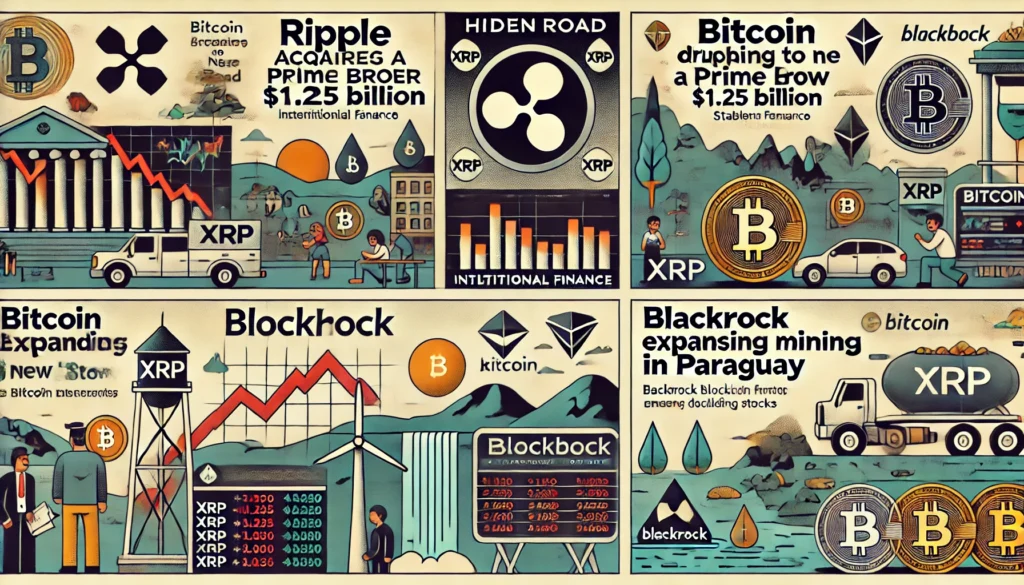
The past 24 hours brought impactful developments across key sectors of the crypto world, signaling a deepening institutional presence and reactive market shifts. Ripple is making a power move with a $1.25 billion acquisition aimed at expanding its DeFi influence. Meanwhile, the broader crypto market reacted negatively to macroeconomic fears, pulling Bitcoin to new lows and dragging crypto stocks down. In contrast, BlackRock is charging ahead, debuting its first Bitcoin product in Europe — a milestone for the region’s digital asset exposure. And Hive Blockchain is going green, announcing new mining operations in Paraguay, tapping into sustainable energy. Ripple’s $1.25 Billion Acquisition of Prime Broker Hidden Road Ripple Labs, the company behind the cryptocurrency XRP, has announced plans to acquire multi-asset prime brokerage firm Hidden Road for $1.25 billion. This strategic move aims to bolster Ripple’s position in institutional decentralized finance (DeFi) by integrating Hidden Road’s extensive client base and clearing capabilities. Hidden Road processes approximately $3 trillion annually across various financial markets and serves over 300 institutional clients. The acquisition is expected to enhance the utility of Ripple’s U.S. dollar-pegged stablecoin, RLUSD, which Hidden Road utilizes as collateral in its brokerage products. This positions Ripple to compete more effectively with established stablecoin providers like Tether and USD Coin. The deal is anticipated to close in the coming months, pending regulatory approvals. Market Impact: This acquisition signifies a substantial expansion of Ripple’s institutional services, potentially increasing XRP’s adoption among institutional investors. The move may also influence the competitive landscape of stablecoins, challenging existing market leaders. U.S. Crypto Stocks Decline as Bitcoin Hits New 2025 Low On April 7, 2025, U.S.-listed crypto company stocks experienced significant declines, mirroring a sharp drop in bitcoin prices. Bitcoin fell by as much as 5.5%, reaching its lowest point in 2025. Shares of major crypto-related firms also suffered, with MicroStrategy falling over 7%, Coinbase dropping 6%, and Robinhood sliding 4%. The downturn is attributed to escalating global trade tensions following new tariffs announced by President Donald Trump, which have dampened investor confidence and risk appetite. Additionally, billionaire investor Bill Ackman warned of a potential “economic nuclear winter,” further fueling market concerns. Market Impact: The recent market volatility underscores the sensitivity of crypto assets to broader economic and geopolitical developments. Investors may need to reassess the role of cryptocurrencies as safe-haven assets during times of economic instability. BlackRock Launches First Bitcoin Product in Europe BlackRock, the world’s largest asset manager, has introduced its first bitcoin exchange-traded product (ETP) in Europe, named the ‘iShares Bitcoin ETP.’ Domiciled in Switzerland, the product is listed in Paris, Amsterdam, and Frankfurt. This launch follows BlackRock’s success in the United States, where it attracted over $50 billion into similar cryptocurrency products after the Securities and Exchange Commission approved such offerings in January 2024. BlackRock has partnered with Coinbase as the custodian and Bank of New York Mellon as the administrator for this new product. Reuters Market Impact: BlackRock’s expansion into the European crypto market reflects growing institutional interest and could pave the way for increased adoption of bitcoin ETPs across the continent. Hive’s Expansion of Bitcoin Mining Operations in Paraguay Hive Blockchain Technologies, under the leadership of Executive Chairman Frank Holmes, is expanding its bitcoin mining operations into Paraguay. The move aims to leverage Paraguay’s abundant hydroelectric power to support sustainable and cost-effective mining activities. This expansion aligns with Hive’s strategy to diversify its operations geographically and enhance its mining capacity while adhering to environmentally friendly practices. Market Impact: Hive’s expansion into Paraguay could set a precedent for other mining companies seeking sustainable energy sources, potentially influencing global mining operations’ geographical distribution and environmental strategies. Key Takeaways: Ripple’s acquisition of Hidden Road for $1.25 billion aims to enhance its institutional DeFi services and stablecoin utility. U.S. crypto stocks have declined amid bitcoin’s drop to a new 2025 low, influenced by escalating trade tensions and economic concerns. BlackRock has launched its first bitcoin ETP in Europe, reflecting growing institutional interest in cryptocurrency products. Hive Blockchain is expanding its bitcoin mining operations into Paraguay, leveraging sustainable hydroelectric power.
5 Important Crypto News: Bitcoin Eyes New Highs, Tariff Shockwaves, PayPal Expands, Safe-Haven Hype, Altseason Fades – Botslash Daily Crypto News Analysis
Bitcoin continues to attract institutional attention amid favorable U.S. macroeconomic signals and increasing volatility in traditional markets. As the U.S. government signals immediate enforcement of tariffs, financial markets experience turbulence, but Bitcoin emerges with notable stability. This resilience is reinforcing its status as a potential safe-haven asset. Meanwhile, PayPal expands its crypto portfolio with the addition of Chainlink and Solana, indicating a steady march of mainstream platforms toward deeper crypto adoption. However, altcoins seem to be falling out of favor, with Bitcoin reclaiming dominance and suggesting a possible end to the current altseason. Analysts Predict Favorable U.S. Macroeconomic Conditions Could Propel Bitcoin to New Heights Recent analyses suggest that the current macroeconomic environment in the United States may set the stage for Bitcoin to achieve new all-time highs in the long term. Factors such as increasing inflation, expansive public spending, and a favorable regulatory landscape are seen as potential catalysts for Bitcoin’s growth. Notably, Anthony Scaramucci, founder of SkyBridge Capital, has projected that Bitcoin could triple in value by mid-2026, reaching approximately $170,000, driven by its limited supply and growing demand. Market Impact The anticipation of Bitcoin reaching new highs could attract more institutional investors, further legitimizing the cryptocurrency market. However, this optimism is tempered by concerns over market volatility and regulatory uncertainties that could influence Bitcoin’s trajectory. U.S. Commerce Secretary Confirms Immediate Implementation of Tariffs Commerce Secretary Howard Lutnick has announced that the United States will proceed with the implementation of new tariffs without delay. These measures are designed to bolster domestic manufacturing and reduce reliance on foreign production in critical sectors such as medicine, ships, and semiconductors. Despite international pressure and outreach from over 50 countries seeking negotiations, the administration remains steadfast in its commitment to these tariffs. Market Impact The immediate enforcement of tariffs has heightened global trade tensions, leading to market volatility and concerns over potential retaliatory measures from affected countries. Industries reliant on international supply chains may experience disruptions, potentially impacting consumer prices and economic growth. Bitcoin’s Stability Amid Market Volatility Enhances Its Safe-Haven Appeal In the wake of significant downturns in traditional stock markets, Bitcoin has demonstrated resilience, with its value rising even as major indices have plummeted. This performance divergence has sparked discussions about Bitcoin’s potential role as a safe-haven asset during periods of economic uncertainty. Analysts attribute this trend to Bitcoin’s decentralized nature and limited exposure to tariff-related economic disruptions. Market Impact Bitcoin’s perceived stability during market turmoil may attract investors seeking alternative assets to hedge against traditional market risks. However, its historical volatility and regulatory challenges continue to pose considerations for risk-averse investors. Bitcoin Outperforms Altcoins, Signaling a Potential End to ‘Altseason’ Recent reports indicate that Bitcoin is surpassing other cryptocurrency categories in performance, leading to speculation that the period known as ‘Altseason’—where alternative cryptocurrencies outperform Bitcoin—may be concluding. This shift suggests a consolidation of investor interest and capital back into Bitcoin, potentially due to its established market position and perceived stability. Market Impact A renewed focus on Bitcoin could result in decreased liquidity and valuations for altcoins, prompting investors to reassess their portfolios and strategies within the cryptocurrency market. PayPal Expands Cryptocurrency Offerings to Include Chainlink and Solana PayPal has announced the addition of Chainlink and Solana to its cryptocurrency offerings, further integrating digital assets into its platform. This move reflects PayPal’s commitment to embracing the evolving crypto landscape and providing users with access to a broader range of cryptocurrencies. Market Impact PayPal’s inclusion of Chainlink and Solana enhances the visibility and accessibility of these cryptocurrencies, potentially driving increased adoption and investment. It also signifies growing mainstream acceptance of digital assets within traditional financial platforms. Key Takeaways Bitcoin is poised for a potential all-time high as U.S. macroeconomic conditions, including inflation and fiscal policy, align favorably for long-term growth. U.S. tariffs to be enacted immediately could intensify global trade tensions, sparking volatility in traditional markets and indirectly benefiting Bitcoin. Bitcoin demonstrates stability as traditional markets dip, strengthening its case as a safe-haven asset for investors during uncertain times. Altseason might be over as Bitcoin significantly outpaces other crypto categories, leading to a capital shift back to BTC. PayPal adds Chainlink and Solana, expanding crypto offerings and signaling growing mainstream adoption and user accessibility of digital assets.
Arizona’s Bitcoin Bill, EU concerns over USD Stablecoin Dominance and Binance’s Legal Troubles : 6 Major Crypto Updates:

The cryptocurrency landscape continues to evolve at breakneck speed, with significant developments impacting everything from stablecoin dominance to state-level adoption of Bitcoin. Key highlights include Arizona’s bold legislative move to hold Bitcoin in its reserves, renewed scrutiny on Binance as it faces legal probes in France, and market turbulence after Bitcoin’s sharp sell-off. Corporate adoption is also heating up, with Japan’s Metaplanet planning a massive Bitcoin purchase, while innovative payment platforms like PayFi aim to bridge crypto with everyday commerce. As geopolitical, corporate, and regulatory forces collide, these stories underscore the transformative shifts underway in the digital finance ecosystem. 1. USD Stablecoin Dominance Sparks EU Concerns Amid Trump-Era Policies The lingering effects of a 2020 executive order by former U.S. President Donald Trump have renewed focus on the global dominance of USD-pegged stablecoins. The policy, originally intended to curb China’s influence in digital finance, unintentionally fortified the position of dollar-backed stablecoins like USDT and USDC. The European Union has voiced increasing concerns over the stability and potential risks posed by this dominance, fearing that it could overshadow the euro in the emerging digital financial ecosystem. The EU has ramped up regulatory efforts to counter this imbalance, promoting euro-backed stablecoins while advancing its Markets in Crypto-Assets (MiCA) framework. This framework aims to control stablecoin issuance, curbing the influence of non-EU players. However, the U.S. remains ahead in this race due to its early regulatory clarity and the global preference for dollar-denominated assets. Market Impact: The stablecoin debate underscores the intensifying geopolitical dynamics in crypto finance. The euro’s push to regain relevance may lead to an increased issuance of euro-pegged stablecoins, presenting an alternative to dollar-backed options. While this is unlikely to displace the USD in the near term, it could shift regional market behaviors in Europe. The broader implications of such competition could tighten the regulatory landscape for stablecoins, impacting liquidity and global adoption patterns. 2. PayFi’s Crypto Payment Gateway Could Revolutionize Retail PayFi, a newly launched payment platform, promises to make crypto payments a practical reality. By acting as a middle layer between blockchain systems and traditional financial rails, PayFi enables merchants to accept cryptocurrencies seamlessly while receiving fiat settlements. This dual-model shields merchants from crypto price volatility, a critical barrier that has previously slowed adoption. In addition to reducing fees and offering instant cross-border settlements, PayFi also addresses inefficiencies in existing payment systems. The gateway aims to cater to both merchants and consumers by combining the speed and cost-effectiveness of blockchain with the reliability of fiat systems. While still in its infancy, the platform’s hybrid design has the potential to serve as a blueprint for future crypto payment solutions. Market Impact: PayFi’s development is a positive indicator for the mainstream adoption of cryptocurrency as a means of payment. If successful, it could drive demand for crypto assets like Bitcoin, Ethereum, or stablecoins, as consumers and merchants adopt these currencies for day-to-day transactions. Its impact on market liquidity and user experience will be closely monitored, potentially paving the way for other similar services to emerge. 3. French Authorities Target Binance in Judicial Probe Binance, the world’s largest cryptocurrency exchange, is under scrutiny in France after investigators launched a formal judicial probe into alleged money laundering and unlicensed operations. The accusations suggest that Binance facilitated illicit financial transactions without adhering to strict anti-money laundering (AML) rules. This adds to a growing list of regulatory troubles faced by Binance globally, including lawsuits by U.S. agencies like the SEC and CFTC. Binance has responded to the allegations by emphasizing its commitment to regulatory compliance. However, the investigation places significant pressure on the exchange, particularly in Europe, where MiCA regulations are expected to tighten operational requirements for crypto platforms. This probe could potentially result in penalties, restrictions, or even suspension of Binance’s services in France. Market Impact: Heightened scrutiny of Binance could create short-term market uncertainty, particularly for BNB (Binance Coin), which is tied to the platform. If the exchange faces operational disruptions in Europe, traders and investors may shift to alternative platforms, affecting market liquidity. This case highlights the ongoing friction between rapid crypto expansion and regulatory oversight, emphasizing the need for robust compliance mechanisms. 4. BTC Market Shakeup: CME Open Interest Declines Amid Sell-Off Bitcoin markets faced turbulence earlier this week as a sharp price drop triggered an exodus of short-term holders. The sell-off led to a record decline in open interest on the Chicago Mercantile Exchange (CME), underscoring a growing sense of caution among leveraged traders. The sell-off coincided with broader macroeconomic concerns, including rising bond yields and fears of extended Federal Reserve rate hikes. While short-term holders exited their positions, long-term investors have shown resilience, potentially using the dip as an opportunity to accumulate Bitcoin. Historically, such sell-offs result in a redistribution of assets from speculative traders to long-term holders, strengthening the asset’s foundation for future growth. Market Impact: The decline in CME open interest highlights the volatile nature of Bitcoin derivatives, especially during macro-driven corrections. Reduced speculative activity could temporarily decrease market liquidity, but the entry of long-term investors might provide stability. This event also serves as a reminder that Bitcoin remains sensitive to broader economic factors, reinforcing the importance of tracking macro trends. 5. Metaplanet’s $745M Bitcoin Buy Reflects Growing Corporate Interest Japanese tech firm Metaplanet has announced plans to raise $745 million to acquire 21,000 Bitcoin, echoing the strategy of U.S.-based MicroStrategy. The company aims to finance the purchase through a combination of equity and debt, betting on Bitcoin’s long-term value as a hedge against inflation and economic uncertainty. This decision highlights the increasing institutional interest in Bitcoin, particularly in regions like Japan, which has a favorable regulatory environment. Despite market volatility, Metaplanet’s move demonstrates confidence in Bitcoin’s potential as a strategic asset. If successful, the firm could influence other corporations in Asia to adopt similar strategies. Market Impact: A purchase of this magnitude would inject significant liquidity into Bitcoin markets, potentially supporting price stabilization or even upward momentum. It also reinforces Bitcoin’s narrative
6 Powerful Crypto Shifts: BlackRock’s Tokenization Push, Coinbase’s Legal Battle, Tron’s Bold Move, and More

From BlackRock’s ambitious push for blockchain tokenization to Coinbase’s legal battle over crypto classification, the industry is navigating a critical period of transformation. On the global stage, compliance initiatives like MiCA and innovation-driven efforts by projects like Tron reflect a sector striving for mainstream acceptance while grappling with challenges like misuse and regulatory uncertainty. Let’s dive into six of the most impactful stories shaping the future of cryptocurrency and blockchain technology. 1. BlackRock CEO Larry Fink Calls on SEC to Approve Tokenization of Bonds BlackRock CEO Larry Fink’s call for SEC approval of bond tokenization is a testament to the growing institutional interest in blockchain technology. Fink’s argument centers on the ability of blockchain to improve transparency, streamline transactions, and eliminate intermediaries. These benefits are particularly relevant in bond markets, which rely heavily on complex infrastructure and manual processes for settlement. By tokenizing bonds, transactions could occur instantly on decentralized ledgers, cutting costs and opening the door for increased liquidity. BlackRock’s advocacy signals a shift in how traditional finance views blockchain. The company’s previous application for a Bitcoin spot ETF demonstrated its intent to be a leader in integrating digital assets into mainstream markets. Now, its push for tokenized bonds indicates a broader ambition to modernize traditional asset classes using blockchain technology. If the SEC greenlights this move, it could accelerate the adoption of blockchain in institutional finance, potentially driving demand for blockchain-based infrastructure and solutions. The potential impact on the crypto market is significant. Approval would validate blockchain as a tool for institutional applications, driving both innovation and adoption. However, regulatory uncertainty remains a key barrier. The SEC’s hesitation stems from concerns over investor protection and market stability, but Fink’s backing adds considerable pressure for progress. If successful, this could create a domino effect, encouraging other financial giants to explore tokenization. 2. Crypto Donations to Extremist Groups on the Rise in Europe The rise in cryptocurrency donations to extremist groups in Europe highlights a darker use case for blockchain technology. These groups exploit the pseudonymous nature of crypto transactions to circumvent traditional banking restrictions, funneling funds into their operations. According to recent reports, there has been a 50% increase in crypto donations to extremist organizations over the past year. While Bitcoin remains the dominant choice, privacy-oriented tokens like Monero are gaining popularity due to their enhanced anonymity features. This growing trend underscores the challenges regulators face in managing the misuse of cryptocurrencies. Governments are pushing for stricter Know Your Customer (KYC) and Anti-Money Laundering (AML) measures to track illicit transactions. Exchanges and blockchain analytics firms are also working to refine tracing technologies to identify and disrupt these funding streams. However, the decentralized nature of crypto complicates enforcement, as transactions often occur outside the jurisdiction of any single government or entity. The impact of these developments extends beyond regulation. Misuse of crypto could tarnish its reputation as a tool for financial freedom and innovation. For the industry, balancing the promotion of privacy with the need for oversight will be critical. Regulators must act swiftly, but crypto companies must also take the lead in addressing this issue to maintain credibility and trust in their platforms. 3. According to the CEO of ConsenSys, the Trump Family Might Utilize Ethereum for Upcoming Business Endeavors Joe Lubin’s suggestion that the Trump family might explore Ethereum for future business projects highlights the growing appeal of blockchain for large enterprises. Ethereum’s ability to support smart contracts, streamline supply chains, and tokenize assets positions it as an attractive solution for traditional businesses seeking efficiency and cost reduction. Given the Trump Organization’s focus on real estate, hospitality, and luxury goods, Ethereum could play a pivotal role in improving operations like property tokenization or secure data management. While this remains speculative, it reflects Ethereum’s growing presence in the corporate space. Major organizations are beginning to understand blockchain’s potential to enhance transparency and reduce intermediaries, especially in industries reliant on trust and security. If a high-profile family like the Trumps were to adopt Ethereum, it would serve as a symbolic endorsement, likely drawing more attention to the network’s capabilities. For the crypto market, such developments could boost Ethereum’s adoption and valuation. However, without confirmation, this remains a “what if” scenario. Lubin’s comments do, however, highlight how Ethereum is positioning itself as the blockchain of choice for enterprise-level adoption, particularly in industries tied to the real economy. 4. OKX Obtains Pre-Authorization Under MiCA, Bolsters Malta Operations OKX’s pre-authorization under the forthcoming MiCA regulations is a proactive step toward securing its foothold in Europe. By aligning with the Malta Financial Services Authority (MFSA), OKX demonstrates its commitment to operating within Europe’s evolving regulatory landscape. MiCA is expected to set the global benchmark for crypto regulation, addressing stablecoin governance, licensing, and investor protections. OKX’s early compliance could offer it a competitive edge as other exchanges rush to meet the framework’s standards. Malta has long been a crypto-friendly jurisdiction, and OKX’s expansion of its Malta hub signals confidence in the EU’s regulatory direction. The platform’s move may also inspire other exchanges to pursue similar strategies, creating a wave of compliance across the industry. OKX’s readiness positions it as a potential leader in the European market as regulators aim to standardize crypto oversight across member states. For the market, this signals an important shift. Regulatory clarity often leads to greater institutional participation, as investors gain confidence in the security and legitimacy of crypto assets. If OKX’s approach proves successful, it could encourage other jurisdictions to adopt similar regulations, further stabilizing the global crypto industry. 5. Coinbase Asks Appeals Court to Rule Crypto Trades Are Not Securities Coinbase’s appeal for a federal court ruling on crypto trades not being securities could be a turning point for the U.S. crypto industry. The exchange has been at odds with the SEC, which accuses it of operating as an unregistered securities exchange. By asking for legal clarification, Coinbase aims to challenge the SEC’s interpretation of securities laws, which it argues are outdated and unsuitable for digital assets. The
Trump Memecoins, Telegram’s Exciting Crypto Revolution, and Musk’s DOGE Controversy: Defining Moments Shaping the Crypto Market in 2025
The cryptocurrency market is buzzing with major developments that are shaping the industry’s future. From the SEC’s crackdown on Donald Trump-themed memecoins to the TON Foundation’s integration with Telegram, we’re witnessing innovation colliding with regulation. Meanwhile, Bank of America is optimistic about the U.S. banking industry adopting crypto payments, while Elon Musk’s Dogecoin-related lawsuit is sparking debates on celebrity influence in crypto markets. Adding to the complexity, global macroeconomic moves, like the Bank of Japan’s potential interest rate hike, and political shifts such as Trump’s proposed deregulation of AI, are sending ripples across the blockchain landscape. Each of these stories highlights the growing intersection between technology, politics, and finance, making 2025 a pivotal year for crypto investors and innovators alike. 1. Trump Memecoins Face SEC Regulatory Challenges The rise of Donald Trump-themed memecoins, such as $TRUMP, has caught the attention of the U.S. Securities and Exchange Commission (SEC). These tokens, which gained popularity by leveraging Trump’s public persona and political influence, are now under scrutiny for potentially operating as unregistered securities. The SEC has been intensifying its focus on memecoins and other speculative tokens, citing their lack of clear use cases and potential for harm to retail investors. From a market perspective, this development could set a precedent for how regulators handle personality-based or event-themed tokens. Many memecoins rely on hype cycles rather than utility, making them inherently volatile and risky investments. If the SEC takes strong action against $TRUMP, other tokens operating in this gray area may face similar challenges. This could lead to decreased investor interest in speculative assets, potentially shrinking the memecoin sector. For the broader crypto market, this highlights the importance of regulatory clarity. While some argue that memecoins are “just for fun,” their financial impact on retail investors can be significant. If regulatory crackdowns become the norm, investors may gravitate toward assets with clearer compliance and utility, such as DeFi protocols or blockchain infrastructure projects. However, memecoin enthusiasts might continue to flock to these tokens as a form of digital expression, keeping the sector alive despite regulatory hurdles. 2. TON Foundation Expands Network With Telegram Mini-Apps The Open Network (TON) Foundation has made a significant leap in its ecosystem expansion by introducing mini-apps within Telegram. These apps, built on the TON blockchain, enable users to engage in cryptocurrency-related activities such as wallet transfers and decentralized finance (DeFi) services directly within Telegram’s interface. By leveraging Telegram’s global user base, TON aims to bring crypto services to millions without the need for standalone wallets or external platforms. This integration is a game-changer for crypto adoption. By removing traditional barriers like complex wallet setups, the TON Foundation is making blockchain technology more accessible. For new users, the simplicity of using crypto within a familiar messaging app could significantly lower the learning curve. This strategy might set a new trend for integrating blockchain into communication apps, further blurring the lines between mainstream tech platforms and decentralized networks. From a market standpoint, this development could make TON one of the most user-friendly blockchain ecosystems. By offering seamless integration into daily communication, TON has a unique value proposition compared to other networks. However, it also faces competition from similar projects that might follow this model. If successful, TON’s move could encourage other messaging platforms to adopt similar strategies, potentially sparking a wave of new users into crypto ecosystems. 3. US Banking Industry May Embrace Crypto Payments, Says Bank of America Bank of America (BofA) recently expressed optimism about the U.S. banking sector integrating cryptocurrency payments into its services. According to analysts, crypto-based payment systems offer significant advantages, such as reduced costs, faster settlement times, and improved efficiency in cross-border transfers. While adoption might take years, the banking industry’s acknowledgment of crypto’s utility marks a significant step toward mainstream integration. The implications of this trend could be profound. If traditional banks adopt blockchain payment rails, it would lend immense credibility to the crypto industry. Institutional players often drive market confidence, and their involvement could encourage more retail investors to explore digital assets. Furthermore, this would create opportunities for blockchain projects that specialize in payment systems, potentially leading to a surge in demand for infrastructure tokens like XRP or Stellar (XLM). However, challenges remain. Banks must navigate regulatory hurdles and educate their customers on how these systems work. Furthermore, concerns about security and scalability need to be addressed for large-scale implementation. Still, Bank of America’s analysis suggests that the long-term trajectory for crypto adoption in finance is positive, signaling bullish sentiment for the industry’s future. 4. Trump Eliminates Biden’s AI Regulations, Potential Benefit for AI Coins Former President Donald Trump has promised to remove artificial intelligence (AI) regulations implemented during Joe Biden’s administration if he wins reelection. While the focus is on reducing barriers for innovation in AI, this policy shift could also benefit blockchain projects that integrate AI into their ecosystems. Tokens like “Mind of Pepe,” which emphasize AI-based capabilities, might gain traction in a deregulated environment. For blockchain developers working on AI integration, deregulation could mean easier access to funding, reduced compliance costs, and a more welcoming innovation landscape. Investors looking for the next big trend might flock to AI-integrated crypto projects, creating upward momentum for coins in this niche. However, this scenario also comes with risks. Critics argue that a lack of oversight could result in ethical concerns or even misuse of AI, potentially impacting public perception of such projects. On a broader scale, the intersection of blockchain and AI is a growing frontier, and political decisions like this could significantly influence its trajectory. Whether this policy materializes or not, the discussion alone brings attention to AI-crypto projects, positioning them as a potential area of growth in the blockchain space. 5. Trump Meme Coin Crash: Will Official $TRUMP Price Drop to $10? $TRUMP, a Donald Trump-themed memecoin, has seen its value plummet by over 70% from its all-time high. The coin, which initially rallied due to speculative hype and Trump’s political influence, is now facing dwindling investor interest.
2025 Crypto Revolution: Trump Coin, State Bitcoin Reserves, Solana Peaks, and EU Regulations Shape the Future

From Trump meme coin endorsed state governments in the U.S. embracing Bitcoin as a reserve asset, the industry is entering uncharted territories. Solana’s blockchain has hit unprecedented peaks, driven by innovative projects like the $TRUMP coin, while the EU has implemented stringent cybersecurity regulations under DORA to protect digital finance. Simultaneously, bold predictions like Bitcoin reaching $200,000 are sparking debates about the future of digital assets. This comprehensive analysis dives into the events shaping crypto’s evolution and their lasting impacts on markets and innovation. 1. Can Trump’s Crypto Policies Survive Beyond His Administration? The Trump administration’s pro-crypto stance has introduced a wave of optimism, with significant steps being taken to foster digital asset growth. The appointment of key crypto advocates to advisory roles and an administration-driven focus on blockchain technology underline these efforts. Policies include supporting innovation, reducing regulatory barriers, and attracting institutional investments. Yet, much of the framework rests on executive orders, making its survival heavily dependent on political dynamics. Future administrations or Congress could either bolster or dismantle these policies based on partisan interests. If institutional trust grows due to these policies, it could spark a wave of global competitiveness in blockchain adoption. However, without permanent legislation, there is uncertainty regarding their long-term impact. The crypto industry is at a crossroads where a lack of regulatory clarity could deter growth despite current momentum. Impact on Markets The current enthusiasm in U.S. crypto markets reflects optimism over these regulatory shifts, with increased activity in blockchain-based startups and cryptocurrencies like Bitcoin. Yet, any political reversal could cause volatility, potentially cooling the broader adoption and innovation push in the blockchain space. 2. Official Trump Meme Coin Triples in Price Amid Binance, Coinbase Listings The launch of the $TRUMP meme coin on the Solana blockchain caused its price to surge by over 300%, skyrocketing to a market cap of $8 billion. This immediate success is due to high-profile exchange listings and the hype surrounding Trump’s endorsement. Built on Solana, the coin has brought significant attention to the blockchain’s speed and low costs, elevating its reputation. The coin’s massive insider ownership—80% linked to Trump-affiliated entities—raises concerns about ethical risks and potential market manipulation. Critics argue the coin’s success could open doors for misuse of political influence in crypto markets. Despite these controversies, the project’s visibility is a win for Solana, driving higher transaction volumes and adoption. Impact on Markets $TRUMP’s rapid adoption strengthens Solana’s position in the blockchain industry. However, ethical concerns surrounding insider holdings could cast shadows on the coin’s longevity and market trust, potentially spurring regulatory scrutiny. 3. U.S. States Consider Strategic Bitcoin Reserves States like Texas, Ohio, and Pennsylvania are exploring Bitcoin reserves to diversify their finances and hedge against inflation. These initiatives reflect growing acceptance of cryptocurrency as a strategic asset by governments. Texas and Ohio have introduced legislative proposals to establish state-run Bitcoin funds, while Pennsylvania plans to allocate up to 10% of its reserve funds to Bitcoin investments. This movement demonstrates cryptocurrency’s shift from speculative to institutional-grade assets. Bitcoin’s decentralized, deflationary nature aligns with states’ goals of financial security amidst rising inflation. Yet, critics argue that Bitcoin’s volatility may endanger public funds. Long-term success will rely on states adopting a balanced approach to mitigate risks. Impact on Markets Institutional adoption, especially by governments, adds credibility to Bitcoin, potentially attracting more institutional investors and strengthening its price stability. Such moves could encourage broader U.S. adoption, bolstering Bitcoin’s position as digital gold. 4. DORA Regulations Reshape Cryptocurrency in the EU The EU’s Digital Operational Resilience Act (DORA), implemented in January 2025, introduces stringent cybersecurity and operational standards for financial institutions, including crypto firms. The legislation mandates regular system testing, incident reporting, and third-party oversight to ensure digital resilience. For crypto providers, this marks an era of greater scrutiny and compliance requirements. While challenging for smaller players, DORA could standardize the industry, enhancing trust among users and investors. It aligns with the EU’s ambition to be a global leader in cryptocurrency regulation. However, immediate compliance requirements leave little room for adaptation, especially for unprepared entities. Impact on Markets DORA bolsters crypto credibility in the EU by ensuring operational resilience. Enhanced security measures could attract institutional players, yet heightened compliance costs might exclude smaller firms, leading to market consolidation. 5.Solana Hits $275 Lifetime Peak as Official Trump Meme Coin Surges Solana’s blockchain reached new heights, with SOL trading at $275 and peaking at $293. This growth aligns with the popularity of the $TRUMP meme coin, built on its network. Solana’s scalability, low fees, and high transaction speeds make it a favorite among developers. The surge in transaction volumes due to $TRUMP activity highlights the network’s utility, further solidifying its position as a top blockchain. Solana’s growth also reflects increasing competition among blockchains to host high-profile projects. However, reliance on volatile trends like meme coins can introduce risks, as a decline in such projects could negatively impact its valuation. Impact on Markets: Solana’s success demonstrates how innovative projects can elevate blockchain ecosystems. Continued adoption could attract more developers, although reliance on speculative tokens like $TRUMP presents challenges. 6. Blockchain Firm Projects Bitcoin at $200,000 by 2025 A Standard Chartered report predicts Bitcoin could reach $200,000 by 2025. The bank attributes this to growing institutional adoption, particularly via Bitcoin ETFs. Increased regulatory clarity in major markets and enhanced trust in Bitcoin as a digital store of value contribute to this bullish forecast. However, achieving this milestone requires consistent global regulatory progress. While institutional investments bolster Bitcoin’s market cap, high volatility and geopolitical uncertainties could pose challenges to these ambitious predictions. Impact on Markets: Such projections drive optimism, encouraging both retail and institutional investors to increase Bitcoin exposure. If Bitcoin approaches these levels, it could redefine its role as the primary cryptocurrency. Key Takeaways Trump’s Pro-Crypto Policies The Trump administration’s crypto-friendly initiatives have boosted optimism in the U.S. digital asset sector. However, their dependence on executive orders creates vulnerability, as future administrations may reverse these measures. Pro-crypto policies need bipartisan legislative backing to
6 latest cryptomarket Rollercoaster : Record DEX Volumes, Policy Shifts, and Bitcoin’s Sentiment Fluctuations

December 2024 latest marked a pivotal moment in the cryptomarket, showcasing dramatic shifts, record-breaking achievements, and forward-looking policy changes. Decentralized exchanges (DEXs) hit unprecedented heights with $462 billion in monthly volume, underscoring the growing dominance of DeFi platforms. Meanwhile, the U.S. and Hong Kong unveiled bold plans, with President-elect Trump promising a crypto-friendly administration and Hong Kong proposing Bitcoin as part of its national reserves. Amidst these highlights, market sentiment took a turn as Bitcoin’s price faced corrections, accompanied by a dip in the Fear & Greed Index. Ethereum stood out with a surge in long-term holders, reflecting growing confidence in its ecosystem, while Bitcoin investors opted for profit-taking, leading to contrasting trends for the two leading assets. This period encapsulated the dynamism of the crypto industry, setting the stage for an eventful 2025. 1. DEXs Hit Record $462 Billion Monthly Volume In December 2024, decentralized exchanges (DEXs) recorded their highest-ever monthly trading volume, reaching $462 billion. This milestone surpassed the previous high of $374 billion set in November, reflecting the growing popularity of decentralized finance (DeFi). Platforms like Uniswap, PancakeSwap, and Raydium led this surge, with $106 billion, $96 billion, and $58 billion in respective volumes. The rise in DEX activity underscores a shift toward decentralized platforms, offering transparency and user control over assets. Interestingly, while DEX volumes flourished, the memecoin market faced a sharp correction, with market capitalization dropping from $137 billion to $92 billion in December. This shift suggests traders are pivoting toward established protocols and away from speculative assets, further solidifying DeFi’s growth trajectory in the crypto ecosystem. 2. Donald Trump’s Pro-Crypto Stance Signals Market Transformation President-elect Donald Trump has vowed to make the U.S. the “crypto capital of the planet,” promising a favorable regulatory environment for cryptocurrencies. His administration plans to appoint crypto-friendly officials, including David Sacks as “AI & Crypto Czar,” aiming to attract institutional investment and foster innovation. Analysts predict this could drive Bitcoin prices near $200,000 and bolster the cryptocurrency market in 2025. However, concerns about increased market volatility remain. While Trump’s agenda may accelerate adoption, it could also intensify speculative activity. Still, his supportive stance is expected to pave the way for significant advancements in blockchain technologies and heightened investor confidence. 3. Hong Kong Proposes Bitcoin as a National Reserve Hong Kong legislator Wu Jiezhuang has proposed adding Bitcoin to the region’s national reserves to strengthen financial security and stability. Inspired by El Salvador and Bhutan, Wu believes such a move could attract global talent and investment while positioning Hong Kong as a digital asset leader. Wu advocates for an incremental approach, starting with Bitcoin ETFs before expanding holdings. This proposal aligns with Hong Kong’s broader strategy of creating a secure and innovative digital asset framework. As the region embraces Bitcoin’s potential as “digital gold,” it aims to enhance its status as a forward-thinking financial hub. 4. Bitcoin’s Fear & Greed Index Falls Amidst Year-End Decline In late December, Bitcoin’s price dropped by 13.7%, landing around $93,000. This correction coincided with a decline in the Crypto Fear & Greed Index to a two-month low of 65, marking a significant shift in market sentiment from extreme greed to caution. Despite short-term volatility, Bitcoin remains the best-performing asset of 2024, with a 129% return compared to traditional investments like gold. cryptomarket analysts are divided on what’s next. While some foresee increased volatility, others maintain a bullish outlook for Bitcoin, citing strong fundamentals and institutional support. As the market digests these fluctuations, the long-term trajectory of Bitcoin remains optimistic. 5. Ethereum Long-Term Holders Surge as Bitcoin Investors Take Profits Throughout 2024, Ethereum (ETH) witnessed a significant rise in long-term holders, climbing from 59% to 75%. This trend contrasts with Bitcoin, where long-term holders decreased from 70% to 62%, likely due to profit-taking during Bitcoin’s recent price rally. Ethereum’s increased adoption is further highlighted by doubling ETF inflows, which reached $2.1 billion in December. The data reflects growing confidence in Ethereum’s ecosystem, driven by advancements in DeFi, scalability, and institutional adoption. Meanwhile, Bitcoin’s correction suggests a natural market adjustment, as investors rebalance portfolios after substantial gains. 6. Bitcoin Dips Below $94,000, Bears Take Charge? Bitcoin’s price slipped below $94,000 on December 29, raising concerns about bearish market control. The Taker-Buy-Sell Ratio fell below 1, signaling heightened selling pressure. Additionally, the rising dominance of Tether (USDT) indicates a flight to stability among investors. Despite bearish signals, some traders remain optimistic, as Bitcoin’s funding rates for perpetual contracts stay positive, showing confidence in long positions. Moreover, Bitcoin continues to hold above its 200-day exponential moving average (EMA), hinting at underlying support. While the market braces for potential short-term volatility, Bitcoin’s long-term bullish case remains strong. Key Insights 1. DEXs Break Records While Memecoins Decline Decentralized exchanges achieved a record $462 billion in trading volume, led by platforms like Uniswap and PancakeSwap. This growth underscores the increasing shift toward decentralized platforms for transparency and control. Memecoins, however, saw a sharp decline, losing 20% of their market capitalization in December. Key Insight: The DeFi sector continues to gain momentum, while speculative assets face a reality check. 2. Trump’s Crypto Push Sets Bullish Expectations President-elect Trump’s pro-crypto stance aims to make the U.S. a global crypto leader. Policies include appointing crypto-friendly officials and fostering institutional investment. Analysts predict these moves could drive Bitcoin toward $200,000 in 2025 but warn of potential market bubbles. Key Insight: U.S. policy shifts could catalyze adoption but introduce volatility risks. 3. Hong Kong’s Bitcoin Reserve Proposal Highlights Regional Ambitions Hong Kong explores adding Bitcoin to national reserves, inspired by El Salvador’s example. Legislators propose starting with ETFs before direct integration into reserves. This move could solidify Hong Kong’s reputation as a forward-thinking financial hub. Key Insight: Regional players are increasingly leveraging Bitcoin as a strategic asset. 4. Bitcoin Sentiment Weakens as Fear & Greed Index Drops Bitcoin fell to $93,000 amid a market sentiment shift from extreme greed to caution. Despite short-term corrections, Bitcoin outperformed other assets in