
Rising Liquidity, Bitcoin Resilience, Cardano’s Governance Shift, Ripple’s Stablecoin Growth ,Hong Kong’s SFC revoked crypto licenses & Czech Republic’s Bold BTC Move : 6 Crypto Market Surge

. The rising M2 money supply signals potential asset inflation, which could fuel Bitcoin’s price growth. Meanwhile, Bitcoin remains stable despite concerns around DeepSeek, showcasing the market’s increasing maturity. In the blockchain ecosystem, Cardano is making a bold move towards full decentralized governance, while Ripple’s RLUSD stablecoin secures new listings with a transparent reserves report. On a geopolitical level, the Czech central bank is exploring Bitcoin as a reserve asset, a move that could influence global financial strategies. Additionally, whale accumulation continues, indicating bullish sentiment as exchange supplies shrink. These developments collectively highlight a period of growth, adaptation, and mainstream acceptance for crypto assets. 1. M2 Money Supply Approaches All-Time High – A Bullish Signal for Crypto? The global M2 money supply is nearing an all-time high, signaling increased liquidity in financial markets. According to the report, a rising M2 supply often leads to asset inflation, meaning that investors may look for stores of value such as Bitcoin and other cryptocurrencies. Historically, when central banks expand the money supply, assets like Bitcoin tend to benefit as they are seen as hedges against inflation. Analysts believe that this development could be particularly bullish for crypto, as more liquidity in the economy means more potential capital inflow into risk-on assets. Additionally, the Federal Reserve’s monetary policies are being closely watched, as any dovish signals could further drive capital into Bitcoin. In past cycles, Bitcoin has reacted positively to expansionary monetary policies, as investors seek alternative assets to hedge against currency debasement. If the M2 supply continues to grow, crypto markets could experience renewed bullish momentum, particularly if interest rates are cut or remain steady. Market Impact: A rising M2 money supply typically supports asset prices, and Bitcoin’s reputation as “digital gold” may attract more capital inflows. This could be a long-term bullish signal, especially if institutional investors allocate more funds to Bitcoin in response to liquidity expansion. 2. Concerns Surrounding DeepSeek Increase, But Bitcoin Remains Resilient DeepSeek, an AI-driven trading firm, is facing growing concerns over its financial stability and market influence. Reports suggest that the firm has been under scrutiny for its trading practices, which some analysts fear could disrupt market stability if issues arise. Despite this uncertainty, Bitcoin has shown resilience, maintaining its price levels and even experiencing minor gains. This stability suggests that Bitcoin is increasingly maturing as an asset, decoupling from individual market events that might have previously caused high volatility. Nigel Green, CEO of deVere Group, highlighted Bitcoin’s ability to remain stable despite these concerns. He pointed out that the digital asset’s fundamentals remain strong, and its long-term growth trajectory is largely unaffected by the troubles of any single firm. Market participants seem more focused on macroeconomic trends, regulatory developments, and institutional adoption rather than individual firms’ activities. Market Impact: While concerns about DeepSeek could create short-term uncertainty, Bitcoin’s resilience suggests growing investor confidence. If Bitcoin continues to hold steady in the face of negative news, it strengthens the case for it being a more stable asset class over time. 3. Cardano to Transition to Full Decentralized Governance After Hard Fork The Cardano Foundation has confirmed that the blockchain will transition to a fully decentralized governance model following its upcoming hard fork. This shift is a major milestone for Cardano, as it means that decision-making processes will no longer be centralized among developers or a core team. Instead, governance will be managed by the community, giving ADA holders direct influence over the network’s future. The hard fork is part of Cardano’s broader plan to evolve into a self-sustaining blockchain ecosystem. By allowing stakeholders to propose and vote on protocol changes, Cardano is aligning itself with the ideals of decentralized finance (DeFi). Some analysts believe this could boost investor confidence and attract more developers to the platform, as decentralized governance is often seen as a positive step for long-term blockchain sustainability. Market Impact: If successful, this transition could strengthen Cardano’s appeal among investors who favor decentralized networks. ADA could see increased demand if governance improvements lead to enhanced ecosystem development and greater adoption. 4. Ripple’s RLUSD Stablecoin Gains New Listings and Releases Reserves Report Ripple’s RLUSD stablecoin has secured another exchange listing, marking a step forward in its adoption. The stablecoin aims to provide an alternative to existing options like USDT and USDC while being backed by a transparent reserve structure. Ripple also released a reserves report confirming that RLUSD is fully backed, which is crucial for maintaining investor trust, especially in a market where stablecoin credibility has been a recurring issue. With regulatory scrutiny surrounding stablecoins, transparency in reserves is a key factor in adoption. Ripple’s approach aligns with the growing demand for audited and verifiable backing of stable assets. The new listings will also increase RLUSD’s liquidity, making it easier for users to access and trade the stablecoin across various platforms. Market Impact: If RLUSD gains traction, it could add competition to the stablecoin market, potentially impacting dominant players like USDT and USDC. A strong reserve structure may also help Ripple position itself as a trusted issuer of digital assets. 5. Czech Central Bank Governor Proposes Adding Bitcoin to Reserves The governor of the Czech National Bank is reportedly considering adding Bitcoin to the country’s reserves. This would be a major shift in traditional central banking strategies, as most central banks still rely on gold and fiat reserves. If approved, this move could set a precedent for other countries, particularly those looking to diversify their reserves amidst economic uncertainty. Central banks have traditionally been skeptical of Bitcoin, but rising inflation and concerns over fiat stability have led some to reconsider. A country adding Bitcoin to its reserves would be a significant step toward mainstream adoption and could drive institutional investors to view BTC as a legitimate store of value. While this proposal is still in the early stages, its approval could mark a historic moment for Bitcoin. Market Impact: If the Czech Republic follows through, it could inspire other nations to consider Bitcoin as a
6 Global Shifts in Crypto, Currency, and Finance: From De-Dollarization to Digital Innovation
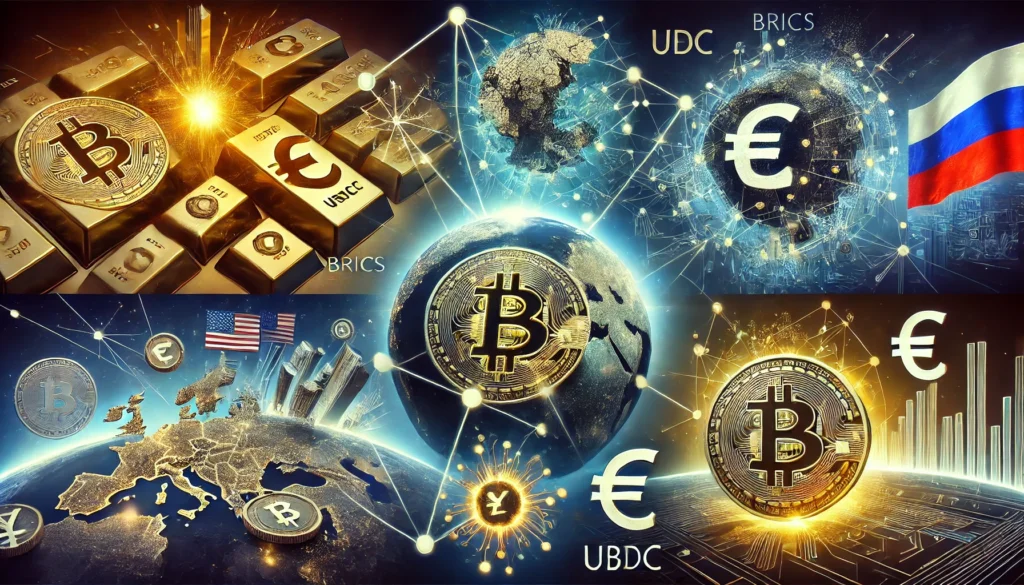
Exploring 6 key global shifts in crypto, currency, and finance, from de-dollarization to digital innovation and AI leadership. 1. India’s Retreat from De-Dollarization Amid Trump’s Pressure India’s decision to step back from the BRICS de-dollarization agenda highlights the geopolitical influence of U.S. policies under Donald Trump. Following his threats to impose 100% tariffs on BRICS nations pursuing alternatives to the dollar, the Reserve Bank of India clarified that de-dollarization was not under consideration. This pivot reflects India’s pragmatic approach to maintaining economic stability and its significant trade relationship with the U.S. Despite initial discussions within BRICS about creating a new currency, India’s stance underscores a preference for minimizing risks amid global financial uncertainties. Russia, however, remains committed to de-dollarization, developing a BRICS payment system regardless of U.S. resistance. This divergence in strategies within the BRICS bloc reveals the complexities of global financial realignment. While India prioritizes economic stability over ideological shifts, Russia sees dollar alternatives as vital to countering Western economic dominance, hinting at varied trajectories within the bloc. Impact: The rift within BRICS could weaken the bloc’s unified stance on global monetary reform, potentially slowing progress on de-dollarization efforts. For global markets, India’s alignment with the dollar reassures investors of continued stability in its financial and trade systems, while Russia’s insistence on alternatives could push smaller nations to explore de-dollarization cautiously. 2. Bitcoin’s Trajectory to Replace Gold: Bernstein’s Vision Bernstein’s analysis predicts Bitcoin’s rise as a primary store of value, potentially replacing gold within the next decade. Key factors driving this transformation include Bitcoin’s low correlation with traditional assets, its hedge against economic instability, and growing institutional adoption. Recent milestones, such as Bitcoin surpassing $100,000, signal the asset’s increasing maturity and widespread acceptance. Bernstein’s outlook aligns with the narrative of Bitcoin transitioning from a speculative asset to a core component of financial portfolios. Support from influential figures like Federal Reserve Chair Jerome Powell further legitimizes Bitcoin’s position. Powell’s acknowledgment of Bitcoin as “digital gold” reflects a broader institutional recognition of its potential. This, coupled with its finite supply and blockchain transparency, positions Bitcoin as a modern, reliable alternative to traditional assets like gold. Impact: The growing acceptance of Bitcoin as a digital store of value could reshape investment strategies, redirecting capital flows from traditional assets. However, the transition also brings challenges, including regulatory scrutiny and technological risks. As Bitcoin solidifies its place, gold markets may face declining demand, creating ripples across commodity investments. 3. Digital Euro: A Revolution or a Risk for Europe? The European Central Bank (ECB) is spearheading the development of the digital euro to modernize Europe’s financial system and strengthen the eurozone’s autonomy. By reducing reliance on foreign payment providers like Visa and Mastercard, the digital euro aims to ensure efficiency and sovereignty in cross-border transactions. The ECB plans to finalize its infrastructure by 2025, balancing innovation with robust risk management and user-centric design. However, the initiative has sparked privacy concerns. Critics argue that the digital euro could pave the way for increased government surveillance over financial activities, raising alarms about potential misuse. The ECB, aware of these fears, emphasizes its commitment to protecting privacy, signaling a delicate balance between innovation and public trust. Impact: If implemented successfully, the digital euro could transform Europe’s payment landscape, bolstering economic resilience and sovereignty. Yet, privacy concerns could hinder adoption, emphasizing the need for transparent governance and stakeholder collaboration. The project’s success will likely set a precedent for other regions exploring CBDCs. 4. Copper’s USDC Integration Drives Sui Blockchain’s Growth Copper’s integration of the USDC stablecoin into the Sui blockchain has propelled the network to new heights, with SUI reaching an all-time high of $4.40. This integration enhances Sui’s decentralized finance (DeFi) ecosystem, which now boasts over $2 billion in total value locked (TVL). By offering enterprise-grade custody and seamless transactions, USDC’s inclusion signals growing institutional interest in Sui’s expanding infrastructure. Further solidifying its ecosystem, Phantom Wallet introduced multi-chain support and asset swap features for Sui users, boosting security and accessibility. These advancements reflect Sui’s strategy to attract broader adoption, particularly among institutional players seeking reliable DeFi platforms. Impact: The integration of USDC significantly enhances Sui’s market position, fostering trust among institutional investors. This development could accelerate Sui’s DeFi ecosystem growth, positioning it as a key player in the blockchain landscape. For the broader crypto market, Sui’s success showcases the importance of interoperability and stablecoin integration in driving blockchain adoption. 5. Putin’s Digital Ruble: A Strategic Leap Toward De-Dollarization Russia’s launch of the digital ruble marks a pivotal step in its effort to modernize its financial system and reduce dependency on the U.S. dollar. By integrating the digital ruble into its federal budget by 2025, Russia aims to streamline domestic transactions while enhancing financial sovereignty. This initiative aligns with Moscow’s broader de-dollarization strategy, emphasizing economic independence amid Western sanctions. Designed to complement cash and non-cash rubles, the digital ruble ensures seamless payments while safeguarding against external economic pressures. By spearheading a state-controlled CBDC, Russia seeks to position itself as a global leader in digital financial solutions, reducing reliance on Western-dominated financial systems. Impact: The digital ruble’s success could influence other nations exploring CBDCs as tools for financial autonomy. While it strengthens Russia’s internal economy, it could also intensify geopolitical tensions, with Western nations viewing the move as a challenge to the dollar’s dominance. For global markets, the adoption of digital currencies could signify a gradual shift toward a multipolar financial order. 6. David Sacks Appointed as Cryptocurrency & AI Czar Donald Trump’s appointment of David Sacks as the White House Cryptocurrency and AI Czar signifies a strategic focus on technological innovation. Sacks, a prominent venture capitalist with deep expertise in fintech, is tasked with creating a regulatory framework for cryptocurrencies and advancing AI policy. His appointment underscores the Trump administration’s intent to position the U.S. as a global leader in these transformative sectors. The market responded positively to this development, with Bitcoin surpassing $100,000 shortly after the announcement. This surge reflects heightened investor optimism about a more supportive
7 Today’s Crypto News Analysis : Crypto Surge, Legal Wins, and Innovations

This week in cryptocurrency brought significant advancements, regulatory shifts, and bullish trends. Here’s an in-depth look at the top stories, their implications, and an overview of what investors can learn from these events. 1. Will Polkadot Price Continue to Rally Following 100% Surge? Polkadot (DOT), one of the leading multi-chain blockchain platforms, has experienced a massive 100% rally over the past month. The token’s price broke past the $8 resistance level, reflecting robust bullish momentum. Analysts attribute this surge to increased network activity, stronger ecosystem developments, and overall market optimism. Over the past 24 hours alone, DOT climbed 35.65%, hitting a high of $8.53. Despite this rally, technical indicators such as the Relative Strength Index (RSI) suggest that DOT is entering overbought territory, often a precursor to short-term price corrections. Analysts predict that a successful breach of the $10 psychological barrier could propel DOT toward the next target of $12.60. However, traders are advised to proceed cautiously, as the current price levels may also attract profit-taking, potentially triggering temporary pullbacks. Polkadot’s recent growth highlights its increasing utility as a scalable and interoperable blockchain platform. Its innovative parachain auctions and ongoing developer support remain key drivers of long-term adoption. DOT’s market capitalization currently stands at $13.14 billion, underscoring its position as a significant player in the cryptocurrency landscape. Market Implications: Polkadot’s breakout could signal sustained investor confidence in scalable blockchain platforms. A break above $10 might ignite further enthusiasm, while a short-term correction would provide buying opportunities for long-term investors. 2. Ripple Provided the Blueprint to Defeat Gary Gensler: Stuart Alderoty Ripple’s legal battle with the U.S. Securities and Exchange Commission (SEC) has become a landmark case for the cryptocurrency industry. In a recent interview, Stuart Alderoty, Ripple’s Chief Legal Officer, credited the company’s leadership for standing firm during the lawsuit. Ripple’s partial legal victory in 2023, where the court ruled that XRP was not a security for secondary market sales, has been widely hailed as a precedent for the entire sector. The announcement of SEC Chair Gary Gensler’s resignation, effective January 2025, adds another dimension to this story. Alderoty emphasized that Ripple’s approach has demonstrated how crypto firms can successfully challenge regulatory overreach. Looking forward, he called on incoming SEC leadership to halt non-fraud-related litigation and focus on collaborative policymaking. Ripple CEO Brad Garlinghouse also expressed optimism about the industry’s future under a more balanced regulatory framework. The unwavering support of the XRP community during the lawsuit further solidifies Ripple’s position as a leader in the blockchain ecosystem. Market Implications: Ripple’s legal success is likely to embolden other crypto firms facing regulatory scrutiny. XRP’s recent 40% price rally reflects market optimism about Ripple’s growing influence and its potential to lead policy discussions. 3. US PCE, FOMC Minutes, & Crypto Expiry in Focus: Brace for Market Impact The crypto market is bracing for a volatile week as several macroeconomic events converge. The U.S. Personal Consumption Expenditures (PCE) report, a key measure of inflation, is scheduled for release on November 27. Analysts expect a 0.2% monthly increase and a year-over-year rise to 2.3% for October. Additionally, the Federal Open Market Committee (FOMC) meeting minutes will offer insights into the Federal Reserve’s monetary policy stance. Adding to the tension is the expiration of cryptocurrency options worth over $10 billion on November 29. This is one of the largest expiries in recent months and could significantly impact Bitcoin and Ethereum prices. Such events often trigger price volatility as traders adjust their positions to hedge against losses or capitalize on market opportunities. Market Implications: Investors should anticipate price swings across major cryptocurrencies. While favorable inflation data could stabilize markets, unexpected outcomes may lead to sharp corrections or rallies, creating both risks and opportunities. 4. Crypto Market This Week: BTC Continues to Soar, Ripple’s XRP Bullish Bitcoin (BTC) has been on an incredible run, nearing the $100,000 milestone after a 10% weekly increase. This rally reflects growing institutional interest, with significant investments announced by firms like Hoth Therapeutics. Additionally, Bitcoin miner MARA completed a $1 billion private offering, partially allocated for BTC acquisitions. Ripple’s XRP also had a stellar week, gaining 40% due to whale activity and optimism surrounding its legal resolution. Analyst Peter Brandt has suggested that XRP may enter a parabolic rally, targeting higher price levels. Ripple CEO Brad Garlinghouse’s comments about the SEC leadership transition further fueled positive sentiment. Market Implications: Bitcoin’s potential to break $100,000 serves as a psychological trigger for new investments, while XRP’s performance highlights renewed investor interest in altcoins. 5. Bitcoin Price and Satoshimeter: Analyst Suggests That $100,000 Is Well Below the Maximum Bitcoin’s recent highs have sparked predictions of even greater growth. The Satoshimeter, a technical tool analyzing market cycles, suggests BTC is far from its peak. Current readings indicate room for further growth, with projections as high as $120,000 in early 2025 and $1 million by the end of that year. Despite these bullish forecasts, short-term risks remain. Indicators like the Market Value to Realized Value (MVRV) ratio suggest Bitcoin may be nearing an overheated zone, potentially prompting temporary pullbacks before the next rally. Market Implications: Bitcoin’s long-term potential is a beacon for institutional and retail investors alike. However, managing short-term corrections is crucial for maximizing gains. 6. Cardano Hydra Unveils Gamified Test Campaign, ADA Price Reacts Cardano’s Hydra team demonstrated its scalability through a gamified stress test, running the game DOOM on its layer-2 solution. This experiment uses Hydra Heads to validate each frame of the game, proving the system’s ability to handle high-throughput and low-latency applications. This announcement coincided with a rise in ADA’s price, reflecting investor confidence in Cardano’s scalability and its appeal for future decentralized applications. Market Implications: Hydra’s success strengthens Cardano’s position as a top blockchain platform, boosting ADA’s long-term prospects. 7. UK Readies Crypto Regulations for Early 2025 The UK is set to unveil comprehensive crypto regulations by early 2025, focusing on stablecoins and staking services. Officials aim to classify staking as a technology