4 Important Crypto News: Dogecoin Open Interest Plummets, Bitcoin Correction Signals, and Gold-Backed Crypto Dips – Botslash Daily Crypto News Analysis
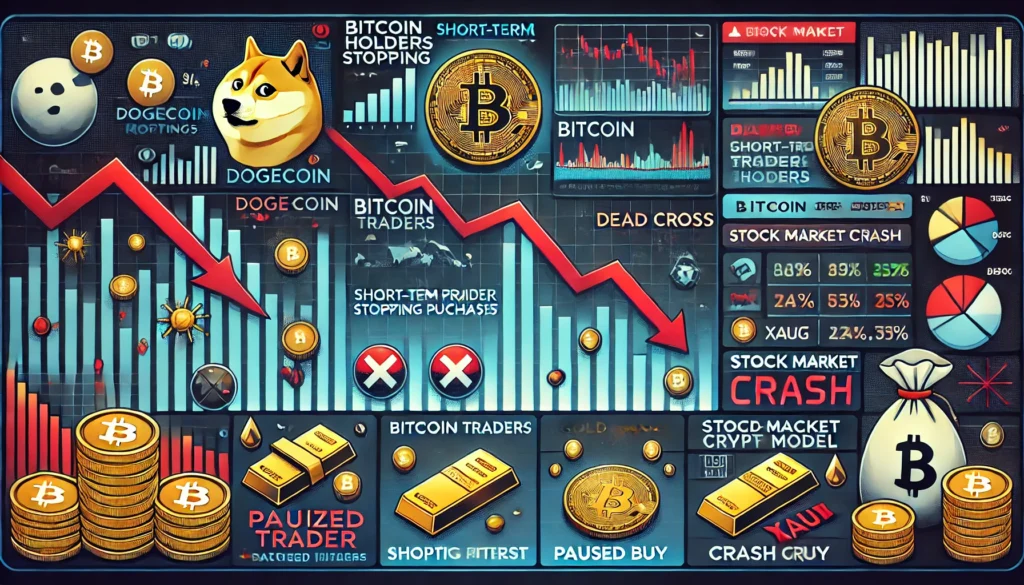
Shifts in trader behavior, technical correction signals, and broader macroeconomic ripples are defining the latest moves in the crypto landscape. From Dogecoin’s massive open interest drop to cautious moves by Bitcoin short-term holders, the signs point to a more conservative market sentiment in the short term. Meanwhile, even gold-backed cryptocurrencies—typically viewed as safe havens—are experiencing declines amid global market turbulence, reflecting the far-reaching impact of current financial conditions. Dogecoin Faces Sharp Decline in Open Interest, Signaling Waning Speculator Enthusiasm Dogecoin’s open interest has experienced a staggering 70.5% drop since mid-January, marking a significant shift in trader behavior. Open interest reflects the total number of outstanding derivative contracts—futures and options—that haven’t been settled. A sharp decline in this metric often points to a retreat of speculative capital. For Dogecoin, a meme coin heavily reliant on community buzz and retail speculation, this decline could be a harbinger of reduced liquidity and slower price movement in the near term. This drop aligns with a broader cooling-off period for altcoins, as capital rotates toward safer or more fundamentally supported assets. Dogecoin, with its meme-driven momentum and limited fundamental utility, has always been more vulnerable to sudden shifts in trader sentiment. Leveraged traders may be exiting due to increased volatility or lower expected returns, further weakening DOGE’s price stability. Notably, social media activity and meme coin hype have also seen a downtick, removing a key driver of demand. The technical indicators for DOGE suggest a lack of immediate recovery signals. Without new speculative inflows or a fresh wave of hype, Dogecoin may continue trading sideways or trend lower. Long-term holders may not be swayed by these short-term changes, but the absence of new capital and trader activity is a red flag for short- to mid-term price action. Market Impact: The decline in open interest for Dogecoin could reduce its short-term volatility but also limits upside momentum. For traders, it signifies reduced speculative opportunities, while for investors, it signals a period of consolidation or potential weakness in meme coin narratives. Short-Term Bitcoin Holders Pause Accumulation, Hinting at Sentiment Weakness Recent data shows that short-term Bitcoin holders (STHs) have stopped increasing their BTC exposure, a move interpreted as a growing lack of confidence in the asset’s near-term prospects. These investors, who typically hold BTC for less than 155 days, often act as sentiment bellwethers. When STHs start accumulating, it usually signals optimism. Conversely, when they stall or sell, it hints at market uncertainty or expectations of lower prices. This behavioral shift comes as Bitcoin faces macroeconomic headwinds and uncertainty around upcoming monetary policies. STHs may be positioning themselves conservatively due to the potential for short-term corrections or lack of bullish catalysts. Historically, such pauses in accumulation have preceded consolidation phases or mild corrections. While this does not necessarily predict a market crash, it emphasizes a cautious sentiment prevailing in the market. Moreover, this stagnation could also reduce buying pressure, making Bitcoin more vulnerable to downward moves triggered by broader market sentiment or external shocks. If long-term holders (LTHs) also begin reducing their positions, the bearish narrative could gain traction. On the other hand, if institutional inflows or bullish news emerge, sidelined STHs could re-enter, potentially reigniting momentum. Market Impact: The stalling of STH accumulation introduces short-term bearish pressure on BTC. While not catastrophic, it may delay bullish momentum and encourage a period of sideways or downward movement, especially if not counterbalanced by institutional or long-term holder activity. Bitcoin Realized Price Model Warns of Extended Correction Period The Realized Price model—especially the Inter-Cycle Cohort Age (ICCA) version—has signaled a “Dead Cross,” which historically indicates the onset of a correction phase within Bitcoin bull cycles. This technical signal emerges when short-term investor cost basis moves above the long-term cohort’s, implying short-term traders are underwater, often leading to selling pressure and reduced confidence. Based on past cycles, such correction phases average about 85 days. This model’s current prediction places the correction at roughly 28 days in, suggesting nearly two months more of potential consolidation or downward movement. Though this doesn’t negate the larger bull market narrative, it does call for caution. The Dead Cross represents a cooling-off period as speculative froth is reduced, and market fundamentals regain focus. It also suggests that the cycle’s emotional highs may have peaked temporarily, and market maturity is taking precedence. Investors and traders are advised to brace for lower volatility and potentially stagnant prices. This phase can also act as a healthy reset, allowing stronger hands to accumulate while weaker hands exit. Monitoring this model helps in adjusting strategy—whether to stay sidelined, accumulate on dips, or hedge existing positions. If external factors like macroeconomic easing or ETF inflows arise, they could shorten the predicted correction duration. Market Impact: While not immediately alarming, the Dead Cross and predicted correction period imply continued choppiness in BTC markets. Long-term investors may view it as a buying opportunity, but traders should remain cautious and manage risk tightly. Gold-Backed Cryptocurrencies Retreat Amid Broader Market Chaos Gold-backed cryptocurrencies like Paxos Gold (PAXG) and Tether Gold (XAUT) have seen sharp pullbacks from recent highs, correlating with global stock market turbulence. These digital assets, typically seen as hedges against fiat instability and equity volatility, initially rallied following political developments like tariff announcements. However, their recent retreat underscores that even “safe-haven” cryptos are not entirely immune to macroeconomic shocks. The initial surge was driven by fear-based demand—investors looking for alternatives to traditional assets amid rising inflation and geopolitical risks. However, the pullback reflects either profit-taking or a shift in broader risk-off sentiment, where investors liquidate across the board to raise cash. It also indicates that while gold-backed cryptos mimic the price of physical gold, they still operate within the broader, more volatile crypto ecosystem. This correction does not necessarily undermine their long-term utility but calls for better education around their behavior during market stress. Institutional interest in tokenized commodities remains high, and such retracements could offer entry points for those with a long-term thesis. That said, the interconnectedness of all asset classes
Daily Crypto News Analysis: Bitcoin Whales Accumulate, FTX Repayments Begin, Trump Eyes Bitcoin ETF, New Mexico Considers Bitcoin Investment, Altcoin Season in Question, $1.6B BTC Outflows, Tether Expands in UAE Real Estate, Foundry Strengthens Bitcoin Layer-2, and Czech Republic Implements Crypto Law

The cryptocurrency market is experiencing a transformative period, with Bitcoin at the center of attention. Recent developments, including institutional investments, whale accumulation, government interest, and key regulatory changes, are shaping the market’s future. Bitcoin’s dominance continues to rise, challenging the possibility of an immediate altcoin season. Meanwhile, FTX’s upcoming creditor repayments could introduce short-term volatility, and mining innovations are strengthening Bitcoin’s security. The increasing adoption of USDT in real estate and the potential for U.S. states to invest in Bitcoin signal a shift toward mainstream integration of crypto. With all these changes, investors must stay informed as the market moves toward a critical phase leading up to Bitcoin’s next halving. 1. Czech President Signs Landmark Crypto Bill (CKMA) Czech President Petr Pavel has signed the Czech Crypto Market Act (CKMA) into law, marking a major regulatory shift for the country’s crypto sector. The law aligns with the European Union’s Markets in Crypto-Assets (MiCA) framework while adding national regulations tailored to the Czech market. Key provisions include mandatory registration for crypto service providers, stricter anti-money laundering (AML) measures, and enhanced oversight to prevent illicit activities. The CKMA aims to foster a safer, more transparent crypto environment while ensuring compliance with EU rules. This brings much-needed legal clarity for businesses operating in the space, reducing regulatory uncertainty around taxation and enforcement. While some industry players welcome the regulation, others fear excessive bureaucracy could stifle innovation, particularly for startups and smaller firms. Market Impact: This move strengthens the Czech Republic’s position as a crypto-friendly hub in Europe. By aligning with MiCA, the country ensures smoother integration into the EU’s broader financial system, potentially attracting more institutional investment. However, the tighter AML regulations might pose challenges for smaller crypto firms, making it harder for them to operate under the new framework. 2. Mining Giant Foundry Boosts Bitcoin Layer-2 Rootstock’s Security Bitcoin mining powerhouse Foundry has taken a major step in supporting Bitcoin’s Layer-2 ecosystem by contributing hash power to Rootstock, a smart contract-enabled sidechain. Rootstock enables Ethereum-like smart contracts on Bitcoin, providing new functionalities while leveraging Bitcoin’s security model. Through its Foundry USA Pool, Foundry will add significant mining resources to the network, enhancing its resilience against potential attacks. Rootstock relies on merged mining, where Bitcoin miners simultaneously secure both chains without extra energy costs. By integrating Foundry’s hash power, the network becomes more secure and reliable, making it an attractive option for developers seeking to build decentralized finance (DeFi) applications on Bitcoin. This partnership is a major step toward strengthening Bitcoin’s role beyond just a store of value. Market Impact: The move highlights growing interest in Bitcoin Layer-2 solutions, an area where Ethereum has traditionally dominated. If Rootstock gains wider adoption, it could bring more smart contract activity to Bitcoin, increasing demand for BTC beyond its traditional use case. Other mining firms may follow Foundry’s lead, further strengthening Bitcoin-based DeFi solutions. 3. Trump’s Social Media Company Moves to Launch Bitcoin ETF Trump Media & Technology Group (TMTG), the media company associated with former U.S. President Donald Trump, is exploring the launch of a Bitcoin ETF. This move follows the recent approval of spot Bitcoin ETFs by the U.S. Securities and Exchange Commission (SEC), signaling growing mainstream adoption of Bitcoin as an investment vehicle. While details remain scarce, the company is reportedly in discussions with financial institutions to navigate regulatory approval. Given Trump’s historically mixed stance on crypto, this move is notable. A Bitcoin ETF under his brand could attract significant attention, especially among conservative investors and Trump supporters. However, the regulatory landscape remains uncertain, and securing SEC approval could be challenging. Market Impact: If successful, a Trump-backed Bitcoin ETF could further accelerate institutional interest in Bitcoin. However, given Trump’s past conflicts with regulators, political factors might influence the approval process. This development adds an intriguing dimension to the crypto market, especially with the 2024 U.S. elections approaching. 4. Tether and Reelly Tech Partner to Boost UAE Real Estate with USDT Tether, the issuer of the USDT stablecoin, has partnered with Reelly Tech to integrate USDT payments into the UAE’s real estate sector. This initiative allows buyers and sellers to use stablecoin transactions instead of traditional banking methods, reducing settlement times and increasing transparency. The UAE has been actively positioning itself as a crypto-friendly jurisdiction, with Dubai leading efforts to integrate blockchain technology into various industries. By facilitating real estate transactions with USDT, the partnership could streamline cross-border investments, making it easier for international buyers to enter the market. Market Impact: This move underscores the increasing real-world adoption of stablecoins. If successful, it could set a precedent for similar initiatives in other global markets. However, regulatory concerns around stablecoins, especially regarding AML compliance, may pose challenges. 5. Bitcoin Worth $1.6B Leaves Exchanges in Biggest Bullish Outflow Since April A significant $1.6 billion worth of Bitcoin has been withdrawn from exchanges, marking the largest outflow since April 2023. This trend is often seen as bullish, as it suggests investors are moving their BTC to private wallets for long-term holding rather than preparing to sell. The timing aligns with rising institutional interest in Bitcoin ETFs and a generally positive market sentiment. A reduction in Bitcoin’s exchange supply historically leads to price increases, as it reduces immediate selling pressure. Market Impact: This trend signals growing confidence in Bitcoin’s long-term potential. If outflows continue, Bitcoin’s price could see strong upward momentum, particularly as the next halving event approaches. 6. Bitcoin Whales Are Accumulating—$100K Rally Soon? On-chain data shows that Bitcoin whales—wallets holding significant amounts of BTC—have been accumulating aggressively during recent price dips. This buying behavior is often seen as a bullish indicator, as it suggests large investors expect a major price rally in the near future. Historically, whale accumulation has preceded Bitcoin’s biggest bull runs, as these investors tend to buy in anticipation of long-term gains. Several factors are driving this accumulation trend. The upcoming Bitcoin halving in April 2024 is a major catalyst, as it will reduce the rate at which new BTC enters circulation.
Rising Liquidity, Bitcoin Resilience, Cardano’s Governance Shift, Ripple’s Stablecoin Growth ,Hong Kong’s SFC revoked crypto licenses & Czech Republic’s Bold BTC Move : 6 Crypto Market Surge

. The rising M2 money supply signals potential asset inflation, which could fuel Bitcoin’s price growth. Meanwhile, Bitcoin remains stable despite concerns around DeepSeek, showcasing the market’s increasing maturity. In the blockchain ecosystem, Cardano is making a bold move towards full decentralized governance, while Ripple’s RLUSD stablecoin secures new listings with a transparent reserves report. On a geopolitical level, the Czech central bank is exploring Bitcoin as a reserve asset, a move that could influence global financial strategies. Additionally, whale accumulation continues, indicating bullish sentiment as exchange supplies shrink. These developments collectively highlight a period of growth, adaptation, and mainstream acceptance for crypto assets. 1. M2 Money Supply Approaches All-Time High – A Bullish Signal for Crypto? The global M2 money supply is nearing an all-time high, signaling increased liquidity in financial markets. According to the report, a rising M2 supply often leads to asset inflation, meaning that investors may look for stores of value such as Bitcoin and other cryptocurrencies. Historically, when central banks expand the money supply, assets like Bitcoin tend to benefit as they are seen as hedges against inflation. Analysts believe that this development could be particularly bullish for crypto, as more liquidity in the economy means more potential capital inflow into risk-on assets. Additionally, the Federal Reserve’s monetary policies are being closely watched, as any dovish signals could further drive capital into Bitcoin. In past cycles, Bitcoin has reacted positively to expansionary monetary policies, as investors seek alternative assets to hedge against currency debasement. If the M2 supply continues to grow, crypto markets could experience renewed bullish momentum, particularly if interest rates are cut or remain steady. Market Impact: A rising M2 money supply typically supports asset prices, and Bitcoin’s reputation as “digital gold” may attract more capital inflows. This could be a long-term bullish signal, especially if institutional investors allocate more funds to Bitcoin in response to liquidity expansion. 2. Concerns Surrounding DeepSeek Increase, But Bitcoin Remains Resilient DeepSeek, an AI-driven trading firm, is facing growing concerns over its financial stability and market influence. Reports suggest that the firm has been under scrutiny for its trading practices, which some analysts fear could disrupt market stability if issues arise. Despite this uncertainty, Bitcoin has shown resilience, maintaining its price levels and even experiencing minor gains. This stability suggests that Bitcoin is increasingly maturing as an asset, decoupling from individual market events that might have previously caused high volatility. Nigel Green, CEO of deVere Group, highlighted Bitcoin’s ability to remain stable despite these concerns. He pointed out that the digital asset’s fundamentals remain strong, and its long-term growth trajectory is largely unaffected by the troubles of any single firm. Market participants seem more focused on macroeconomic trends, regulatory developments, and institutional adoption rather than individual firms’ activities. Market Impact: While concerns about DeepSeek could create short-term uncertainty, Bitcoin’s resilience suggests growing investor confidence. If Bitcoin continues to hold steady in the face of negative news, it strengthens the case for it being a more stable asset class over time. 3. Cardano to Transition to Full Decentralized Governance After Hard Fork The Cardano Foundation has confirmed that the blockchain will transition to a fully decentralized governance model following its upcoming hard fork. This shift is a major milestone for Cardano, as it means that decision-making processes will no longer be centralized among developers or a core team. Instead, governance will be managed by the community, giving ADA holders direct influence over the network’s future. The hard fork is part of Cardano’s broader plan to evolve into a self-sustaining blockchain ecosystem. By allowing stakeholders to propose and vote on protocol changes, Cardano is aligning itself with the ideals of decentralized finance (DeFi). Some analysts believe this could boost investor confidence and attract more developers to the platform, as decentralized governance is often seen as a positive step for long-term blockchain sustainability. Market Impact: If successful, this transition could strengthen Cardano’s appeal among investors who favor decentralized networks. ADA could see increased demand if governance improvements lead to enhanced ecosystem development and greater adoption. 4. Ripple’s RLUSD Stablecoin Gains New Listings and Releases Reserves Report Ripple’s RLUSD stablecoin has secured another exchange listing, marking a step forward in its adoption. The stablecoin aims to provide an alternative to existing options like USDT and USDC while being backed by a transparent reserve structure. Ripple also released a reserves report confirming that RLUSD is fully backed, which is crucial for maintaining investor trust, especially in a market where stablecoin credibility has been a recurring issue. With regulatory scrutiny surrounding stablecoins, transparency in reserves is a key factor in adoption. Ripple’s approach aligns with the growing demand for audited and verifiable backing of stable assets. The new listings will also increase RLUSD’s liquidity, making it easier for users to access and trade the stablecoin across various platforms. Market Impact: If RLUSD gains traction, it could add competition to the stablecoin market, potentially impacting dominant players like USDT and USDC. A strong reserve structure may also help Ripple position itself as a trusted issuer of digital assets. 5. Czech Central Bank Governor Proposes Adding Bitcoin to Reserves The governor of the Czech National Bank is reportedly considering adding Bitcoin to the country’s reserves. This would be a major shift in traditional central banking strategies, as most central banks still rely on gold and fiat reserves. If approved, this move could set a precedent for other countries, particularly those looking to diversify their reserves amidst economic uncertainty. Central banks have traditionally been skeptical of Bitcoin, but rising inflation and concerns over fiat stability have led some to reconsider. A country adding Bitcoin to its reserves would be a significant step toward mainstream adoption and could drive institutional investors to view BTC as a legitimate store of value. While this proposal is still in the early stages, its approval could mark a historic moment for Bitcoin. Market Impact: If the Czech Republic follows through, it could inspire other nations to consider Bitcoin as a