
5 Important Crypto News: Stablecoin Bill Stalls, Bullish Bitcoin Indicator, $13.3B Binance Case, & EU Capital Controls: BotSlash Daily Crypto News Analysis
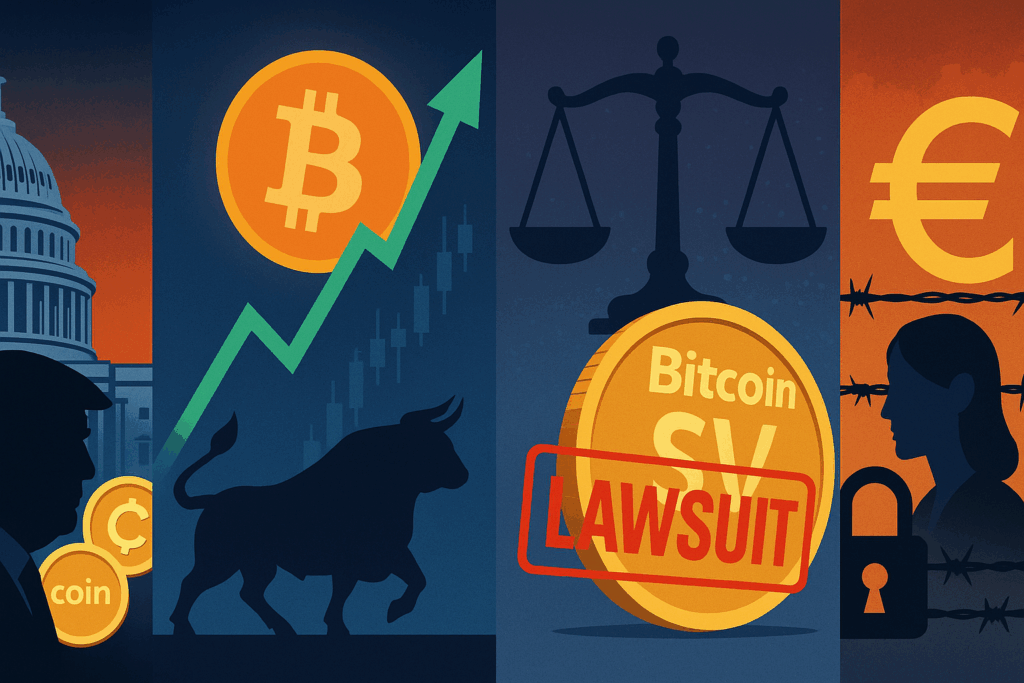
Political scrutiny, legal disputes, and macroeconomic policy shifts are converging with Crypto momentum and institutional behavior to shape the current crypto narrative. While the U.S. Senate battles controversy over the stablecoin framework, Europe tightens monetary policy in the shadow of its digital euro ambitions. Meanwhile, bullish market indicators and whale activity are hinting at renewed optimism in Bitcoin’s trajectory, all while Binance faces a resurrected multibillion-dollar lawsuit from discontented Bitcoin SV investors. 1. Senate Stablecoin Bill Stalls Amid Political Controversy The U.S. Senate’s attempt to pass the GENIUS Act, aimed at establishing a federal regulatory framework for stablecoins, has hit a roadblock. Despite earlier bipartisan support, the bill failed a procedural vote, largely due to concerns over former President Donald Trump’s involvement in cryptocurrency ventures. Democrats expressed apprehension about potential conflicts of interest, citing Trump’s launch of a meme coin and connections to a stablecoin project receiving significant foreign investment. The legislation’s future remains uncertain, with ongoing negotiations attempting to address issues related to money laundering, foreign issuers, and accountability. Senator Mark Warner has indicated a commitment to refining the bill to garner broader support. The crypto industry, which has invested heavily in lobbying for regulatory clarity, views the bill’s failure as a significant setback. The situation underscores the complexities of crafting legislation in a rapidly evolving financial landscape, especially when political interests intersect with regulatory efforts. 2. Bitcoin Bull-Bear Cycle Indicator Signals Potential Uptrend CryptoQuant’s Bull-Bear Market Cycle Indicator has flashed its first bullish signal since February, suggesting a possible shift in Bitcoin’s market dynamics. The indicator, which had consistently signaled bearish conditions, now points to a trend reversal as Bitcoin consolidates around the $103,000 mark. Analysts interpret this development as a sign of renewed investor confidence, with the potential for Bitcoin to challenge its all-time high of $109,000. The current market behavior indicates accumulation, often a precursor to significant price movements. While the bullish signal is promising, market participants remain cautious, acknowledging the need for sustained momentum and external factors that could influence the trajectory. 3. Bitcoin SV Investors Revive $13.3 Billion Claim Against Binance Investors in Bitcoin SV (BSV) are seeking to reinstate a “loss of chance” claim in a UK lawsuit against Binance, alleging that the exchange’s delisting of BSV led to significant financial losses. The claim, valued at approximately $13.3 billion, centers on the argument that Binance’s actions deprived investors of potential gains. A judge previously highlighted a discrepancy in the claimed damages, noting a substantial overstatement. Despite this, the investors are pushing to have their case reconsidered, emphasizing the impact of Binance’s decision on their investment opportunities. The outcome of this legal battle could set a precedent for how exchanges handle token listings and the responsibilities they bear toward investors. 4. Europe Faces Capital Controls Amid Digital Euro Concerns European nations are implementing capital controls in response to growing apprehensions about the digital euro initiative. Critics argue that the central bank digital currency could lead to increased surveillance and reduced financial privacy. Concerns include the potential for the digital euro to limit cash availability and grant authorities greater control over individual spending habits. The European Central Bank maintains that the digital euro aims to modernize the financial system, but public skepticism persists. The debate highlights the challenges central banks face in balancing innovation with privacy and autonomy in the digital age. 5. Institutional Bitcoin Holdings Surge by 41,300 BTC Institutional investors have significantly increased their Bitcoin holdings, with a reported addition of 41,300 BTC. This surge reflects a growing institutional interest in Bitcoin as a hedge against economic uncertainty and a store of value. Analysts attribute this trend to factors such as global economic instability and the search for alternative assets. The accumulation by large-scale investors suggests confidence in Bitcoin’s long-term prospects. This development could influence market dynamics, potentially leading to increased price stability and further adoption of Bitcoin in institutional portfolios. Key Takeaways 1. Senate Stablecoin Bill Stalls Amid Political Controversy The GENIUS Act failed to pass due to political disputes tied to Trump’s crypto involvement. Key issues include foreign issuer oversight, anti-money laundering, and governance structures. A major regulatory setback for stablecoin clarity and institutional crypto expansion in the U.S. 2. Bitcoin Bull-Bear Cycle Indicator Signals Potential Uptrend CryptoQuant’s indicator flipped bullish for the first time since February. Bitcoin hovers around $103K with renewed institutional and retail accumulation signals. A potential trend shift could lead BTC toward retesting its all-time high of $109K. 3. Bitcoin SV Investors Revive $13.3 Billion Claim Against Binance Investors allege Binance’s delisting of BSV caused lost opportunities. The case highlights exchange accountability and risks tied to token removals. A judicial precedent could emerge affecting future token listing decisions globally. 4. Europe Faces Capital Controls Amid Digital Euro Concerns EU capital restrictions raise alarms over surveillance and cash access. Public distrust grows around CBDCs despite ECB’s assurances. The development adds friction to the broader push toward digital financial systems. 5. Institutional Bitcoin Holdings Surge by 41,300 BTC Bitcoin whale wallets saw a sharp spike in holdings, signaling institutional confidence. Motivated by macroeconomic concerns and long-term value positioning. May fuel price stability and boost institutional adoption.
5 Important Crypto News: Miners Underperform, UK’s Regulatory Stumble, Bitcoin’s Bullish Signals, and Stablecoin Innovations : Botslash Daily Crypto News Analysis

The world of digital finance is undergoing major transformations, driven by institutions doubling down on Bitcoin, evolving regulatory landscapes, and innovative product launches. Major players like Franklin Templeton and Morgan Stanley are actively deepening their crypto involvement, while Tether sharpens its focus on the U.S. market with a new stablecoin. Meanwhile, market dominance dynamics shift with Bitcoin’s rising share and bold moves by figures like Michael Saylor. These headlines signal accelerating momentum across decentralized finance, traditional investment platforms, and policy developments. Franklin Templeton Embraces Bitcoin DeFi, Citing ‘New Utility’ for Investors Franklin Templeton, a prominent asset management firm, has announced its support for Bitcoin-based decentralized finance (DeFi) initiatives, highlighting the new utility these offer to investors. The firm believes that integrating Bitcoin into DeFi platforms can enhance the asset’s functionality without compromising its core value proposition as a store of value. This move signifies a growing institutional interest in expanding the use cases of established cryptocurrencies beyond traditional investment vehicles. By backing Bitcoin DeFi, Franklin Templeton aims to provide investors with more diverse and innovative financial products. The firm’s endorsement could pave the way for increased adoption of DeFi solutions that leverage Bitcoin’s security and liquidity. This development also reflects a broader trend of traditional financial institutions exploring blockchain technologies to offer more efficient and transparent services. The firm’s initiative is part of a larger strategy to integrate digital assets into mainstream finance. Franklin Templeton’s support for Bitcoin DeFi could encourage other institutional players to explore similar avenues, potentially leading to a more robust and diversified DeFi ecosystem. As regulatory frameworks evolve, such institutional involvement may also contribute to greater legitimacy and stability within the cryptocurrency market. Market Impact: Franklin Templeton’s endorsement of Bitcoin DeFi is likely to bolster investor confidence in the integration of traditional finance with decentralized platforms. This could lead to increased capital inflows into DeFi projects and further validation of Bitcoin’s evolving role in the financial ecosystem. BTC Dominance Rises; Saylor Eyes $82B BTC Acquisition; BOOP Launches Bitcoin’s dominance in the cryptocurrency market has reached a four-year high, indicating a shift in investor preference towards the leading digital asset. This resurgence is attributed to growing institutional interest and macroeconomic factors favoring Bitcoin over alternative cryptocurrencies. The increased dominance suggests a consolidation phase where investors seek stability amidst market volatility. In a bold move, Michael Saylor, a prominent Bitcoin advocate, has expressed intentions to acquire an additional $82 billion worth of Bitcoin. Such a significant investment underscores the confidence some institutional players have in Bitcoin’s long-term value proposition. Saylor’s strategy may influence other large-scale investors to consider substantial allocations to Bitcoin, further reinforcing its market position. Meanwhile, the launch of BOOP, a new cryptocurrency project, has garnered attention. While details remain limited, BOOP’s introduction during a period of increasing Bitcoin dominance suggests a competitive environment where new entrants must offer unique value propositions to capture market share. The success of such projects will depend on their ability to differentiate themselves and meet evolving investor demands. Market Impact: The rise in Bitcoin dominance and significant investment plans by institutional figures like Michael Saylor are likely to attract more investors to Bitcoin, potentially leading to price appreciation. However, new projects like BOOP must navigate a challenging landscape dominated by established cryptocurrencies. Morgan Stanley Introduces Crypto Trading on E*Trade Amid Deregulation Morgan Stanley has announced plans to introduce cryptocurrency trading on its E*Trade platform, marking a significant step in mainstream financial institutions embracing digital assets. This initiative is facilitated by recent deregulation efforts under the Trump administration, which have created a more favorable environment for banks to engage in crypto-related activities. The move aims to meet growing client demand for diversified investment options, including cryptocurrencies. By integrating crypto trading into E*Trade, Morgan Stanley positions itself to compete with established crypto exchanges and attract a broader client base interested in digital assets. The firm’s entry into the crypto market reflects a broader trend of traditional financial institutions recognizing the importance of offering comprehensive investment services that include emerging asset classes. This development also signals increased confidence in the stability and legitimacy of cryptocurrencies as investment vehicles. As more banks and financial platforms offer crypto trading, the barrier to entry for retail investors decreases, potentially leading to higher market participation and liquidity. However, it also underscores the need for robust regulatory frameworks to ensure investor protection and market integrity. Market Impact: Morgan Stanley’s foray into crypto trading via E*Trade is poised to enhance the accessibility and acceptance of digital assets among mainstream investors. This could lead to increased trading volumes and further integration of cryptocurrencies into traditional financial systems. Trump’s Economic Advisor Anticipates Imminent Tariff Changes The Trump administration’s economic advisor has indicated that changes to current tariff policies may be forthcoming. This anticipation arises amidst ongoing trade negotiations and economic considerations, suggesting a potential shift in the administration’s approach to international trade. Adjustments to tariffs could have significant implications for global markets and trade relations. The possibility of tariff modifications reflects the dynamic nature of trade policies and their responsiveness to economic indicators and diplomatic engagements. Such changes could aim to balance domestic economic interests with international trade obligations, potentially easing tensions with key trading partners. However, the specifics of any policy adjustments remain to be seen and will depend on the outcomes of ongoing discussions. Market participants are closely monitoring these developments, as alterations in tariff structures can influence supply chains, pricing, and investment decisions across various sectors. A move towards more favorable trade terms could bolster investor confidence and stimulate economic activity, while increased protectionism might lead to market volatility and strained international relations. Market Impact: Anticipated changes in tariff policies could lead to shifts in market dynamics, affecting sectors reliant on international trade. Investors should remain vigilant to policy announcements, as these could impact asset valuations and economic forecasts. Tether Plans U.S.-Focused Stablecoin Launch Later This Year Tether, the issuer of the widely used USDT stablecoin, has announced plans to launch a U.S.-focused stablecoin by the end
4 Important Crypto News: Ripple’s $1.25B Move, Bitcoin’s Slide, BlackRock’s EU ETF, and Hive’s Paraguay Expansion — BotSlash Daily Crypto News Analysis
The past 24 hours brought impactful developments across key sectors of the crypto world, signaling a deepening institutional presence and reactive market shifts. Ripple is making a power move with a $1.25 billion acquisition aimed at expanding its DeFi influence. Meanwhile, the broader crypto market reacted negatively to macroeconomic fears, pulling Bitcoin to new lows and dragging crypto stocks down. In contrast, BlackRock is charging ahead, debuting its first Bitcoin product in Europe — a milestone for the region’s digital asset exposure. And Hive Blockchain is going green, announcing new mining operations in Paraguay, tapping into sustainable energy. Ripple’s $1.25 Billion Acquisition of Prime Broker Hidden Road Ripple Labs, the company behind the cryptocurrency XRP, has announced plans to acquire multi-asset prime brokerage firm Hidden Road for $1.25 billion. This strategic move aims to bolster Ripple’s position in institutional decentralized finance (DeFi) by integrating Hidden Road’s extensive client base and clearing capabilities. Hidden Road processes approximately $3 trillion annually across various financial markets and serves over 300 institutional clients. The acquisition is expected to enhance the utility of Ripple’s U.S. dollar-pegged stablecoin, RLUSD, which Hidden Road utilizes as collateral in its brokerage products. This positions Ripple to compete more effectively with established stablecoin providers like Tether and USD Coin. The deal is anticipated to close in the coming months, pending regulatory approvals. Market Impact: This acquisition signifies a substantial expansion of Ripple’s institutional services, potentially increasing XRP’s adoption among institutional investors. The move may also influence the competitive landscape of stablecoins, challenging existing market leaders. U.S. Crypto Stocks Decline as Bitcoin Hits New 2025 Low On April 7, 2025, U.S.-listed crypto company stocks experienced significant declines, mirroring a sharp drop in bitcoin prices. Bitcoin fell by as much as 5.5%, reaching its lowest point in 2025. Shares of major crypto-related firms also suffered, with MicroStrategy falling over 7%, Coinbase dropping 6%, and Robinhood sliding 4%. The downturn is attributed to escalating global trade tensions following new tariffs announced by President Donald Trump, which have dampened investor confidence and risk appetite. Additionally, billionaire investor Bill Ackman warned of a potential “economic nuclear winter,” further fueling market concerns. Market Impact: The recent market volatility underscores the sensitivity of crypto assets to broader economic and geopolitical developments. Investors may need to reassess the role of cryptocurrencies as safe-haven assets during times of economic instability. BlackRock Launches First Bitcoin Product in Europe BlackRock, the world’s largest asset manager, has introduced its first bitcoin exchange-traded product (ETP) in Europe, named the ‘iShares Bitcoin ETP.’ Domiciled in Switzerland, the product is listed in Paris, Amsterdam, and Frankfurt. This launch follows BlackRock’s success in the United States, where it attracted over $50 billion into similar cryptocurrency products after the Securities and Exchange Commission approved such offerings in January 2024. BlackRock has partnered with Coinbase as the custodian and Bank of New York Mellon as the administrator for this new product. Reuters Market Impact: BlackRock’s expansion into the European crypto market reflects growing institutional interest and could pave the way for increased adoption of bitcoin ETPs across the continent. Hive’s Expansion of Bitcoin Mining Operations in Paraguay Hive Blockchain Technologies, under the leadership of Executive Chairman Frank Holmes, is expanding its bitcoin mining operations into Paraguay. The move aims to leverage Paraguay’s abundant hydroelectric power to support sustainable and cost-effective mining activities. This expansion aligns with Hive’s strategy to diversify its operations geographically and enhance its mining capacity while adhering to environmentally friendly practices. Market Impact: Hive’s expansion into Paraguay could set a precedent for other mining companies seeking sustainable energy sources, potentially influencing global mining operations’ geographical distribution and environmental strategies. Key Takeaways: Ripple’s acquisition of Hidden Road for $1.25 billion aims to enhance its institutional DeFi services and stablecoin utility. U.S. crypto stocks have declined amid bitcoin’s drop to a new 2025 low, influenced by escalating trade tensions and economic concerns. BlackRock has launched its first bitcoin ETP in Europe, reflecting growing institutional interest in cryptocurrency products. Hive Blockchain is expanding its bitcoin mining operations into Paraguay, leveraging sustainable hydroelectric power.
8 Latest Crypto Analysis : Bitcoin ETFs, Binance Rumors, Institutional Growth & Regulatory Challenges Shape Market Sentiment : News Daily Crypto News Analysis

The cryptocurrency landscape is undergoing significant changes, driven by both market dynamics and regulatory shifts. Key developments include the rise of Bitcoin exchange-traded funds (ETFs), which could bring institutional investors into the market, as well as rumors surrounding Binance’s potential sale, with CEO Changpeng Zhao firmly denying these claims. Meanwhile, global regulations are tightening, with Australia leading the charge in cracking down on crypto exchanges, while Hong Kong sees increased institutional investment in Bitcoin. Reports also suggest Bitcoin could play a key role in the market’s growth in 2025, contingent on holding support levels. These stories reflect a market in transition, with both growth potential and regulatory uncertainty on the horizon. 1. FTX Payouts, Trump & Musk, FOMC Minutes May Roil Crypto Markets This Week Analysis:The crypto market faces potential turbulence this week, driven by a combination of significant events. First, the payout of FTX creditors is expected to have ripple effects. As the bankrupt exchange distributes assets, many creditors, particularly institutional players, may liquidate their holdings, causing price fluctuations in the market. The timing of these asset sales, compounded by the current market conditions, could amplify volatility. The liquidation of assets by large creditors could flood the market with Bitcoin and other cryptocurrencies, creating downward pressure on prices. The second potential catalyst for market volatility is the high-profile Trump and Musk interview, which could trigger unpredictable movements in market sentiment. Both figures are influential in shaping public opinion on crypto, and their views on the industry often send signals that can sway investor behavior. As we’ve seen in the past, Musk’s remarks on cryptocurrencies, especially regarding Bitcoin and Dogecoin, have caused sharp price fluctuations. With Trump’s political influence and Musk’s power as a tech mogul, any new developments from their interaction could have substantial implications for market confidence. Lastly, the release of the Federal Open Market Committee (FOMC) minutes is expected to further stir market sentiment. The FOMC minutes provide insight into the Federal Reserve’s future plans on interest rates and monetary policies, which directly affect risk assets, including cryptocurrencies. Investors in the crypto space are highly sensitive to any signals of tightening monetary policy, as it could lead to higher borrowing costs and reduced liquidity in the market. The release of the minutes is likely to fuel uncertainty, adding more volatility to an already fragile market. Market Impact:The combined effect of these events could result in short-term market volatility, especially if the FTX payouts lead to large sell-offs. Market participants will also be keeping a close eye on the political and macroeconomic developments tied to Trump, Musk, and the FOMC. It’s possible that investors might choose to sit on the sidelines, awaiting clearer guidance from these events. However, the outcome could vary depending on how quickly the market absorbs the potential shocks. 2. U.S. Listed Bitcoin Miners Growing Their Share of the Network Hashrate: Bernstein Analysis:U.S.-listed Bitcoin miners are gaining a significant share of the network’s hashrate, as detailed in a recent Bernstein report. Bitcoin mining, known for its high capital requirements and energy demands, has seen a shift toward U.S.-based mining operations, thanks in large part to access to the U.S. capital markets. Publicly traded companies like Marathon Digital and Riot Platforms have successfully raised capital to expand their mining capacity, investing heavily in more efficient mining hardware. This surge in hashrate has not only strengthened the position of U.S. miners but also provided them with greater influence over the Bitcoin network itself, potentially affecting network security and block production. The expansion of U.S.-listed miners could be seen as a response to global mining pressures, particularly from China, which was once the dominant force in Bitcoin mining. As the Chinese government imposed a ban on Bitcoin mining in 2021, many miners relocated to jurisdictions with more favorable regulations, including the U.S. The increased share of U.S. miners in the Bitcoin network demonstrates the global shift in the mining landscape, showcasing the power of the U.S. to harness resources and technology for Bitcoin mining. The shift also marks a growing trend toward centralization of mining power in the U.S., which could influence the decentralization principles that Bitcoin was initially built upon. While the increase in mining capacity has advantages for U.S. miners, it also poses challenges. The industry faces growing scrutiny over the environmental impact of energy-intensive mining operations. There are calls for the adoption of cleaner energy sources to mitigate the carbon footprint associated with mining. Additionally, the increased dominance of U.S.-listed miners could create potential risks of network centralization, which might be counterproductive to the decentralization ethos of the Bitcoin network. Nonetheless, this trend is a clear indicator that the U.S. is becoming a major player in the future of Bitcoin mining. Market Impact:The increase in U.S. miners’ hashrate share can influence the price of Bitcoin and market sentiment, particularly in terms of perceived network security and centralization risks. Miners with greater control over the network may benefit from enhanced profitability, but as the sector becomes more competitive, smaller miners may face challenges in staying afloat. Investors in mining companies might see opportunities in this trend, but the environmental and centralization concerns could introduce long-term market risks, especially in terms of regulation and public perception. 3. Institutional Adoption of Bitcoin ETF Increases Under Trump Administration Analysis:The increasing institutional adoption of Bitcoin ETFs has gained traction, and the potential return of a pro-crypto stance under a Trump administration could significantly accelerate this trend. Institutional investors have shown increasing interest in Bitcoin, primarily driven by Bitcoin’s potential to serve as a hedge against inflation and the digital asset’s growing acceptance as an asset class. Bitcoin ETFs, in particular, offer a more accessible method of exposure to Bitcoin for traditional investors who are reluctant to handle the complexities of holding Bitcoin directly. The launch of Bitcoin ETFs, such as the recent attempts by various financial institutions to introduce Bitcoin-linked ETFs, would allow larger investors, like pension funds and hedge funds, to gain exposure to Bitcoin through familiar financial
Crypto Daily News Analysis: Bitcoin’s $100K Struggle, India’s Brutal Tax Crackdown, ETF Boom & Market Volatility

Bitcoin and the broader crypto market are experiencing significant turbulence due to global economic concerns, strict regulations, and shifting investor sentiment. The possibility of new U.S. tariffs under Donald Trump’s leadership has triggered fears of a stronger dollar, which historically puts downward pressure on Bitcoin. At the same time, India is tightening its tax grip on crypto holders, imposing a 70% penalty on undisclosed gains, making the country’s regulatory landscape one of the toughest globally. Meanwhile, institutional interest in Bitcoin is rising, as spot Bitcoin ETFs recorded a $318 million net inflow, signaling renewed confidence in digital assets. Despite this, market volatility remains high, with concerns over a potential trade war and profit-taking from recent rallies weighing on prices. LUNC’s burning mechanism has crossed the 400 billion milestone, but questions remain about its long-term value. Looking ahead, India’s 2025 crypto regulatory review could bring major shifts, either improving the investment environment or pushing more users toward decentralized platforms. With macroeconomic conditions playing a crucial role, traders and investors will be closely watching how Bitcoin reacts to inflation, interest rates, and institutional demand in the coming months. 1. Bitcoin’s $100K Target at Risk as Trump’s Tariff Plans Stir Market Fears Bitcoin’s path to $100,000 may face obstacles as former U.S. President Donald Trump proposes a new wave of import tariffs if re-elected. The potential tariffs, aimed at reshaping global trade policies, could strengthen the U.S. dollar while increasing inflationary pressure on consumer goods. A stronger dollar historically leads to a decline in Bitcoin and other risk assets, as investors shift their capital toward more stable investments. If trade restrictions lead to increased inflation, the Federal Reserve may be forced to maintain high interest rates for a longer period. This would be a bearish scenario for Bitcoin since higher interest rates make traditional investments like bonds and cash savings more attractive than speculative assets. Analysts caution that despite bullish sentiment in the crypto space, Bitcoin might struggle to maintain momentum if macroeconomic conditions turn unfavorable. On the flip side, some investors argue that economic instability could increase Bitcoin’s appeal as a hedge against inflation and monetary policies. This was seen during past economic crises, where Bitcoin gained traction as a “digital gold” alternative. However, the short-term reaction to trade war concerns has leaned bearish, with Bitcoin’s price showing signs of struggle. If global trade tensions escalate further, the crypto market could see heightened volatility, delaying Bitcoin’s push past the psychological $100,000 barrier. Market Impact: Short-Term: Bearish pressure due to macroeconomic uncertainty. Long-Term: Could be neutral or bullish if Bitcoin is viewed as an inflation hedge. 2. India’s Crypto Regulations Could See Major Changes in 2025 India is preparing to reevaluate its cryptocurrency regulations in 2025, potentially bringing major shifts to the country’s digital asset industry. For years, India has maintained a cautious stance on crypto, imposing a 30% tax on gains and a 1% tax deducted at source (TDS) on transactions. These harsh measures have driven many Indian traders and businesses to foreign platforms or decentralized exchanges. However, with global crypto adoption on the rise, the Indian government is signaling a possible policy shift. Key areas under review include taxation, exchange regulations, and the potential for a clearer legal framework. The current high tax rates have slowed industry growth and discouraged innovation. A reduction in crypto taxes could revitalize the Indian crypto market by encouraging more domestic investment. Additionally, regulators may introduce more structured compliance rules for exchanges, which would bring more legitimacy to the sector and protect investors. Another major point of interest is how India will integrate its central bank digital currency (CBDC), the digital rupee, into the financial system. While the government has been cautious about private cryptocurrencies, a well-structured framework could allow both the digital rupee and decentralized crypto assets to coexist. If regulations become more favorable, India’s massive population could become one of the largest crypto markets globally. Market Impact: Short-Term: Neutral, as regulatory decisions will take time. Long-Term: Bullish if India adopts friendlier policies, attracting investors and companies. 3. Spot Bitcoin ETFs See $318M Inflow as Institutional Interest Surges Spot Bitcoin ETFs are regaining traction, with a massive $318 million inflow recorded recently. This marks a reversal in sentiment after periods of declining interest. The renewed institutional demand highlights Bitcoin’s growing appeal as a mainstream investment asset, especially among hedge funds, wealth managers, and traditional finance firms. Institutional investors favor ETFs because they provide exposure to Bitcoin without requiring direct custody of the asset. This recent increase in inflows suggests that many investors view Bitcoin as a long-term store of value rather than a speculative trade. Additionally, market analysts believe that growing interest in ETFs could drive Bitcoin’s price higher by reducing available supply on exchanges. However, ETF inflows have been inconsistent in the past, with sudden outflows sometimes following large investments. While the current trend is positive, market participants are watching closely to see if this momentum sustains or fades. If inflows continue, Bitcoin could see strong price support and further institutional adoption in the coming months. Market Impact: Short-Term: Bullish as ETF inflows signal strong demand. Long-Term: Bullish if institutional adoption continues. 4. Terra Luna Classic Burn Hits 400 Billion as Binance Contributes 700M LUNC The Terra Luna Classic (LUNC) token burn initiative has reached a significant milestone, with 400 billion tokens removed from circulation. Binance has played a major role in this effort, recently burning over 700 million LUNC tokens. Token burns are designed to reduce supply and create scarcity, theoretically boosting the asset’s value. Despite the large burn, LUNC’s price remains volatile. While some investors are optimistic about long-term price appreciation, others argue that LUNC’s fundamental challenges, including low developer activity and lingering trust issues, could prevent major gains. The project has struggled to rebuild confidence after the Terra ecosystem collapse in 2022, and without significant development progress, the burn alone may not be enough to drive sustainable price increases. Still, Binance’s continued support signals that there is at least some
Crypto Daily News Analysis: Bitcoin at $105K, Grayscale’s Doge coin Trust, Tether’s $13B Profit, Stablecoin Surge, UBS Explores zkSync, and More : 8 Important News

Institutional interest in crypto continues to grow, with Grayscale launching a Dogecoin Trust and UBS exploring zkSync’s Layer-2 technology for blockchain integration with Bitcoin’s recent climb past $105,000 is fueling excitement, but rising open interest in derivatives markets is raising caution. Meanwhile, Tether’s $13 billion profit highlights the dominance of stablecoins, which now exceed $200 billion in market capitalization. However, on-chain data shows a 48% decline in Bitcoin retail transactions, signaling reduced small investor activity. Macroeconomic factors, including U.S. labor market data and potential Fed rate cuts, are also influencing Bitcoin’s short-term price action. 1. Grayscale Unveils New Doge coin Trust Grayscale, one of the largest digital asset management firms, has launched a new Dogecoin Trust, marking a significant step in institutional adoption of the popular meme coin. The trust allows accredited investors to gain exposure to Dogecoin without directly holding or managing the asset. Grayscale has previously introduced similar trusts for Bitcoin, Ethereum, and even lesser-known assets like Filecoin and Chainlink. The move indicates that institutional players see long-term value in Dogecoin beyond its meme status. Dogecoin has been one of the most speculative assets in the crypto market, often driven by retail enthusiasm and high-profile endorsements, including from Elon Musk. With Grayscale’s involvement, DOGE gains legitimacy as a viable investment product. However, the broader question remains: Can Dogecoin sustain institutional interest, or will this trust remain a niche product like some of Grayscale’s less popular offerings? The success of this trust will depend on demand from serious investors who traditionally favor assets with stronger fundamentals. Market Impact: The announcement led to a modest increase in DOGE’s price, but the reaction remains muted compared to previous hype cycles. If the trust sees significant inflows, it could help stabilize Dogecoin’s price and reduce its historically high volatility. However, given DOGE’s meme-driven nature, the impact may be short-lived unless institutional adoption continues to grow. 2. Tether Reports $13B Profit for 2024 as Bitcoin & Gold Prices Rise Tether, the company behind USDT, reported a massive $13 billion profit in 2024, primarily driven by rising Bitcoin and gold prices. The company, which earns revenue from U.S. Treasury holdings and other assets backing USDT, has benefited significantly from the current macroeconomic environment. With Bitcoin breaking new all-time highs and gold reaching record levels, Tether’s reserves have appreciated considerably, boosting its profits. This profitability highlights Tether’s dominance in the stablecoin sector, but it also raises concerns about its lack of transparency. While Tether has increased its disclosures over the years, critics still question the true backing of USDT and the company’s ability to withstand extreme market volatility. Additionally, Tether’s expanding profits show that it is not just a stablecoin issuer but a major financial player with significant market influence. Market Impact: The increase in Tether’s profitability reassures investors about the stability of USDT, the most used stablecoin in crypto trading. However, any concerns about Tether’s transparency or regulatory issues could cause panic in the market. If Bitcoin and gold continue their upward trajectory, Tether’s profits could keep rising, further solidifying its dominance in the crypto economy. 3. UBS Tests zkSync’s Layer-2 Technology, Signaling TradFi Interest in Crypto UBS, one of the world’s largest banks, is exploring zkSync’s Layer-2 technology, marking another step toward traditional finance (TradFi) integrating with blockchain infrastructure. zkSync, a zero-knowledge rollup scaling solution for Ethereum, offers faster transactions and lower fees while maintaining security. UBS’s involvement suggests that major financial institutions are actively looking at blockchain-based solutions to enhance their operations. Traditional banks have historically been skeptical of cryptocurrencies, but the benefits of blockchain technology—particularly in terms of transaction speed, cost savings, and security—are becoming impossible to ignore. With UBS testing zkSync, it’s possible that more banks will start adopting Layer-2 solutions for payments, settlements, or even tokenized assets. This move aligns with a broader trend where financial giants like JPMorgan and Citibank are exploring similar blockchain integrations. Market Impact: Institutional adoption of Layer-2 technology could significantly boost Ethereum’s long-term value proposition. If more banks follow UBS’s lead, we might see increased demand for Ethereum-based solutions, leading to greater use of ETH itself. While this news is bullish for Ethereum and Layer-2 networks, widespread TradFi adoption could still take time due to regulatory and compliance hurdles. 4. Bitcoin Bounces Back to $105K, But Open Interest Raises Caution Bitcoin has surged past $105,000, recovering from a recent dip, but analysts warn that excessive open interest in futures markets could lead to volatility. High open interest means a large number of active derivative contracts, which can amplify price swings if traders get liquidated. This situation often leads to sudden price corrections as leveraged positions get wiped out. While Bitcoin’s strength remains intact, traders should remain cautious, as a crowded derivatives market has historically preceded sharp price pullbacks. Many analysts believe that if open interest continues to rise without sufficient spot buying, a sudden price drop is likely. On the other hand, if Bitcoin maintains this level with strong demand, we could see another leg up in price discovery. Market Impact: Short-term volatility is expected, but Bitcoin’s long-term trend remains bullish. Traders should watch for liquidation events that could trigger price swings, especially if leverage continues to build up. If Bitcoin sustains $105K with strong spot buying, it could set the stage for a push toward new all-time highs. 5. Stablecoin Market Surges Past $200B, Signaling Potential Crypto Price Upswing The total market capitalization of stablecoins has surpassed $200 billion, marking a significant milestone that could indicate a broader crypto market upswing. Stablecoins act as a key liquidity provider for the cryptocurrency market, and their expansion often precedes bullish movements in Bitcoin and altcoins. This surge is largely driven by increased demand for USDT and USDC, as traders and institutions use them for trading, hedging, and on-chain settlements. A growing stablecoin market suggests that new capital is entering the crypto space, as stablecoins are often the first step before investors deploy funds into Bitcoin, Ethereum, or other assets. Historically, when the stablecoin supply
5 Groundbreaking Crypto Trends: Stablecoins, ETFs, Regulation Wins, and Market Signals You Can’t Ignore

From the Philippines launching its first peso-backed stablecoin to the record-breaking success of U.S. spot Bitcoin ETFs, the industry is brimming with innovation and growth. Meanwhile, Kenya takes a bold step towards legalizing cryptocurrencies, setting the stage for broader African adoption. Amid these advancements, the U.S. job market report highlights Bitcoin’s sensitivity to macroeconomic factors. Let’s delve into the key developments shaping the crypto world today. 1. Filipino Banks Launch PHPX Stablecoin on Hedera Network Filipino banks, in collaboration with Singapore-based Just Finance, are introducing PHPX, a stablecoin pegged to the Philippine peso and powered by Hedera’s decentralized ledger technology (DLT). The initiative, slated for launch between May and July, involves prominent banks like UnionBank, RCBC, and Cantilan Bank. PHPX aims to provide a secure and efficient payment solution, leveraging blockchain’s capabilities to enhance cross-border payments and financial inclusion. The project also plans to establish a multicurrency stablecoin exchange for seamless transactions, bridging PHPX with other stablecoins like USDC and EURC. This move reflects the Philippines’ commitment to embracing blockchain technology as a tool for economic development. By integrating regulated institutions, the PHPX initiative stands out for its secure, transparent, and inclusive approach. The collaboration among local banks highlights the growing interest in digital finance in emerging markets, underscoring the demand for blockchain solutions to address inefficiencies in traditional systems. If executed successfully, this could serve as a template for other nations aiming to modernize their financial systems. The launch of PHPX could reshape remittance markets, vital to the Philippine economy, which saw over $40 billion in remittances in 2024. By reducing transaction costs and processing times, PHPX may encourage wider crypto adoption while fostering innovation in the country’s financial sector. As stablecoins gain traction globally, PHPX’s success could position the Philippines as a leader in blockchain integration in Southeast Asia. 2. First U.S. Spot Bitcoin ETF Marks a Year of Record Growth The first U.S. spot Bitcoin ETFs, launched on January 11, 2024, have celebrated a remarkable debut year, surpassing $61 billion in assets under management (AUM). BlackRock’s iShares Bitcoin Trust led the charge, becoming the most successful ETF launch in history. Institutional investors, drawn by the simplified exposure to Bitcoin, fueled unprecedented inflows, exceeding initial projections of $14 billion. The ETFs thrived against a backdrop of supportive regulations, heightened institutional demand, and Bitcoin’s stellar price performance, doubling to over $100,000 in 2024. The introduction of spot Bitcoin ETFs marked a pivotal shift in the crypto market, bridging the gap between traditional finance and digital assets. By offering a regulated avenue for Bitcoin exposure, the ETFs addressed lingering concerns over security and custody. The regulatory approval also signaled growing institutional trust in crypto assets, potentially setting the stage for broader adoption of blockchain-based financial instruments. The SEC’s landmark decision provided clarity, invigorating market sentiment and reinforcing Bitcoin’s role as a legitimate investment vehicle. This milestone for Bitcoin ETFs has likely set a precedent for future financial innovation, enabling investors to participate in the crypto market without direct ownership complexities. As institutional interest grows, Bitcoin ETFs could attract more capital, increasing liquidity and reducing volatility in the crypto market. The sustained success of these ETFs solidifies Bitcoin’s mainstream acceptance, reinforcing its position as “digital gold.” 3. U.S. Nonfarm Payrolls Surge to 256,000: Implications for Bitcoin The U.S. added 256,000 jobs in December 2024, outpacing the forecasted 160,000 and driving the unemployment rate down to 4.1%. This robust labor market performance has tempered expectations of Federal Reserve rate cuts, which were initially anticipated for early 2025. Strong employment data suggests the economy remains resilient, even as higher interest rates weigh on borrowing and spending. This development has prompted investors to revise their outlook for monetary policy, with rate cuts now delayed to late 2025. The surge in payrolls has created ripples across financial markets, including the crypto sector. Bitcoin, often perceived as a hedge against loose monetary policy, faced downward pressure following the labor report. Prices fell by 1.3% over 24 hours, reflecting concerns over tighter financial conditions. The Fed’s reluctance to cut rates implies higher yields for traditional assets, potentially diverting investment away from riskier options like Bitcoin. Traders are now weighing macroeconomic stability against crypto’s role in diversifying portfolios. This news underscores the ongoing tension between macroeconomic factors and crypto market performance. Bitcoin’s sensitivity to interest rates highlights its maturing relationship with traditional finance, where economic indicators increasingly influence its price movements. As the Federal Reserve navigates monetary policy, Bitcoin’s trajectory may hinge on how investors balance their risk appetite in a high-interest-rate environment. 4. Kenya’s Shift Toward Crypto Regulation Kenya is preparing to legalize cryptocurrency through a comprehensive regulatory framework addressing issues like money laundering and taxation. The government has tasked the Blockchain Association of Kenya (BAK) with drafting a Virtual Asset Service Providers (VASP) bill. This legislation will outline licensing requirements, consumer protections, and tax regulations. Meanwhile, the Kenya Revenue Authority (KRA) has proposed a real-time tax system to track crypto transactions, aiming to integrate taxation into crypto trading platforms seamlessly. This marks a groundbreaking shift in Kenya’s approach to digital finance. The move to regulate cryptocurrencies reflects a desire to embrace innovation while ensuring compliance with international financial standards, such as FATF anti-money laundering guidelines. By involving stakeholders like BAK, the Kenyan government demonstrates its commitment to creating an inclusive and balanced regulatory ecosystem. This could position Kenya as a leader in crypto adoption across Africa, leveraging blockchain to address financial inclusion challenges. The initiative’s success could pave the way for more African nations to adopt similar measures, fostering a more robust crypto ecosystem across the continent. For Kenya, legalizing crypto could boost investment, innovation, and financial inclusion while setting an example for emerging markets globally. By combining regulation with technological advancement, Kenya may become a hub for crypto innovation in Africa. 5. Bitcoin Funding Rates Turn Negative: A Potential Bottom Signal? Bitcoin’s funding rates briefly turned negative, a situation where traders holding short positions (betting on Bitcoin’s price decline) pay funding fees to