6 Crypto news Unleashed: Explosive Growth, Bold Innovations, and Resilient Markets
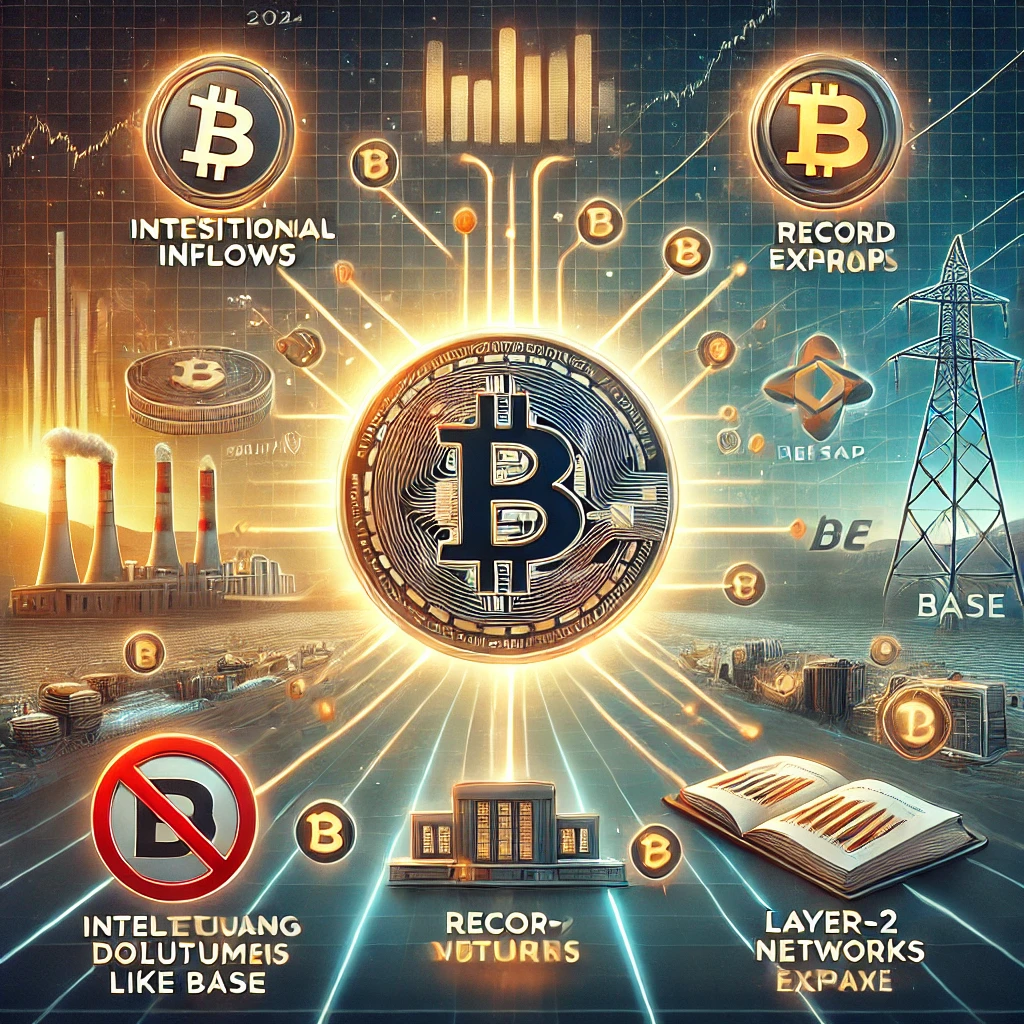
The cryptocurrency industry in 2024 has been a hotbed of innovation, resilience, and dynamic shifts, showcasing its ability to adapt and thrive amidst challenges. From groundbreaking developments in decentralized finance (DeFi) platforms to record-breaking derivatives activity and regulatory interventions, the crypto landscape continues to evolve at an unprecedented pace. Institutional interest has surged to new heights, while layer-2 solutions and blockchain innovations have brought scalability and efficiency to the forefront. Meanwhile, global regulatory shifts remind us of the delicate balance between innovation and compliance. This analysis delves into six pivotal developments that have shaped the crypto markets in 2024. Each event offers unique insights into how technological advancements, market sentiment, and geopolitical forces are redefining the financial ecosystem. Together, these stories paint a comprehensive picture of the trends driving the cryptocurrency sector forward and the challenges it faces as it matures into a global economic force. Let’s explore each of these key developments and their far-reaching implications. 1. PancakeSwap’s Explosive Trading Volume Growth in 2024 PancakeSwap, a leading decentralized exchange (DEX) on the Binance Smart Chain (BSC), reported a staggering 179% year-over-year increase in trading volumes in 2024, reaching $310 billion, compared to $111 billion in 2023. This growth is largely attributed to its strategic adoption of layer-2 scaling solutions like Arbitrum and Base, which have significantly enhanced its transaction efficiency. Arbitrum alone saw a 3,656% year-over-year growth in trading volumes, while Base experienced a 3,539% increase. These platforms enabled PancakeSwap to offer users faster and cheaper transactions, boosting its competitiveness in the DeFi sector. Moreover, PancakeSwap introduced innovative features such as PancakeSwapX, which allows for zero-fee trading and gasless swaps on Ethereum and Arbitrum. Such user-focused advancements have made decentralized finance (DeFi) more accessible, driving user engagement and expanding its customer base. The DEX has also made considerable inroads into Ethereum, achieving a 251% trading volume increase, further cementing its position as a versatile and multi-chain DeFi hub. Market Impact: The exponential growth of exemplifies the increasing appeal and adoption of DeFi platforms as viable alternatives to centralized exchanges. By lowering transaction fees and improving accessibility, PancakeSwap has managed to attract both retail traders and institutional players. This growing user base and liquidity influx are likely to have long-term implications for the broader DeFi ecosystem, potentially leading to price appreciation for native tokens associated with PancakeSwap and other DeFi protocols. Additionally, PancakeSwap’s success places pressure on centralized exchanges to innovate or risk losing market share, signaling a shift toward decentralization in global financial systems. Bitcoin Options Expiry Coming: Will Crypto Market Move This Christmas? As Christmas approaches, the cryptocurrency market is bracing for a record-breaking event with the expiration of $14 billion worth of Bitcoin (BTC) options contracts on December 27, 2024. Representing 44% of the total open interest on Deribit, this massive expiry signals a crucial moment for Bitcoin traders. The “max pain” price—a metric indicating the level at which the most options contracts expire worthless—has been identified at $84,000. This suggests potential downward pressure on Bitcoin’s price, which is currently trading at approximately $98,000. This event coincides with a period of heightened market activity as investors anticipate Bitcoin’s halving in April 2024. While the expiry could lead to temporary price declines, it also presents an opportunity for long-term investors to capitalize on potential dips. Increased trading volumes and significant options activity indicate the growing maturity of the crypto derivatives market, further solidifying Bitcoin’s role as a key financial instrument for both speculative and hedging strategies. Market Impact: The substantial volume of options expiring is likely to introduce considerable volatility into the market. A price drop toward the $84,000 “max pain” level could trigger losses for options holders, particularly for those with bullish positions. However, market resilience may come into play as investors seize the opportunity to “buy the dip,” driving prices back up and stabilizing the market. This dynamic underscores the evolving sophistication of the cryptocurrency ecosystem, where derivatives play a critical role in shaping price movements. 3. Russia’s Ban on Crypto Mining in 10 Regions Russia has implemented a six-year ban on cryptocurrency mining in 10 regions, citing energy shortages and infrastructure challenges. These regions, which include energy-rich Siberian areas and territories annexed from Ukraine, were once attractive hubs for miners due to low electricity costs. However, the increasing strain on the power grid, particularly during harsh winters, has compelled the government to enforce strict regulations. The mining industry in Russia consumes approximately 16 billion kilowatt-hours annually, representing 1.5% of the nation’s total energy consumption. To mitigate the economic impact of this ban, the Russian government has introduced taxes on crypto mining, aiming to generate $2 billion annually. Despite these efforts, concerns are growing about the rise of illegal mining activities, as miners seek to evade detection and continue operations covertly. Market Impact: The ban on mining in key regions is likely to drive miners to relocate to more crypto-friendly jurisdictions, such as Kazakhstan or the United States. This migration could temporarily disrupt Bitcoin’s network hash rate, although the decentralized nature of mining ensures overall stability in the long term. The regulatory crackdown also highlights the need for sustainable mining practices and may accelerate the adoption of energy-efficient protocols in the industry. Meanwhile, the potential rise in illegal mining poses challenges for enforcement and energy management, underscoring the complex interplay between regulation and innovation. 4. Insights from The Satoshi Papers on Bitcoin’s Societal Role Natalie Smolenski’s The Satoshi Papers is a groundbreaking anthology that explores Bitcoin’s broader implications for governance, financial systems, and societal norms. The collection features essays from prominent scholars, delving into topics such as the decentralization of state power, the future of central banking, and the philosophical underpinnings of sound money. Inspired by historical debates between Federalists and Anti-Federalists, the book draws parallels between Bitcoin and the evolution of governance in modern societies. Smolenski’s work highlights Bitcoin’s potential to disrupt traditional financial institutions, prompting a reevaluation of the relationship between individuals and the state. Key discussions include the automation of state