
4 Important Crypto News: Ethereum ETF Surge, Stablecoin Bill Momentum, Market-Making Scandals & Abu Dhabi’s Bitcoin Bet – Botslash Daily Crypto News Analysis
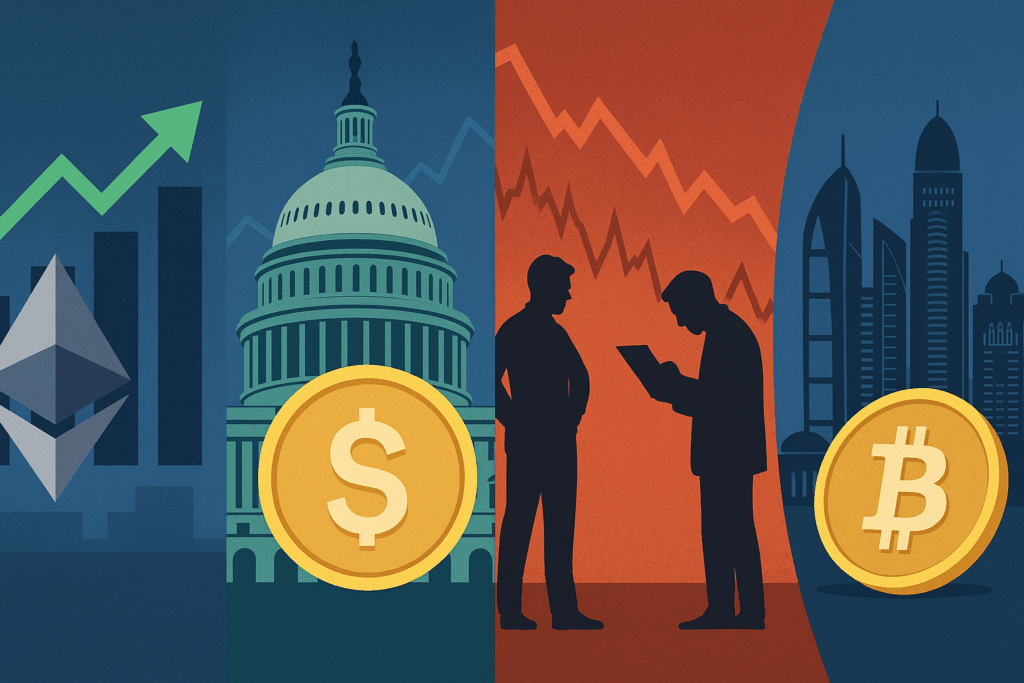
Investor sentiment in crypto is seeing strong momentum across multiple fronts, from Ethereum’s underappreciated value now attracting ETF interest, to a critical U.S. stablecoin regulation bill nearing Senate approval. At the same time, a scandal involving Movement Labs and Mantra is raising concerns about integrity in crypto market-making. In a major institutional move, Abu Dhabi has strengthened its stake in Bitcoin via a $408 million investment in BlackRock’s ETF. These developments underline a shifting landscape driven by both optimism and scrutiny. 🟢 Undervalued Ether Catching Eye of ETF Buyers as Rally Inbound Ethereum (ETH) is experiencing a notable resurgence, drawing increased attention from ETF investors. According to a CryptoQuant report, the ETH/BTC Market Value to Realized Value (MVRV) ratio indicates that ETH is significantly undervalued compared to Bitcoin—a condition not observed since 2019. This undervaluation, coupled with a 38% surge in the ETH/BTC price ratio from a five-year low, suggests a potential bullish trend for ETH. Institutional interest is also on the rise, with ETF holdings of ETH increasing relative to BTC since late April. Additionally, the ETH-to-BTC spot trading volume ratio has reached 0.89, the highest since August 2024, indicating a shift in investor preference towards ETH. These metrics, combined with reduced selling pressure on ETH, point towards a favorable market sentiment. The convergence of these factors suggests that Ethereum may be poised to lead a new ‘Alt season,’ potentially outperforming Bitcoin and driving a broader altcoin rally. 🟢 U.S. Stablecoin Bill Could Clear Senate Next Week, Proponents Say The U.S. Senate is on the verge of passing the Guiding and Establishing National Innovation in U.S. Stablecoins (GENIUS) Act, which aims to establish a regulatory framework for stablecoins. The bill mandates that stablecoins be backed by safe, liquid assets and comply with anti-money laundering and terrorism financing regulations. It also provides bankruptcy protections for holders. Despite facing opposition over provisions that could allow non-financial tech companies to issue stablecoins, the bill has garnered bipartisan support. Proponents argue that regulating stablecoins will reinforce the U.S. dollar’s global standing, as over 99% of stablecoins are pegged to the USD. By providing a clear regulatory framework, the bill could enhance the dollar’s appeal as a ‘safe haven’ asset. The passage of the GENIUS Act could be a significant step towards integrating stablecoins into the mainstream financial system, potentially boosting institutional confidence and accelerating crypto adoption. 🔻 Movement Labs and Mantra Scandal Are Shaking up Crypto Market-Making Recent scandals involving Movement Labs and Mantra have disrupted the crypto market-making landscape. Leaked documents reveal that Movement Labs, a Trump-backed startup, secretly promised up to 10% of its MOVE token supply to shadow advisers through undisclosed agreements. These arrangements were not disclosed to investors, raising concerns about transparency and governance. Additionally, Movement Labs’ co-founder Rushi Manche was fired following a controversial market-making deal involving the sale of 66 million MOVE tokens. This incident, along with similar issues at Mantra, has prompted a reevaluation of liquidity structures and trust in the crypto market-making sector. These events highlight the need for greater transparency and stricter verification processes within the crypto industry to maintain investor confidence and market integrity. 🟢 Abu Dhabi’s Sovereign Wealth Fund Reveals $408 Million Investment In BlackRock’s Bitcoin ETF Abu Dhabi’s sovereign wealth fund, Mubadala, has disclosed a $408.5 million investment in BlackRock’s iShares Bitcoin Trust (IBIT), according to a recent SEC filing. Mubadala’s strategic move into Bitcoin ETFs reflects a growing institutional appetite for crypto assets. By opting for ETF exposure rather than direct Bitcoin purchases, the fund simplifies custody and compliance processes, making it a more manageable investment. This investment also underscores the increasing acceptance of digital assets among sovereign wealth funds. As institutional interest in Bitcoin continues to rise, such significant investments could further legitimize and stabilize the crypto market, potentially attracting more traditional investors. Key Takeaways: Ethereum ETF buying surges as metrics reveal ETH is undervalued compared to BTC; bullish signs point to an incoming altcoin season. U.S. stablecoin legislation (GENIUS Act) is expected to reach the Senate floor next week; this could define global standards and boost dollar dominance. Movement Labs and Mantra scandal shakes investor trust, revealing backroom token deals and poor market-making transparency. Abu Dhabi invests $408M in Bitcoin ETF, signaling sustained institutional confidence and expanding sovereign crypto exposure.
4 Important Crypto News: Ripple’s $1.25B Move, Bitcoin’s Slide, BlackRock’s EU ETF, and Hive’s Paraguay Expansion — BotSlash Daily Crypto News Analysis
The past 24 hours brought impactful developments across key sectors of the crypto world, signaling a deepening institutional presence and reactive market shifts. Ripple is making a power move with a $1.25 billion acquisition aimed at expanding its DeFi influence. Meanwhile, the broader crypto market reacted negatively to macroeconomic fears, pulling Bitcoin to new lows and dragging crypto stocks down. In contrast, BlackRock is charging ahead, debuting its first Bitcoin product in Europe — a milestone for the region’s digital asset exposure. And Hive Blockchain is going green, announcing new mining operations in Paraguay, tapping into sustainable energy. Ripple’s $1.25 Billion Acquisition of Prime Broker Hidden Road Ripple Labs, the company behind the cryptocurrency XRP, has announced plans to acquire multi-asset prime brokerage firm Hidden Road for $1.25 billion. This strategic move aims to bolster Ripple’s position in institutional decentralized finance (DeFi) by integrating Hidden Road’s extensive client base and clearing capabilities. Hidden Road processes approximately $3 trillion annually across various financial markets and serves over 300 institutional clients. The acquisition is expected to enhance the utility of Ripple’s U.S. dollar-pegged stablecoin, RLUSD, which Hidden Road utilizes as collateral in its brokerage products. This positions Ripple to compete more effectively with established stablecoin providers like Tether and USD Coin. The deal is anticipated to close in the coming months, pending regulatory approvals. Market Impact: This acquisition signifies a substantial expansion of Ripple’s institutional services, potentially increasing XRP’s adoption among institutional investors. The move may also influence the competitive landscape of stablecoins, challenging existing market leaders. U.S. Crypto Stocks Decline as Bitcoin Hits New 2025 Low On April 7, 2025, U.S.-listed crypto company stocks experienced significant declines, mirroring a sharp drop in bitcoin prices. Bitcoin fell by as much as 5.5%, reaching its lowest point in 2025. Shares of major crypto-related firms also suffered, with MicroStrategy falling over 7%, Coinbase dropping 6%, and Robinhood sliding 4%. The downturn is attributed to escalating global trade tensions following new tariffs announced by President Donald Trump, which have dampened investor confidence and risk appetite. Additionally, billionaire investor Bill Ackman warned of a potential “economic nuclear winter,” further fueling market concerns. Market Impact: The recent market volatility underscores the sensitivity of crypto assets to broader economic and geopolitical developments. Investors may need to reassess the role of cryptocurrencies as safe-haven assets during times of economic instability. BlackRock Launches First Bitcoin Product in Europe BlackRock, the world’s largest asset manager, has introduced its first bitcoin exchange-traded product (ETP) in Europe, named the ‘iShares Bitcoin ETP.’ Domiciled in Switzerland, the product is listed in Paris, Amsterdam, and Frankfurt. This launch follows BlackRock’s success in the United States, where it attracted over $50 billion into similar cryptocurrency products after the Securities and Exchange Commission approved such offerings in January 2024. BlackRock has partnered with Coinbase as the custodian and Bank of New York Mellon as the administrator for this new product. Reuters Market Impact: BlackRock’s expansion into the European crypto market reflects growing institutional interest and could pave the way for increased adoption of bitcoin ETPs across the continent. Hive’s Expansion of Bitcoin Mining Operations in Paraguay Hive Blockchain Technologies, under the leadership of Executive Chairman Frank Holmes, is expanding its bitcoin mining operations into Paraguay. The move aims to leverage Paraguay’s abundant hydroelectric power to support sustainable and cost-effective mining activities. This expansion aligns with Hive’s strategy to diversify its operations geographically and enhance its mining capacity while adhering to environmentally friendly practices. Market Impact: Hive’s expansion into Paraguay could set a precedent for other mining companies seeking sustainable energy sources, potentially influencing global mining operations’ geographical distribution and environmental strategies. Key Takeaways: Ripple’s acquisition of Hidden Road for $1.25 billion aims to enhance its institutional DeFi services and stablecoin utility. U.S. crypto stocks have declined amid bitcoin’s drop to a new 2025 low, influenced by escalating trade tensions and economic concerns. BlackRock has launched its first bitcoin ETP in Europe, reflecting growing institutional interest in cryptocurrency products. Hive Blockchain is expanding its bitcoin mining operations into Paraguay, leveraging sustainable hydroelectric power.
7 Important Crypto News: FOMC-Induced Volatility, SEC’s Crypto Roundtable, North Carolina’s Bitcoin Bill & More – BotSlash Daily Crypto News Analysis
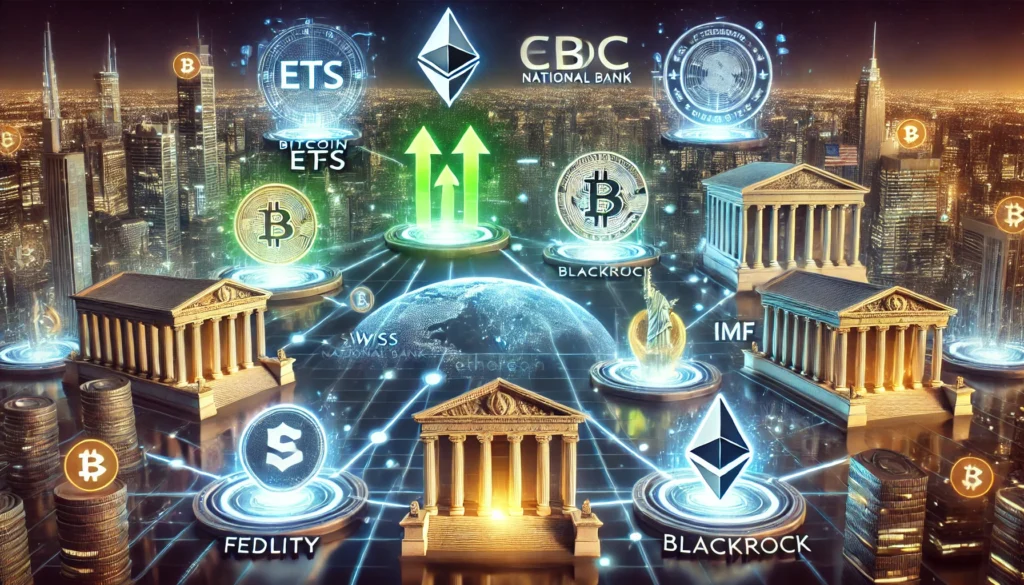
Major developments across the global crypto space are signaling the increasing institutional embrace, regulatory attention, and infrastructure evolution of digital assets. From Bitcoin’s volatility driven by ETF enthusiasm and regulatory clarity, to Ethereum’s tightening exchange supply, to traditional finance giants like Fidelity stepping into tokenized treasuries, the industry continues to mature rapidly. Meanwhile, the IMF’s inclusion of Bitcoin in global economic statistics marks a symbolic breakthrough for its legitimacy, and Switzerland’s wholesale CBDC pilot shows how blockchain may reshape traditional settlement systems. Regulatory frameworks for stablecoins are tightening in the U.S., and Tether’s push for transparency could shape future standards in stablecoin auditing. Bitcoin Volatility Surges as ETFs Rebound and SEC Clears Mining Bitcoin’s recent market behavior reflects both volatility and optimism, driven by two key developments. Firstly, the U.S. SEC’s decision to approve multiple spot Bitcoin ETFs has reignited institutional interest. These ETFs offer investors direct exposure to Bitcoin without the complexity of self-custody, creating a more accessible gateway for traditional finance players. Their rebound in trading volume and net inflows has coincided with Bitcoin’s rally past all-time highs, reflecting strong market confidence. ETFs serve as a legitimizing bridge, and their success suggests a broader acceptance of crypto as a mainstream asset. Secondly, the SEC’s greenlight to Bitcoin mining operations—an area previously clouded by regulatory uncertainty—has further boosted sentiment. By removing ambiguity and affirming the legality of mining, it has incentivized new players to join the space and given existing miners a renewed sense of operational security. This regulatory clarity has likely played a part in increased mining activity and rising hash rates, reinforcing the Bitcoin network’s security and robustness. The combination of institutional inflows and mining support has created a bullish undertone in the market. However, such sharp upward movements also increase short-term volatility, attracting traders but cautioning long-term investors. Market Impact: Bitcoin’s upward price action and the ETF inflows are bringing mainstream validation, increasing market participation and liquidity. As the infrastructure matures, this could lay the groundwork for Bitcoin’s next growth cycle. Swiss National Bank Pilots CBDC for Tokenized Securities Settlement The Swiss National Bank (SNB) has launched a pilot program to test a wholesale central bank digital currency (CBDC), targeting the settlement of tokenized securities. This represents a pioneering move among central banks, signaling Switzerland’s ambition to remain at the forefront of financial innovation. By experimenting with a CBDC that directly interfaces with tokenized asset platforms, the SNB is addressing the key challenge of integrating decentralized finance mechanisms into traditional financial systems. The pilot, executed via Switzerland’s SIX Digital Exchange (SDX), focuses on improving efficiency in clearing and settlement processes. Tokenized securities—real-world assets issued and traded on blockchains—require instant and final settlement mechanisms, which a wholesale CBDC can offer. Unlike retail CBDCs intended for public use, this variant is restricted to financial institutions, streamlining interbank payments and reducing counterparty risks. This approach could revolutionize capital markets by enabling 24/7 trading, removing reconciliation delays, and potentially reducing operational costs. The SNB’s focus on legal and technical feasibility is crucial, as other central banks observe this experiment closely. Its outcome could influence digital monetary policies worldwide, especially in Europe and Asia. Market Impact: The SNB’s pilot reinforces confidence in the institutional viability of blockchain, potentially accelerating tokenized finance adoption. If successful, it may spark similar initiatives globally, boosting the credibility of digital assets and increasing investment in tokenization infrastructure. Ethereum Supply on Exchanges Drops 16.4%, Signaling Bullish Sentiment Ethereum has shown a strong bullish indicator: a 16.4% decrease in ETH supply on centralized exchanges. This shift is typically interpreted as investors moving their assets into long-term storage, possibly in anticipation of price appreciation or to engage with DeFi platforms and staking opportunities. When Ethereum leaves exchanges, selling pressure reduces, and that often sets the stage for organic price growth due to reduced supply. This reduction also coincides with the continued expansion of Ethereum’s Layer 2 ecosystem and increasing adoption of staking post-merge. As more ETH is locked in staking contracts and Layer 2 solutions, the circulating supply becomes tighter. Such dynamics can significantly influence ETH’s price behavior, particularly in a market already experiencing bullish momentum driven by broader crypto resurgence. Ethereum’s deflationary tokenomics post-EIP-1559 and the Merge further support this bullish framework. With less ETH issued and more burned during transactions, supply pressure is already reduced. Add to that a decrease on exchanges, and the fundamentals align well for a price rally. Market Impact: A declining exchange balance often precedes bull runs, and Ethereum’s network fundamentals support this sentiment. This trend could push ETH towards new highs, especially if institutional interest picks up in tandem with improved macroeconomic conditions. Fidelity Enters Tokenized Treasury Race to Rival BlackRock’s BUIDL Fidelity’s announcement to launch a tokenized U.S. Treasury fund signals escalating competition among traditional asset managers entering the digital asset space. By tokenizing U.S. Treasuries, Fidelity is aiming to combine the security of traditional fixed-income investments with the accessibility and efficiency of blockchain. This move directly challenges BlackRock’s BUIDL product, which has already made waves by using blockchain infrastructure to modernize asset management. Tokenized treasuries offer a unique value proposition: enhanced liquidity, real-time settlement, and programmable financial instruments. These features appeal to a new generation of investors looking for transparency and on-chain yield without sacrificing regulatory compliance. Fidelity’s participation lends massive credibility to the concept, signaling that tokenized finance is maturing beyond experimental phases. The firm’s strategy involves issuing digital fund shares on public or permissioned blockchains, enabling seamless access and potentially lowering costs associated with fund management. This also caters to decentralized finance (DeFi) platforms seeking reliable yield sources, potentially bridging traditional and decentralized financial ecosystems. Market Impact: Fidelity’s entry legitimizes tokenized fixed-income markets. This could accelerate institutional adoption of blockchain-based securities, unlocking significant capital inflow into on-chain finance and further validating the tokenization narrative. IMF Adds Bitcoin to Global Economic Data Metrics In a landmark move, the International Monetary Fund (IMF) has incorporated Bitcoin into its global economic statistics databases. This represents a huge leap for Bitcoin’s
7 Important Crypto News : Franklin Templeton’s Bitcoin & Ether ETF, Pi Network’s Token Launch, SEC’s Crypto Crime Unit, UAE Crypto Adoption, & More: Botslash Daily Crypto News Analysis

The rapid development and adoption of cryptocurrency continue to shape global financial landscapes, with significant advancements taking place in institutional investment, technological integration, and regulatory frameworks. From the launch of new ETFs offering exposure to Bitcoin and Ether to efforts aimed at bridging the gap between Bitcoin and other blockchain ecosystems, the crypto space is expanding into new territories. Meanwhile, rising concerns about security and fraud have prompted regulatory bodies like the SEC to introduce specialized units dedicated to combating illicit activities in the sector. In parallel, regions such as the UAE are witnessing a surge in crypto adoption, driven by progressive regulations and increased consumer interest. As these trends evolve, the lines between traditional finance and decentralized technologies are becoming increasingly blurred, setting the stage for a more integrated and dynamic financial future. 1. Franklin Templeton Bitcoin and Ether Index ETF Launched on NYSE Arca Franklin Templeton, one of the world’s most respected asset managers, has taken a bold step into the cryptocurrency space with the launch of its Bitcoin and Ether Index ETF on the NYSE Arca exchange. This move represents the company’s entry into the rapidly growing cryptocurrency market, providing investors with an easy way to gain exposure to the price movements of Bitcoin and Ether. By utilizing an index approach, this ETF offers diversified exposure, mitigating risks associated with investing in just one cryptocurrency. The launch of this ETF is significant for a few reasons. First, it marks a major shift in institutional acceptance of digital currencies. Franklin Templeton’s strong reputation in traditional financial markets adds legitimacy to the growing trend of cryptocurrencies becoming a mainstream investment asset. The ETF’s structure makes it accessible to a wider range of investors, from institutional players to retail investors, who may have otherwise found it challenging to directly invest in cryptocurrencies. However, the impact of this launch goes beyond just creating a new investment vehicle. It reflects the broader trend of traditional financial institutions recognizing cryptocurrencies as a legitimate asset class. This could potentially prompt other asset managers to develop similar crypto-based products, which may further enhance the credibility and market maturity of digital assets. Market Impact:The introduction of a Bitcoin and Ether ETF by such a major institution is likely to increase investor confidence in the crypto market, particularly among those hesitant about direct cryptocurrency ownership. Additionally, the increased exposure to Bitcoin and Ether could provide much-needed liquidity to the market, boosting overall market stability. If other institutional investors follow Franklin Templeton’s lead, we could see a surge in institutional money entering the space, leading to further price appreciation and market maturation. 2. Bitcoin Hashrate Growth Slows Amid Tough Market Conditions for Smaller Miners Bitcoin’s network has seen a deceleration in hashrate growth, largely due to the tough market conditions impacting smaller mining operations. Mining has always been a critical part of Bitcoin’s infrastructure, as miners secure the network and validate transactions. However, as Bitcoin’s block reward continues to decrease and electricity costs rise, small miners are finding it increasingly difficult to stay competitive. This slowdown in mining activity could have long-term implications for Bitcoin’s decentralization and security. Smaller miners, who are essential for maintaining Bitcoin’s decentralized nature, are being squeezed by higher operational costs. Many are finding it more profitable to shut down their operations rather than continue mining under the current conditions. As a result, mining power is increasingly concentrated among larger mining pools that can afford the hefty operational costs and have access to cheaper electricity sources. The slowdown in hashrate growth may also lead to higher transaction fees, as it could take longer for blocks to be mined. Moreover, it poses a risk to the security of the Bitcoin network, as a smaller number of mining entities controlling the majority of the hashrate could lead to centralization, making the network more susceptible to attacks. Market Impact:While the market consolidation trend may reduce competition, it could also bring increased efficiency as large mining pools leverage economies of scale. This may further solidify Bitcoin’s position as a store of value but could hurt its appeal as a truly decentralized system. In the long term, the reduction in small miners may lessen Bitcoin’s overall security, and further regulatory attention may be drawn to address the concentration of mining power. 3. SEC Launches New Crypto Crime-Fighting Unit The U.S. Securities and Exchange Commission (SEC) has launched a dedicated Crypto Crime-Fighting Unit aimed at addressing the increasing number of frauds and illicit activities within the cryptocurrency space. The unit will focus on enforcing regulations, investigating market manipulation, and combating fraudulent practices like Ponzi schemes, pump-and-dump scams, and other illegal activities that have emerged as the crypto market continues to mature. This initiative signals the SEC’s commitment to ensuring the protection of investors and maintaining market integrity as cryptocurrencies gain mainstream adoption. The new unit comes at a time when the crypto space is under intense scrutiny from regulators worldwide. As more institutional investors enter the market, the potential for manipulation and fraud increases, requiring more robust oversight. By establishing a dedicated team focused solely on crypto crimes, the SEC aims to stay ahead of emerging risks, providing better enforcement and regulatory clarity to crypto market participants. This unit will likely lead to more prosecutions and regulatory actions against malicious actors. It also serves as a warning to those looking to exploit the lack of regulation in the crypto space. Investors will likely view this as a positive development, as it demonstrates a growing commitment to protecting their interests within the crypto markets. Market Impact:The formation of the SEC’s Crypto Crime-Fighting Unit is likely to bring a sense of increased security to the crypto market. However, this could also lead to heightened compliance costs for crypto projects and exchanges, especially in the short term. More aggressive enforcement could slow down the innovation cycle as firms ensure they meet regulatory requirements. In the long term, the increased regulatory oversight could help institutional investors feel more confident about entering the crypto
8 Important Crypto News: Binance, Ethereum ETFs, Hong Kong’s Crypto Roadmap, and More: Botslash Daily Crypto News Analysis

The cryptocurrency market has seen various shifts over the past few days, marked by regulatory actions, institutional movements, and notable product launches. From Binance US navigating regulatory hurdles to Ethereum’s success with spot ETFs in the U.S., the landscape continues to evolve. As institutions gear up to invest in crypto, and jurisdictions like Hong Kong chart regulatory paths to support the ecosystem, the market is adapting. At the same time, lawsuits and legal challenges, such as Nigeria’s legal action against Binance, continue to stir debates about compliance. Meanwhile, firms like Fold and Mantra are attempting to carve a global presence, demonstrating that despite volatility, there is forward momentum for crypto adoption worldwide. Binance US Restores US Dollar Deposits & Withdrawals After Surviving “Chokepoint 2.0” The resumption of USD deposits and withdrawals on Binance US marks a significant recovery for the exchange, following months of regulatory pressure and operational disruptions. The “Chokepoint 2.0” initiative, a broader government-led effort to tighten financial flows within the crypto space, had caused massive challenges for Binance US in maintaining its liquidity and offering services. However, this development signals a possible resolution to these challenges, with the exchange working more closely with US regulators to ensure compliance moving forward. By restoring essential functions like USD deposits and withdrawals, Binance US is looking to regain user trust and regain its position as a leading crypto exchange in the region. This recovery also highlights a growing trend of exchanges becoming more attuned to the regulatory environment, which has been a long-standing concern for regulators in the US. As a part of its recovery strategy, Binance US has doubled down on compliance initiatives, improving transparency and working with banks to mitigate previous regulatory challenges. The decision to restore these essential services signals confidence in the exchange’s ability to navigate legal obstacles while providing essential services to its users. The market impact of this news is potentially positive, especially for investors who rely on Binance US as a liquidity hub. With the return of USD deposit and withdrawal functionalities, Binance US can expect to see a boost in transaction volumes and an increase in market activity, which could lead to renewed confidence in the platform. However, Binance US will still face ongoing scrutiny from regulators, and the success of this recovery will ultimately depend on how well it can maintain compliance with US regulations moving forward. Bitcoin Rewards App Fold Faces Volatility in Wall Street Debut The debut of Fold, the Bitcoin rewards app, on Wall Street revealed the inherent volatility of crypto-linked stocks. While Fold’s unique proposition—allowing users to earn Bitcoin as cashback from purchases—has attracted attention in the cryptocurrency space, its performance in the stock market showed that public investor sentiment toward crypto is still wary. Despite the app’s growing popularity and a strong user base, the fluctuating stock price on its debut day signals a lack of confidence from traditional investors, particularly those skeptical about crypto assets. Fold’s volatility highlights the broader skepticism surrounding crypto companies going public. The market for crypto stocks, although showing some promise, remains highly unpredictable, driven not only by the performance of the app itself but also by external factors such as regulatory changes and broader market sentiment. With the crypto market still volatile, investors may find it difficult to assess the true value of companies that are deeply intertwined with digital assets. This has led to higher-than-expected fluctuations in Fold’s stock price, as investors struggle to determine whether the app can scale its business in a sustainable way. The immediate market impact has been mixed, with Fold’s stock experiencing wild fluctuations. However, in the long term, its performance will be a key indicator of how well the cryptocurrency sector can transition into the mainstream financial markets. If Fold can stabilize and prove its business model, it could serve as a case study for other crypto-based platforms attempting to go public. The success of such ventures is critical for the future of cryptocurrency adoption, especially as more companies seek to offer blockchain-based rewards or similar services to mainstream consumers. Hashdex Secures Approval to Launch First XRP ETF in Brazil Hashdex’s approval to launch the first-ever XRP ETF in Brazil is a monumental step for both the company and the broader crypto industry in Latin America. The approval is significant not just for Brazilian investors, but also for global crypto markets, as it signals growing institutional interest in the XRP token and the wider potential of decentralized finance (DeFi) and blockchain ecosystems. The launch of this ETF comes at a critical moment when the crypto market is under close scrutiny from regulators in multiple countries, and the approval indicates that Brazilian authorities are open to embracing crypto innovation, as long as regulatory guidelines are followed. This move could also pave the way for other nations in Latin America to follow Brazil’s example, potentially opening up crypto-based financial products to a broader retail and institutional investor base. XRP’s inclusion in the ETF is particularly notable as it comes amid ongoing legal battles in the United States, where Ripple (XRP’s parent company) is facing scrutiny from the SEC. By gaining regulatory approval in Brazil, Hashdex’s ETF could enhance XRP’s legitimacy and serve as a counterpoint to ongoing legal uncertainties in the US. Market-wise, this could lead to increased inflows into XRP-based financial products, as institutional investors gain easier access to the token without needing to directly purchase or manage it themselves. The ETF could further drive up demand for XRP as an asset, potentially increasing its value and market liquidity. This development also provides more evidence of the crypto industry’s maturation, as it becomes more integrated into traditional financial markets in regulated forms, appealing to both institutional and retail investors. Nigeria Sues Binance for $79.5 Billion in Losses, $2 Billion Tax Nigeria’s lawsuit against Binance, seeking $79.5 billion in damages and $2 billion in unpaid taxes, marks a major escalation in the government’s regulatory actions against global crypto exchanges. The lawsuit alleges that Binance
8 Latest Crypto Analysis : Bitcoin ETFs, Binance Rumors, Institutional Growth & Regulatory Challenges Shape Market Sentiment : News Daily Crypto News Analysis

The cryptocurrency landscape is undergoing significant changes, driven by both market dynamics and regulatory shifts. Key developments include the rise of Bitcoin exchange-traded funds (ETFs), which could bring institutional investors into the market, as well as rumors surrounding Binance’s potential sale, with CEO Changpeng Zhao firmly denying these claims. Meanwhile, global regulations are tightening, with Australia leading the charge in cracking down on crypto exchanges, while Hong Kong sees increased institutional investment in Bitcoin. Reports also suggest Bitcoin could play a key role in the market’s growth in 2025, contingent on holding support levels. These stories reflect a market in transition, with both growth potential and regulatory uncertainty on the horizon. 1. FTX Payouts, Trump & Musk, FOMC Minutes May Roil Crypto Markets This Week Analysis:The crypto market faces potential turbulence this week, driven by a combination of significant events. First, the payout of FTX creditors is expected to have ripple effects. As the bankrupt exchange distributes assets, many creditors, particularly institutional players, may liquidate their holdings, causing price fluctuations in the market. The timing of these asset sales, compounded by the current market conditions, could amplify volatility. The liquidation of assets by large creditors could flood the market with Bitcoin and other cryptocurrencies, creating downward pressure on prices. The second potential catalyst for market volatility is the high-profile Trump and Musk interview, which could trigger unpredictable movements in market sentiment. Both figures are influential in shaping public opinion on crypto, and their views on the industry often send signals that can sway investor behavior. As we’ve seen in the past, Musk’s remarks on cryptocurrencies, especially regarding Bitcoin and Dogecoin, have caused sharp price fluctuations. With Trump’s political influence and Musk’s power as a tech mogul, any new developments from their interaction could have substantial implications for market confidence. Lastly, the release of the Federal Open Market Committee (FOMC) minutes is expected to further stir market sentiment. The FOMC minutes provide insight into the Federal Reserve’s future plans on interest rates and monetary policies, which directly affect risk assets, including cryptocurrencies. Investors in the crypto space are highly sensitive to any signals of tightening monetary policy, as it could lead to higher borrowing costs and reduced liquidity in the market. The release of the minutes is likely to fuel uncertainty, adding more volatility to an already fragile market. Market Impact:The combined effect of these events could result in short-term market volatility, especially if the FTX payouts lead to large sell-offs. Market participants will also be keeping a close eye on the political and macroeconomic developments tied to Trump, Musk, and the FOMC. It’s possible that investors might choose to sit on the sidelines, awaiting clearer guidance from these events. However, the outcome could vary depending on how quickly the market absorbs the potential shocks. 2. U.S. Listed Bitcoin Miners Growing Their Share of the Network Hashrate: Bernstein Analysis:U.S.-listed Bitcoin miners are gaining a significant share of the network’s hashrate, as detailed in a recent Bernstein report. Bitcoin mining, known for its high capital requirements and energy demands, has seen a shift toward U.S.-based mining operations, thanks in large part to access to the U.S. capital markets. Publicly traded companies like Marathon Digital and Riot Platforms have successfully raised capital to expand their mining capacity, investing heavily in more efficient mining hardware. This surge in hashrate has not only strengthened the position of U.S. miners but also provided them with greater influence over the Bitcoin network itself, potentially affecting network security and block production. The expansion of U.S.-listed miners could be seen as a response to global mining pressures, particularly from China, which was once the dominant force in Bitcoin mining. As the Chinese government imposed a ban on Bitcoin mining in 2021, many miners relocated to jurisdictions with more favorable regulations, including the U.S. The increased share of U.S. miners in the Bitcoin network demonstrates the global shift in the mining landscape, showcasing the power of the U.S. to harness resources and technology for Bitcoin mining. The shift also marks a growing trend toward centralization of mining power in the U.S., which could influence the decentralization principles that Bitcoin was initially built upon. While the increase in mining capacity has advantages for U.S. miners, it also poses challenges. The industry faces growing scrutiny over the environmental impact of energy-intensive mining operations. There are calls for the adoption of cleaner energy sources to mitigate the carbon footprint associated with mining. Additionally, the increased dominance of U.S.-listed miners could create potential risks of network centralization, which might be counterproductive to the decentralization ethos of the Bitcoin network. Nonetheless, this trend is a clear indicator that the U.S. is becoming a major player in the future of Bitcoin mining. Market Impact:The increase in U.S. miners’ hashrate share can influence the price of Bitcoin and market sentiment, particularly in terms of perceived network security and centralization risks. Miners with greater control over the network may benefit from enhanced profitability, but as the sector becomes more competitive, smaller miners may face challenges in staying afloat. Investors in mining companies might see opportunities in this trend, but the environmental and centralization concerns could introduce long-term market risks, especially in terms of regulation and public perception. 3. Institutional Adoption of Bitcoin ETF Increases Under Trump Administration Analysis:The increasing institutional adoption of Bitcoin ETFs has gained traction, and the potential return of a pro-crypto stance under a Trump administration could significantly accelerate this trend. Institutional investors have shown increasing interest in Bitcoin, primarily driven by Bitcoin’s potential to serve as a hedge against inflation and the digital asset’s growing acceptance as an asset class. Bitcoin ETFs, in particular, offer a more accessible method of exposure to Bitcoin for traditional investors who are reluctant to handle the complexities of holding Bitcoin directly. The launch of Bitcoin ETFs, such as the recent attempts by various financial institutions to introduce Bitcoin-linked ETFs, would allow larger investors, like pension funds and hedge funds, to gain exposure to Bitcoin through familiar financial
8 Latest Crypto News : Institutional Bitcoin ETF Growth, Ethereum Staking Trends, and Liquidity Risks in Token Issuances : Daily Crypto News Analysis

The cryptocurrency market continues to evolve rapidly, driven by increasing institutional involvement, regulatory developments, and growing concerns about liquidity risks. From significant increases in Bitcoin ETF holdings to Hong Kong’s tokenization of retail assets, institutional adoption is gaining momentum. Meanwhile, Bitcoin and Ethereum are navigating shifts in investor behavior, with Ethereum’s staking declining slightly, and Bitcoin’s transaction fees hitting multi-year lows. At the same time, regulatory moves, including a shift in the U.S. Federal Reserve’s stance and potential liquidity risks surrounding token issuances, remain central to market developments. 1. Wisconsin Investment Board Increases Bitcoin ETF Holdings The State of Wisconsin Investment Board (SWIB) has significantly expanded its investment in BlackRock’s iShares Bitcoin Trust (IBIT), doubling its holdings from approximately 2.9 million shares in Q3 2024 to over 6 million shares by the end of Q4. This investment surge reflects a broader trend among institutional investors, signaling increasing confidence in Bitcoin as a long-term asset. The total valuation of SWIB’s Bitcoin ETF holdings now stands at approximately $340 million, positioning it among the largest state-managed pension fund investments in the cryptocurrency sector. The timing of SWIB’s increased allocation coincides with Bitcoin’s strong performance in Q4 2024, where the asset recorded a 47% price increase. Analysts speculate that institutions like SWIB see Bitcoin as an alternative store of value, particularly as macroeconomic conditions, such as inflation concerns and global monetary policies, remain uncertain. The move also aligns with a growing narrative among traditional investors who view Bitcoin ETFs as a safer and more accessible way to gain exposure to digital assets. While this development is a significant step for Bitcoin’s legitimacy in traditional finance, some experts warn of potential risks, including regulatory scrutiny and price volatility. Institutional adoption often brings both stability and unpredictability to the market, as large-scale investments can influence liquidity and short-term price movements. Nevertheless, SWIB’s move strengthens the case for Bitcoin ETFs as a viable investment vehicle for pension funds and other long-term investors. Market Impact: The increase in institutional holdings in Bitcoin ETFs may lead to further capital inflows, strengthening Bitcoin’s price support levels. If other pension funds follow SWIB’s lead, Bitcoin’s institutional adoption narrative could gain further momentum, possibly reducing volatility and establishing Bitcoin ETFs as a mainstream asset class. 2. Ethereum Staking Declines After November 2024 Peak Ethereum staking has experienced a notable decline since its peak in November 2024, with the total staked ETH percentage dropping from 29% to 27% by February 2025. This marks the first significant decline in staking since Ethereum’s transition to Proof-of-Stake (PoS) in 2022. While a 2% reduction may seem minimal, it reflects shifting investor behavior, possibly driven by better yield opportunities in alternative blockchain ecosystems such as Solana and Avalanche. One of the key reasons behind the decline in staking activity is the rise of competitive decentralized finance (DeFi) platforms that offer higher returns on locked assets. Solana’s DeFi ecosystem, for instance, saw its Total Value Locked (TVL) surge from $4.5 billion in September 2024 to over $11.3 billion by January 2025. This shift suggests that investors are moving their capital toward blockchains that provide more attractive staking rewards and ecosystem incentives. Despite the decline, liquid staking derivatives (LSDs) remain dominant in Ethereum’s staking market. Lido Finance continues to hold a significant market share, accounting for nearly 69% of all staked ETH, while Binance’s staking service controls approximately 15%. This centralization within staking solutions raises concerns about Ethereum’s long-term decentralization, as too much influence over validator nodes may compromise network security. Market Impact: The reduction in Ethereum staking could have mixed effects on its price stability. While lower staking rates may lead to increased ETH liquidity, enabling more active trading, it could also weaken Ethereum’s security model. Investors and developers will be watching how this trend develops, particularly in comparison to alternative chains gaining traction in DeFi. 3. Bitcoin Transaction Fees Reach Multi-Year Lows Bitcoin’s transaction fees have fallen to a multi-year low, with the average fee dropping to $1.33 as of February 14, 2025. This is a dramatic decline from the $6.72 average transaction fee recorded in early 2024. Several factors have contributed to this decline, most notably reduced network congestion and a decline in Bitcoin Inscriptions’ popularity. The drop in fees comes amid a period of lower mempool activity, meaning there are fewer unconfirmed transactions waiting to be processed. The primary reason behind this is the cooling down of Bitcoin Inscriptions, which had previously contributed to network congestion and fee spikes. Additionally, the recent market downturn has led to a decrease in retail trading activity, further reducing transaction volume. Lower fees are generally seen as beneficial for users, particularly those engaging in small or frequent transactions. However, prolonged periods of low transaction fees can negatively impact miners, as they rely on fees alongside block rewards for revenue. Market Impact: While lower transaction fees make Bitcoin more accessible for everyday use, they may reduce miner incentives, potentially impacting network security in the long run. Investors should monitor whether lower fees persist post-halving, as this could affect the economic model of Bitcoin mining and the security of the network. 4. Binance Founder CZ Highlights Jerome Powell’s Shifting Bitcoin Stance Binance founder Changpeng Zhao (CZ) has recently pointed out Federal Reserve Chair Jerome Powell’s evolving stance on Bitcoin, particularly in comparing the cryptocurrency to gold. Powell’s acknowledgment of Bitcoin as a speculative store of value, rather than dismissing it outright, represents a subtle yet important shift in the Fed’s perspective on digital assets. Previously, Powell had been skeptical of Bitcoin’s role in the financial system, citing concerns over volatility and lack of practical use. However, his recent statements recognize Bitcoin as a virtual form of gold, indicating that the Federal Reserve now sees it as a legitimate asset class, albeit not a direct competitor to the U.S. dollar. Despite this acknowledgment, Powell clarified that the Fed has no intention of holding Bitcoin on its balance sheet or advocating for regulatory changes to facilitate such holdings. Additionally, he reaffirmed
Daily Crypto News Analysis: Bitcoin Whales Accumulate, FTX Repayments Begin, Trump Eyes Bitcoin ETF, New Mexico Considers Bitcoin Investment, Altcoin Season in Question, $1.6B BTC Outflows, Tether Expands in UAE Real Estate, Foundry Strengthens Bitcoin Layer-2, and Czech Republic Implements Crypto Law

The cryptocurrency market is experiencing a transformative period, with Bitcoin at the center of attention. Recent developments, including institutional investments, whale accumulation, government interest, and key regulatory changes, are shaping the market’s future. Bitcoin’s dominance continues to rise, challenging the possibility of an immediate altcoin season. Meanwhile, FTX’s upcoming creditor repayments could introduce short-term volatility, and mining innovations are strengthening Bitcoin’s security. The increasing adoption of USDT in real estate and the potential for U.S. states to invest in Bitcoin signal a shift toward mainstream integration of crypto. With all these changes, investors must stay informed as the market moves toward a critical phase leading up to Bitcoin’s next halving. 1. Czech President Signs Landmark Crypto Bill (CKMA) Czech President Petr Pavel has signed the Czech Crypto Market Act (CKMA) into law, marking a major regulatory shift for the country’s crypto sector. The law aligns with the European Union’s Markets in Crypto-Assets (MiCA) framework while adding national regulations tailored to the Czech market. Key provisions include mandatory registration for crypto service providers, stricter anti-money laundering (AML) measures, and enhanced oversight to prevent illicit activities. The CKMA aims to foster a safer, more transparent crypto environment while ensuring compliance with EU rules. This brings much-needed legal clarity for businesses operating in the space, reducing regulatory uncertainty around taxation and enforcement. While some industry players welcome the regulation, others fear excessive bureaucracy could stifle innovation, particularly for startups and smaller firms. Market Impact: This move strengthens the Czech Republic’s position as a crypto-friendly hub in Europe. By aligning with MiCA, the country ensures smoother integration into the EU’s broader financial system, potentially attracting more institutional investment. However, the tighter AML regulations might pose challenges for smaller crypto firms, making it harder for them to operate under the new framework. 2. Mining Giant Foundry Boosts Bitcoin Layer-2 Rootstock’s Security Bitcoin mining powerhouse Foundry has taken a major step in supporting Bitcoin’s Layer-2 ecosystem by contributing hash power to Rootstock, a smart contract-enabled sidechain. Rootstock enables Ethereum-like smart contracts on Bitcoin, providing new functionalities while leveraging Bitcoin’s security model. Through its Foundry USA Pool, Foundry will add significant mining resources to the network, enhancing its resilience against potential attacks. Rootstock relies on merged mining, where Bitcoin miners simultaneously secure both chains without extra energy costs. By integrating Foundry’s hash power, the network becomes more secure and reliable, making it an attractive option for developers seeking to build decentralized finance (DeFi) applications on Bitcoin. This partnership is a major step toward strengthening Bitcoin’s role beyond just a store of value. Market Impact: The move highlights growing interest in Bitcoin Layer-2 solutions, an area where Ethereum has traditionally dominated. If Rootstock gains wider adoption, it could bring more smart contract activity to Bitcoin, increasing demand for BTC beyond its traditional use case. Other mining firms may follow Foundry’s lead, further strengthening Bitcoin-based DeFi solutions. 3. Trump’s Social Media Company Moves to Launch Bitcoin ETF Trump Media & Technology Group (TMTG), the media company associated with former U.S. President Donald Trump, is exploring the launch of a Bitcoin ETF. This move follows the recent approval of spot Bitcoin ETFs by the U.S. Securities and Exchange Commission (SEC), signaling growing mainstream adoption of Bitcoin as an investment vehicle. While details remain scarce, the company is reportedly in discussions with financial institutions to navigate regulatory approval. Given Trump’s historically mixed stance on crypto, this move is notable. A Bitcoin ETF under his brand could attract significant attention, especially among conservative investors and Trump supporters. However, the regulatory landscape remains uncertain, and securing SEC approval could be challenging. Market Impact: If successful, a Trump-backed Bitcoin ETF could further accelerate institutional interest in Bitcoin. However, given Trump’s past conflicts with regulators, political factors might influence the approval process. This development adds an intriguing dimension to the crypto market, especially with the 2024 U.S. elections approaching. 4. Tether and Reelly Tech Partner to Boost UAE Real Estate with USDT Tether, the issuer of the USDT stablecoin, has partnered with Reelly Tech to integrate USDT payments into the UAE’s real estate sector. This initiative allows buyers and sellers to use stablecoin transactions instead of traditional banking methods, reducing settlement times and increasing transparency. The UAE has been actively positioning itself as a crypto-friendly jurisdiction, with Dubai leading efforts to integrate blockchain technology into various industries. By facilitating real estate transactions with USDT, the partnership could streamline cross-border investments, making it easier for international buyers to enter the market. Market Impact: This move underscores the increasing real-world adoption of stablecoins. If successful, it could set a precedent for similar initiatives in other global markets. However, regulatory concerns around stablecoins, especially regarding AML compliance, may pose challenges. 5. Bitcoin Worth $1.6B Leaves Exchanges in Biggest Bullish Outflow Since April A significant $1.6 billion worth of Bitcoin has been withdrawn from exchanges, marking the largest outflow since April 2023. This trend is often seen as bullish, as it suggests investors are moving their BTC to private wallets for long-term holding rather than preparing to sell. The timing aligns with rising institutional interest in Bitcoin ETFs and a generally positive market sentiment. A reduction in Bitcoin’s exchange supply historically leads to price increases, as it reduces immediate selling pressure. Market Impact: This trend signals growing confidence in Bitcoin’s long-term potential. If outflows continue, Bitcoin’s price could see strong upward momentum, particularly as the next halving event approaches. 6. Bitcoin Whales Are Accumulating—$100K Rally Soon? On-chain data shows that Bitcoin whales—wallets holding significant amounts of BTC—have been accumulating aggressively during recent price dips. This buying behavior is often seen as a bullish indicator, as it suggests large investors expect a major price rally in the near future. Historically, whale accumulation has preceded Bitcoin’s biggest bull runs, as these investors tend to buy in anticipation of long-term gains. Several factors are driving this accumulation trend. The upcoming Bitcoin halving in April 2024 is a major catalyst, as it will reduce the rate at which new BTC enters circulation.
Crypto Daily News Analysis: Bitcoin Adoption Soars, BlackRock ETP in EU ETF Inflows Surge, Liquidity Crisis Looms, Stablecoins Rise, and Gold-Backed Cryptos Gain Momentum 10 important news

Institutional adoption of Bitcoin is accelerating, with BlackRock set to launch a Bitcoin ETP (Exchange-Traded Product) in Europe, further cementing BTC’s role in traditional finance. Meanwhile, companies like Semler Scientific are adding millions in Bitcoin to their treasuries, reinforcing BTC as a strategic asset. In the U.S., spot Bitcoin ETF inflows have surged 175% year-over-year, signaling growing mainstream and institutional demand. Technological advancements are also shaping the market, with a trustless bridge between Bitcoin and Ethereum via Arbitrum unlocking BTC’s potential in DeFi. However, concerns over tightening U.S. dollar liquidity have raised fears of potential corrections in Bitcoin and altcoins. Despite market uncertainties, stablecoins are experiencing significant growth, proving their resilience amid regulatory challenges. Infrastructure expansion is another key trend, as Blockstream establishes a new Bitcoin hub in Tokyo, strengthening Asia’s role in global crypto development. Meanwhile, a corporate race to accumulate Bitcoin is intensifying, with businesses and institutions increasing their holdings as an inflation hedge. On the regulatory front, Trump’s newly appointed Crypto Czar is pushing for policy clarity, a move that could shape the future of crypto regulations in the U.S. Optimistic market forecasts continue, as Standard Chartered predicts Bitcoin could reach $500,000 by 2029, citing halvings and institutional demand. Additionally, gold-backed cryptocurrencies are gaining traction, driven by economic uncertainty and rising global trade tensions. These developments highlight a rapidly evolving crypto landscape, where traditional finance, decentralized finance, and macroeconomic factors are becoming increasingly interconnected. 1.BlackRock to Launch Bitcoin ETP in Europe: Expanding Institutional Access to BTC BlackRock, the world’s largest asset manager, is preparing to launch a Bitcoin Exchange-Traded Product (ETP) in Europe, marking another major step in institutional Bitcoin adoption. This move follows BlackRock’s success with its spot Bitcoin ETF in the U.S., which has seen massive inflows since its approval. The European Bitcoin ETP will provide institutional and retail investors with a regulated, traditional finance vehicle to gain exposure to Bitcoin, without the need to directly hold or manage the asset. This expansion into Europe highlights growing demand for Bitcoin investment products globally and reinforces the narrative that traditional finance is embracing digital assets at an accelerating pace. The launch of BlackRock’s Bitcoin ETP could be a game-changer for European crypto markets, as it provides a more accessible and regulated way for investors to enter the Bitcoin market. Unlike direct crypto purchases, an ETP allows institutions to gain exposure to BTC through familiar financial instruments, reducing the risk of custody issues and regulatory uncertainty. Additionally, with Europe having a more progressive regulatory stance on crypto compared to the U.S., this move could further legitimize Bitcoin as an institutional asset class. Given BlackRock’s massive influence in global finance, this expansion could drive billions in new capital into Bitcoin, potentially boosting its price and adoption in traditional financial markets. 2.Semler Scientific Adds $88 Million to Its Bitcoin Treasury Semler Scientific, a publicly traded medical technology company, has made a bold move into Bitcoin by purchasing $88 million worth of BTC for its corporate treasury. This follows its initial Bitcoin purchase in May, signaling a deepening commitment to the digital asset. The company now holds 828 BTC, making it one of the latest firms outside the tech and financial sectors to integrate Bitcoin into its balance sheet. Semler’s move mirrors the strategy of companies like MicroStrategy and Tesla, which have also allocated significant portions of their cash reserves to Bitcoin. The company’s executives view Bitcoin as a hedge against inflation and a superior store of value compared to fiat currencies. This decision comes at a time when businesses are increasingly concerned about rising inflation, interest rate uncertainty, and fiat currency devaluation. Market Impact: While Bitcoin’s price didn’t react immediately to Semler’s purchase, this move reinforces the trend of corporate Bitcoin adoption. If more companies, especially in non-financial industries, follow suit, the available Bitcoin supply could shrink, potentially driving prices higher. With the upcoming Bitcoin halving in 2024, increasing institutional accumulation could create long-term bullish pressure on BTC. 3. Bitcoin Now Has a Trustless Bridge to Ethereum Through Arbitrum L2 A major breakthrough in cross-chain interoperability has arrived: Bitcoin now has a trustless bridge to Ethereum, thanks to Arbitrum, a leading Layer 2 scaling solution. This innovation allows Bitcoin holders to move BTC onto Ethereum’s DeFi ecosystem without relying on centralized intermediaries. The bridge leverages Arbitrum’s rollup technology, enabling fast, secure, and cost-effective Bitcoin transactions across Ethereum-based applications. For years, moving Bitcoin into Ethereum’s DeFi ecosystem required centralized wrapped Bitcoin solutions like WBTC (Wrapped Bitcoin), which introduced third-party risks and security vulnerabilities. Arbitrum’s trustless bridge removes these concerns, allowing BTC holders to lend, borrow, stake, and trade directly on Ethereum’s DeFi platforms in a decentralized manner. This unlocks new opportunities for Bitcoin liquidity in Ethereum’s growing financial ecosystem. Market Impact: The integration of Bitcoin into Ethereum’s DeFi space could significantly increase Bitcoin’s utility beyond being just a store of value. More BTC flowing into DeFi could boost Ethereum’s network activity and liquidity, strengthening the relationship between the two largest crypto ecosystems. This also makes Bitcoin more attractive to institutional investors looking to generate yield on their holdings, potentially driving further adoption. 4. Bitcoin Price Will Rise to $500,000 Before Trump Leaves Office – Standard Chartered In a bold price prediction, Standard Chartered forecasts that Bitcoin could reach $500,000 by 2029, aligning with the potential end of Donald Trump’s second term if re-elected. The report cites increasing institutional adoption, Bitcoin ETFs, and upcoming halving events as key factors that could drive this massive price surge. The bank’s analysts argue that the supply shock from Bitcoin’s fixed supply and decreasing issuance rate will significantly impact future valuations. A major factor in this prediction is the potential return of Donald Trump to the White House, as he is seen as more crypto-friendly than the current administration. Trump has recently shifted his stance on Bitcoin and digital assets, suggesting that a second Trump presidency could bring favorable regulatory changes for the industry. Combined with rising demand from institutions, this could fuel
Crypto Daily News Analysis: Bitcoin’s $100K Struggle, India’s Brutal Tax Crackdown, ETF Boom & Market Volatility

Bitcoin and the broader crypto market are experiencing significant turbulence due to global economic concerns, strict regulations, and shifting investor sentiment. The possibility of new U.S. tariffs under Donald Trump’s leadership has triggered fears of a stronger dollar, which historically puts downward pressure on Bitcoin. At the same time, India is tightening its tax grip on crypto holders, imposing a 70% penalty on undisclosed gains, making the country’s regulatory landscape one of the toughest globally. Meanwhile, institutional interest in Bitcoin is rising, as spot Bitcoin ETFs recorded a $318 million net inflow, signaling renewed confidence in digital assets. Despite this, market volatility remains high, with concerns over a potential trade war and profit-taking from recent rallies weighing on prices. LUNC’s burning mechanism has crossed the 400 billion milestone, but questions remain about its long-term value. Looking ahead, India’s 2025 crypto regulatory review could bring major shifts, either improving the investment environment or pushing more users toward decentralized platforms. With macroeconomic conditions playing a crucial role, traders and investors will be closely watching how Bitcoin reacts to inflation, interest rates, and institutional demand in the coming months. 1. Bitcoin’s $100K Target at Risk as Trump’s Tariff Plans Stir Market Fears Bitcoin’s path to $100,000 may face obstacles as former U.S. President Donald Trump proposes a new wave of import tariffs if re-elected. The potential tariffs, aimed at reshaping global trade policies, could strengthen the U.S. dollar while increasing inflationary pressure on consumer goods. A stronger dollar historically leads to a decline in Bitcoin and other risk assets, as investors shift their capital toward more stable investments. If trade restrictions lead to increased inflation, the Federal Reserve may be forced to maintain high interest rates for a longer period. This would be a bearish scenario for Bitcoin since higher interest rates make traditional investments like bonds and cash savings more attractive than speculative assets. Analysts caution that despite bullish sentiment in the crypto space, Bitcoin might struggle to maintain momentum if macroeconomic conditions turn unfavorable. On the flip side, some investors argue that economic instability could increase Bitcoin’s appeal as a hedge against inflation and monetary policies. This was seen during past economic crises, where Bitcoin gained traction as a “digital gold” alternative. However, the short-term reaction to trade war concerns has leaned bearish, with Bitcoin’s price showing signs of struggle. If global trade tensions escalate further, the crypto market could see heightened volatility, delaying Bitcoin’s push past the psychological $100,000 barrier. Market Impact: Short-Term: Bearish pressure due to macroeconomic uncertainty. Long-Term: Could be neutral or bullish if Bitcoin is viewed as an inflation hedge. 2. India’s Crypto Regulations Could See Major Changes in 2025 India is preparing to reevaluate its cryptocurrency regulations in 2025, potentially bringing major shifts to the country’s digital asset industry. For years, India has maintained a cautious stance on crypto, imposing a 30% tax on gains and a 1% tax deducted at source (TDS) on transactions. These harsh measures have driven many Indian traders and businesses to foreign platforms or decentralized exchanges. However, with global crypto adoption on the rise, the Indian government is signaling a possible policy shift. Key areas under review include taxation, exchange regulations, and the potential for a clearer legal framework. The current high tax rates have slowed industry growth and discouraged innovation. A reduction in crypto taxes could revitalize the Indian crypto market by encouraging more domestic investment. Additionally, regulators may introduce more structured compliance rules for exchanges, which would bring more legitimacy to the sector and protect investors. Another major point of interest is how India will integrate its central bank digital currency (CBDC), the digital rupee, into the financial system. While the government has been cautious about private cryptocurrencies, a well-structured framework could allow both the digital rupee and decentralized crypto assets to coexist. If regulations become more favorable, India’s massive population could become one of the largest crypto markets globally. Market Impact: Short-Term: Neutral, as regulatory decisions will take time. Long-Term: Bullish if India adopts friendlier policies, attracting investors and companies. 3. Spot Bitcoin ETFs See $318M Inflow as Institutional Interest Surges Spot Bitcoin ETFs are regaining traction, with a massive $318 million inflow recorded recently. This marks a reversal in sentiment after periods of declining interest. The renewed institutional demand highlights Bitcoin’s growing appeal as a mainstream investment asset, especially among hedge funds, wealth managers, and traditional finance firms. Institutional investors favor ETFs because they provide exposure to Bitcoin without requiring direct custody of the asset. This recent increase in inflows suggests that many investors view Bitcoin as a long-term store of value rather than a speculative trade. Additionally, market analysts believe that growing interest in ETFs could drive Bitcoin’s price higher by reducing available supply on exchanges. However, ETF inflows have been inconsistent in the past, with sudden outflows sometimes following large investments. While the current trend is positive, market participants are watching closely to see if this momentum sustains or fades. If inflows continue, Bitcoin could see strong price support and further institutional adoption in the coming months. Market Impact: Short-Term: Bullish as ETF inflows signal strong demand. Long-Term: Bullish if institutional adoption continues. 4. Terra Luna Classic Burn Hits 400 Billion as Binance Contributes 700M LUNC The Terra Luna Classic (LUNC) token burn initiative has reached a significant milestone, with 400 billion tokens removed from circulation. Binance has played a major role in this effort, recently burning over 700 million LUNC tokens. Token burns are designed to reduce supply and create scarcity, theoretically boosting the asset’s value. Despite the large burn, LUNC’s price remains volatile. While some investors are optimistic about long-term price appreciation, others argue that LUNC’s fundamental challenges, including low developer activity and lingering trust issues, could prevent major gains. The project has struggled to rebuild confidence after the Terra ecosystem collapse in 2022, and without significant development progress, the burn alone may not be enough to drive sustainable price increases. Still, Binance’s continued support signals that there is at least some