South African Eskom Considering Discount Power for Bitcoin Miners as Solar Creates Surplus
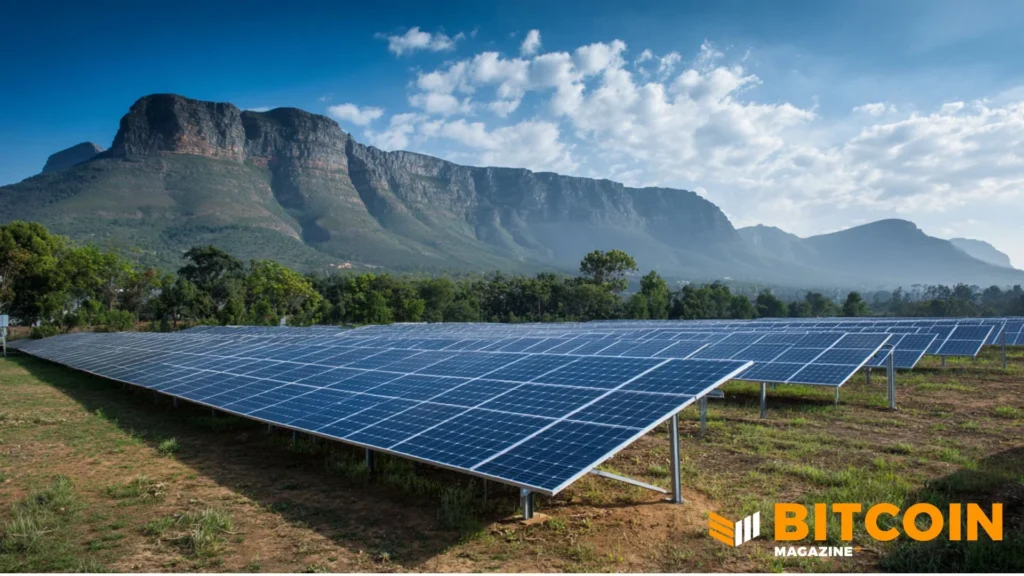
Bitcoin Magazine South African Eskom Considering Discount Power for Bitcoin Miners as Solar Creates Surplus Eskom, a South African electricity public utility, is exploring plans to sell excess daytime electricity to Bitcoin mining companies as rooftop solar installations reduce grid demand during daylight hours. Speaking at the Biznews Conference 2026 in Hermanus, Eskom chairman Mteto Nyati said the utility is evaluating ways to monetize surplus power generated during the middle of the day, according to local reporting. South Africa’s rapid adoption of rooftop solar systems has begun to reshape the country’s electricity demand profile. Many households and businesses now generate their own power during daylight hours, leaving Eskom with unused capacity once solar panels begin producing electricity. Nyati said the pattern is increasingly predictable. Demand spikes in the early morning as households prepare for work and businesses open. As solar generation ramps up later in the day, grid demand falls, leaving Eskom with surplus electricity. Eskom is looking at creative ways and means of using that capacity. One option under review is offering discounted electricity to Bitcoin mining companies operating in South Africa. The sector runs large data centers that perform energy-intensive computations to secure the Bitcoin network. Nyati said industries such as Bitcoin mining are contributing to rising global electricity demand. He said that the technology did not exist two decades ago but now represents a growing source of power consumption. Selling excess electricity to miners could allow Eskom to generate revenue from power that might otherwise go unused during solar-heavy hours. South African Bitcoin mining opportunities The idea also builds on earlier comments from Eskom chief executive Dan Marokane, who said the state-owned utility is examining opportunities tied to Bitcoin mining, artificial intelligence infrastructure, and large-scale data centers. Those sectors require large, continuous electricity supplies and could provide new demand for Eskom’s generation fleet. Nyati framed the initiative as part of a broader strategy to adapt to structural changes in South Africa’s electricity market. The country’s power sector is opening to private investment, allowing independent companies to build generation capacity and compete in electricity distribution. At the same time, rising rooftop solar adoption is shifting demand away from the national grid. Nyati said Eskom must adapt to remain viable in a more competitive environment. Alongside new revenue strategies, Eskom is pursuing cost reductions. Nyati said the utility plans to eliminate about R112 billion in expenses over the next five years. Reducing those costs could help lower electricity prices for households and energy-intensive industries such as mining and smelting. Despite the changes in the energy landscape, Nyati said South Africa still needs a strong national utility. He argued that Eskom’s coal and nuclear power stations provide the base-load electricity required to support industrial growth and economic development. The proposal to supply discounted electricity to Bitcoin miners reflects how utilities are beginning to treat flexible energy consumers as tools for balancing supply and demand in an evolving power system. This post South African Eskom Considering Discount Power for Bitcoin Miners as Solar Creates Surplus first appeared on Bitcoin Magazine and is written by Micah Zimmerman. Original and detailed news is here: Read More
Bitcoin Nears $74K as Oil Tops $100 and Markets Price in Faster Fed Rate Cuts (imported from Binance News)

According to CoinMarketCap data, the global cryptocurrency market cap now stands at $2.49T, up by 3.81% over the last 24 hours.Bitcoin (BTC) traded between $69,355 and $73,593 over the past 24 hours. As of 12:30 PM (UTC) today, BTC is trading at $73,554, up by 4.85%.Most major cryptocurrencies by market cap are trading mixed. Market outperformers include PIXEL, TRUMP, and TURBO, up by 56%, 30%, and 25%, respectively.Top stories of the day:Economists Predict Faster Fed Rate Cuts Amid Concerns Over Fed Chair Nominee U.S. GDP Growth Revised Downward as Inflation Remains Stubborn Public Companies Increase Bitcoin Holdings by 8% in Q1 2026 U.S. January JOLTs Job Openings Exceed Expectations U.S. March One-Year Inflation Rate Expectations Fall Short of Forecasts Saudi Arabia Reduces Oil Production by 2 Million Barrels Per Day U.S. Aims to Preserve Stable Relations with China Ahead of Key Meeting Strait of Hormuz Reopens Amid Continued Iranian Aggression Bitcoin Hits $73,800 One-Month High as Negative Funding Rates Signal Potential Short SqueezeEurozone Bond Yields Climb as Brent Crude Tops $100Market movers:ETH: $2103 (+3.00%)BNB: $665.59 (+2.89%)XRP: $1.4318 (+3.98%)SOL: $89.16 (+4.07%)TRX: $0.2893 (-0.24%)DOGE: $0.09773 (+5.63%)WLFI: $0.1056 (+5.60%)U: $0.9997 (-0.02%)ADA: $0.2727 (+4.68%)WBTC: $71649.57 (+3.03%)
Israel Detects Ballistic Missile Attack from Iran (imported from Binance News)

The Israel Defense Forces have detected a ballistic missile attack originating from Iran. According to Jin10, alarms are expected to sound in central Israel within the next few minutes as a precautionary measure. The situation is developing, and further updates are anticipated as more information becomes available.
Sweden Intensifies Efforts Against Suspected Russian Shadow Fleet Vessel (imported from Binance News)

Swedish authorities have boarded a second vessel believed to be part of Russia’s shadow fleet, signaling increased vigilance against ships perceived as security and environmental risks. Bloomberg posted on X, highlighting Sweden’s proactive measures in addressing potential threats from maritime activities linked to Russia. The Nordic nation is enhancing its maritime security protocols amid growing concerns over the implications of such vessels in its waters. This move reflects Sweden’s commitment to safeguarding its territorial integrity and environmental standards.
Lundbeck Shifts Investment Focus to U.S. and China Amid European Challenges (imported from Binance News)

Lundbeck has announced a strategic shift in its capital investment focus, prioritizing the U.S. and China over Europe. Bloomberg posted on X, highlighting the company’s decision as Europe grapples with increasing pressure to stimulate innovation. This move reflects Lundbeck’s response to the evolving economic landscape and the need to adapt to regions with more favorable conditions for growth. The pharmaceutical company aims to leverage opportunities in the U.S. and China, where market dynamics and regulatory environments are perceived as more conducive to innovation and expansion. Lundbeck’s decision underscores the challenges faced by European markets in maintaining competitiveness and fostering a supportive environment for business development.
Support for Trans Adolescents in the U.S. Diminishes (imported from Binance News)

The support systems for transgender adolescents in the United States are rapidly decreasing. Bloomberg posted on X, highlighting the challenges faced by this community as supportive environments become increasingly scarce. This trend raises concerns about the well-being and mental health of trans youth, who often rely on these spaces for acceptance and understanding. The diminishing support networks underscore the need for increased awareness and advocacy to ensure that trans adolescents have access to safe and affirming environments.
France Faces Impact from Global Private Credit Boom (imported from Binance News)

France, while not at the forefront of the private credit surge, is experiencing its effects. Bloomberg posted on X, highlighting how the global expansion of private credit markets is influencing financial dynamics in France. The country’s financial sector is witnessing shifts as private credit becomes a more prominent player worldwide. This trend is reshaping investment strategies and financial operations, even in regions not directly involved in the boom. As private credit continues to grow, its impact is felt across various markets, including those in France, prompting adjustments in financial approaches and strategies.
Vitalik Buterin Criticizes Use of SHIB Donation by Future of Life Institute (imported from Binance News)

Vitalik Buterin has expressed concerns over the allocation of approximately $500 million from his 2021 SHIB donation by the Future of Life Institute. According to NS3.AI, Buterin noted that the institute’s use of the funds deviated from the technical roadmap initially presented to him. He stated that the organization shifted its focus towards political advocacy, rather than the broad risk-focused initiatives he anticipated.
EU Commission Confirms X’s Remedial Measures for Blue Badge Issue (imported from Binance News)

The European Commission has announced that X has submitted remedial measures concerning its blue badge issue. According to Jin10, the spokesperson for the EU Commission confirmed the submission, indicating that the company is taking steps to address the concerns raised. The blue badge, which signifies verified accounts, has been a topic of scrutiny, prompting the need for corrective actions. The Commission will review the measures to ensure compliance with regulatory standards.
EU Commission to Proceed with Security Loan Agreement with Poland Despite Presidential Veto (imported from Binance News)

The European Commission is set to move forward with a security loan agreement with Poland, despite a veto from the Polish President. According to Jin10, a spokesperson for the EU Commission confirmed that preparations are underway to finalize the agreement soon. This development comes amid ongoing discussions between the EU and Poland regarding financial and security collaborations. The decision to proceed highlights the EU’s commitment to strengthening ties with member states, even in the face of political challenges. The agreement is expected to bolster Poland’s security infrastructure and enhance cooperation within the EU framework.