Thailand Faces Export Challenges Amid Hormuz Strait Crisis (imported from Binance News)

Thailand’s shipping industry is grappling with significant challenges due to the ongoing crisis in the Hormuz Strait. According to Jin10, the cost of transporting a 40-foot container is expected to rise sharply from $3,500 to $7,000. This situation is causing Thailand’s exports to the Middle East to face monthly losses of approximately 33.3 billion baht, with an additional 32 billion baht worth of goods stranded in transit. The crisis underscores the vulnerability of global trade routes and the potential economic impact on Thailand’s export sector.
JPMorgan CEO Advocates for Equal Regulatory Standards for Stablecoins (imported from Binance News)

JPMorgan CEO Jamie Dimon recently expressed support for the development of blockchain technology during an appearance on CNBC. According to ChainCatcher, Dimon emphasized that stablecoins should adhere to the same regulatory standards as traditional banking products. He argued that any company holding customer funds and paying interest is essentially engaging in banking activities and should be subject to appropriate regulation.
Dimon proposed offering rewards on transactions rather than balances as a compromise. Meanwhile, the Senate Agriculture Committee has approved parts of a market structure bill aimed at clarifying the jurisdiction of the SEC and CFTC, which includes requirements for customer fund segregation and reserve proof.
Ethereum(ETH) Drops Below 2,000 USDT with a Narrowed 2.93% Increase in 24 Hours (imported from Binance News)

On Mar 03, 2026, 02:22 AM(UTC). According to Binance Market Data, Ethereum has dropped below 2,000 USDT and is now trading at 1,999.300049 USDT, with a narrowed narrowed 2.93% increase in 24 hours.
Asian Currencies Show Mixed Performance Amid Geopolitical Concerns (imported from Binance News)

Asian currencies exhibited a mixed performance as geopolitical risks continue to influence market dynamics. Wall Street Journal (Markets) posted on X, highlighting the ongoing uncertainties affecting the region’s economic outlook. Analysts suggest that tensions in various geopolitical hotspots may exert pressure on currency valuations, impacting investor sentiment and economic stability.
The fluctuating currency values reflect the complex interplay of regional political developments and global economic factors. Market observers are closely monitoring these trends, as they could have significant implications for trade and investment flows in Asia.
Despite the challenges, some currencies have shown resilience, buoyed by domestic economic policies and external trade relationships. However, the overall outlook remains cautious, with potential volatility expected in the near term.
Investors are advised to stay informed about geopolitical developments and their potential impact on currency markets, as these factors could shape future economic trajectories in the region.
Israel and Saudi Arabia Anticipate Peace Amid Actions Against Iran (imported from Binance News)

Israeli Prime Minister Benjamin Netanyahu has expressed optimism about the potential for peace between Saudi Arabia and Israel. According to Jin10, this development comes in the context of ongoing actions targeting Iran. Netanyahu’s remarks highlight the shifting dynamics in the Middle East, where geopolitical tensions and alliances are evolving. The prospect of peace between these two nations could have significant implications for regional stability and international relations. As both countries navigate their respective challenges, the possibility of a diplomatic breakthrough remains a focal point for observers and stakeholders in the region.
U.S. Marines Open Fire During Protest at Karachi Consulate (imported from Binance News)
Two U.S. officials confirmed that U.S. Marines fired at protesters during a weekend incident at the U.S. Consulate in Karachi, Pakistan. According to Jin10, this rare use of force at a diplomatic institution followed the death of Iran’s Supreme Leader Ayatollah Khamenei, which led to demonstrators breaching the consulate’s perimeter wall, resulting in 10 fatalities. The officials noted that it remains unclear whether the Marines’ bullets hit or killed anyone, or if other security personnel also fired shots. This marks the first confirmation of Marine involvement in firing at protesters. A spokesperson for the provincial government in Pakistan mentioned that ‘security’ personnel fired shots but did not specify their affiliation. Typically, security at U.S. diplomatic institutions is managed by private contractors and local forces, highlighting the perceived severity of the threat that prompted Marine intervention.
As Bombs Fall on Tehran, Iran’s Crypto Lifeline Lights Up
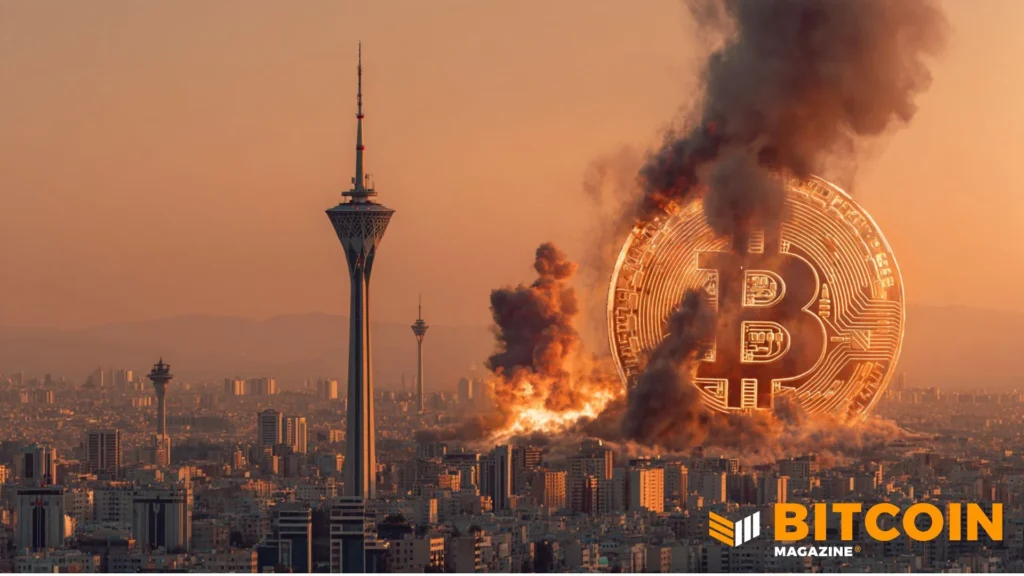
Bitcoin Magazine As Bombs Fall on Tehran, Iran’s Crypto Lifeline Lights Up Within minutes of the first U.S.-Israeli missiles striking Tehran on Saturday morning, a different kind of exodus was already underway. Crypto outflows from Nobitex, Iran’s largest cryptocurrency exchange, surged 700%, according to blockchain analytics firm Elliptic. The spike was capital flight, executed in real time, by Iranians racing to move money out of a country suddenly under full-scale military bombardment. Nobitex processed $7.2 billion in crypto transactions in 2025 and serves more than 11 million users, Elliptic said. It allows Iranians to convert rials into crypto and withdraw to external wallets which is a direct pipeline around the country’s crippled banking system and the web of international sanctions choking it. Elliptic’s initial tracing of the weekend’s outflows shows funds flowing to overseas exchanges that have historically received significant Iranian inflows, suggesting the crypto is being moved out. Elliptic flagged similar spikes earlier this year: a massive outflow on January 9 coincided with widespread anti-regime protests and a government-imposed internet blackout. Even during that blackout, some outflows continued, raising questions about who retains access to Nobitex’s holdings when the platform’s website goes dark. Two additional surges aligned with announcements of fresh U.S. sanctions on Iranian actors. Each time, crypto served as the escape hatch. “The outflows potentially represent capital flight from Iran that bypasses the traditional banking system,” said Dr. Tom Robinson, Elliptic’s co-founder. Bitcoin’s weekend rollercoaster The strikes — codenamed Operation Roaring Lion by Israel and Epic Fury by the Pentagon — hit at 9:45 a.m. Tehran time on Saturday, targeting nuclear facilities, missile sites, and the Pasteur district in the capital where Supreme Leader Ayatollah Ali Khamenei resided. Iran confirmed Khamenei’s death hours later, along with other top officials. Crypto markets reacted instantly. Bitcoin plunged from roughly $67,000 to below $64,000, shedding nearly 5% in minutes. The total crypto market capitalization dropped $128 billion as forced liquidations cascaded across exchanges. Then came the snapback. The news of following events briefly pushed Bitcoin above $68,000, as traders speculated the regime’s decapitation might shorten the conflict. But the rally fizzled as Iranian retaliation — missiles and drones launched at Israel, Qatar, the UAE, Bahrain, and U.S. bases across the region — made clear this was no contained event. By Sunday afternoon, Bitcoin had settled around $65,300. At time of writing, Bitcoin is flirting with $70,000. “The positive performance of the crypto market today can be explained primarily by a significantly more restrained reaction than anticipated,” Thomas Probst, a research analyst at Kaiko, wrote to Bitcoin Magazine. He noted that when U.S. equities opened slightly positive on Monday, it reinforced the upward bias, with Bitcoin approaching $70,000 and major altcoins posting gains of 6–10%. Open interest also climbed on February 28, showing that traders were adding new positions rather than reducing exposure ahead of the event. According to Axis, this behavior indicates that the market had largely priced in the geopolitical developments and was no longer viewing them as a major threat. Still, the options market tells a more cautious story. On Deribit, $1.9 billion in Bitcoin put options were stacked at the $60,000 strike price over the weekend — heavy demand for downside protection that suggests sophisticated traders are hedging for worse to come. Timot Lamarre, director of market research at Unchained, said bitcoin’s reaction to periods like this challenges the idea that it trades only as a risk-on tech proxy and instead reflects growing recognition of its role in times of counterparty risk. “Much like we saw during the banking crisis of 2023, when the market runs to bitcoin in chaos, it gives a glimpse into more people understanding bitcoin’s value in a chaotic world full of counterparty risk,” Lamarre wrote to Bitcoin Magazine. A conflict beyond crypto The conflict’s economic ripple effects extend well beyond crypto. Iran’s Islamic Revolutionary Guard Corps announced that no vessels would be permitted to cross the Strait of Hormuz, through which roughly 20% of the world’s daily oil supply passes. Oil futures surged at Monday’s open. Goldman Sachs has projected oil could hit $100 per barrel if the conflict persists for the four to five weeks that President Trump suggested in remarks over the weekend. For Bitcoin, the Iran crisis underscores a fundamental tension. Crypto was built to operate outside state control — and Nobitex’s 700% outflow spike proves it can. But that same utility makes it a front line in the shadow financial war between Western sanctions regimes and adversary states. This post As Bombs Fall on Tehran, Iran’s Crypto Lifeline Lights Up first appeared on Bitcoin Magazine and is written by Micah Zimmerman. Original and detailed news is here: Read More
Iranian Stock Market Halts Trading Until Next Week (imported from Binance News)
Iran’s stock market has temporarily suspended trading until next week. According to Jin10, a spokesperson for the Iranian Securities and Exchange Organization announced that only stock market trading is currently paused. Details regarding the operation of the spot market or other financial markets within the capital market will be disclosed later.
Iranian Stock Market Halts Trading Until Next Week (imported from Binance News)
Iran’s stock market has temporarily suspended trading until next week. According to Jin10, a spokesperson for the Iranian Securities and Exchange Organization announced that only stock market trading is currently paused. Details regarding the operation of the spot market or other financial markets within the capital market will be disclosed later.
Iran Announces Leadership Transition Plan Following Supreme Leader’s Death (imported from Binance News)
Iranian media reported on March 1 that following the passing of Iran’s Supreme Leader Ayatollah Ali Khamenei, the country will be led by President Ebrahim Raisi, the Chief Justice, and a jurist from the Guardian Council. According to Jin10, this leadership structure is part of a transitional plan to ensure stability in the nation. The report highlights the importance of maintaining governance continuity in the wake of such a significant change in leadership. The Guardian Council, which plays a crucial role in overseeing elections and legislation, will have a representative involved in this interim leadership arrangement. This development underscores the structured approach Iran is taking to manage the potential power vacuum and maintain order during the transition period.