
7 Essential On-Chain Metrics Driving Bitcoin & Ethereum Rally: October 9, 2025 Insights

Enhanced Crypto Market On-Chain Analysis: October 9, 2025Blending the granular on-chain depth from my prior snapshot (e.g., MVRV, SOPR, netflows) with the fresh technical/macro insights from X analysts and recent web reports, this updated analysis captures a market in resilient uptrend mode. Total market cap sits at $4.25T (+1.5% 24h), with Bitcoin dominance at 59.1%—a “knife-edge” level where a break above 60% could squeeze alts further, while sub-58.5% sparks rotation. Fear & Greed holds neutral-bullish at 62, amid $1.2B record ETF inflows on Oct 6 and $4.61B weekly for spot BTC ETFs overtaking ETH for the first time in weeks. Ethereum’s ETF flows have surged past 10% of supply, fueling staking and L2 hype, but both assets show choppy consolidation post-ATH tests: BTC rejected $124.7K, ETH stalled at $4,600. On-chain signals affirm accumulation (declining exchange reserves, rising mid-tier holder stacks), tempered by overbought RSI (64 for BTC, 49 neutral for ETH) and cooling open interest hinting at profit-taking. Macro tailwinds like gold’s $4,000 ATH and upcoming CPI (Oct 15) support “Uptober” extension, but leverage risks loom for 3-7% dips.Bitcoin On-Chain & Technical HighlightsBTC trades at $123,200 (+1.2% 24h), defending the 4H EMA50 after a -2.2% pullback from $124.7K ATH. Institutional ETF stacking ($4.61B net inflows, BlackRock AUM at $96.2B) dominates spot demand, with mid-tier holders (1-10 BTC) absorbing ~30K BTC in $121K-$122K clusters. Exchange netflows remain negative, signaling self-custody shifts, while hashrate stability post-halving underscores network resilience. TA confirms bullish MACD crossover and ascending triangle (support $119.5K VAH/OB zone), but CRSI overbought and volume taper suggest short-term hesitation. https://studio.glassnode.com/dashboards/btc-onchain-activity Metric Value (as of Oct 9) 24h/Weekly Change Insight Price $123,200 +1.2% (24h) Consolidating in ascending triangle; key support $119.5K (VAH + VWAP + POC), resistance $124.7K-$125K. Active Addresses (24h) ~1.1M +2% (weekly) Steady network health; no cooldown despite volatility. Transaction Volume $240B (spot est.) +15% (24h) Surge reflects repositioning; ETF-driven over speculation. Exchange Netflow -$12M/day (avg.) Outflows up 20% Declining reserves bullish; whales derisking via self-custody. MVRV Z-Score ~2.6 (neutral-rising) +0.1 Room for upside; not yet euphoric (threshold ~7). SOPR 1.02 (low profit-taking) Stable Minimal distribution; aligns with intact rally. Miner Reserves ~1.79M BTC -0.1% (weekly) Flat, no selling pressure; hashrate at ATH levels. ETF Inflows (Spot) $4.61B (weekly) Record high Institutional FOMO; $1.2B single-day peak Oct 6. Open Interest Cooling mildly -3% (24h) Hesitation post-rally; long/short ratio 0.71 (contrarian buy). RSI (1D) 64.6 Neutral-bullish Overbought edge; watch for divergence. Key Trends & Signals: Bullish: Mid-tier accumulation score ~0.75 (up from 0.71), LTH distribution easing; dominance basing 58-60% favors BTC lead without full alt bleed. Bearish Risks: Profit-taking via declining OI/volume; $125K liquidation walls could cascade if rejected. VDD at 0.92 (mid-range) flags mild capitulation potential. Outlook: Break $125K targets $130K-$140K; hold $119.5K for continuation. Powell speech/jobs data today could catalyze. Ethereum On-Chain & Technical HighlightsETH at $4,510 (+1.4% 24h), bouncing from $4,450 double-bottom support amid ETF surge (net +$420M daily, total inflows >10% supply). Staking hits 28.5% (deposits +0.7% weekly, e.g., Grayscale’s 32K ETH lockup), slashing exchange float and boosting ~4.3% APY yields. L2s (Base, Arbitrum) drive 92% tx volume, with fees paradoxically low despite ATH usage—scalability win. Futures net-long (55-70% on majors), but sideways grind tests $4,600 resistance; ETH/BTC holds August breakout (0.036 support). Metric Value (as of Oct 9) 24h/Weekly Change Insight Price $4,510 +1.4% (24h) Sideways post-drop; double-bottom reversal, support $4,450, resistance $4,600-$4,748. Active Addresses (Daily) ~595K +1% (from 589K) Elevated vs. yearly avg.; monthly uniques near peaks. Transaction Count ~1.25M (est.) +12% (weekly) L2 boom (90%+ volume); EIP-4484 upgrade hype. Gas Used ATH throughput Stable Fees down 15% despite surge—adoption bullish. Exchange Netflow -55K ETH/day Outflows +25% Staking/self-custody lockup; reduces sell pressure. Staking Ratio ~28.5% of supply +0.7% (weekly) Deposits accelerating; enhances security/yields. DeFi TVL ~$175B +6% (weekly) Restaking/L2 growth (e.g., Mantle integrations); stablecoin +14%. ETF Inflows (Spot) Surge >10% supply +$420M (daily) Institutional demand flips script; overtakes prior weeks. Open Interest High, net-long +2% (24h) 55-70% long bias; funding neutral, profit-taking fade. RSI (1D) 49 Neutral Sideways setup; golden cross intact for $5K path. Key Trends & Signals: Bullish: 92% Polymarket odds for $5K EOY; realized profits rising sans peaks, L2 catalysts (e.g., Base USDC streaming). ETH/BTC >0.039 flips alt tailwind. Bearish Risks: Overbought signals on 1H, node centralization (OFAC risks); thin alt breadth if dominance spikes. Outlook: Upside to $4,748-$5.2K on breakout; $4,450 hold key. Softer CPI tomorrow could ignite to $5K+. For more news and Analysis keep in touch with https://www.botslash.com/
Decentralized Identity (DID): The New Concept of Identity in Web3
Introduction In today’s digital landscape, identity is both a cornerstone and a vulnerability. From social media platforms to financial services, users are required to hand over their personal data—email addresses, passwords, names, government IDs—to centralized entities. These platforms often become honeypots for hackers, and history is filled with high-profile data breaches affecting millions. Moreover, users have little to no control over how their data is used, shared, or monetized. Surveillance capitalism thrives on this imbalance, where digital identity becomes a commodity sold behind users’ backs. This is the crux of the problem with traditional, centralized identity systems. Enter Web3—a decentralized web paradigm built on blockchain technology. Web3 advocates for user ownership, privacy, and interoperability. At the heart of this shift lies a revolutionary concept: Decentralized Identity (DID). It promises a model where individuals create, own, and manage their identities without reliance on central authorities. Technical Foundation of DID What Are DIDs? A Decentralized Identifier (DID) is a globally unique, resolvable identifier that does not rely on a centralized registry. Unlike email addresses or usernames issued by companies, a DID is created and controlled by the user. It is essentially a pointer to a set of public metadata and verifiable credentials. Each DID is cryptographically secured, often anchored to a blockchain or a decentralized ledger, and can be verified without revealing personal information. Blockchain, Verifiable Credentials, and Public-Key Cryptography At the core of DID systems are three technologies: Blockchain ensures tamper-proof, decentralized storage of identifiers or credential registries. Public/Private Key Cryptography enables identity holders to sign and authenticate without disclosing sensitive details. Verifiable Credentials (VCs) are digitally signed statements issued by trusted parties (e.g., universities, governments), linked to a DID. They can be presented and cryptographically verified without contacting the issuer. W3C DID Specification The World Wide Web Consortium (W3C) defines the standard for DIDs to ensure interoperability. A DID Document contains the public key and service endpoints associated with the identifier, enabling secure communication and verification. DIDs vs. Verifiable Credentials DIDs represent identity—a decentralized reference point. VCs represent claims about identity (e.g., “Alice has a driver’s license”). The separation of identifier and credential is key to achieving privacy, control, and trust. How DID Works in Web3 Ecosystems Identity Creation and Authentication To create a DID, users generate a public/private key pair. The public key becomes part of the DID document, while the private key remains securely with the user. This pair is then used to prove ownership and sign credentials. Authentication is performed by proving control over the private key—no need for passwords, captchas, or centralized servers. DIDs can also be linked with biometric authentication, further enhancing security. Selective Disclosure and SSI Self-Sovereign Identity (SSI) is a model where users manage their own credentials and disclose only what is necessary. For instance, instead of providing a full ID card to prove age, one can present a zero-knowledge proof (ZKP) that confirms “over 18” without revealing birthdate or name. Real-World Example Imagine logging into a decentralized application (dApp) without an email or password. Instead, your DID is authenticated via your wallet, and access is granted based on the credentials in your control—fully secure, private, and instant. Privacy, Security, and Control Traditional systems centralize data into silos that are prone to leaks and misuse. DIDs allow users to: Avoid unnecessary data exposure. Decide who accesses what, and when. Revoke access at any time. Zero-Knowledge Proofs (ZKPs) With ZKPs, users can prove claims without revealing the underlying data, ideal for privacy in KYC, voting, and credentialing. Comparison to OAuth2 and SSO OAuth2 and Single Sign-On (SSO) solutions offer convenience but rely on trust in the identity provider (e.g., Google, Facebook). DIDs remove this dependency, providing trustless authentication. Use Cases and Applications DeFi Platforms Decentralized finance (DeFi) can use verifiable credentials for KYC compliance without exposing user data to protocols or counterparties. DAOs DAOs use DIDs to validate members for voting rights, task assignments, or rewards distribution based on participation history. NFT Platforms Artists can prove authorship through DID-linked credentials, and buyers can verify authenticity and ownership—fighting fraud and plagiarism. Web3 Social Networks Platforms like Lens Protocol are integrating DIDs to give users full control of their profile, social graph, and content. Supply Chain & Healthcare In supply chains, DIDs track asset provenance. In healthcare, patients can share verifiable medical records without compromising confidentiality. Education Universities can issue digital diplomas as verifiable credentials, instantly sharable with employers or institutions without the need for third-party verification. Popular DID Frameworks and Tools Several projects and networks have emerged to support DID adoption: Sovrin Network – Open-source infrastructure for self-sovereign identity. uPort – Ethereum-based identity protocol. Ceramic Network – Composable data streams for Web3 identities. Evernym – Creator of the Aries/Indy agent framework. Microsoft ION – A public DID network built on Bitcoin. Polygon ID – Scalable solution using zkProofs and Ethereum Layer 2. Many of these are integrated into crypto wallets and protocols, enabling seamless interaction with dApps, DAOs, and DeFi. Regulatory Considerations KYC/AML Compliance DIDs can support regulation by providing compliance-friendly credentials (e.g., “KYC Verified”) without exposing sensitive data. GDPR and Data Sovereignty Since data is stored under the user’s control, DIDs align well with GDPR’s data minimization and right-to-be-forgotten principles. Governments vs. DID Some governments are pursuing centralized digital IDs, which conflict with DID principles. However, others are exploring hybrid models that combine regulation with user autonomy. Challenges and Limitations Scalability Current blockchain infrastructures face speed and cost barriers in hosting large-scale identity registries. Interoperability With multiple DID methods (e.g., did:ethr, did:key, did:ion), ensuring cross-platform compatibility is an ongoing challenge. Adoption and Key Management Non-technical users may find it difficult to manage keys, store credentials, or understand revocation mechanics. Trust Frameworks Determining which credential issuers are trustworthy remains a key issue. Decentralization shifts trust from platforms to networks of reputation and audits. The Future of Digital Identity in Web3 DIDs are poised to become the foundation of digital interaction in Web3: In the Metaverse: Each avatar or entity can be linked to a
CBDCs vs Stablecoins: Government Control vs Public Freedom 5 Important things to know
🏦 CBDCs: Government-Backed Digital Mint Central Bank Digital Currencies (CBDCs) are digital forms of national currencies, issued and regulated directly by a country’s central bank. These digital assets are not cryptocurrencies in the traditional sense; rather, they are sovereign currencies with legal tender status, backed by the full faith and credit of the issuing nation. Examples include China’s digital yuan (e-CNY), the European Union’s digital euro, and the UK’s upcoming digital pound. CBDCs represent a fundamental shift in monetary systems. Unlike decentralized cryptocurrencies, which are built to operate without a central authority, CBDCs are designed for centralized control. Governments and central banks can issue, monitor, and regulate every unit of currency in real-time, allowing them to enforce monetary policies with surgical precision. One of the key benefits of CBDCs is security and regulatory oversight. Since they are built on permissioned blockchain or secure databases, CBDCs allow for high levels of control, traceability, and protection against fraud. This level of security makes them attractive for high-volume financial systems, especially in national and cross-border settlements. Another powerful feature is programmability. CBDCs can be designed to support smart payment logic—such as conditional disbursements, expiry dates on stimulus packages, or automatic tax collection. This could enable real-time implementation of fiscal policies, targeted subsidies, and instant social welfare disbursements. CBDCs also promise greater financial inclusion and cost efficiency. For underserved populations lacking access to traditional banks, CBDCs could offer mobile-based access to digital money. Cross-border remittances, typically slow and expensive, could become faster and cheaper through CBDC-powered international corridors. However, the downsides are significant. The introduction of CBDCs raises concerns over privacy and surveillance, as governments could technically track every transaction. There are fears that authoritarian regimes may misuse this capability to restrict dissent or control behavior. Additionally, the potential for bank disintermediation is real—if individuals can hold money directly with central banks, commercial banks may lose deposits, weakening their role in credit creation. Critics also warn about the politicization of financial systems, where governments might freeze or redirect funds based on political agendas. For example, programmable money could be restricted to certain uses or areas, curbing financial freedom. Despite these concerns, many countries are rapidly advancing their CBDC experiments. Nations like China, the UAE, Sweden, and the UK are conducting active pilot programs. While full-scale national rollouts may still take a few more years, industry experts expect many CBDCs to enter public circulation by the mid-to-late 2020s. CBDCs are not merely a digital extension of fiat—they signal a reshaping of how money itself is understood, issued, and controlled. Whether they become tools of empowerment or instruments of control will depend on how they are implemented, regulated, and balanced with civil liberties. 🪙 Stablecoins: Private Innovation & Decentralized Utility 💵 Stablecoins: Privately-Issued Digital Alternatives Stablecoins are digital tokens typically issued by private companies or decentralized protocols, designed to maintain a stable value by being pegged to another asset—most commonly fiat currencies like the US dollar, but also sometimes commodities or even algorithmic models. Some of the most well-known examples include Tether (USDT), USD Coin (USDC), and DAI. What sets stablecoins apart is their value stabilization mechanisms. Fiat-backed stablecoins rely on cash or asset reserves held in banks or custodians to ensure each token is redeemable for one unit of the underlying currency. In contrast, algorithmic stablecoins maintain parity through supply-adjusting code that automatically burns or mints tokens based on demand. This programmability allows for on-chain value management without a central authority—although it comes with its own set of risks. A significant advantage of stablecoins is their interoperability with decentralized finance (DeFi). They serve as the foundational layer for numerous DeFi applications, enabling users to trade, lend, borrow, and earn yields across various decentralized platforms. Their ability to function seamlessly across different blockchain networks has made them the preferred medium for on-chain financial transactions and cross-border remittances. The adoption of stablecoins is accelerating worldwide, particularly in regions facing currency instability or banking access issues. For individuals in countries with high inflation or limited financial infrastructure, stablecoins offer a means to preserve value and participate in global commerce using just a mobile phone and internet connection. Industry forecasts suggest that stablecoin usage could surpass $2 trillion annually by 2028, underlining their transformative potential in the digital economy. However, stablecoins are not without challenges. Concerns often arise around the transparency and safety of their reserves, especially in cases where issuers do not undergo frequent or independent audits. There are also cybersecurity risks, as stablecoin platforms can be targeted by sophisticated attacks that compromise funds. Additionally, regulatory ambiguity poses a major hurdle, with governments unsure how to classify, supervise, or integrate stablecoins within existing legal frameworks. In response to these concerns, legislative efforts are underway in jurisdictions like the United States. Proposals such as the STABLE Act and the GENIUS Act aim to introduce legal clarity by mandating regular audits, enforcing capital reserve requirements, and creating standards for operational transparency. These regulatory moves indicate that while stablecoins are decentralized in use, they are increasingly subject to centralized scrutiny. 🔍 Side-by-Side Comparison Issuer CBDC: Central bank (e.g., digital euro, digital pound) Stablecoins: Private companies or algorithmic protocols Trust Anchor CBDC: Backed by sovereign government guarantee Stablecoins: Backed by audited reserves or algorithmic codes Regulation CBDC: Fully regulated by state authorities Stablecoins: Partially regulated; evolving legal frameworks Decentralization CBDC: Fully centralized control Stablecoins: Hybrid — decentralized in DeFi, centralized in fiat-backed models Innovation Speed CBDC: Slow, due to government-led development and policy constraints Stablecoins: Rapid innovation driven by private sector competition Privacy CBDC: Low — prone to potential surveillance and transaction tracking Stablecoins: Generally higher, depending on design and issuer policy DeFi & Programmability CBDC: Programmable only if configured by central authorities Stablecoins: Native compatibility with dApps and smart contracts Financial Inclusion CBDC: Broad national access, but digital literacy gaps remain Stablecoins: Global access for anyone with a smartphone and internet 🤝 CBDC and Stablecoin Coexistence Researchers envision a hybrid ecosystem, where CBDCs provide foundational stability and transparency, while stablecoins
Web3 and Its Relationship with the Financial System

Introduction The financial system has always been central to human progress — evolving from barter to banknotes, from centralized institutions to decentralized finance. Now, as technology moves into the next phase of the internet — Web3 — the way we perceive, manage, and interact with money is undergoing a radical transformation. Web3 isn’t just a technical innovation; it’s a philosophical shift in how trust, ownership, and value are managed online. This article explores what Web3 really means, how it’s reshaping the financial system, and what it could mean for individuals, institutions, and the global economy. What is Web3? Web3 is the third generation of the internet, where control shifts from centralized platforms (like Google, Facebook, and Amazon) to decentralized networks built on blockchain technology. It empowers users with ownership of their data, digital assets, and identity. Unlike Web2, where data and power are concentrated in the hands of a few corporations, Web3 is about openness, transparency, and self-governance. Core components of Web3 include: Decentralized applications (dApps) Smart contracts Decentralized finance (DeFi) NFTs and digital ownership Token-based incentives Self-sovereign identity The Traditional Financial System: Centralized and Regulated The current financial system is built on centralized institutions — banks, governments, insurance companies, and regulatory bodies. It relies on intermediaries for trust and compliance, with strict controls on transactions, identity verification, credit scoring, and capital flow. Some of the key characteristics include: Regulated access: Only licensed entities can issue money or provide financial services. Delayed settlement: Payments can take days to process. Limited access: Billions of people remain underbanked or excluded entirely. Privacy concerns: Financial data is stored and managed by third parties. While this system offers stability and control, it is also expensive, slow, and often exclusionary. Web3: A New Financial Paradigm Web3 disrupts traditional finance by enabling peer-to-peer transactions without centralized gatekeepers. Through the use of blockchains, smart contracts, and token economies, Web3 makes it possible to recreate many financial services — lending, borrowing, investing, insurance, asset trading — in an open, permissionless environment. Let’s examine some core innovations that connect Web3 to finance: 1. Decentralized Finance (DeFi) DeFi is perhaps the clearest bridge between Web3 and finance. It replaces traditional financial intermediaries with code-based protocols running on blockchains like Ethereum. DeFi platforms allow users to: Lend or borrow assets without a bank Earn yield through staking or liquidity mining Trade tokens on decentralized exchanges (DEXs) Take out insurance via smart contracts DeFi is borderless, available 24/7, and often more efficient than legacy systems. In Web3, liquidity comes from users, not institutions — creating a more participatory economy. 2. Programmable Money and Smart Contracts Smart contracts — self-executing agreements coded on blockchain — allow for automated financial transactions. From recurring payments to complex derivatives, smart contracts eliminate the need for legal middlemen and manual processing. In Web3: Loans can be issued and settled autonomously. Crowdfunding can be trustless and transparent. Payrolls can be distributed instantly to wallets. This “programmable money” concept radically expands what money can do and how it can be managed. 3. Tokenization of Assets Web3 introduces tokenization, where real-world or digital assets are represented as tokens on a blockchain. Anything from real estate, stocks, art, or intellectual property can be turned into tradable tokens, enabling: Fractional ownership Instant global liquidity 24/7 trading without brokers More accessible investing This has massive implications for how wealth is created and transferred. 4. Self-Custody and Wallets Web3 emphasizes self-custody — users control their own funds via crypto wallets (e.g., MetaMask, Ledger) without relying on banks. This aligns with the philosophy of financial sovereignty. While this increases responsibility, it also offers: Greater privacy Resistance to censorship Access to decentralized services This is particularly impactful for populations in unstable economies or under authoritarian regimes. 5. Global Financial Inclusion According to the World Bank, over 1.4 billion people are unbanked. Web3 removes many barriers: No need for formal ID or credit history No reliance on banking infrastructure Mobile and internet-based access With just a smartphone and internet, anyone can participate in DeFi, earn yield, and send or receive payments globally. Web3 has the potential to be a powerful tool for financial inclusion and empowerment. Challenges to Web3 in Finance Despite its promise, Web3’s integration into global finance is not without hurdles: Regulatory uncertainty: Governments are still figuring out how to regulate DeFi and token-based economies. Security risks: Hacks, exploits, and smart contract bugs can lead to massive losses. User experience: Web3 tools can be complex and intimidating for non-technical users. Scalability: Blockchains still struggle with speed and transaction fees during high demand. Volatility: The value of tokens can swing dramatically, making financial planning difficult. Web3 and the Future of Banking As traditional banks explore central bank digital currencies (CBDCs) and begin to offer crypto custody, we may see a convergence between Web2 institutions and Web3 innovations. Banks could: Use blockchain for real-time settlement Offer access to DeFi products Integrate digital identity with on-chain records However, the core difference will remain: Web3 empowers the individual, while traditional finance serves institutions. Whether the two models can coexist or compete remains an open question. Philosophical Shifts: From Trust in Institutions to Trust in Code One of the most profound transformations Web3 brings is not technical — it’s philosophical. In traditional finance, trust is placed in human institutions, laws, and regulators. In Web3, trust shifts to open-source code, community governance, and mathematical certainty. This shift has wide-reaching implications: Financial systems become more transparent and audit-able. Corruption and fraud become harder to hide. Trust is earned through algorithms, not authority. Conclusion Web3 is more than just a buzzword or a blockchain upgrade — it’s a new financial operating system. It reimagines ownership, access, and value creation in ways that are more inclusive, transparent, and participatory. While the technology is still maturing, and many challenges remain, the direction is clear: Web3 is reshaping finance at its core — offering not just new tools, but a new vision for how global finance should work in a digitally connected world. For individuals,
4 Important Crypto News: Ethereum ETF Inflows, Bitcoin Price Stability, Quantum Risk Alert, Crypto as Digital Gold: BotSlash Daily Crypto News Analysis

Today’s crypto headlines underscore the growing institutional embrace of Ethereum, with spot ETFs recording their longest streak of inflows. Bitcoin, meanwhile, is showcasing an unusual period of price stability, floating tightly around the $103K–$107K zone. On the tech front, BlackRock is highlighting quantum computing as a potential long-term threat to digital asset security. At the macro level, CITIC Securities predicts that cryptocurrencies are poised to benefit from global trends like de-globalization and de-dollarization, potentially establishing themselves as the new “digital gold.” Ethereum Spot ETFs Record Record-Breaking Inflows U.S. spot Ethereum exchange-traded funds have continued their strong momentum, logging their 14th consecutive day of net inflows. Since May 20, these inflows have surpassed $812 million, bringing year-to-date cumulative inflows to a pristine over $3 billion. BlackRock’s iShares Ethereum Trust (ETHA) has taken the lead, driving much of the activity, alongside other ETFs like Grayscale’s offerings. Daily inflows remain robust, with $25 million recorded on June 6 . This sustained investor interest reflects a growing appetite for regulated Ethereum investment vehicles and increasing institutional acceptance. This inflow streak is particularly notable because it approaches a cumulative inflow mark of nearly $3.33 billion since launch . Such a trend signals confident sustained accumulation by institutional players. Ethereum’s price has responded in kind, climbing over 15% in the past 30 days and currently trading around $2,500–2,520 . The sharp contrast with Bitcoin’s more volatile ETF flows—where BTC ETFs saw outflows around May 29—is also striking, suggesting a possible investor rotation into Ethereum exposure. Market Impact The sustained inflows into Ethereum spot ETFs could catalyze further gains for both ETH and the broader market. Institutional validation via regulated channels enhances confidence, possibly increasing Ethereum’s use in DeFi, smart contracts, and broader adoption. As more traditional investors allocate to ETH through these vehicles, Ethereum could emerge as a serious challenger to Bitcoin in institutional portfolios. Bitcoin Prices Show Weekly Stability Around $103K–$107K Bitcoin has been demonstrating notable stability in the $103,000–$107,000 range, showing less than 1–2% intraday swings. Recent analysis from CoinMarketCap aligns with this picture, reporting BTC priced around $107,730, a weekly gain of about 4% . Technical indicators remain optimistic: the 50‑day and 200‑day moving averages are trending upward, suggesting institutional inflows may be providing underlying support. Conservative projections forecast a continued bullish bias if BTC holds above $105,000, with resistance and breakout potential near $110,000–$112,000 . Analysts elsewhere point out that broader macroeconomic forces—such as trade optimism and expectations of Fed rate cuts—have helped tether BTC price around the $100K psychological mark . Market Impact Bitcoin’s current consolidation phase signals growing maturity, portraying BTC less as a speculative asset and more as a macro hedge. With ETF outflows subdued and mixed, continued inflows or breakouts above $110K may reignite interest from institutional and retail investors alike. Stability near key levels could also reduce volatility in altcoins and DeFi tokens, possibly heralding broader sector calm. BlackRock Raises Quantum Computing Risks to Crypto Security BlackRock has added cautionary language to its Bitcoin and Ethereum ETF filings, warning that advances in quantum computing could threaten the cryptographic integrity of digital assets . As quantum research accelerates—driven by breakthroughs like Google’s RSA-2048 threshold—traditional encryption may become vulnerable . BlackRock’s inclusion positions it among mainstream asset managers acknowledging long-term risks. These warnings appear primarily compliance-driven, as the noted threats remain years off and protocols like Bitcoin’s Taproot upgrade already lay groundwork for future quantum resilience. Nonetheless, regulators and institutional investors are paying attention, signaling a future shift toward post-quantum cryptographic standards across blockchain ecosystems. Market Impact In the short term, quantum concerns may not disrupt markets. However, long-term strategic planning for post-quantum security could shape development priorities and investor education. Crypto protocols that actively integrate quantum-resistant features may gain credibility, while ETFs backed by robust security frameworks could attract more institutional trust. CITIC Securities: Crypto to Benefit from De-Globalization, De-Dollarization CITIC Securities, in a recent research report, forecasts that cryptocurrencies—with their strong privacy, anti-inflation, and speculative attributes—will increasingly serve as digital gold amid global economic shifts . The report notes cryptocurrencies are gaining legitimacy as asset classes, supported by speculative yet rigid demand structures akin to gold. In the medium to long term, crypto and gold are expected to gain from ongoing de-globalization and de-dollarization, with policy shifts under transformative leadership further legitimizing the asset class . In the short term, though, crypto volatility remains driven by speculative sentiment and investor risk appetite. Market Impact CITIC’s framing of crypto as a “future gold” could influence Asian institutional sentiment, possibly increasing capital allocations. As regulatory clarity emerges, especially around stablecoins and ETFs, crypto’s position as a preservation asset may strengthen, attracting global investment and enhancing long-term resilience. Key Takeaways Ethereum spot ETFs saw 14 consecutive days of net inflows, indicating strong institutional demand and growing investor trust in Ethereum-based regulated products. Bitcoin’s price stability in the $103K–$107K range suggests investor confidence and market maturity, potentially signaling a new consolidation phase before a breakout. BlackRock’s quantum computing warning raises long-term concerns about cryptographic vulnerabilities in BTC and ETH, though actual risks remain years away. CITIC Securities’ analysis frames cryptocurrencies as a hedge asset similar to gold, driven by anti-inflationary characteristics and speculative demand amid global economic shifts.
Will FIS (StaFi) live?
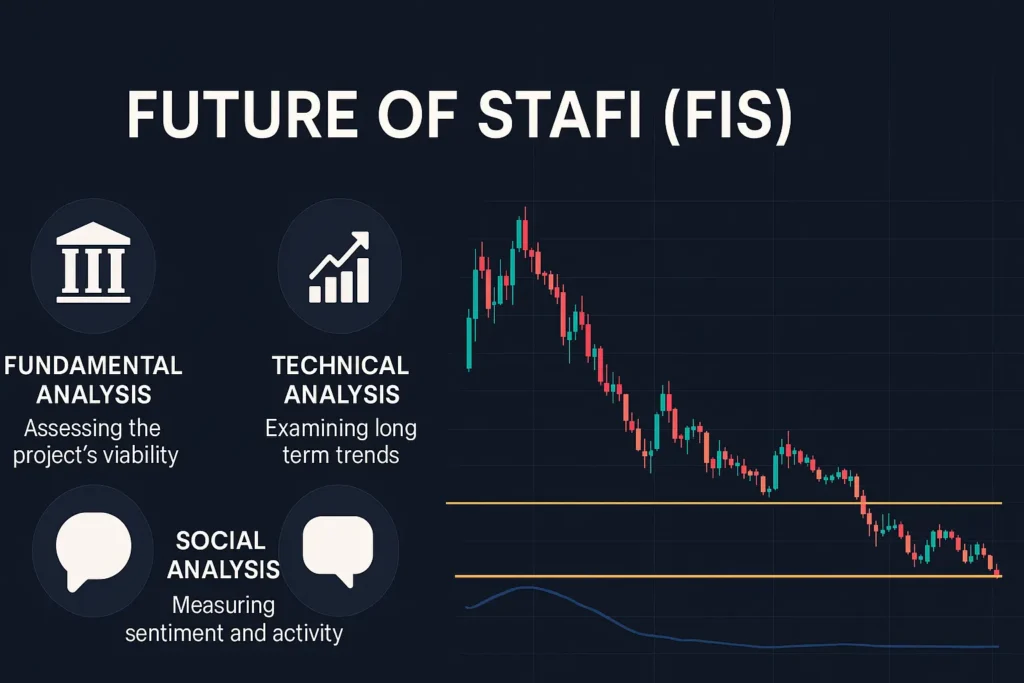
StaFi (FIS) – A Comprehensive Analysis: Opportunities, Challenges, and Current Status Introduction and Core Technology StaFi (short for Staking Finance), which possess token FIS, has positioned itself as a notable name in the decentralized finance (DeFi) ecosystem, aiming to solve a longstanding problem faced by PoS (Proof of Stake) investors—the illiquidity of staked assets. Typically, when users stake their PoS tokens, those assets become locked and inaccessible for trading or use in other DeFi protocols. StaFi tackles this issue through its rToken model: when users stake their tokens via the StaFi protocol, they receive an equal amount of rTokens in return. These rTokens represent both the underlying staked asset and the staking rewards, offering users continued liquidity without compromising their contribution to network security. Importantly, StaFi is not restricted to a single blockchain. Instead, it operates on a multi-chain architecture, enabling support for assets across leading networks such as Ethereum, Polkadot, and Cosmos. This flexibility allows users to stake across different chains while maintaining liquidity via rTokens. StaFi’s infrastructure combines staking pools and its rToken issuance system to deliver a comprehensive liquid staking solution for modern crypto investors. Founding Team, Vision, and Leadership Founded in 2019 by Liam Young and Tore Zhang, StaFi benefits from the leadership of individuals with deep blockchain experience. According to a Medium article, Liam Young is the author of Mastering Proof of Stake and previously founded Wetez, a staking mining pool. The team comprises experts familiar with major networks such as Polkadot, Ethereum, and Cosmos. While the technical core is solid, the project’s advisory board features few prominent public figures. StaFi was backed early on by strategic investors including Woodstock (India) and TGR Capital (Netherlands), lending credibility and institutional support to its foundational stage. FIS Tokenomics and Financial Structure StaFi’s native token, FIS, is built on the Substrate parachain framework within the Polkadot ecosystem. Initially capped at 100 million tokens, the total supply was transparently allocated among the community, team, advisors, private sale contributors, and ecosystem development initiatives. FIS serves three key purposes: paying network transaction fees, rewarding validators, and enabling governance participation. StaFi employs Polkadot’s Nominated Proof of Stake (NPoS) consensus, which issues new tokens annually through inflation to incentivize network participants. Initially, the inflation rate stood at 10% per year. As of June 2025, the total supply has exceeded 113 million FIS. To counter ongoing inflation and shift toward a deflationary model, StaFi proposed a major policy in August 2024 to burn the share of FIS tokens allocated to the treasury from each block—effectively reducing net inflation to around 6%. Alongside this, the team introduced FIS Tokenomics V2, aiming to decrease dependency on rTokens, enhance protocol security, and introduce new use cases for FIS, including fee mechanisms under Liquid Staking as a Service (LSaaS). Recent Developments, Features, and Partnerships StaFi has achieved several notable milestones since launch. These include successful integrations with Polkadot and Cosmos, the rollout of rTokens across Ethereum and other EVM-compatible chains, the introduction of the StaFi 2.0 vision, and the launch of its LSaaS platform. More recently, the project has embraced the AI finance narrative, unveiling tools such as the Staking Code Agent and Assistant Agent. These leverage language models to automate staking operations and enhance accessibility for both developers and end-users. On the partnership front, StaFi has collaborated with prominent blockchain infrastructure players including Chainlink (for CCIP), Everstake/Everclear (for cross-chain operations), zkMe (for zero-knowledge proofs), and Vouch (for Ethereum LSD staking). To date, over a dozen rTokens have been released, including rETH, rBNB, rMATIC, and rATOM. In 2024, StaFi expanded to The Open Network (TON) and Sei Network, highlighting its intention to scale across emerging ecosystems. Market Performance and Price History FIS debuted in 2020 via a public offering on the AscendEX launchpad, with an initial sale price of approximately $1.00. It was quickly listed on major exchanges such as Binance, Coinbase, and Huobi. The 2021 bull market propelled FIS to an all-time high of $4.31. However, the token experienced a steady decline during the ensuing bear market and dropped below $1 in 2022. Throughout 2023 and 2024, FIS traded between $0.10 and $0.50. As of June 2025, the token is priced around $0.13, with a market capitalization ranging from $15 million to $20 million. Daily trading volume has largely dwindled to a few million dollars. This declining activity indicates reduced investor confidence and poses challenges for maintaining listings on top-tier exchanges. While trading volumes occasionally spike during news cycles, FIS generally suffers from low liquidity and muted market interest. Technical Analysis and Trading Patterns From a technical standpoint, FIS has been in a prolonged downtrend since its 2021 peak. The price has consistently formed lower highs and lower lows, losing more than 97% of its value. Key support is established around the $0.10–$0.12 range, while short-term resistance is observed near $0.18–$0.20. RSI remains in the oversold zone, and MACD has remained in negative territory, highlighting persistent bearish momentum. The 200-day moving average lies well above the current price, further indicating structural weakness. Volume trends reinforce this bearish narrative. Average daily volume dropped from ~$13.9M in 2021 to ~$4.7M in 2023. While some short-lived spikes have occurred in recent months, the overall pattern reflects a shrinking market presence and increased risk of slippage for larger trades. Community Sentiment and Social Outlook StaFi maintains a moderately active community presence across Twitter, Telegram, and Discord. The team frequently posts updates, holds community calls, and conducts AMA sessions. However, engagement on platforms like Reddit remains low. Overall, the sentiment is currently between bearish and neutral. Long-term holders are discouraged by FIS’s sharp decline, although some remain hopeful due to ongoing developments in staking and AI. The assignment of a “Monitoring Tag” by Binance in mid-2025 further dampened market sentiment. Although not an immediate delisting, the tag signals increased scrutiny and raised fears among investors, which has directly impacted price volatility and liquidity. Analyst and Influencer Perspectives FIS has fallen off the radar for most prominent analysts and influencers. Major crypto
بلز اور بئیرز کی نفسیات: کامیاب کرپٹو ٹریڈر بننے کے لیے مکمل گائیڈ (2025)

بلز اور بئیرز کی نفسیات: ایک کرپٹو ٹریڈر کے لیے لازمی فہم جب کرپٹو مارکیٹ کی بات کی جاتی ہے تو اکثر دو اصطلاحات سننے کو ملتی ہیں: “بلز” (Bulls) اور “بئیرز” (Bears)۔ ان کا بنیادی مطلب یہ ہوتا ہے کہ بلز مارکیٹ کو اوپر جاتا ہوا دیکھتے ہیں، جبکہ بئیرز نیچے کی طرف۔ لیکن ایک سنجیدہ اور کامیاب ٹریڈر کے لیے صرف یہ سمجھ لینا کافی نہیں کہ بلش کا مطلب اضافہ اور بئیرش کا مطلب کمی ہے۔ حقیقی کامیابی اس وقت آتی ہے جب ایک ٹریڈر ان دونوں سوچوں کی نفسیاتی ساخت کو سمجھتا ہے، تاکہ وہ مارکیٹ میں جذبات کے بہاؤ میں بہہ کر غلط فیصلے نہ کرے۔ بلز کی سائیکولوجی: ہر حال میں مثبت سوچ بلز وہ افراد ہوتے ہیں جو ہر وقت مارکیٹ میں رجائیت (Optimism) رکھتے ہیں۔ ان کی ذہنیت کچھ اس طرح کام کرتی ہے: وہ ہر نیوز یا اپ ڈیٹ کو مارکیٹ میں ایک نئی ریلی کا آغاز سمجھتے ہیں۔ ان میں “Fear of Missing Out” یعنی FOMO بہت شدت سے پایا جاتا ہے؛ انہیں ہر لمحہ یہ خطرہ ہوتا ہے کہ شاید وہ کوئی بڑا موقع ضائع نہ کر بیٹھیں۔ ان کی سوچ میں ہر ڈِپ ایک بہترین خریداری کا موقع ہوتا ہے اور ہر resistance ایک نیا breakout بننے کو تیار ہوتا ہے۔ اگرچہ بلش سوچ میں توانائی اور جوش ہوتا ہے، مگر اس میں کئی خطرات بھی پوشیدہ ہیں۔ بلز اکثر خطرے کو نظر انداز کر دیتے ہیں اور مارکیٹ کے کرش یا correction کی علامات کو اہمیت نہیں دیتے۔ وہ over-leverage، over-trading اور غیر ضروری رسک لینے کی طرف مائل ہو جاتے ہیں، جس کی وجہ سے نقصان کے امکانات بڑھ جاتے ہیں۔ بئیرز کی سائیکولوجی: ہر حال میں منفی سوچ بئیرز وہ ہوتے ہیں جو مارکیٹ کو ہمیشہ گرتا ہوا دیکھتے ہیں۔ ان کی سوچ بدگمانی (Pessimism) پر مبنی ہوتی ہے: وہ ہر pump کو manipulation سمجھتے ہیں اور ہر ریلی کو ایک trap مانتے ہیں۔ وہ خوف کی نفسیات کے زیرِ اثر رہتے ہیں اور اکثر lagging indicators پر ضرورت سے زیادہ انحصار کرتے ہیں، جس کی وجہ سے وہ market reversal کے مواقع سے محروم رہ جاتے ہیں۔ ان کی ترجیح اکثر “نہ کمانا” ہوتی ہے، بجائے اس کے کہ وہ کوئی رسک لے کر potential profits کمائیں۔ بئیرز کی اس سوچ کے نقصانات میں سب سے نمایاں یہ ہے کہ وہ جلدی short کرتے ہیں اور liquidation کا شکار ہو جاتے ہیں۔ وہ اکثر بڑی bull runs میں جلد exit کر کے اپنے ممکنہ منافع سے ہاتھ دھو بیٹھتے ہیں۔ ساتھ ہی وہ نئی تکنیکی signals کو شک کی نگاہ سے دیکھتے ہیں، جس کی وجہ سے وہ کئی مواقع گنوا دیتے ہیں۔ ایک کامیاب ٹریڈر کو دونوں کے درمیان کیوں رہنا چاہیے؟ دنیا کی ہر مالیاتی مارکیٹ میں اصل کامیابی ان افراد کو حاصل ہوتی ہے جو اعتدال پسند سوچ رکھتے ہیں۔ ایک پروفیشنل ٹریڈر نہ اندھا بل ہوتا ہے، نہ مستقل بئیر۔ وہ اپنے فیصلے ڈیٹا اور پرائس ایکشن کی بنیاد پر کرتا ہے، نہ کہ صرف جذبات یا blind faith پر۔ وہ مارکیٹ کی فطرت کو سمجھتا ہے کہ یہاں قیمتوں کا اتار چڑھاؤ اکثر سائیکولوجی کا کھیل ہوتا ہے، جہاں جذبات ہی سب سے بڑے دشمن بن جاتے ہیں۔ ایک سمجھ دار ٹریڈر یہ جانتا ہے کہ بلش رجحان بھی کبھی نہ کبھی تھکتا ہے، اور بئیرش مارکیٹ بھی ہمیشہ کے لیے نیچے نہیں رہتی بلکہ ایک وقت پر reversal ضرور لاتی ہے۔ وہ نہ تو خوش فہمی میں جیتا ہے، نہ ہی بدگمانی میں ڈوبا رہتا ہے؛ بلکہ وہ حقیقت پر مبنی حکمت عملی اپناتا ہے۔ نفسیاتی توازن کی طاقت کرپٹو مارکیٹ میں ٹکنے اور کامیاب ہونے کے لیے ضروری ہے کہ آپ مارکیٹ کو جیسا ہے ویسا دیکھیں، نہ کہ جیسا آپ دیکھنا چاہتے ہیں۔ اپنی تکنیکی analysis کے ساتھ ساتھ اپنی سوچ اور جذبات کا تجزیہ بھی کریں، اور ہمیشہ یاد رکھیں کہ تکنیکی تجزیہ (Technical Analysis – TA) کے ساتھ نفسیاتی تجزیہ (Psychological Analysis – PA) بھی ایک کامیاب ٹریڈر کے ہتھیاروں میں شامل ہونا چاہیے۔ بلش اور بئیرش سوچیں اگرچہ مارکیٹ کے فطری پہلو ہیں، لیکن ان کے غلبے میں آ جانا نقصان دہ ہو سکتا ہے۔ ایک سمجھ دار اور پیشہ ور ٹریڈر ہمیشہ ان دونوں extreme سوچوں کے بیچ رہتا ہے اور حقیقت پر مبنی فیصلے کرتا ہے — یہی توازن اسے مارکیٹ کی غیر یقینی دنیا میں کامیابی کی راہ دکھاتا ہے۔
Stablecoins: Algorithmic vs Fiat-backed — 3 Key Differences
Have you heard of stablecoins? In the crypto world, price volatility has always been one of the biggest challenges.If you’ve ever invested in Bitcoin or Ethereum, you’ve surely experienced moments when prices jumped or fell by 10–20% within a day, or even a few hours.This volatility can be a major shock for new investors and can put experienced ones under constant pressure. That’s why, when Decentralized Finance (DeFi) emerged as a complete alternative financial system, the market realized that it didn’t just need opportunities — it also needed stability.This is where stablecoins came onto the scene, creating a whole new revolution.Stablecoins are digital currency units designed with specific mechanisms to maintain price stability, no matter what’s happening in the broader market. Why Stablecoins Matter Imagine you’re running a business in the digital world, making online purchases, or trading on a crypto platform. You need a currency that serves as a stable unit of account — just like the US dollar or euro does in the real world. In the crypto space, stablecoins fulfill this role. Today, nearly every major DeFi platform, trading exchange, and crypto wallet uses stablecoins.Without them, decentralized finance wouldn’t progress, nor would crypto adoption on a global scale become feasible. But here’s the interesting part:Not all stablecoins are the same.They operate on different mechanisms, models, and principles — and understanding their differences is crucial because that determines which model can stay strong… and which can collapse. In this article, we’ll break down two major types:✅ Fiat-backed stablecoins — coins backed by real-world currencies or assets✅ Algorithmic stablecoins — coins that maintain their value purely through code and algorithmic mechanisms We’ll explore how they work, their advantages and disadvantages, how trust is built (or lost), and what role they play in the global financial landscape. Let’s dive in and understand where stablecoins came from, how they function, and how they’re transforming our digital world. 💵 What Are Fiat-backed Stablecoins? Fiat-backed stablecoins are digital currency units backed by real-world currencies (like US dollars or euros) or valuable assets (like gold or silver).This means that if you hold 1 USDT (Tether) or 1 USDC (USD Coin) in your wallet, somewhere behind the scenes, there’s one US dollar sitting in a bank account or financial reserve supporting the value of your coin. The primary purpose of stablecoins is to provide price stability to holders — meaning you don’t have to worry about the price suddenly fluctuating, as often happens with Bitcoin or Ethereum. 🔹 How Do They Work? Here’s how:When you buy a new fiat-backed stablecoin, the issuing company (like Tether or Circle) holds one dollar or an equivalent asset in its reserves for every unit issued. For example: You pay $100 on an exchange to get 100 USDT. The Tether company deposits $100 into its bank account to back those coins, ensuring that when you redeem them, you can get real dollars back. These companies typically maintain reserves in: ✅ Cash in bank accounts✅ US treasuries✅ Short-term loans✅ Other secure financial assets 🔍 Transparency and Trust Because this model is centralized — meaning a single company or institution controls it — transparency becomes a key issue. Companies like Tether release periodic audit reports to prove they have enough reserves to back their issued coins. However, historically, projects like Tether have faced accusations that their reserves were incomplete or unclear, damaging their credibility. By contrast, coins like USDC and BUSD have gained stronger trust by operating under stricter regulatory environments. 🌟 The Importance of Fiat-backed Stablecoins Fiat-backed stablecoins are now the backbone of the crypto market. Why?✅ They serve as the base currency for most trading pairs, like BTC/USDT or ETH/USDC.✅ They function as “digital dollars,” transferable globally — fast, cheap, and without needing bank approval.✅ They play a fundamental role in DeFi protocols, crypto lending, and smart contracts, where stable value is essential. ⚙️ What Are Algorithmic Stablecoins? Algorithmic stablecoins are digital currencies that are not backed directly by real-world currencies or reserves.Instead, they maintain price stability using smart contracts and complex algorithms that automatically adjust supply and demand. The core idea is:If you can flexibly increase or decrease the number of units in circulation, you can maintain price stability — no matter how volatile the market. 🔹 How Do They Work? Algorithmic stablecoins operate on two main mechanisms: 1️⃣ Expansion (Increasing Supply):When the market price rises above $1, the system mints (creates) new coins, increasing supply to bring the price down. 2️⃣ Contraction (Reducing Supply):When the price drops below $1, the system buys back or burns (destroys) coins, reducing supply to push the price back up. This system is similar to how a central bank manages its currency’s value — but here, it’s fully decentralized, automated, and governed by algorithms, not human decisions. 🌍 Example: Terra’s UST Terra’s UST was one of the most famous algorithmic stablecoins, working in conjunction with the LUNA token.When UST’s price rose above $1, the system minted more UST and burned LUNA to stabilize the price.When UST’s price fell below $1, the system burned UST and minted more LUNA to lift it back up. Unfortunately, in May 2022, the market lost confidence in UST, causing the algorithm to fail — and UST’s price collapsed to near zero. This became one of the most infamous stablecoin crashes in crypto history. 🔑 The Allure of Algorithmic Stablecoins ✅ Their biggest promise is decentralization — no company or central authority controls them.✅ They are programmable, meaning new algorithms and models can be tested for innovative financial systems. But: ❌ These models are highly sensitive — if market confidence disappears, the supply-demand balance can break down quickly, leading to collapse.❌ For new users, they can be very complex, making them prone to misunderstanding and misuse. 🏛️ Popular Examples Globally, we have several famous stablecoins. Among fiat-backed ones: USDT (Tether) USDC (USD Coin) BUSD (Binance USD) Among algorithmic ones: Frax TerraUSD (UST) — now defunct Empty Set Dollar (ESD) 💡 A Simple Analogy Imagine you’re at a restaurant
The Psychology of Bulls and Bears: A Must-Understand for Every Crypto Trader (2025)

The Psychology of Bulls and Bears: A Must-Understand for Every Crypto Trader When we talk about crypto markets, the terms “Bulls” and “Bears” are often used to describe market trends. But simply knowing that “bullish” means prices are rising and “bearish” means they’re falling isn’t enough. For any serious and successful trader, it’s crucial to understand the psychological makeup behind both mindsets — to avoid making emotionally driven decisions that can lead to costly mistakes. The Psychology of Bulls: Always Seeing the Positive Bulls are those market participants who consistently view the market as rising. Their mindset includes: Optimism: Every news update, every price spike is seen as the beginning of a new rally. FOMO (Fear of Missing Out): Bullish-minded traders constantly worry they might miss the next big opportunity. Dream selling: Every dip is viewed as a “buying opportunity,” and every resistance level as a potential “breakout.” However, this optimism can become dangerous because: Bulls tend to ignore risk. They often overlook the signs of market corrections or crashes. They may fall into the traps of over-leverage and over-trading, increasing their exposure to sudden losses. The Psychology of Bears: Always Seeing the Negative Bears, on the other hand, are traders who constantly view the market as declining. Their mindset includes: Pessimism: Every pump is considered market manipulation; every rally is seen as a trap. Fear-driven thinking: They rely heavily on lagging indicators and often miss market reversals. Preference for safety: Bears often believe it’s better to avoid potential loss altogether, even if it means missing out on profits. The dangers of this mindset include: Bears tend to short too early, which can lead to liquidations. They often exit early during bull runs, missing significant profit potential. They view new technical signals with suspicion, which can cause them to overlook evolving market opportunities. Why a Successful Trader Stays in the Middle In any market, real success comes to those who maintain a balanced mindset. A professional trader: Is neither blindly bullish nor permanently bearish — they base decisions on data and price action, not just emotions. Understands that the market is inherently psychological and that unchecked emotions are a trader’s biggest enemy. Knows that even a bullish trend eventually weakens, and a bearish market will eventually reverse. Such a trader is grounded in reality, not wishful thinking or constant fear. Conclusion: The Power of Psychological Balance To survive — and thrive — in the crypto market, you must: See the market as it is, not as you wish it to be. Analyze your own mindset and emotions alongside your technical analysis. Master Psychological Analysis (PA) just as you master Technical Analysis (TA). While bullish and bearish mindsets are natural parts of market behavior, falling entirely into one or the other can be destructive. A smart, successful trader stays balanced between the two, making decisions grounded in data, reality, and sound strategy — and this balance is what ultimately leads to success in the unpredictable world of crypto markets.
4 Important Crypto News: Bitcoin & Gold Rally, BitMine’s $4M Deal, Kiyosaki’s Recession Alert, Senate Pushes Crypto Bill – BotSlash Daily Crypto News Analysis

Today’s developments reflect a pivotal mix of crypto market sentiment, institutional movement, regulatory shifts, and cautionary economic outlooks. As traditional financial structures face renewed skepticism, digital assets like Bitcoin and stablecoins are taking center stage. From gold and Bitcoin gaining favor amid bond market concerns, to legislative advancements and influential warnings about the economy, the crypto ecosystem is experiencing dynamic evolution. Bitcoin and Gold in Sweet Spot as Bond Market ‘Smackdown’ Exposes U.S. Fiscal Kayfabe A recent analysis highlights that Bitcoin and gold are benefiting from a shift in investor sentiment as the U.S. bond market reveals underlying fiscal vulnerabilities. Real bond yields are surging, while inflation expectations remain steady, indicating that traders are questioning the perceived stability of U.S. fiscal policies. This divergence suggests a growing skepticism about the government’s financial health. The breakdown in traditional correlations between foreign exchange and bond markets points to a loss of confidence in the U.S. dollar’s reliability. As a result, investors are turning to alternative assets like Bitcoin and gold, which are seen as hedges against fiscal instability. This trend underscores the appeal of decentralized and finite assets in times of economic uncertainty. The current market dynamics suggest that Bitcoin and gold are well-positioned to benefit from the ongoing reassessment of fiscal policies. As traditional financial instruments face scrutiny, these assets offer a perceived safe haven for investors seeking to mitigate risk. 🟢 BitMine Launches Bitcoin Treasury Advisory Practice, Secures $4M Deal with First Client BitMine Immersion Technologies has announced the launch of its Bitcoin Treasury Advisory Practice, securing a $4 million deal with its first client, a U.S. exchange-listed company. This transaction surpasses BitMine’s entire 2024 revenue, marking a significant milestone for the company. The deal includes a $3.2 million lease for 3,000 Bitcoin ASIC miners through December 2025 and an $800,000 consulting agreement for Bitcoin Mining-as-a-Service (MaaS) and treasury strategy. BitMine’s new advisory practice aims to support public companies with Bitcoin-based revenue strategies, GAAP accounting, custody solutions, and BTC/USD hedging. This development reflects a growing trend among public companies to explore Bitcoin not just as a treasury asset but also as a source of revenue. BitMine’s initiative positions it to capitalize on the increasing institutional interest in Bitcoin and related services. 🔻 Robert Kiyosaki Warns of Potential U.S. Economic Downturn Financial author Robert Kiyosaki has issued a stark warning following Moody’s downgrade of the U.S. government’s credit rating. He suggests that this downgrade could signal a looming economic crisis, potentially as severe as the Great Depression. Kiyosaki argues that the downgrade will likely lead to higher interest rates, triggering a recession, rising unemployment, potential bank failures, and a crash reminiscent of 1929. He emphasizes the importance of investing in alternative assets such as gold, silver, and Bitcoin to safeguard wealth amid economic uncertainty. This warning reflects growing concerns about the stability of traditional financial systems and fiat currencies amid rising national debt and economic instability. Kiyosaki’s advice underscores the perceived value of tangible assets in times of financial turmoil. 🟢 U.S. Senate Advances Cryptocurrency Legislation Amidst Delays The U.S. Senate has advanced the GENIUS Act, a bill aimed at regulating stablecoins, with a 66-32 procedural vote. The legislation seeks to establish a federal regulatory framework for stablecoins, ensuring consumer protection while fostering innovation in the digital asset space. The bill includes provisions requiring stablecoin issuers to maintain full liquid reserves and prohibits offering yields on stablecoins. It also restricts foreign payment stablecoin providers unless compliant and bars executive branch officials from launching stablecoins, with exemptions for the president and vice president. The advancement of the GENIUS Act reflects the increasing influence of the cryptocurrency industry and the government’s growing interest in integrating cryptocurrencies into mainstream financial oversight. If enacted, it would be the first comprehensive federal law to regulate stablecoins, signaling a significant step toward broader governmental oversight of digital assets. Key Takeaways: Bitcoin & Gold Gaining Investor Favor Real bond yields are climbing while inflation expectations stay flat, exposing fragilities in U.S. fiscal policy. Bitcoin and gold are becoming go-to alternatives as the dollar’s reliability is questioned. The shift hints at growing demand for decentralized and inflation-hedged assets. BitMine’s Institutional Push with $4M Advisory Deal BitMine Immersion Technologies launches a treasury advisory, landing a $4M client contract. The deal includes mining equipment leasing and consulting services. The move signals growing corporate interest in Bitcoin as both a revenue tool and hedge asset. Kiyosaki’s Grim Forecast Following U.S. Credit Downgrade The “Rich Dad Poor Dad” author compares the current U.S. financial path to the 1929 crash. He recommends investors move to Bitcoin, gold, and silver as protections against an incoming recession. Rising interest rates and a potential debt spiral are central to his concerns. Senate Advances GENIUS Act for Stablecoin Regulation A 66-32 Senate vote moves forward comprehensive federal stablecoin regulation. The act mandates full liquidity backing and restricts non-compliant foreign issuers. If passed, this would mark the first major step toward U.S. crypto regulation at the federal level.