

The cryptocurrency industry is shaping up for an eventful 2025, with key developments spanning price forecasts, regulatory battles, investment surges, and adoption milestones. From Ethereum’s ambitious price targets and Bitcoin’s potential reserves adoption to a revival in venture capital interest, the crypto landscape is abuzz with transformative changes. As privacy debates intensify and Bitcoin rallies are anticipated, investors and stakeholders must navigate a complex and evolving market.
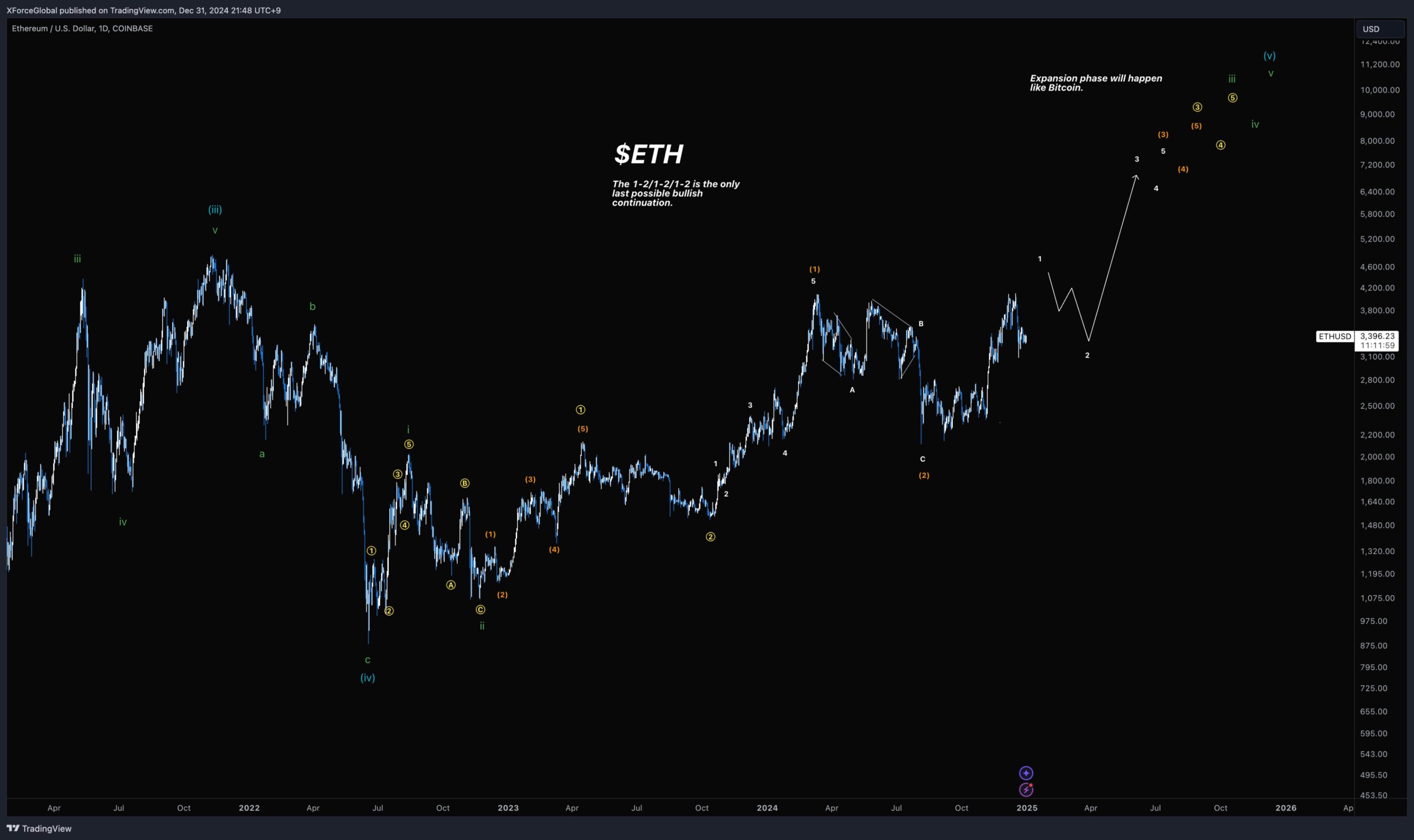
1. Ethereum Price Targets for 2025: Elliott Wave Analysis
Elliott Wave Theory provides a method for analyzing market trends by identifying repetitive wave patterns, which can predict significant price movements. For Ethereum, analysts utilizing this theory anticipate substantial price fluctuations leading up to 2025, projecting a value range between $3,000 and $18,603. These predictions stem from historical price data, investor sentiment, and broader market psychology. The potential for Ethereum to rally strongly is supported by its position as a leading blockchain platform with an expansive ecosystem of decentralized applications and DeFi projects.
The price range, however, underscores the uncertainty inherent in such forecasts. This volatility suggests that while Ethereum offers immense growth potential, investors must approach these predictions with caution. External factors such as global economic conditions, regulatory developments, and technological advancements within Ethereum’s network could significantly influence its price trajectory. Traders and investors need to remain vigilant, employing a mix of technical indicators and fundamental analysis to navigate this uncertain landscape effectively.
2. Crypto’s War on Digital Privacy in 2024
The debate surrounding privacy and regulation intensified in 2024, with privacy-focused cryptocurrencies like Monero facing significant challenges. Major exchanges, including Binance and Kraken, delisted Monero in response to regulatory pressure, citing concerns over its association with illicit activities. This trend has highlighted the growing scrutiny faced by privacy coins, even as demand for secure, anonymous transactions persists among certain user groups.
At the same time, projects like Worldcoin have pushed the boundaries of privacy by incorporating biometric data collection for identity verification. With over 6.9 million participants enrolling in the World ID program, critics have raised alarms about potential misuse of sensitive personal data. On the policy front, the Republican Party in the United States has taken a bold stance, opposing central bank digital currencies and advocating for privacy rights in cryptocurrency transactions. This support could create a more favorable environment for privacy-centric innovations in the blockchain space.
The clash between privacy advocates and regulatory authorities illustrates a critical tension in the crypto sector. While tighter regulations aim to curb illicit activity, they risk stifling innovation and alienating users who prioritize privacy. Investors and developers in this niche must navigate these challenges, balancing compliance requirements with the demand for user-centric, privacy-preserving solutions.

3. Bitcoin ETFs Lose Momentum Amid Year-End Calm
After an initial wave of enthusiasm, Bitcoin exchange-traded funds (ETFs) experienced significant outflows totaling $420 million toward the end of 2024. This retreat indicates that many investors chose to lock in profits after a period of growth, leading to a stabilization in Bitcoin’s price around $95,000. Analysts attribute this cooling-off period to a lack of immediate market catalysts, despite the broader optimism surrounding Bitcoin’s long-term prospects.
Looking ahead, the Bitcoin halving event, scheduled for April 2024, stands out as a critical driver for renewed interest. The halving will reduce the reward for mining new Bitcoin, tightening supply and potentially driving prices higher. Additionally, the anticipated inauguration of a crypto-friendly U.S. administration is expected to create a more supportive regulatory environment, fostering increased institutional adoption of Bitcoin and other cryptocurrencies.
The ETF outflows and subsequent price stabilization provide a strategic opportunity for investors to accumulate Bitcoin at a steady pace. However, the cryptocurrency’s inherent volatility demands a cautious approach, with attention paid to upcoming events like the halving and policy shifts that could significantly impact market dynamics.

4. Venture Capital Funding in Crypto Climbs to $13.6 Billion
The resurgence of venture capital (VC) interest in the cryptocurrency space was a defining trend in 2024, with investments climbing to $13.6 billion from $10.1 billion in 2023. This renewed enthusiasm reflects growing confidence in blockchain technology and its applications, particularly in areas like decentralized finance (DeFi), modular blockchain platforms, and tokenization services. Notable deals included Monad Labs securing $225 million for its layer-1 smart contract network and Avalon Labs raising $10 million to advance its Bitcoin-backed DeFi solutions.
This upward trajectory is expected to continue into 2025, with projections estimating VC funding could surpass $18 billion. Factors contributing to this optimism include easing global interest rates, improved regulatory clarity, and the maturation of blockchain-based business models. Startups driving innovation in modular blockchains and tokenization are particularly well-positioned to attract substantial investment in the coming year.
The increase in VC funding highlights a shift toward long-term growth and innovation within the blockchain sector. However, the industry’s reliance on favorable economic conditions poses a potential risk. A reversal in macroeconomic trends or tightening regulations could challenge the sector’s ability to sustain this momentum, emphasizing the importance of adaptive strategies among entrepreneurs and investors alike.

5. Bitcoin’s Path to $120,000: The January Effect
The start of 2025 is anticipated to bring renewed momentum to Bitcoin’s price, with projections suggesting it could rally to $120,000 in January. This optimism is partly driven by the “January effect,” a market phenomenon where asset prices often rise due to increased investment activity at the beginning of the year. Additionally, Binance’s stablecoin reserves of $45 billion signal a strong liquidity base that could help sustain Bitcoin’s upward trajectory.
Despite this bullish outlook, recent corrections in Bitcoin’s price serve as a reminder of its inherent volatility. The cryptocurrency fell by 10% from its December high of $108,300, highlighting the market’s sensitivity to profit-taking and shifts in investor sentiment. Such corrections are common and emphasize the need for strategic positioning among both institutional and retail investors.
The potential rally to $120,000 could invigorate market sentiment, but caution remains essential. Investors must consider the broader economic context, including inflation trends and interest rate policies, while monitoring liquidity conditions and demand indicators that could impact Bitcoin’s performance in the new year.

6. Nations Eye Bitcoin Reserves Amid Institutional Adoption
The adoption of Bitcoin as a strategic reserve asset gained momentum in 2024, with Franklin Templeton predicting more nations will follow this trend in 2025. Legislative proposals in regions like Hong Kong and Germany exemplify this shift, as policymakers explore Bitcoin’s potential to enhance financial stability. For instance, Hong Kong lawmakers have proposed adding Bitcoin to national reserves, drawing inspiration from early adopters like El Salvador and Bhutan.
These moves reflect a broader recognition of Bitcoin as a digital store of value with global utility. The growing interest in Bitcoin’s reserve status marks a departure from its perception as a speculative asset, suggesting its integration into traditional financial systems. This shift could significantly bolster Bitcoin’s legitimacy and demand in global markets.
While the adoption of Bitcoin as a reserve asset is a promising development, its success depends on a range of factors, including geopolitical considerations and economic conditions. Policymakers and investors must carefully navigate these complexities, balancing the potential benefits of Bitcoin reserves with the risks associated with its price volatility and evolving regulatory landscape.
Key Takeaways
- Ethereum’s Ambitious Price Predictions:
- Elliott Wave Analysis forecasts Ethereum’s price between $3,000 and $18,603 by 2025.
- These speculative targets hinge on historical price trends and broader market conditions, emphasizing the need for diversified strategies for Ethereum holders.
- Privacy Coins Face Regulatory Hurdles:
- Privacy-centric projects like Monero face delistings due to regulatory pressure.
- The GOP’s crypto-friendly stance may foster innovation in privacy-focused blockchain projects, balancing the challenges of compliance and privacy advocacy.
- Bitcoin ETFs and Halving Event:
- Bitcoin ETFs experienced $420 million in outflows, signaling profit-taking and short-term caution.
- The upcoming Bitcoin halving event and pro-crypto policies may serve as major catalysts for price growth, emphasizing Bitcoin’s cyclical market dynamics.
- Venture Capital Resurgence:
- Crypto startups attracted $13.6 billion in 2024, with projections for $18 billion in 2025.
- Focused on DeFi, tokenization, and smart contract networks, these investments highlight confidence in blockchain innovation and its growth potential.
- Bitcoin’s Reserve Adoption Grows:
- Franklin Templeton highlights potential for Bitcoin to be adopted as a reserve asset.
- Legislative interest in regions like Germany and Hong Kong underscores Bitcoin’s increasing role in global financial stability.
- Market Volatility and Strategic Opportunities:
- Bitcoin’s January effect and price corrections emphasize the need for cautious optimism.
- Stablecoin reserves, such as Binance’s $45 billion, showcase liquidity strength supporting the crypto ecosystem.