

Grayscale’s new Bitcoin Miners ETF signals growing confidence in crypto infrastructure, while speculation around Litecoin’s potential ETF has fueled a fresh rally.From the expansion of Bitcoin’s DeFi ecosystem to sovereign wealth funds gaining indirect Bitcoin exposure, the past week has been filled with groundbreaking news. Grayscale’s new Bitcoin Miners ETF signals growing confidence in crypto infrastructure, while speculation around Litecoin’s potential ETF has fueled a fresh rally. Additionally, the U.S. state of Indiana is considering Bitcoin ETF investments for retirement funds, further legitimizing Bitcoin in traditional finance. Perhaps the most significant regulatory shift comes from Federal Reserve Chair Jerome Powell, who has signaled approval for crypto banking—potentially paving the way for deeper integration between crypto and traditional financial systems.
Meanwhile, El Salvador is moving quickly to align its Bitcoin regulations with IMF requirements, ensuring continued financial stability while maintaining its Bitcoin strategy. These developments highlight the increasing acceptance and integration of crypto into mainstream finance, setting the stage for further growth in 2025.
Elastos Raises $20M to Build Native Bitcoin DeFi Protocol
Elastos, a blockchain platform focused on decentralized internet solutions, has secured $20 million in funding to develop a Bitcoin-native DeFi protocol. The funding round was led by several venture capital firms and aims to create a decentralized financial ecosystem that directly integrates with Bitcoin’s blockchain. This move is expected to enhance Bitcoin’s usability beyond just a store of value, enabling lending, borrowing, and other financial services without requiring intermediaries. Unlike Ethereum-based DeFi, which relies on smart contracts built on separate chains, Elastos’ approach seeks to make Bitcoin itself the foundation for DeFi applications.
The project aims to solve Bitcoin’s long-standing issue: its limited programmability. By leveraging technologies like Bitcoin Layer-2 scaling solutions and decentralized identity frameworks, Elastos wants to enable secure, transparent financial transactions. While DeFi has been thriving on Ethereum, Solana, and other chains, bringing DeFi natively to Bitcoin could introduce new liquidity and attract more institutional investors. This innovation could also mitigate risks associated with wrapping Bitcoin on other blockchains, such as WBTC on Ethereum, which introduces custodial risks.
Market Impact: The news has sparked optimism among Bitcoin DeFi supporters, as Bitcoin remains the largest cryptocurrency but lacks a well-established DeFi ecosystem. If successful, Elastos’ Bitcoin-native DeFi protocol could attract significant capital and drive innovation within the Bitcoin network. However, the project faces technical and regulatory challenges, as DeFi on Bitcoin is still in its early stages. Short-term, this may not move BTC’s price much, but long-term, a functioning Bitcoin DeFi system could boost Bitcoin adoption and expand its use cases beyond simple transactions and store of value.

World’s Largest Sovereign Wealth Fund Holds Indirect Bitcoin Exposure of Over $355M
Norway’s Government Pension Fund, the world’s largest sovereign wealth fund, has indirect exposure to Bitcoin worth over $355 million. This exposure comes through the fund’s investments in companies with Bitcoin holdings, such as MicroStrategy, Coinbase, and Tesla. The fund, which manages over $1.4 trillion in assets, does not hold Bitcoin directly but gains exposure through equity investments in crypto-related firms. This revelation highlights the growing institutional acceptance of Bitcoin, as even traditionally conservative financial institutions are indirectly participating in the crypto market.
While the fund has not explicitly announced any plans to acquire Bitcoin directly, its exposure through public companies indicates a shift in sentiment toward digital assets. Sovereign wealth funds often take a cautious approach to new asset classes, and Norway’s fund serves as a key indicator of how institutional investors are positioning themselves. Other sovereign wealth funds may follow a similar strategy, using public companies as a proxy for Bitcoin exposure rather than directly purchasing the asset.
Market Impact: The indirect Bitcoin holdings of such a massive financial entity signal growing institutional interest, which could positively influence Bitcoin’s long-term adoption. While this news may not trigger an immediate price surge, it strengthens Bitcoin’s credibility as an investment-grade asset. If more sovereign wealth funds adopt a similar strategy—or eventually invest in Bitcoin directly—it could lead to sustained price appreciation and increased legitimacy in the eyes of regulators and traditional investors.

Grayscale Launches Bitcoin Miners ETF (MNRS) to Boost BTC Mining
Grayscale, one of the largest digital asset managers, has introduced a new exchange-traded fund (ETF) focused on Bitcoin mining companies. The ETF, called MNRS, is designed to provide investors with exposure to publicly traded Bitcoin mining firms, such as Marathon Digital, Riot Platforms, and CleanSpark. This ETF launch comes at a time when Bitcoin mining profitability is under scrutiny due to increasing mining difficulty and halving event in 2024, which reduced miner rewards.
The new ETF aims to give traditional investors an easier way to gain exposure to Bitcoin mining without directly purchasing mining equipment or Bitcoin itself. It also provides a diversified approach, allowing investors to benefit from the overall growth of the mining industry rather than relying on individual company performance. The move aligns with Grayscale’s broader strategy to expand its crypto-related investment offerings beyond Bitcoin and Ethereum funds.
Market Impact: The launch of a Bitcoin mining ETF could attract fresh capital into the mining sector, potentially helping struggling miners stay afloat ahead of the halving. It also signals increasing mainstream acceptance of Bitcoin mining as a legitimate industry, despite regulatory pressures in various regions. If the ETF gains traction, it could provide stability to mining stocks and improve investor sentiment toward Bitcoin’s infrastructure. However, given the volatility of mining stocks and the challenges posed by rising energy costs, the ETF’s success remains uncertain.
Litecoin Surges on ETF Speculation as Market Rallies After Powell’s Comments
Litecoin (LTC) experienced a strong rally following speculation that it could be the next cryptocurrency to get an exchange-traded fund (ETF). The price jump coincided with broader market gains after U.S. Federal Reserve Chair Jerome Powell signaled a more dovish stance on interest rate hikes. Powell’s comments were interpreted as positive for risk assets, including cryptocurrencies, leading to a market-wide rally. Litecoin, in particular, saw an outsized gain due to renewed optimism about its potential for an ETF approval.
The speculation around a Litecoin ETF follows the approval of multiple Bitcoin spot ETFs earlier this year. While no formal applications for a Litecoin ETF have been confirmed, investors are increasingly looking at established cryptocurrencies with strong fundamentals. Litecoin’s similarity to Bitcoin in terms of security and decentralization makes it a potential candidate. However, regulatory hurdles remain a significant challenge, as the SEC has been hesitant to approve non-Bitcoin crypto ETFs.
Market Impact: The surge in Litecoin’s price demonstrates how ETF speculation can drive short-term rallies. However, without concrete regulatory developments, the gains may not be sustainable. The broader crypto market’s rally following Powell’s comments suggests that macroeconomic factors continue to play a major role in price movements. If interest rate cuts materialize, risk assets like crypto could benefit further, but regulatory clarity will be key for sustained growth.
Indiana Seeks Bitcoin ETF Exposure for Retirement Funds
The U.S. state of Indiana is exploring adding Bitcoin ETF investments to its state-managed retirement funds. This move aligns with a growing trend among institutional investors and government entities looking for regulated ways to gain exposure to Bitcoin. The proposal comes after the SEC approved spot Bitcoin ETFs, providing a safer and more transparent way for pension funds and retirement accounts to invest in the asset.
Indiana’s decision is significant because it sets a precedent for other states and government-backed funds to follow. If approved, the move could encourage more institutional adoption, as pension funds traditionally manage large amounts of capital and seek long-term growth opportunities. Bitcoin’s increasing legitimacy as an asset class makes it an attractive option, particularly in an environment of inflation concerns and monetary policy shifts.
Market Impact: If Indiana moves forward with Bitcoin ETF investments, it could accelerate institutional adoption across the U.S. and influence other states to consider similar strategies. The news also reinforces the idea that Bitcoin is becoming a mainstream financial asset. While this may not have an immediate impact on BTC’s price, the long-term effect could be substantial, especially if more pension funds allocate capital to Bitcoin ETFs.
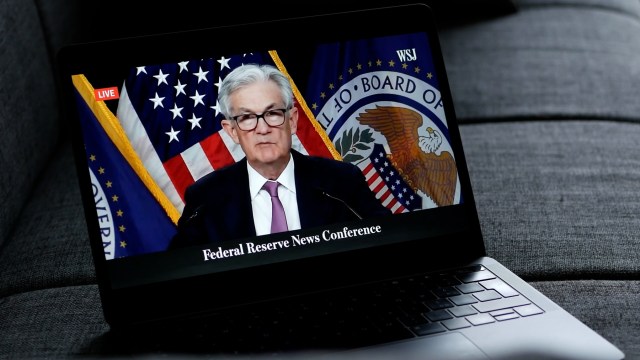
Jerome Powell Signals Approval for Crypto Banking
U.S. Federal Reserve Chair Jerome Powell has expressed a more favorable stance toward crypto banking, suggesting that regulated financial institutions should have pathways to engage with digital assets. Powell’s comments indicate a shift from previous regulatory uncertainty, signaling that the Federal Reserve may be open to integrating crypto-related banking services into the broader financial system.
This development is crucial because regulatory clarity has been one of the biggest barriers to institutional crypto adoption. Banks have been hesitant to offer crypto services due to unclear regulations and concerns about compliance. Powell’s approval could encourage major banks to start offering crypto custody, payments, and lending services, further bridging the gap between traditional finance and digital assets.
Market Impact: Powell’s comments are bullish for the crypto market, as they suggest that regulatory resistance to crypto banking may be easing. If banks begin integrating crypto services, it could drive mainstream adoption and increase capital inflows. However, the extent of this approval remains uncertain, and further regulatory developments will be key to determining the impact.
El Salvador Rushes New Bitcoin Laws to Comply With IMF Deal
El Salvador is accelerating the implementation of new Bitcoin regulations to align with the requirements of the International Monetary Fund (IMF). The country, which made history in 2021 by becoming the first nation to adopt Bitcoin as legal tender, is now facing pressure to ensure its financial policies remain in line with international standards. According to reports, these regulatory changes are aimed at addressing concerns about financial transparency, anti-money laundering (AML) measures, and fiscal stability. The move is part of El Salvador’s broader strategy to secure continued financial support from the IMF while maintaining its pro-Bitcoin stance.
The country’s Bitcoin adoption has been met with both praise and skepticism. While it has attracted crypto investment and tourism, it has also raised concerns among global financial institutions about economic risks and volatility. By introducing new regulations, El Salvador is attempting to strike a balance between integrating Bitcoin into its economy and satisfying international financial regulators. The government has already implemented policies such as Bitcoin-backed bonds and a Bitcoin treasury, but further regulatory refinements could impact how businesses and individuals use BTC within the country.
Market Impact: This news presents a mixed outlook for Bitcoin’s role in El Salvador. On the one hand, ensuring compliance with the IMF may provide the country with much-needed financial stability and continued international investment. On the other hand, stricter regulations could limit Bitcoin’s use or introduce new hurdles for businesses and citizens. While this doesn’t directly affect global Bitcoin prices, it does serve as a case study for other nations considering Bitcoin adoption. If El Salvador successfully balances both its Bitcoin policies and IMF requirements, it could pave the way for broader crypto acceptance on a national level.