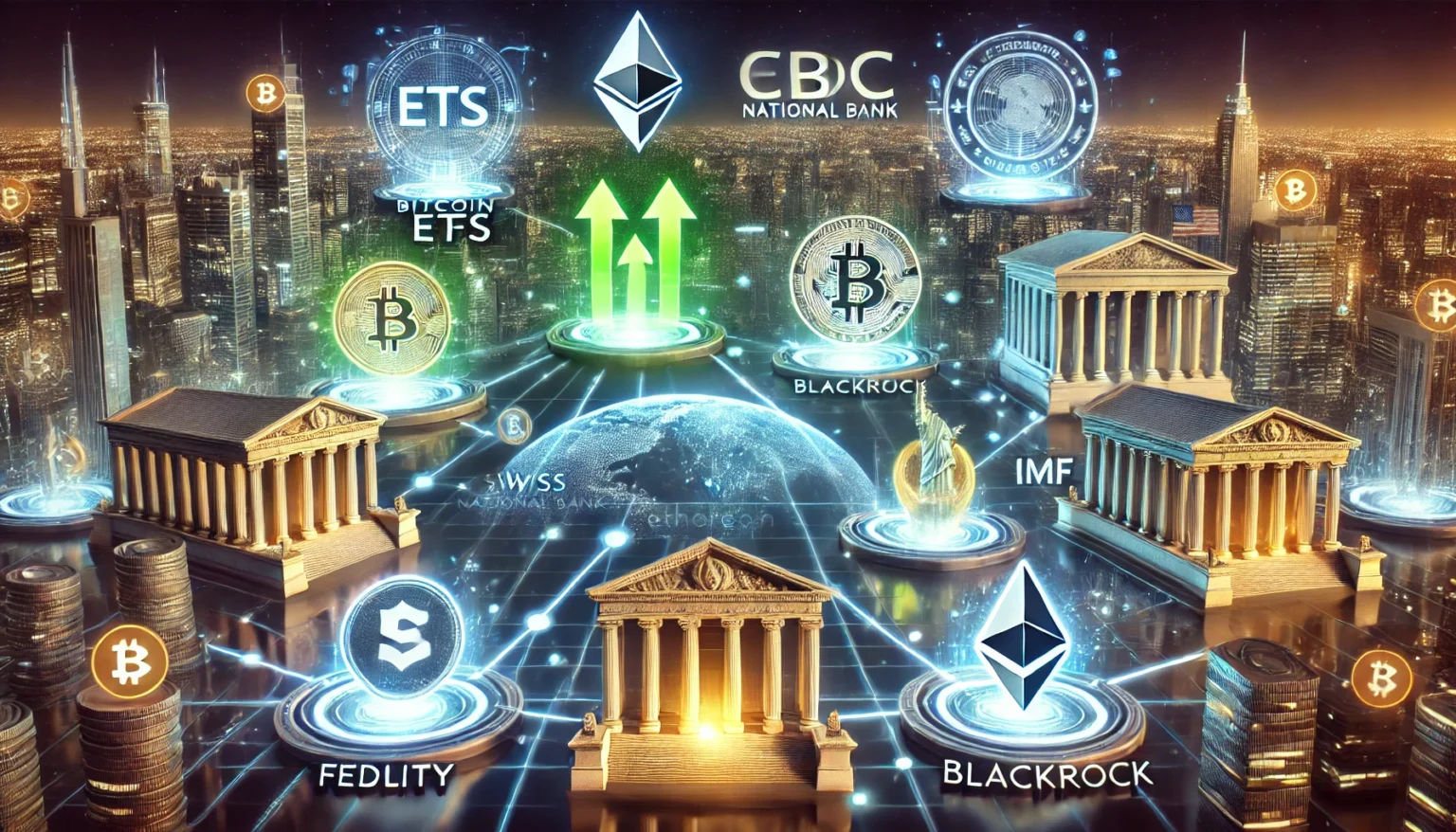

Major developments across the global crypto space are signaling the increasing institutional embrace, regulatory attention, and infrastructure evolution of digital assets. From Bitcoin’s volatility driven by ETF enthusiasm and regulatory clarity, to Ethereum’s tightening exchange supply, to traditional finance giants like Fidelity stepping into tokenized treasuries, the industry continues to mature rapidly. Meanwhile, the IMF’s inclusion of Bitcoin in global economic statistics marks a symbolic breakthrough for its legitimacy, and Switzerland’s wholesale CBDC pilot shows how blockchain may reshape traditional settlement systems. Regulatory frameworks for stablecoins are tightening in the U.S., and Tether’s push for transparency could shape future standards in stablecoin auditing.
Bitcoin Volatility Surges as ETFs Rebound and SEC Clears Mining
Bitcoin’s recent market behavior reflects both volatility and optimism, driven by two key developments. Firstly, the U.S. SEC’s decision to approve multiple spot Bitcoin ETFs has reignited institutional interest. These ETFs offer investors direct exposure to Bitcoin without the complexity of self-custody, creating a more accessible gateway for traditional finance players. Their rebound in trading volume and net inflows has coincided with Bitcoin’s rally past all-time highs, reflecting strong market confidence. ETFs serve as a legitimizing bridge, and their success suggests a broader acceptance of crypto as a mainstream asset.
Secondly, the SEC’s greenlight to Bitcoin mining operations—an area previously clouded by regulatory uncertainty—has further boosted sentiment. By removing ambiguity and affirming the legality of mining, it has incentivized new players to join the space and given existing miners a renewed sense of operational security. This regulatory clarity has likely played a part in increased mining activity and rising hash rates, reinforcing the Bitcoin network’s security and robustness.
The combination of institutional inflows and mining support has created a bullish undertone in the market. However, such sharp upward movements also increase short-term volatility, attracting traders but cautioning long-term investors.
Market Impact:
Bitcoin’s upward price action and the ETF inflows are bringing mainstream validation, increasing market participation and liquidity. As the infrastructure matures, this could lay the groundwork for Bitcoin’s next growth cycle.

Swiss National Bank Pilots CBDC for Tokenized Securities Settlement
The Swiss National Bank (SNB) has launched a pilot program to test a wholesale central bank digital currency (CBDC), targeting the settlement of tokenized securities. This represents a pioneering move among central banks, signaling Switzerland’s ambition to remain at the forefront of financial innovation. By experimenting with a CBDC that directly interfaces with tokenized asset platforms, the SNB is addressing the key challenge of integrating decentralized finance mechanisms into traditional financial systems.
The pilot, executed via Switzerland’s SIX Digital Exchange (SDX), focuses on improving efficiency in clearing and settlement processes. Tokenized securities—real-world assets issued and traded on blockchains—require instant and final settlement mechanisms, which a wholesale CBDC can offer. Unlike retail CBDCs intended for public use, this variant is restricted to financial institutions, streamlining interbank payments and reducing counterparty risks.
This approach could revolutionize capital markets by enabling 24/7 trading, removing reconciliation delays, and potentially reducing operational costs. The SNB’s focus on legal and technical feasibility is crucial, as other central banks observe this experiment closely. Its outcome could influence digital monetary policies worldwide, especially in Europe and Asia.
Market Impact:
The SNB’s pilot reinforces confidence in the institutional viability of blockchain, potentially accelerating tokenized finance adoption. If successful, it may spark similar initiatives globally, boosting the credibility of digital assets and increasing investment in tokenization infrastructure.

Ethereum Supply on Exchanges Drops 16.4%, Signaling Bullish Sentiment
Ethereum has shown a strong bullish indicator: a 16.4% decrease in ETH supply on centralized exchanges. This shift is typically interpreted as investors moving their assets into long-term storage, possibly in anticipation of price appreciation or to engage with DeFi platforms and staking opportunities. When Ethereum leaves exchanges, selling pressure reduces, and that often sets the stage for organic price growth due to reduced supply.
This reduction also coincides with the continued expansion of Ethereum’s Layer 2 ecosystem and increasing adoption of staking post-merge. As more ETH is locked in staking contracts and Layer 2 solutions, the circulating supply becomes tighter. Such dynamics can significantly influence ETH’s price behavior, particularly in a market already experiencing bullish momentum driven by broader crypto resurgence.
Ethereum’s deflationary tokenomics post-EIP-1559 and the Merge further support this bullish framework. With less ETH issued and more burned during transactions, supply pressure is already reduced. Add to that a decrease on exchanges, and the fundamentals align well for a price rally.
Market Impact:
A declining exchange balance often precedes bull runs, and Ethereum’s network fundamentals support this sentiment. This trend could push ETH towards new highs, especially if institutional interest picks up in tandem with improved macroeconomic conditions.

Fidelity Enters Tokenized Treasury Race to Rival BlackRock’s BUIDL
Fidelity’s announcement to launch a tokenized U.S. Treasury fund signals escalating competition among traditional asset managers entering the digital asset space. By tokenizing U.S. Treasuries, Fidelity is aiming to combine the security of traditional fixed-income investments with the accessibility and efficiency of blockchain. This move directly challenges BlackRock’s BUIDL product, which has already made waves by using blockchain infrastructure to modernize asset management.
Tokenized treasuries offer a unique value proposition: enhanced liquidity, real-time settlement, and programmable financial instruments. These features appeal to a new generation of investors looking for transparency and on-chain yield without sacrificing regulatory compliance. Fidelity’s participation lends massive credibility to the concept, signaling that tokenized finance is maturing beyond experimental phases.
The firm’s strategy involves issuing digital fund shares on public or permissioned blockchains, enabling seamless access and potentially lowering costs associated with fund management. This also caters to decentralized finance (DeFi) platforms seeking reliable yield sources, potentially bridging traditional and decentralized financial ecosystems.
Market Impact:
Fidelity’s entry legitimizes tokenized fixed-income markets. This could accelerate institutional adoption of blockchain-based securities, unlocking significant capital inflow into on-chain finance and further validating the tokenization narrative.

IMF Adds Bitcoin to Global Economic Data Metrics
In a landmark move, the International Monetary Fund (IMF) has incorporated Bitcoin into its global economic statistics databases. This represents a huge leap for Bitcoin’s legitimacy in the eyes of global financial authorities. Previously, Bitcoin was treated as an external asset or an afterthought in macroeconomic models. Now, by officially integrating it into global datasets, the IMF is recognizing its material impact on economies and markets.
This inclusion also suggests that the IMF is taking a more pragmatic approach to digital assets—choosing engagement over dismissal. The decision follows a series of IMF-led discussions on central bank digital currencies, stablecoins, and crypto regulations, indicating a broader strategic pivot toward understanding and managing digital asset risks at the global level.
From a policy perspective, it enables better macroeconomic modeling, risk assessment, and data-driven regulation concerning cross-border capital flows involving cryptocurrencies. It also acknowledges Bitcoin’s growing role as a store of value and alternative financial system, especially in emerging markets with weaker currencies.
Market Impact:
This move could enhance Bitcoin’s institutional appeal, particularly among sovereign funds and global financial entities. It’s a subtle yet significant signal that Bitcoin is no longer fringe—it’s now part of the global economic conversation.

U.S. House to Review Stablecoin Legislation Amid Policy Concerns
The U.S. House Financial Services Committee is revisiting proposed legislation targeting stablecoin regulation. This move is prompted by growing concerns over the financial stability and transparency of stablecoin issuers. With the rapid rise in stablecoin market caps and usage in payment systems and DeFi, lawmakers are under pressure to establish a regulatory framework that ensures consumer protection while not stifling innovation.
Key areas under scrutiny include reserve backing, auditing requirements, and issuer licensing. The goal is to prevent scenarios where poorly collateralized stablecoins trigger market disruptions—something regulators want to avoid after past controversies with algorithmic stablecoins like TerraUSD.
The legislation could result in federal oversight being granted to either the Federal Reserve or a new body, giving regulators real-time visibility into reserve holdings and redemption mechanisms. While some in the industry welcome clarity, others fear overregulation could push innovation offshore.
Market Impact:
Regulatory clarity, if balanced, could boost stablecoin trust and accelerate their adoption in mainstream finance. However, excessive restrictions could hamper U.S.-based innovation and benefit overseas markets with friendlier regulations.

Tether Seeks Independent Audit from Big 4 Accounting Firm
Tether has entered talks with a Big Four accounting firm to conduct an independent audit of its reserve holdings. This comes after years of criticism and skepticism around Tether’s transparency, given its pivotal role in crypto markets as the issuer of USDT—the most used stablecoin by volume. A full audit would represent a major shift in Tether’s approach to corporate governance and accountability.
Previously, Tether had only released attestations, not comprehensive audits, leading to concerns about the quality and liquidity of its reserve assets. With regulators increasingly focused on stablecoin issuers, and rivals like Circle gaining credibility through transparent disclosures, Tether may be under pressure to bolster trust with institutional and retail users alike.
A successful audit would not only reduce market doubts but also help Tether secure regulatory approvals in more jurisdictions. It could also serve as a benchmark for other stablecoin providers and set a new industry standard for transparency.
Market Impact:
If the audit is thorough and positive, Tether could strengthen its market leadership and reduce regulatory friction. Conversely, any negative findings could trigger volatility across crypto markets, given USDT’s systemic role in trading and liquidity.

Key Takeaways:
- Bitcoin’s price movement is heavily influenced by institutional ETF inflows and the SEC’s mining approval, increasing market volatility with bullish sentiment.
- Switzerland is leading CBDC innovation by piloting a wholesale digital currency aimed at settling tokenized securities, setting a template for other central banks.
- Ethereum shows strength as the supply on exchanges drops 16.4%, indicating investor confidence and potential upward momentum.
- Fidelity enters the race with a tokenized U.S. Treasury fund, escalating competition with BlackRock and legitimizing on-chain fixed income markets.
- IMF’s recognition of Bitcoin in economic statistics signals that digital assets are being integrated into global financial narratives.
- U.S. lawmakers focus on stablecoin regulation, addressing transparency and consumer safety while balancing innovation.
- Tether seeks validation through a Big Four audit, aiming to solidify its dominance and credibility in the stablecoin space.